How to Read a Shampoo Label: Deciphering Ingredients and Claims
11 min read ·
Learning how to read a shampoo label helps you understand ingredients, evaluate product claims, and make informed choices for your hair and scalp health.
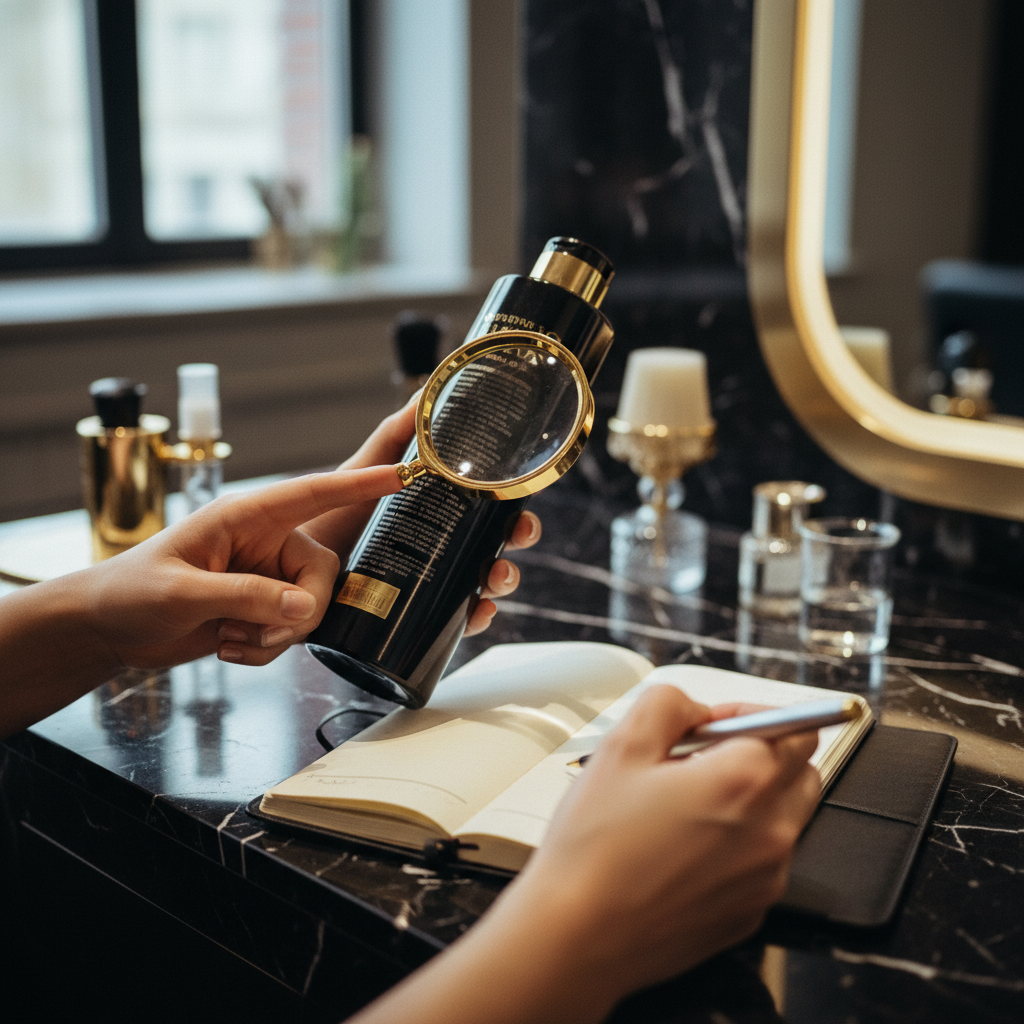
Quick answer: Learning how to read a shampoo label empowers you to understand the ingredients, evaluate product claims, and make informed choices for your hair and scalp health. It allows you to select formulations that genuinely address your specific needs rather than relying solely on marketing, though the complexity of cosmetic chemistry means a full understanding often requires expert knowledge and regulatory insight.
Key takeaways
- Shampoo ingredients are listed in descending order of concentration, meaning the first few make up the largest portion of the product.
- Identifying surfactants helps you understand a shampoo's cleansing power and how it might interact with your hair and scalp type.
- Recognising conditioning agents, humectants, and emollients can guide choices for hydration, smoothness, and manageability.
- Marketing claims like "volumising" or "colour-safe" are distinct from the ingredient list, which provides the objective information.
- Understanding pH adjusters indicates whether a shampoo is formulated to support the natural slightly acidic pH of hair and scalp.
- Preservatives, fragrances, and colourants ensure product safety and sensory appeal, but can be a source of sensitivity for some individuals.
How to read a shampoo label: what the evidence shows
Understanding how to read a shampoo label involves deciphering the ingredient list, interpreting marketing claims, and knowing what specific components mean for your hair and scalp health. The label is a legal document, providing mandatory information required by regulatory bodies such as the UK's Cosmetic, Toiletry and Perfumery Association (CTPA) or the EU Cosmetics Regulation (EC) No 1223/2009. This information helps consumers make more informed choices, moving beyond front-of-bottle marketing to the product's actual composition.
The Ingredient List: Decoding Cosmetic Chemistry
By law, ingredients must be listed in descending order of concentration. This means the components listed first are present in the largest amounts, while those at the end are in smaller, sometimes trace, quantities. Ingredients are identified by their International Nomenclature of Cosmetic Ingredients (INCI) names. These are standardised scientific names, which can often look like complex chemical terms or botanical names in Latin.
1. Water (Aqua): The Foundation
Most shampoos list "Aqua" or "Water" as the first ingredient. This indicates it is the primary solvent and typically the largest component, forming the liquid base for other ingredients.
2. Surfactants: The Cleansing Agents
Surfactants (surface-active agents) are the core cleansing ingredients in shampoo. Their role is to lower the surface tension of water, allowing it to mix with and lift oils, dirt, and product residue from your hair and scalp. These impurities are then rinsed away. Surfactants are also responsible for the lathering properties of shampoo. You can learn more about cleansing agents in 'Hair Cleansing and Conditioning'.
Surfactants vary in their cleansing strength and gentleness:
- Anionic Surfactants: These are generally the strongest cleansers and produce abundant lather. Common examples include Sodium Lauryl Sulfate (SLS) and Sodium Laureth Sulfate (SLES). While highly effective at removing oil and build-up, some individuals with very sensitive scalps or dry hair types may find them potentially drying. Research by regulatory bodies has largely concluded they are safe for cosmetic use at typical shampoo concentrations, but individual sensitivities are always possible.
- Amphoteric Surfactants: Milder than anionics, these are often used alongside stronger surfactants to reduce potential irritation and enhance lather. Examples include Cocamidopropyl Betaine and Cocoamphodiacetate.
- Non-ionic Surfactants: These are the mildest cleansers and are often found in gentle or low-lather formulas, or used to thicken a shampoo. Decyl Glucoside and Laureth-4 are common examples.
3. Conditioning Agents: For Smoothness and Manageability
These ingredients are designed to reduce friction, improve detangling, and leave hair feeling softer and smoother. They often work by depositing a thin film on the hair fibre, smoothing down the cuticle. For more detail, see 'Choosing the Right Hair Conditioner'.
Common examples include:
- Quaternary Ammonium Compounds ("Quats"): Such as Polyquaternium-10, Behentrimonium Chloride, and Cetrimonium Chloride. These positively charged molecules neutralise the negative charge on damaged hair, reducing static and frizz, and improving wet and dry combability.
- Silicones: Like Dimethicone, Cyclopentasiloxane, and Amodimethicone. These polymers form a smooth, protective layer on the hair, providing slip, shine, and reducing frizz. Some silicones are water-soluble and easily rinsed away, while others can be more resistant to washing, potentially leading to a feeling of build-up if not adequately cleansed. See 'Understanding Hair Damage' for more on protecting the hair fibre.
- Natural Oils and Butters: Ingredients such as Argania Spinosa Kernel Oil (Argan Oil), Butyrospermum Parkii (Shea) Butter, and Cocos Nucifera (Coconut) Oil provide emollient benefits, moisturising and softening the hair.
4. Humectants and Emollients: Boosting Hydration and Softness
These ingredients play a crucial role in maintaining hair's moisture balance and softness. For more on how they work, see 'Understanding Humectants: How They Hydrate and Protect Your Hair' and 'Hair Hydration: Maintaining Moisture for Healthy Hair'.
- Humectants: These substances attract and bind moisture from the atmosphere to the hair. Glycerin, Propylene Glycol, and Panthenol (Pro-Vitamin B5) are frequently used humectants. They can be particularly beneficial for dry or brittle hair, helping to maintain its flexibility and reduce breakage.
- Emollients: These create a protective barrier on the hair surface, preventing moisture loss and contributing to a soft, smooth feel. Many natural oils and fatty alcohols (like Cetyl Alcohol or Stearyl Alcohol) act as emollients.
5. PH Adjusters: Balancing for Health
Healthy hair and scalp have a slightly acidic pH, typically in the range of 4.5 to 5.5. Shampoos are formulated to be within this range or slightly higher. An overly alkaline pH can cause the hair cuticle to swell and open, leading to frizz, increased vulnerability to damage, and faster colour fading, particularly for colour-treated hair. Common pH adjusters include Citric Acid, Lactic Acid, and Sodium Hydroxide. For a deeper dive, read 'The pH Scale and Hair'.
6. Preservatives: Ensuring Product Safety and Stability
Preservatives are essential for preventing the growth of harmful bacteria, fungi, and mould in water-based products. Without them, shampoos could quickly become contaminated, rendering them ineffective or even harmful. They ensure the product remains safe and stable throughout its shelf life. Common preservatives include Phenoxyethanol, Sodium Benzoate, and Potassium Sorbate. Certain parabens (e.g., Methylparaben, Propylparaben) are also used and have been deemed safe by regulatory bodies for use in cosmetics at approved concentrations, despite some public concern.
7. Fragrances (Parfum/Fragrance): For Scent
Fragrances are blends of various aromatic compounds added to give shampoo its distinctive scent. They are often listed simply as "Parfum" or "Fragrance". While generally safe for most, fragrances can be a source of irritation or allergic reactions for individuals with very sensitive skin or known fragrance sensitivities. If you have a sensitive scalp, looking for fragrance-free options may be beneficial.
8. Colourants (CI Numbers): For Visual Appeal
Colourants are synthetic or natural dyes added to give the shampoo a specific appearance. They are identified by their Colour Index (CI) numbers, such as CI 19140 (Yellow 5) or CI 42090 (Blue 1). Like fragrances, they can occasionally trigger sensitivities in certain individuals, though this is less common for rinse-off products.
Marketing Claims: Separating Fact from Formulation
Shampoo labels often feature prominent claims on the front of the bottle, such as "volumising," "hydrating," "colour-safe," "anti-frizz," or "repairing." While these claims guide consumers, it's important to remember they are marketing statements designed to highlight perceived benefits. The true efficacy of a product lies in its ingredient list and how those ingredients interact with your specific hair and scalp type, as discussed in 'Choosing the Right Shampoo for Your Hair Type'.
For instance, a "volumising" shampoo might contain lighter conditioning agents to avoid weighing hair down, or polymers that coat the hair fibre to create the illusion of fullness. A "colour-safe" shampoo typically uses milder surfactants and is formulated with a pH balance designed to minimise cuticle swelling and colour washout. Understanding how to read a shampoo label allows you to cross-reference these claims with the actual ingredients.
What the Evidence Does Not Show
There is currently insufficient strong evidence to support claims that specific ingredients, when used in rinse-off shampoo products as directed, directly cause permanent hair loss (follicular issues) or irreversible damage to the hair fibre. While some individuals may experience temporary irritation or dryness from certain ingredients, particularly strong surfactants, this is typically a short-term reaction that resolves upon discontinuing use. Similarly, claims linking common shampoo ingredients to serious systemic health conditions are largely unfounded by robust scientific consensus from major regulatory bodies when products are used as intended.
The Mechanism: How Ingredients Interact
The effectiveness of a shampoo depends on the synergistic interaction of its ingredients. Surfactants lift dirt and oil, but without conditioning agents, hair could feel stripped. Humectants draw moisture, but emollients help seal it in. PH adjusters ensure the formulation is kind to the hair's natural acidity, preventing excessive cuticle lift and maintaining fibre integrity. Each component has a role in creating a balanced product that cleanses effectively while supporting hair and scalp health.
When to Seek Professional Advice
If you experience persistent scalp irritation, excessive hair shedding, or unexplained changes in hair health despite carefully selecting shampoos, it is advisable to consult a dermatologist or trichologist. These professionals can help identify underlying conditions, such as allergies, scalp dermatitis, or other health issues that may be contributing to your symptoms. They can offer tailored advice and recommend appropriate treatments, which may extend beyond cosmetic product choices.
Common Shampoo Ingredients and Their Functions
| Ingredient Category | Common Examples | Primary Function | Potential Impact on Hair/Scalp |
|---|---|---|---|
| Surfactants | Sodium Lauryl Sulfate (SLS), Cocamidopropyl Betaine | Cleansing (removing oil and dirt, creating lather) | Stronger types can be drying for some; milder types are gentler, often preferred for sensitive scalps. |
| Conditioning Agents | Polyquaternium-10, Dimethicone, Argania Spinosa Kernel Oil | Smooths hair, reduces friction, improves manageability, adds shine | Reduces frizz, helps detangle, protects against damage. Silicones can build up if not rinsed well or clarified. |
| Humectants | Glycerin, Panthenol, Propylene Glycol | Attracts and retains moisture from the air into the hair | Hydrates dry hair, improves elasticity, reduces brittleness. Can be less effective in very dry climates. |
| Emollients | Cetyl Alcohol, Stearyl Alcohol, Shea Butter | Forms a protective barrier, prevents moisture loss, softens hair | Imparts softness and smoothness, helps to seal in moisture. |
| pH Adjusters | Citric Acid, Lactic Acid, Sodium Hydroxide | Maintains product pH within an optimal range (typically 4.5 to 7.0) | Helps keep the hair cuticle smooth, reduces frizz, preserves colour. |
| Preservatives | Phenoxyethanol, Sodium Benzoate, Potassium Sorbate | Prevents microbial growth, ensures product safety and shelf life | Essential for product integrity; rare sensitivities can occur. |
| Fragrances | Parfum, various essential oils (e.g., Lavandula Angustifolia Oil) | Imparts scent to the product | Can be an irritant for individuals with fragrance sensitivities or allergies. |
| Colourants | CI 19140 (Yellow 5), CI 42090 (Blue 1) | Gives the product its visual appearance | Primarily cosmetic; very rarely a source of sensitivity. |
Frequently asked questions about How to read a shampoo label
What do all those long chemical names on a shampoo label mean?
The long chemical names are International Nomenclature of Cosmetic Ingredients (INCI) names. These are standardised, globally recognised scientific names for cosmetic ingredients. They might look complex, but they ensure consistency across products worldwide, helping you accurately identify what's in your shampoo regardless of the brand or country of origin. Learning how to read a shampoo label means understanding these terms.
How important is the order of ingredients on a shampoo label?
The order of ingredients is very important. By law, ingredients are listed in descending order of their concentration. This means the ingredients at the beginning of the list are present in the largest quantities, while those towards the end are present in smaller, often trace, amounts. This helps you understand which ingredients are the primary active components of the shampoo.
Should I avoid sulfates when reading a shampoo label?
Whether to avoid sulfates depends on your hair type and sensitivity. Sulfates like SLS and SLES are effective cleansers, but for some individuals, they can be drying or irritating. If you have a sensitive scalp, colour-treated hair, or very dry hair, you might prefer sulfate-free options. However, they are generally considered safe for most people. For more information, see 'Sulfate-Free Shampoo Benefits'.
What does "pH balanced" mean on a shampoo label?
"pH balanced" means the shampoo's pH level is formulated to be compatible with the natural slightly acidic pH of your hair and scalp, typically around 4.5 to 5.5. Maintaining this balance helps keep the hair cuticle flat and smooth, reducing frizz, minimising damage, and preserving hair colour. An unbalanced pH can lead to cuticle swelling and increased hair porosity.
Can I tell if a shampoo will cause hair loss by reading the label?
You generally cannot tell if a shampoo will cause hair loss (follicular issues) by reading its label, as cosmetic products are not known to cause such conditions. Claims linking common shampoo ingredients to permanent hair loss are not supported by scientific evidence. However, a shampoo might cause temporary irritation or dryness, which is different from true hair loss. If you're experiencing hair loss, consult a medical professional.
Conclusion
Mastering how to read a shampoo label transforms you from a passive consumer into an informed decision-maker for your hair and scalp health. By understanding the ingredient list, from primary surfactants to conditioning agents and pH adjusters, you can look beyond marketing claims and choose products that genuinely align with your hair's unique needs. This knowledge helps you select formulations that support your hair's health, manageability, and appearance effectively.
Sources and references
- Cosmetic, Toiletry and Perfumery Association (CTPA), The UK regulatory framework for cosmetics, https://www.ctpa.org.uk/the-uk-regulatory-framework-for-cosmetics
- European Commission, Regulation (EC) No 1223/2009 on cosmetic products, 2009, https://eur-lex.europa.eu/legal-content/EN/TXT/?uri=CELEX%3A32009R1223
- Food and Drug Administration (FDA), Cosmetics Labeling Guide, https://www.fda.gov/cosmetics/cosmetics-labeling-regulations/cosmetics-labeling-guide
- PubMed Central, Final Report on the Safety Assessment of Sodium Lauryl Sulfate and Ammonium Lauryl Sulfate, International Journal of Toxicology, 1983
- PubMed Central, Final Report of the Safety Assessment of Sodium Laureth Sulfate, International Journal of Toxicology, 1983
- American Academy of Dermatology Association (AAD), Hair and Scalp Conditions, https://www.aad.org/public/diseases/hair-loss/hair-care
Find these ingredients in Watermans products
- Panthenol (Provitamin B5) — you will find this ingredient in our Heat Protection Spray.
- Shea Butter — you will find this ingredient in our Curly Hair Conditioner.