How to Choose the Right Conditioner for Your Hair Type: An Evidence-Based Guide
10 min read ·
Understanding how to choose the right conditioner for your hair type is crucial for maintaining hair health and addressing specific concerns.
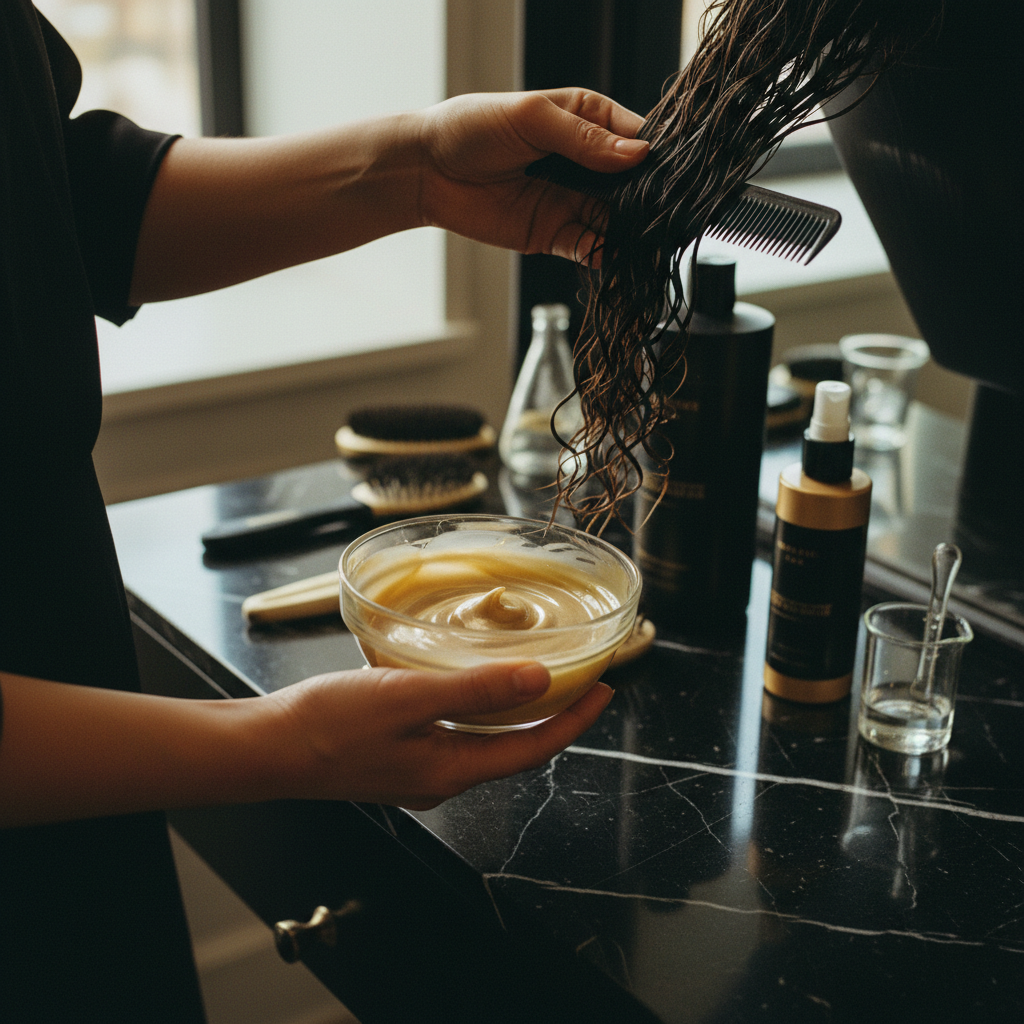
Quick answer: How to choose the right conditioner for your hair type depends primarily on identifying your hair's unique needs, such as its texture (fine, medium, coarse), type (straight, wavy, curly, coily), and current condition (dry, oily, damaged, colour-treated). By matching these characteristics with conditioner formulations, focusing on ingredients like humectants, emollients, and proteins, you can select a product that provides optimal hydration, protection, and manageability for your specific hair, though individual results may vary.
Key takeaways
- Your hair's type and condition are the main factors in learning how to choose the right conditioner for your hair type.
- Conditioners work by smoothing the hair's cuticle, neutralising static, and providing moisture or repair.
- Different hair types (fine, coarse, curly, oily, damaged) require specific ingredient profiles and formulations.
- Ingredient lists and pH levels can offer valuable clues about a conditioner's suitability for your hair.
- Regularly assess your hair's response and adjust your conditioner choice as its needs change.
How to choose the right conditioner for your hair type: what the evidence shows
Choosing the right conditioner is fundamental to healthy hair care, as it plays a crucial role in maintaining the hair's structural integrity and aesthetic qualities. The primary function of a conditioner is to counteract the effects of shampoo, which, while cleansing, can leave the hair's outer layer (cuticle) open and negatively charged, leading to frizz, dullness, and tangles. Conditioners, typically formulated with positively charged ingredients, smooth the cuticle, reduce static electricity, and replenish moisture.
Evidence shows that different hair types and conditions have distinct needs, influencing how to choose the right conditioner for your hair type. For example, hair with a high porosity, often seen in chemically treated or damaged hair, benefits from conditioners that can help seal the cuticle and provide intense moisturisation. Conversely, fine hair can be easily weighed down by heavy formulations, requiring lighter, water-based products.
Hair Anatomy and Conditioner Action
To understand how conditioners work, it's helpful to know a little about hair anatomy. The hair shaft consists of three main layers: the medulla (innermost, often absent in fine hair), the cortex (middle layer, providing strength and colour), and the cuticle (outermost protective layer, made of overlapping cells). When hair is healthy, the cuticle scales lie flat, reflecting light and making the hair feel smooth. Shampooing, especially with alkaline products, can lift these scales, making the hair feel rough and prone to tangling. Conditioners are designed to flatten these scales again.
Conditioners achieve their effects primarily through cationic surfactants (positively charged molecules). Hair, particularly after shampooing, carries a negative charge. Cationic surfactants are attracted to these negatively charged sites, binding to the hair shaft. This binding neutralises static electricity, reduces friction between hair strands, and helps the cuticle scales lie flat. This mechanism enhances shine, reduces frizz, and makes detangling easier. For more detailed information, see The Science of Conditioners: How Hair Care Formulations Work.
Beyond basic conditioning, specific ingredients address various hair concerns:
- Humectants (e.g., glycerin, hyaluronic acid, panthenol) attract moisture from the air into the hair, providing hydration. This is particularly beneficial for dry or brittle hair. For further reading, explore Humectants: Understanding How They Hydrate and Protect Your Hair.
- Emollients (e.g., fatty alcohols like cetyl alcohol, stearyl alcohol; plant oils like argan oil, shea butter) create a protective film on the hair surface, smoothing the cuticle and providing slip, which aids in detangling and adds softness.
- Proteins (e.g., hydrolyzed wheat protein, keratin, silk amino acids) can temporarily patch damaged areas on the hair cuticle, offering a perception of increased strength and reduced breakage. However, excessive protein can lead to stiffness, especially in hair that doesn't genuinely require it.
- Silicones (e.g., dimethicone) form a smooth, water-resistant layer on the hair, providing shine, reducing frizz, and offering some heat protection.
Identifying Your Hair Type and Concerns
Before you can effectively choose the right conditioner for your hair type, you need to understand your hair's characteristics. Consider these aspects:
1. Hair Texture and Density:
- Fine Hair: Has a small diameter, can be easily weighed down. Needs lightweight conditioners that provide volume without residue. See Fine Hair: A Complete Guide to Understanding and Care for more.
- Medium Hair: Balances volume and manageability. Benefits from a wide range of formulations.
- Coarse Hair: Has a large diameter, often feels dry, and is prone to frizz. Requires richer, more emollient-heavy conditioners.
2. Hair Type (Curl Pattern):
- Straight Hair: Tends to become oily at the roots and may be dry at the ends. Look for balancing formulas that don't over-moisturise the scalp.
- Wavy Hair: Can be prone to frizz and may lack definition. Benefits from lightweight hydration and frizz control. Refer to Dealing with Frizzy Hair and How to Reduce Frizz in Hair.
- Curly and Coily Hair: These hair types are typically drier due to the structure of the hair shaft, which makes it harder for natural oils to travel down. They require significant moisture and richer formulations to maintain their curl pattern and prevent breakage. See Caring for Curly Hair and How to Care for Afro Hair: An Evidence-Based Guide.
3. Hair Condition:
- Dry Hair: Appears dull, lacks elasticity, and may feel rough. Needs intensely moisturising conditioners rich in humectants and emollients.
- Oily Scalp with Dry Ends: A common combination. Focus on applying conditioner primarily to the mid-lengths and ends, avoiding direct application to the scalp. See Oily Scalp Care: Understanding and Managing Excess Sebum and Oily Scalp: Causes, Management, and When to Seek Help.
- Damaged Hair: Appears brittle, has split ends, or has been weakened by chemical treatments or heat styling. Requires reparative conditioners with proteins and deep conditioning treatments. For more on this, read Hair Damage: Causes, Signs, and Solutions and Heat Styling Safety Best Practices.
- Colour-Treated Hair: Needs formulas that protect colour, prevent fading, and help repair damage from chemical processes. These often have a slightly acidic pH to help seal the cuticle and lock in colour. See Maintaining Colour-Treated Hair: Maintaining Colour-Treated Hair: A Guide to Longevity and Health.
Understanding Conditioner Categories
Conditioners are generally categorised by their application and intensity:
- Rinse-out Conditioners: These are the most common type, applied after shampoo and rinsed out. They provide immediate detangling, cuticle smoothing, and a degree of moisture.
- Leave-in Conditioners: Applied after washing and left in the hair, they offer continuous hydration, detangling, and protection throughout the day. They are often lighter in texture and beneficial for dry or curly hair.
- Deep Conditioners (Hair Masks): These are intensive treatments with higher concentrations of conditioning agents, proteins, and lipids. Designed to penetrate deeper into the hair shaft, they provide significant repair and moisture and are typically used once a week or bi-weekly. For very dry or coily hair, a deep conditioner may be used more frequently.
The Importance of pH
Conditioners are typically formulated to be slightly acidic, with a pH usually between 3.5 and 5.0. This acidity is crucial because it helps to close the hair cuticle, which might have been slightly raised by the often more alkaline pH of shampoos (though many modern shampoos are pH-balanced). A closed cuticle creates a smoother hair surface, enhancing shine, reducing frizz, and helping to lock in moisture and colour molecules. For colour-treated hair, a conditioner with a pH around 3.5 to 4.5 is particularly beneficial for preserving colour longevity.
Decoding the Ingredient List
When learning how to choose the right conditioner for your hair type, always examine the ingredient list. Ingredients are listed in descending order of concentration, meaning the first few ingredients make up the bulk of the product. Look for:
- For Fine or Oily Hair: Water-based formulas with humectants (glycerin, panthenol) higher on the list. Avoid heavy oils or butters as primary ingredients, which can weigh hair down. Some light emollients like aloe vera or hydrolyzed wheat protein can be beneficial.
- For Dry, Coarse, Curly, or Coily Hair: Seek out emollients like shea butter, coconut oil, argan oil, and thicker fatty alcohols (cetearyl alcohol, behentrimonium methosulfate) high on the list. Occlusives such as dimethicone can provide significant slip, frizz control, and moisture retention. For afro-textured hair, specifically, rich emollients are vital; refer to Moisturizing Afro-Textured Hair and How to Moisturise Afro Hair: A Guide to Hydration and Retention.
- For Damaged or Chemically Treated Hair: Hydrolyzed proteins (e.g., keratin, wheat, rice, or silk proteins) can help temporarily strengthen the hair shaft by filling in gaps in the cuticle. Amino acids also support hair health. However, be cautious of protein overload if your hair is not truly damaged, as too much protein can lead to stiffness and brittleness. Silicones can also offer a protective layer.
Adjusting Your Routine
Your hair's needs aren't static. Factors such as seasonal changes, chemical treatments (like colouring), heat styling frequency, and even dietary shifts can alter your hair's requirements. It's advisable to re-evaluate your conditioner choice every few months, or whenever you notice a significant change in your hair's texture, moisture levels, or manageability. Don't be afraid to mix and match; for instance, using a lighter daily conditioner and a richer deep conditioner once a week.
| Hair Type / Concern | Recommended Conditioner Characteristics | Key Ingredients to Look For |
|---|---|---|
| Fine, Oily | Lightweight, non-greasy | Glycerin, Panthenol, Hydrolyzed Wheat Protein, Aloe Vera |
| Dry, Coarse | Rich, deeply moisturising | Shea Butter, Argan Oil, Coconut Oil, Fatty Alcohols, Ceramides |
| Curly, Coily | Creamy, highly emollient, leave-in optional | Heavy Butters (Shea, Mango), Rich Oils (Castor, Jojoba), Humectants, Proteins (if needed) |
| Damaged, Brittle | Reparative, strengthening | Hydrolyzed Proteins (Keratin, Silk), Amino Acids, Silicones, Ceramides |
| Colour-Treated | Colour-safe, cuticle-sealing, acidic pH | UV Filters, Antioxidants, Silicones, Low pH (3.5-4.5), Specific Colour-Protective Polymers |
| Balanced, Normal | Hydrating, balancing | Fatty Alcohols, Light Oils (Jojoba, Sunflower), Silk Amino Acids |
Frequently asked questions about How to choose the right conditioner for your hair type
How often should I use conditioner?
It's generally recommended to use conditioner every time you shampoo your hair. Shampoo cleanses the hair and scalp, but it can also strip some natural oils and lift the cuticle. Conditioner helps to restore moisture, smooth the cuticle, and make hair more manageable. For very dry or coily hair, a leave-in conditioner can be used daily between washes to maintain hydration.
Can I use a conditioner that's not specifically for my hair type?
While using a conditioner not designed for your specific hair type won't necessarily cause damage, it might not provide optimal results. For example, a heavy conditioner on fine hair can weigh it down and make it look greasy, while a very light conditioner might not provide enough moisture for coarse or curly hair. Understanding how to choose the right conditioner for your hair type ensures you get the best benefits.
What's the difference between a conditioner and a hair mask?
A conditioner is typically a lighter formulation designed for daily or frequent use to provide basic hydration, detangling, and cuticle smoothing. A hair mask (or deep conditioner) is a more intensive treatment, with a higher concentration of active ingredients like emollients, humectants, and proteins. Masks are used less frequently, usually once a week or bi-weekly, to provide deep nourishment, repair, or intense moisture.
Should I apply conditioner to my scalp?
Generally, it's best to apply conditioner primarily to the mid-lengths and ends of your hair, as these areas tend to be the driest and most prone to damage. Applying rich conditioners directly to the scalp, especially if you have an oily scalp, can weigh down fine hair or contribute to excess oiliness. However, if you have a very dry or flaky scalp, some specific scalp conditioners are formulated for direct application.
Conclusion
Mastering how to choose the right conditioner for your hair type is an essential step towards achieving and maintaining healthy, vibrant hair. By taking the time to understand your hair's unique characteristics, dissecting ingredient lists, and observing how your hair responds, you can select the most effective product. Remember, your hair's needs can evolve, so regular assessment and willingness to adjust your routine will ensure your conditioning regimen remains optimal for its ongoing health and appearance.
Sources and references
- PubMed Central, Hair Cosmetics: An Overview, 2015, DOI: 10.4103/0974-7753.153927
- British Association of Dermatologists, Hair care products, https://www.bad.org.uk/for-the-public/patient-information-leaflets/hair-care-products/
- Journal of Cosmetic Science, Conditioners and Conditioning, 2011
- American Academy of Dermatology Association, Hair care: How to shampoo and condition, https://www.aad.org/public/everyday-care/hair-care-basics/wash/shampoo-condition-how
Find these ingredients in Watermans products
- Argan Oil: you will find this ingredient in our Hair Growth Shampoo.
- Aloe Vera: you will find this ingredient in our Curly Hair Conditioner.