Hair Cleansing and Conditioning: The Science Behind a Healthy Scalp and Hair
10 min read ·
Effective Hair Cleansing and Conditioning are fundamental to maintaining scalp health and hair fibre integrity, removing impurities while restoring moisture and manageability.
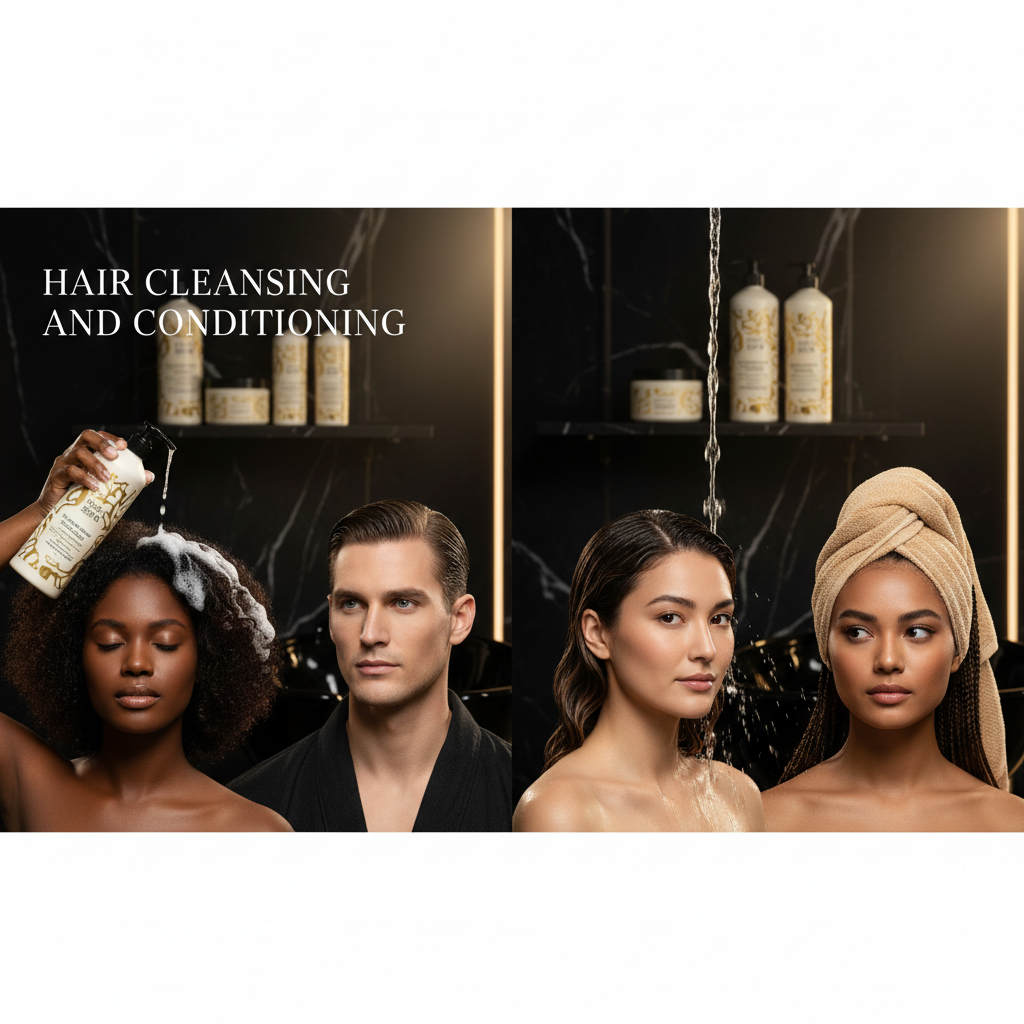
Quick answer: Hair Cleansing and Conditioning are essential practices that remove accumulated sebum, environmental pollutants, and product residue from the scalp and hair, while simultaneously replenishing moisture and smoothing the hair's outer layer. This twin approach helps maintain a healthy scalp environment and resilient hair fibres, reducing breakage and improving appearance. However, the optimal frequency and product choice for Hair Cleansing and Conditioning depend significantly on individual hair type, scalp condition, and lifestyle, meaning there's no universal "one size fits all" solution.
Key takeaways
- Cleansing removes impurities: Shampoos use surfactants to lift and wash away sebum, dirt, and product buildup from the hair and scalp.
- Conditioning restores and protects: Conditioners smooth the hair cuticle, detangle, and add moisture, protecting the hair fibre from damage.
- pH balance is crucial: Maintaining the scalp and hair's slightly acidic pH (4.5 to 5.5) helps keep the cuticle smooth and protects against microbial growth.
- Personalised approach is best: Optimal cleansing and conditioning frequency and product types vary widely based on individual hair characteristics and lifestyle.
- Minimising breakage: Proper techniques, like gentle detangling when wet, are vital to prevent hair fibre damage during cleansing and conditioning.
Hair Cleansing and Conditioning: What the Evidence Shows
Hair Cleansing and Conditioning are two distinct yet complementary processes crucial for maintaining the health and appearance of hair and scalp. Cleansing primarily focuses on removing unwanted substances, while conditioning aims to restore and protect the hair fibre after cleansing. Understanding the mechanisms behind each helps tailor a routine that supports optimal hair health.
The Purpose and Mechanism of Hair Cleansing
Hair cleansing, typically performed using shampoo, serves to remove sebum (the natural oil produced by scalp glands), dead skin cells, environmental pollutants, and styling product residue from both the scalp and hair shaft. While sebum is vital for moisturising the scalp and hair, its accumulation can lead to an oily appearance, dullness, and a favourable environment for certain microorganisms. Excessive buildup can also contribute to scalp irritation and discomfort.
Shampoos contain active ingredients called surfactants (surface-active agents). These molecules have a unique structure with a hydrophilic (water-loving) head and a lipophilic (oil-loving) tail. When mixed with water and applied to hair, the lipophilic tails of the surfactants attach to the oily residues and dirt on the hair and scalp. As water rinses through, the hydrophilic heads allow these oil-and-dirt clusters to be carried away, effectively emulsifying and suspending the impurities for removal. This process is essential for preventing the accumulation of substances that can weigh hair down, clog follicles, or irritate the scalp.
The Role and Mechanism of Hair Conditioning
Following shampooing, the hair's outer layer, known as the cuticle, can be slightly raised. This can make hair feel rough, lead to tangling, and increase susceptibility to damage and frizz. Hair conditioning is designed to counteract these effects, restoring smoothness, manageability, and protection to the hair fibre. You can learn more about The Science of Conditioners: How Hair Care Formulations Work in our detailed guide.
Conditioners typically contain a blend of ingredients including cationic surfactants (positively charged molecules), emollients, humectants, and sometimes hydrolysed proteins. The positively charged components are attracted to the negatively charged areas that can develop on the hair's surface after shampooing. This electrostatic attraction helps to smooth down the raised cuticle scales, neutralising the negative charge and reducing friction between individual hair strands. This process makes hair feel softer, easier to detangle, and appear shinier.
- Emollients (like fatty alcohols or natural oils) provide lubrication, enhancing the hair's slip and reducing mechanical damage during styling.
- Humectants (such as glycerine or panthenol) attract and retain moisture from the atmosphere, contributing to Hair Hydration: The Science Behind Keeping Hair Moist.
- Hydrolysed proteins can temporarily deposit onto the hair shaft, offering a sense of strength and improved texture.
The Importance of pH Balance in Hair Care
The natural pH of healthy scalp skin and hair fibres is slightly acidic, generally ranging from 4.5 to 5.5. This acidic environment is crucial for several reasons:
- Cuticle integrity: An acidic pH helps to keep the hair's cuticle scales tightly closed and flat, which contributes to smoothness, shine, and resistance to damage.
- Microbial balance: It supports the natural barrier function of the scalp and inhibits the growth of certain bacteria and fungi that can contribute to scalp issues like Dandruff: Causes and Treatments Explained.
Many conventional shampoos have an alkaline pH, which can cause the cuticle to swell and lift, making hair more vulnerable. Conditioners are typically formulated with an acidic pH to help neutralise the hair after shampooing, effectively re-sealing the cuticle, enhancing shine, and improving manageability. This pH adjustment is a key aspect of effective Hair Cleansing and Conditioning.
Factors Influencing Hair Cleansing and Conditioning Needs
The optimal approach to Hair Cleansing and Conditioning is highly individual, influenced by numerous factors. There is no one-size-fits-all recommendation.
Hair Type and Texture
- Fine hair: Can be easily weighed down by heavy conditioners or excessive product. May benefit from more frequent cleansing due to quicker oil accumulation.
- Thick hair: Often requires more intensive conditioning to ensure even coverage and moisturisation.
- Oily hair/scalp: May necessitate daily or every-other-day cleansing to manage excess sebum. (See also Oily Scalp Care: Understanding and Managing Excess Sebum.)
- Dry hair/scalp: Benefits from less frequent cleansing (2 to 3 times per week) to preserve natural oils and more emollient-rich conditioners. (See also Hair Hydration: The Science Behind Keeping Hair Moist.)
- Curly or Afro-textured hair: Tends to be drier and can be more fragile, often requiring gentle, sulfate-free cleansers and rich, deeply moisturising conditioners. (See also Caring for Afro Hair and Moisturizing Afro-Textured Hair.)
Lifestyle and Environmental Factors
- Exercise: Frequent physical activity can increase sweat and oil production, potentially requiring more frequent cleansing.
- Environment: Exposure to pollution, humidity, or dry climates can influence how often hair needs to be cleansed and conditioned. Hard water, for instance, can leave mineral deposits on hair, affecting its texture and requiring specific cleansing strategies (see Hard Water and Hair Damage: Understanding the Impact on Your Hair).
- Product Use: Regular use of styling products can lead to buildup, necessitating clarifying washes. (See How to Do a Clarifying Wash: A Guide to Deep Hair Cleansing.)
Chemical Treatments and Damage
Hair that has undergone Chemical Hair Treatments: What They Are and How They Affect Hair (such as colouring, perming, or straightening) is often more porous and prone to dryness and damage. Such hair typically requires gentle, colour-safe shampoos and intensive, restorative conditioners to help maintain its integrity and longevity. Maintaining Colour-Treated Hair: A Guide to Longevity and Health provides further guidance.
Best Practices for Hair Cleansing and Conditioning
Adopting effective techniques can significantly enhance the benefits of your Hair Cleansing and Conditioning routine and minimise potential damage.
- Water Temperature: Start with lukewarm water to thoroughly wet the hair and help lift the cuticle slightly for effective cleansing. Finish with cooler water during the final rinse of conditioner to help seal the cuticle, locking in moisture and enhancing shine.
- Focus on the Scalp: When shampooing, concentrate the product and effort on the scalp. Gently massage the scalp with your fingertips (not nails) to stimulate blood circulation and dislodge dirt, oil, and product buildup. Allow the lather to run down the hair shafts to cleanse them without aggressive scrubbing, which can cause Hair Damage: Causes, Signs, and Solutions.
- Thorough Rinsing: Ensure all shampoo and conditioner are completely rinsed from the hair and scalp. Residue can lead to dullness, heaviness, and potentially scalp irritation.
- Conditioner Application: Apply conditioner primarily to the mid-lengths and ends of the hair, which are typically older and more prone to dryness and damage. Avoid applying heavy conditioners directly to the scalp, especially if you have fine hair or an oily scalp, as it can weigh hair down or exacerbate oiliness. For curly or Afro-textured hair, generous application from root to tip is often beneficial.
- Gentle Detangling: Hair is most fragile when wet. Use a wide-tooth comb or your fingers to gently detangle while the conditioner is still in your hair, working from the ends upwards. This minimises Hair Breakage.
- Product Selection: Choose products formulated for your specific hair type and concerns. For instance, those with sensitive scalps or fine hair may benefit from Sulfate-Free Shampoo Benefits, while those with dry hair might seek conditioners rich in emollients and humectants.
Comparing Conditioner Types
Choosing the right conditioner type is an important part of a comprehensive Hair Cleansing and Conditioning routine.
| Conditioner Type | Primary Benefit | Application Method |
|---|---|---|
| Rinse-out Conditioner | Daily detangling, cuticle smoothing, light moisture | Applied after shampoo, left on for 1-5 minutes, then thoroughly rinsed. |
| Leave-in Conditioner | Continuous hydration, heat protection, frizz control, detangling aid | Applied to damp hair after washing, not rinsed out. Often used before styling. |
| Deep Conditioner / Hair Mask | Intensive repair, moisture infusion, strengthening, increased elasticity | Applied to clean, damp hair, left on for 5-20 minutes (sometimes with heat), then rinsed. Used weekly or bi-weekly. |
When to Seek Professional Advice
While proper Hair Cleansing and Conditioning can significantly improve hair health, some persistent scalp or hair concerns may warrant professional evaluation. If you experience chronic scalp itching, excessive Hair Shedding (beyond typical daily loss), sudden or patchy Hair Loss, severe dandruff that doesn't respond to over-the-counter treatments, or persistent scalp irritation, it's advisable to consult a dermatologist or trichologist. They can diagnose underlying conditions and recommend appropriate medical treatments or management strategies.
Frequently asked questions about Hair Cleansing and Conditioning
How often should I wash my hair?
The ideal washing frequency varies greatly. Factors like hair type, scalp oiliness, lifestyle, and environment play a role. Those with oily scalps or who exercise frequently might need to wash daily or every other day. People with dry, curly, or chemically treated hair may find washing 2 to 3 times per week sufficient to preserve natural oils and moisture. Observe your hair and scalp to find your optimal schedule for Hair Cleansing and Conditioning.
Can washing my hair too often cause hair loss?
No, washing your hair too often does not cause Hair Loss (alopecia). Hair loss is typically related to follicular issues, genetics, or underlying health conditions. However, excessively aggressive washing or using harsh shampoos can lead to Hair Breakage if the hair fibre is mechanically stressed. Hair shedding, such as telogen effluvium, is also unrelated to washing frequency; seeing hairs come out during a wash is normal as it removes hairs already detached from the follicle.
What's the difference between shampooing the scalp and the hair?
When shampooing, the primary focus should be the scalp. The scalp produces sebum and accumulates dead skin cells and product buildup, which need to be thoroughly cleansed. The lather created on the scalp will naturally run down and gently cleanse the hair strands without the need for vigorous scrubbing, which can lead to friction and Hair Damage: Causes, Signs, and Solutions. Focusing on the scalp ensures effective cleansing where it's most needed.
Is it bad to skip conditioner?
Skipping conditioner regularly can leave hair vulnerable to damage. Conditioner helps to smooth the hair cuticle after shampooing, reducing tangling, frizz, and static. It also replenishes moisture, improves elasticity, and provides a protective layer against environmental stressors and mechanical damage. Without conditioner, hair may feel rougher, be harder to comb, and be more prone to Hair Breakage and dullness.
Do Watermans products help with Hair Cleansing and Conditioning?
Watermans Grow Me Shampoo is formulated with ingredients designed to cleanse the scalp and hair effectively, removing impurities while promoting a healthy scalp environment. Paired with Watermans Condition Me Conditioner, which helps to smooth the hair cuticle and replenish moisture, these products work together to support improved hair health and manageability. Watermans products are suitable for regular use as part of a comprehensive Hair Cleansing and Conditioning routine, aiming for stronger-feeling and fuller-looking hair.
Conclusion
Mastering Hair Cleansing and Conditioning is fundamental to achieving and maintaining healthy hair and scalp. By understanding the distinct roles of shampoos and conditioners, the importance of pH balance, and tailoring practices to individual hair needs, you can effectively remove impurities, replenish moisture, and protect your hair fibres. This informed approach not only improves hair's appearance and manageability but also supports overall scalp health, contributing to a vital foundation for stronger-feeling and more resilient hair.
Sources and references
- American Academy of Dermatology Association, "Hair care: How to wash your hair", aad.org
- Cosmetic Ingredient Review, "Safety Assessment of Alkyl Sulfates as Used in Cosmetics", 2010, cir-safety.org
- Gavazzoni Dias, Maria Fernanda Reese. "Hair Cosmetics: An Overview." International Journal of Trichology, vol. 7, no. 1, 2015, pp. 2-15. doi.org/10.4103/0974-7753.153926
- US Food & Drug Administration, "Hair Dyes & Hair Relaxers", fda.gov
- PubMed Central, "pH of shampoos: a review", 2014, ncbi.nlm.nih.gov/pmc/articles/PMC4158629/