Argan Oil for Hair: Understanding Its Benefits and How It Works
11 min read ·
Argan oil for hair is a popular cosmetic ingredient, derived from the Moroccan argan tree, primarily valued for its conditioning properties and ability to reduce the appearance of breakage.
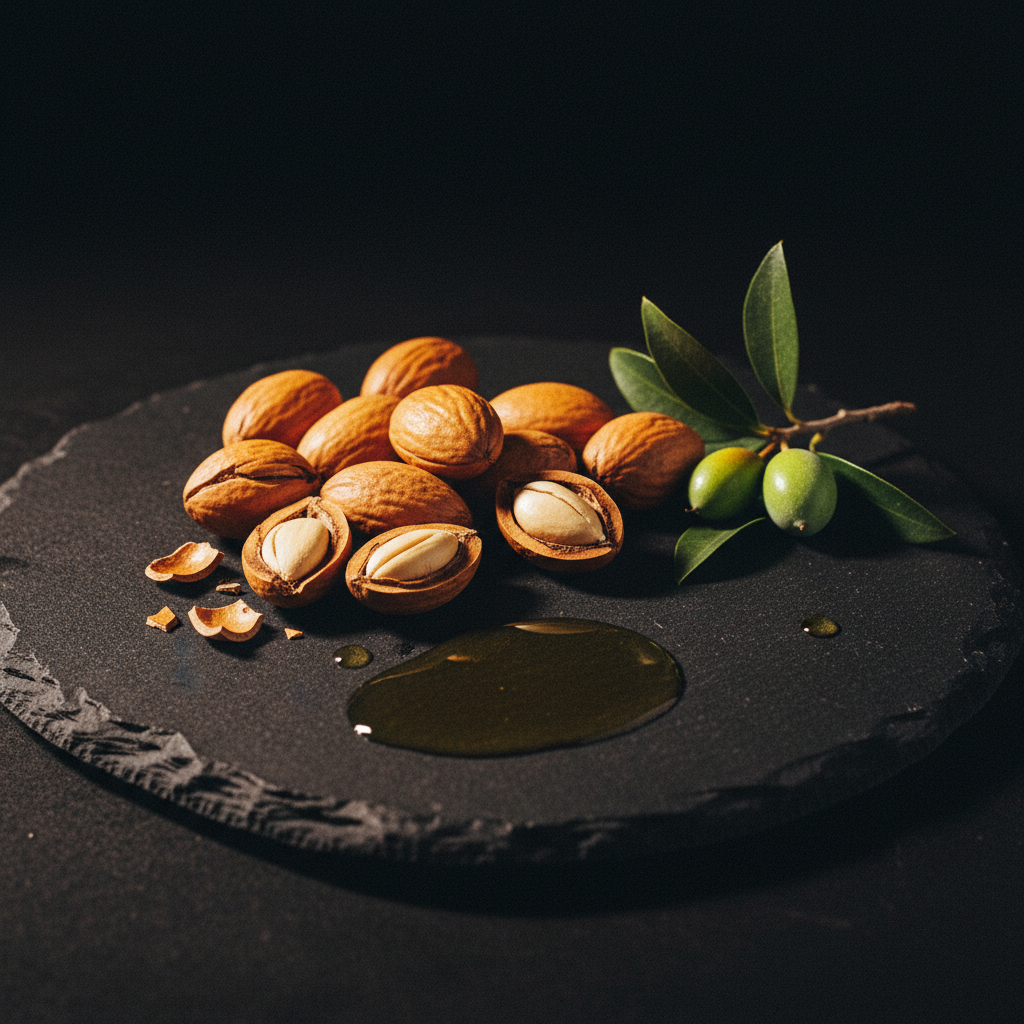
Quick answer: Argan oil for hair, sourced from the kernels of the Moroccan argan tree, is a widely used cosmetic ingredient renowned for its conditioning properties. It helps to moisturise hair, smooth the cuticle for enhanced shine, and improve elasticity, which can reduce hair breakage. While it offers notable cosmetic benefits, controlled research has not found that argan oil for hair directly treats hair loss or stimulates new growth; its primary benefits relate to the hair fibre's appearance and condition.
Key takeaways
- Argan oil is rich in fatty acids, particularly oleic and linoleic acids, and tocopherols (Vitamin E), which contribute to its conditioning properties.
- It effectively moisturises hair, reduces frizz, and enhances shine by smoothing the hair's outer cuticle layer.
- The oil can improve hair elasticity, which helps to reduce breakage and makes hair feel stronger and look fuller.
- While argan oil can soothe a dry, irritated scalp and contribute to a healthier-looking environment for hair, evidence does not support claims that it stimulates new hair growth or treats underlying hair loss conditions.
- Argan oil is suitable for most hair types, though individuals with very fine or oily hair may need to use it sparingly to avoid weighing hair down.
- It is generally well-tolerated, but performing a patch test is advisable for anyone with sensitivities or known nut allergies.
Argan oil for hair: what the evidence shows
Argan oil for hair, extracted from the nuts of the Argania spinosa tree native to Morocco, has a long history of use in traditional cosmetics. Modern scientific inquiry, largely through in vitro (laboratory) studies and observational research, supports its role in improving the cosmetic characteristics of hair rather than treating specific medical conditions like hair loss.
Hair moisturisation and shine
Argan oil's primary benefits stem from its rich composition of fatty acids. Oleic acid (an omega-9 fatty acid) and linoleic acid (an omega-6 fatty acid) make up approximately 80% of its fatty acid profile. These emollients work by forming a protective film on the hair surface, which helps to reduce moisture loss from the hair shaft. This surface coating also smooths the hair cuticle, the outermost layer of the hair fibre, allowing it to reflect light more uniformly. The result is hair that often feels softer, appears shinier, and is less prone to frizz.
This mechanism is common among many natural oils used in conditioning treatments. For instance, research published in journals such as the Journal of Cosmetic Science has highlighted how plant oils, including argan oil, can penetrate the hair shaft to some degree or form a protective layer, thereby reducing protein loss and increasing hair's hydrophobicity (water repellency). This contributes to improved manageability and appearance.
Improved elasticity and reduced breakage
By coating the hair shaft and enhancing its flexibility, argan oil can significantly improve hair's elasticity. When hair is more elastic, it can stretch further before snapping. This increased resilience means less breakage from daily styling, brushing, or environmental stressors. This cosmetic benefit helps hair to feel stronger and look healthier. It is crucial to distinguish this effect from "hair loss". Argan oil reduces breakage, which is the fibre snapping along its length, but it does not prevent hair shedding (hair leaving the follicle, as in telogen effluvium) or treat alopecia (a medical condition causing hair loss from the root). For a deeper understanding of fibre damage, refer to our guide on Understanding Hair Damage.
Scalp conditioning
Argan oil contains tocopherols, commonly known as Vitamin E, which are natural antioxidants. These antioxidants can help protect the scalp from oxidative stress caused by environmental factors like pollution and UV radiation. Additionally, some studies suggest that the anti-inflammatory properties of certain plant oils, including components found in argan oil, may help to soothe an irritated or dry scalp. By contributing to a healthier-looking and more moisturised scalp, argan oil can support an optimal environment for hair. However, comprehensive clinical trials are needed to fully substantiate claims that it directly stimulates hair follicles or offers a cure for specific scalp conditions. For more on general scalp care, see our article on Understanding Scalp Health.
What the evidence does not show for Argan oil for hair
While argan oil is highly effective for cosmetic conditioning, current scientific literature does not provide strong evidence that it stimulates hair follicles to grow new hair or treats conditions like androgenetic alopecia or other forms of hair loss. Any perceived "fuller hair" effect is typically due to reduced breakage and improved overall hair condition, making existing hair appear thicker and healthier. If you are experiencing hair loss, it's important to consult with a healthcare professional to identify the cause and discuss appropriate treatments. Organisations like the NHS provide evidence-based information on hair loss conditions.
How argan oil works on hair
Argan oil primarily functions as a conditioning and protective agent for both hair and scalp. Its unique molecular structure, particularly its high concentration of beneficial fatty acids, allows it to interact with the hair fibre in several key ways:
- Emollient Effect: The abundance of oleic and linoleic acids forms a thin, lubricating film on the hair surface. This film smooths down the overlapping cuticle scales, reducing friction between hair strands. This action makes hair feel softer, less prone to tangling, and easier to manage, while also enhancing its ability to reflect light for increased shine.
- Moisture Retention: By creating a smooth, sealed surface on the hair cuticle, argan oil helps to minimise transepidermal water loss from the hair shaft. This is particularly beneficial for hair that is dry, porous, or has been chemically treated, as these hair types tend to lose moisture more readily.
- Antioxidant Protection: The tocopherols (Vitamin E) present in argan oil are potent antioxidants. When applied to the scalp, these compounds can help neutralise free radicals, which are unstable molecules that can cause cellular damage and contribute to scalp irritation. This protective action supports a healthier-looking scalp environment.
- Improved Flexibility: The conditioning properties of argan oil contribute to increased hair elasticity. This means hair becomes less rigid and more pliable, making it less susceptible to breaking under mechanical stress from brushing, styling, or environmental factors. This can be especially helpful for hair that is frequently heat-styled or exposed to chemical treatments.
Signs Argan oil for hair could help you
You might find argan oil beneficial if you recognise any of the following characteristics in your hair or scalp:
- Dry, brittle, or coarse hair: If your hair feels rough to the touch, lacks softness, or appears dull, argan oil's moisturising properties can help restore suppleness and sheen.
- Dull or lacklustre appearance: Hair that looks flat or lacks natural shine can often benefit from argan oil's cuticle-smoothing action, which enhances light reflection.
- Frizz and flyaways: If your hair is prone to frizz, especially in humid conditions, argan oil can help to smooth the outer layer of the hair fibre and reduce unruly strands.
- Frequent hair breakage: If you notice small broken pieces of hair, particularly after brushing, styling, or using hair ties, argan oil can help improve hair's elasticity and reduce further fibre damage.
- Chemically treated or heat-damaged hair: Hair that has undergone colouring, perming, relaxing, or frequent heat styling often has a compromised cuticle. Argan oil can help to condition and protect these vulnerable areas, making hair feel smoother and more resilient.
- Dry or mildly irritated scalp: A flaky or itchy scalp, not associated with a medical condition, may feel more comfortable and hydrated with regular, gentle application of argan oil.
How to use Argan oil for hair
Argan oil can be integrated into your haircare routine in several ways, depending on your hair type, concerns, and desired outcomes. As with any oil, a little goes a long way, especially for finer hair.
| Usage Method | Application | Hair Type Recommendation |
|---|---|---|
| Leave-in Treatment | Apply 1 to 2 drops (or more for very long, thick, or coarse hair) to damp or dry hair, focusing on mid-lengths and ends. Distribute evenly. Do not rinse. Use daily or as needed for shine, frizz control, and conditioning. | All hair types, particularly dry, frizzy, or coarse hair. Fine or oily hair should use very sparingly and avoid application near the roots to prevent weighing hair down. |
| Pre-Shampoo Treatment | Massage a generous amount into dry hair and scalp. Leave for 30 minutes to a few hours (or overnight) before shampooing and conditioning as usual. This allows for deeper conditioning. | Beneficial for dry, damaged, or coarse hair; also helpful for a dry scalp. Not typically recommended for very oily hair or scalp unless used sparingly and rinsed thoroughly. |
| Styling Aid | Use a tiny amount (half to one drop) on dry hair to smooth flyaways, add shine, and provide a light, flexible hold. Can be applied before heat styling to help manage hair and enhance smoothness, or after to finish a style. | All hair types, especially for adding a finishing touch of shine and controlling frizz. |
| Hair Mask Enhancer | Add a few drops of pure argan oil to your favourite hair mask or conditioner for an extra boost of moisture and conditioning. Mix well before applying to hair as directed by the mask or conditioner. | All hair types, particularly beneficial for very dry or damaged hair. |
| Scalp Massage Oil | Warm a few drops between your palms and gently massage into a dry scalp. Leave for 15 to 30 minutes before shampooing. This can help to soothe a dry scalp and improve the scalp's feeling of hydration. | Beneficial for dry, flaky, or itchy scalps. Avoid if you have an oily scalp. |
Watermans and Argan Oil
Watermans products are formulated with carefully selected ingredients to support hair health and appearance. While specific Argan oil for hair formulations may vary across our product range, we prioritise ingredients known for their beneficial properties, such as natural oils and extracts that contribute to stronger-feeling, thicker-looking hair, and a healthier-looking scalp environment.
Frequently asked questions about Argan oil for hair
Does Argan oil for hair cause hair growth?
No, there is currently no strong scientific evidence to suggest that argan oil directly stimulates hair growth or acts as a treatment for hair loss conditions. Its benefits are primarily cosmetic; it helps to improve the condition, strength, and appearance of existing hair, which can make hair look fuller by reducing breakage and enhancing shine. If you are concerned about hair growth, consult a medical professional.
Can I leave Argan oil for hair in my hair overnight?
Yes, you can leave argan oil in your hair overnight as a deep conditioning treatment. Apply a generous amount to dry hair and scalp, focusing on the mid-lengths and ends, then cover your hair with a cap or towel to protect your bedding. Shampoo and condition as normal in the morning. This method is particularly beneficial for very dry, damaged, or coarse hair.
Is Argan oil for hair suitable for oily hair?
Argan oil can be used on oily hair, but it requires careful application. Use a very small amount (half a drop to one drop) and focus primarily on the hair ends, avoiding the scalp and roots to prevent further oiliness. Its lightweight nature means it's less likely to weigh hair down compared to heavier oils, but moderation is key. You might also consider it as a pre-shampoo treatment for oily hair.
How often should I use Argan oil for hair?
The frequency of use depends on your hair type and needs. For dry, damaged, or coarse hair, daily use as a leave-in treatment might be beneficial. For normal hair, 2 to 3 times a week may suffice. For oily or very fine hair, using it once a week or as a pre-shampoo treatment might be more appropriate. Observe how your hair responds and adjust accordingly.
Can Argan oil for hair help with frizz?
Yes, argan oil is highly effective at reducing frizz. Its rich fatty acid content helps to smooth the hair's cuticle, which is the outer layer of the hair shaft. When the cuticle lies flat, hair appears smoother, shinier, and less prone to absorbing humidity that causes frizz. Apply a small amount to damp or dry hair, focusing on frizzy areas, to help tame flyaways.
Conclusion
Argan oil for hair stands as a valuable ingredient in cosmetic haircare, offering significant benefits for improving the appearance and feel of hair. Its rich composition of fatty acids and antioxidants makes it an excellent choice for moisturising, enhancing shine, smoothing frizz, and reducing breakage. While it excels at these cosmetic functions and can contribute to a healthier-looking scalp environment, it's important to understand that current scientific evidence does not support claims that argan oil for hair directly promotes new hair growth or treats underlying medical causes of hair loss. For those seeking to improve hair condition, manage frizz, and protect against breakage, incorporating argan oil into a haircare routine can be a beneficial step towards achieving healthier-looking and more resilient hair.
Sources and references
- British Association of Dermatologists
- NHS
- American Academy of Dermatology Association
- PubMed Central, Evaluation of Hair Protective Effect of Argan Oil on Damaged Hair, 2017. DOI: 10.1007/s13346-017-0402-z
- Journal of Cosmetic Science, Effect of mineral oil, sunflower oil, and coconut oil on prevention of hair damage, 2001.
- International Journal of Trichology, Hair Cosmetics: An Overview, 2015. DOI: 10.4103/0974-7753.153920
- Journal of Analytical Chemistry, Characterization of Moroccan Argan Oil, 2008. DOI: 10.1007/s10337-008-0852-6
Find these ingredients in Watermans products
- Vitamin E — you will find this ingredient in our Hair Vitamins.
- Oleic Acid — you will find this ingredient in our Camellia & Black Castor Hair & Body Oil.
- Sunflower Seed Oil — you will find this ingredient in our Heat Protection Spray.