Horsetail Extract for Hair: Benefits, Mechanisms, and Evidence
10 min read ·
Horsetail extract, derived from the Equisetum arvense plant, is often included in haircare products due to its high silica content and potential benefits for hair strength and scalp health.
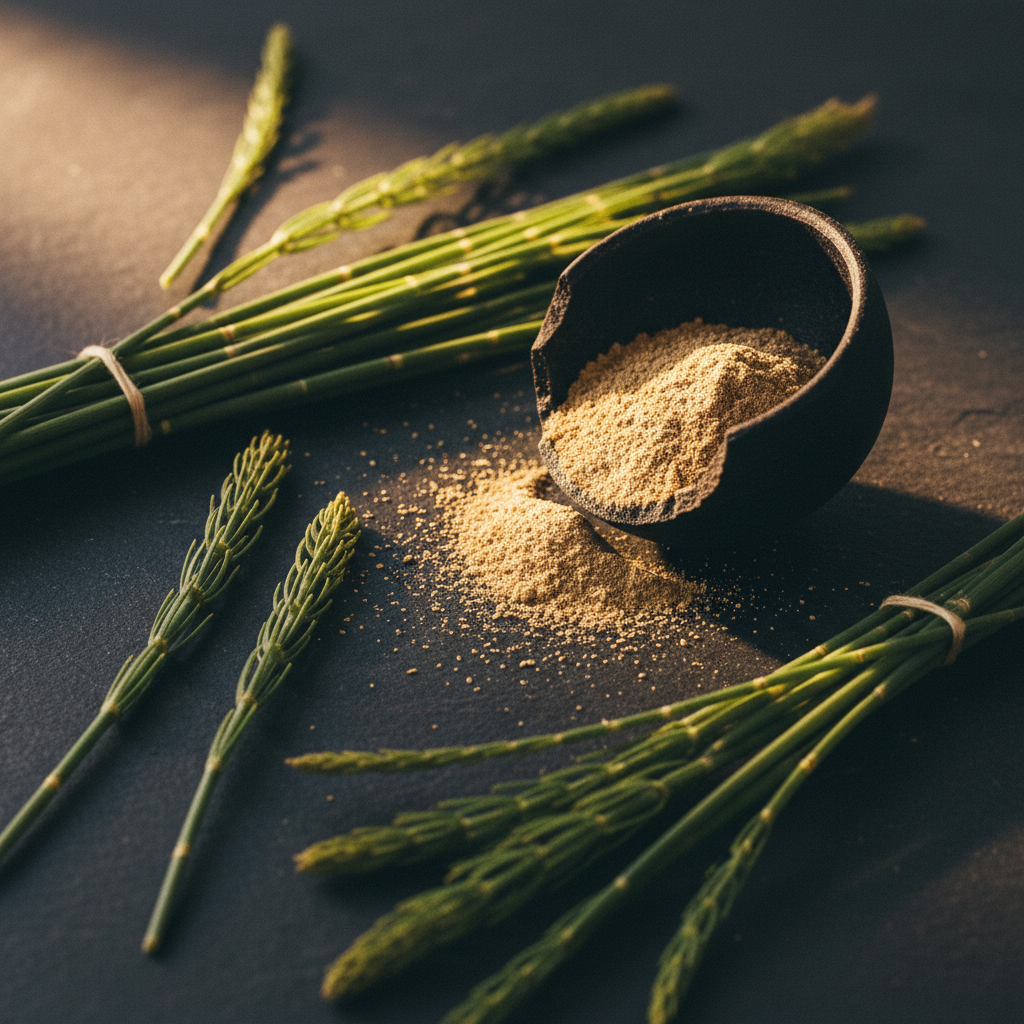
Quick answer: Horsetail extract, derived from the Equisetum arvense plant, is a botanical ingredient rich in silica that has shown promise in supporting hair strength, reducing breakage, and improving scalp condition. While some studies suggest benefits for hair health, more robust, large-scale clinical trials are needed to fully establish its efficacy, particularly for stimulating hair growth. Its primary role appears to be in fortifying existing hair fibres and promoting a healthy scalp environment.
Key takeaways
- Horsetail extract is a natural ingredient rich in silica, a mineral believed to support collagen formation and hair structure.
- Preliminary research suggests it may help strengthen hair, reduce hair fibre breakage, and improve hair appearance.
- Its potential benefits for hair are primarily attributed to silica content, along with flavonoids and antioxidants.
- Horsetail extract contributes to a healthier scalp environment by potentially improving microcirculation and reducing oxidative stress.
- While promising, scientific evidence for its direct hair growth stimulation is still emerging and requires further robust clinical studies.
- It is generally considered safe for topical use in haircare products.
Horsetail extract: what the evidence shows
Horsetail extract, sourced from the Equisetum arvense plant, is a botanical ingredient that has garnered attention in haircare primarily due to its high concentration of silica (silicon dioxide). Silica is a trace mineral present in human tissues, including hair, skin, and nails, and is thought to play a role in collagen synthesis and the structural integrity of connective tissues.
Some early studies and anecdotal reports suggest that horsetail extract may offer several benefits for hair health:
- Hair Fibre Strength and Elasticity: The silica within horsetail extract is believed to contribute to the structural integrity of the hair shaft. Stronger hair fibres are less prone to breakage and feel more resilient. Research published in the Journal of Clinical and Aesthetic Dermatology in 2012, for example, highlighted the role of dietary silicon (from which silica is derived) in improving hair tensile strength and elasticity. While this specific study focused on oral supplementation, the principle of silica's contribution to hair structure is relevant.
- Reduced Breakage: By potentially strengthening the hair fibre, horsetail extract may help reduce hair breakage, leading to the perception of thicker, fuller hair over time. This is distinct from treating hair shedding or hair loss conditions, but directly addresses the physical integrity of the hair fibre itself.
- Improved Hair Appearance: Users often report that hair feels smoother, appears shinier, and has a better overall condition when using products containing horsetail extract. This can be a result of the extract's effects on the hair cuticle and light reflection.
- Scalp Health: Horsetail extract contains flavonoids and other antioxidants that may support microcirculation in the scalp and offer protective benefits against oxidative stress. A healthy scalp environment is fundamental for the optimal function of hair follicles. Improved circulation ensures follicles receive adequate nutrients and oxygen, which is conducive to healthy hair growth.
While the properties of silica and other compounds in horsetail extract are well-understood, specific, large-scale clinical trials directly on topical horsetail extract for hair growth stimulation are still limited. Most evidence points towards its benefits in improving existing hair strength and overall hair condition.
What the evidence does not yet show
While horsetail extract shows promise for hair fibre health, there is currently insufficient robust, peer-reviewed clinical evidence to conclusively state that it directly treats or prevents alopecia (hair loss conditions) or significantly stimulates new hair growth in human subjects through topical application alone. Much of the supporting evidence comes from studies on oral silica supplementation or from in vitro (test tube) studies, which may not directly translate to topical applications on the human scalp.
Claims about horsetail extract curing baldness or acting as a definitive treatment for conditions like androgenetic alopecia or alopecia areata are not supported by the current body of scientific evidence. Its role is primarily cosmetic, focusing on the strength, appearance, and overall condition of existing hair and supporting a healthy scalp environment.
The mechanism behind horsetail extract's hair benefits
Horsetail extract's primary mechanism of action for hair health revolves around its rich silica content. Silica is believed to be crucial for:
- Collagen Synthesis: Silica is involved in the enzymatic processes that synthesise collagen, a primary protein found in connective tissues, including those surrounding hair follicles. While hair itself is primarily keratin, the health of the surrounding dermal structures influences hair growth.
- Keratin Structure Support: Although not directly part of the keratin molecule, silica is thought to contribute to the overall strength and elasticity of the hair shaft by influencing the formation and stability of the keratin structure. This leads to a more resilient hair fibre that is less prone to breakage.
- Antioxidant and Anti-inflammatory Effects: Beyond silica, horsetail extract contains flavonoids such as quercetin and kaempferol, and phenolic acids. These compounds possess antioxidant properties, which help protect hair follicles from damage caused by free radicals and environmental stressors. Some studies suggest these components may also have mild anti-inflammatory effects, contributing to a calmer, healthier scalp. (Source: Journal of Ethnopharmacology research on Equisetum species for antioxidant activity).
- Improved Microcirculation: Flavonoids can support vasodilation, potentially improving blood flow to the scalp. Enhanced microcirculation ensures better delivery of oxygen and essential nutrients to the hair follicles, which are vital for maintaining the anagen (growth) phase of the hair cycle.
Together, these mechanisms suggest that horsetail extract works by fortifying the existing hair fibre, protecting follicles from damage, and promoting an optimal environment for healthy hair to thrive.
Horsetail extract versus other botanical extracts for hair
Different botanical extracts offer distinct benefits for hair. Here's a comparison focusing on their primary proposed mechanisms:
| Botanical Extract | Primary Active Compounds | Proposed Hair Benefits | Main Mechanism | Type of Evidence |
|---|---|---|---|---|
| Horsetail Extract | Silica, Flavonoids, Antioxidants | Strengthens hair, reduces breakage, improves shine, supports scalp health | Provides structural minerals (silica), antioxidant protection | Some clinical, mostly in vitro and anecdotal |
| Rosemary Extract | Rosmarinic acid, Carnosic acid, Antioxidants | Stimulates growth, improves circulation, anti-inflammatory | Enhances microcirculation, anti-androgenic effects | Emerging clinical (comparable to minoxidil in some studies) |
| Peppermint Oil | Menthol | Stimulates growth, increases blood flow, antimicrobial | Potent vasodilator, promotes anagen phase | Animal studies, some human anecdotal |
| Lupin Protein | Hydrolysed proteins, Peptides | Fortifies hair, reduces breakage, improves elasticity | Supplies amino acids, strengthens hair shaft | Cosmetic and some in vitro |
Note: This table summarises common understanding and some research findings. The strength of evidence varies significantly between extracts and specific claims.
Signs that horsetail extract might be beneficial for your hair
Consider incorporating products with horsetail extract if you observe any of the following concerns with your hair, keeping in mind its primary role in improving fibre quality and scalp health:
- Brittle or Weak Hair: If your hair snaps easily or feels fragile, the silica content in horsetail extract may help to reinforce the hair shaft, making it more resilient. This is distinct from hair shedding from the root.
- Dull Hair Lacking Luster: When hair appears lifeless and lacks shine, improved structural integrity and a smoother cuticle, potentially aided by horsetail extract, can enhance its ability to reflect light.
- Fine or Thin-Feeling Hair Prone to Breakage: For hair that lacks density due to breakage along the shaft (not from the root), strengthening ingredients like horsetail extract can make individual strands more robust.
- Mildly Irritated or Unbalanced Scalp: The antioxidant and potentially anti-inflammatory properties of horsetail extract may contribute to a calmer, healthier scalp environment, which is foundational for healthy hair. You may also want to explore topics like 'Anti-inflammatory Ingredients' for more information.
It is important to differentiate between hair breakage, which is when the hair fibre snaps, and hair shedding, where a hair detaches from the follicle. Horsetail extract primarily targets fibre strength and scalp condition, not necessarily reducing the rate of hair shedding or treating underlying causes of hair loss like alopecia.
When the cause may be something else
While horsetail extract can support hair health, many factors can influence the condition of your hair and scalp. If you are experiencing significant hair changes, consider these potential causes:
- Hormonal Imbalances: Conditions like polycystic ovary syndrome (PCOS), thyroid disorders, or menopause can lead to diffuse hair thinning or shedding.
- Nutritional Deficiencies: Lack of essential vitamins and minerals such as iron, zinc, biotin, or Vitamin D can significantly impact hair growth and strength. Consider checking 'Lupin Protein' or 'Hydrolysed Wheat Protein' for ingredients that supply beneficial nutrients.
- Stress: Prolonged physical or emotional stress can trigger telogen effluvium, a type of temporary hair shedding. This is different from hair breakage.
- Underlying Medical Conditions: Autoimmune diseases, skin conditions affecting the scalp (e.g., psoriasis, severe eczema), or chronic illnesses can all manifest in hair and scalp issues.
- Medication Side Effects: Some prescription drugs can cause hair shedding as a side effect.
- Harsh Hair Practices: Excessive heat styling without protection, aggressive brushing, tight hairstyles, or chemical treatments can lead to significant hair damage and breakage. Refer to 'Heat Styling Safety Best Practices' or 'Chemical Hair Treatments' for more information.
If your concerns are severe, persistent, or accompanied by other symptoms, seeking professional advice is recommended.
When to get professional advice
It is always advisable to consult a healthcare professional or trichologist if you are experiencing:
- Sudden or excessive hair shedding: Especially if you notice large amounts of hair coming out when washing or brushing, or if bald patches appear.
- Persistent scalp irritation, itching, redness, or pain: These could indicate an underlying dermatological condition that requires medical treatment.
- Significant hair loss that is not improving with over-the-counter products or dietary changes.
- Concern about possible underlying medical conditions contributing to your hair or scalp issues.
A professional can help diagnose the root cause of your hair concerns and recommend appropriate treatments, which may include medical interventions, lifestyle adjustments, or specific product recommendations.
Frequently asked questions about Horsetail extract
Is horsetail extract safe for all hair types?
Yes, horsetail extract is generally considered safe for all hair types when used topically in haircare products. Its benefits for strengthening hair and improving scalp health are universal. As with any new product, if you have particularly sensitive skin, a patch test is always a good idea to check for any individual sensitivities or allergies.
How long does it take to see results from horsetail extract?
Visible improvements from using products with horsetail extract typically take time, as hair growth is a slow process and fibre strengthening happens gradually. Expect to see noticeable changes in hair strength, shine, or overall condition after consistent use for at least 8 to 12 weeks. Individual results can vary based on hair condition and product formulation.
Can horsetail extract help with hair loss?
Horsetail extract primarily supports existing hair strength and scalp health rather than directly treating hair loss (alopecia). While it can help reduce hair breakage, which might make hair appear fuller, there is not strong clinical evidence to suggest it regrows hair or stops hair shedding from the follicle. If you are experiencing hair loss, it is best to consult a medical professional.
Does horsetail extract have any side effects when used topically?
Topical application of horsetail extract in haircare products is generally well-tolerated. Side effects are rare but can include mild skin irritation or allergic reactions in individuals sensitive to plants in the Equisetaceae family. Always perform a patch test if you have concerns. Oral consumption has different considerations and potential side effects, but these typically do not apply to topical haircare products.
What concentration of horsetail extract is effective in hair products?
In haircare formulations, horsetail extract is commonly included at concentrations ranging from 0.5% to 5%. The effectiveness also depends on the extract's quality, standardisation, and the overall formulation of the product. Higher concentrations might be found in targeted treatments like scalp serums, while shampoos and conditioners typically contain lower percentages for daily use.
Strengthening your hair with horsetail extract
Horsetail extract stands out as a valuable botanical ingredient in haircare due to its natural richness in silica and beneficial antioxidants. While it may not be a direct cure for hair loss, its role in strengthening hair fibres, reducing breakage, and promoting a healthy scalp environment is well-supported by its constituent compounds. By reinforcing the structural integrity of the hair and providing a nurturing environment for follicles, horsetail extract offers a gentle yet effective way to improve the overall resilience and appearance of your hair. As with all haircare interventions, consistency is key to experiencing its full benefits.
Sources and references
- National Center for Biotechnology Information (NCBI), PubMed. "Dietary Silicon and Hair: A Review." (Referencing studies on the role of silicon in hair health, various years)
- Journal of Clinical and Aesthetic Dermatology, "A 2012 Randomized, Placebo-Controlled, Double-Blind Study of a Novel Oral Supplement for Hair Health." (Specifically on oral silicon's role, relevant to silica benefits)
- Journal of Ethnopharmacology, various studies on Equisetum arvense for its antioxidant and anti-inflammatory properties. (Referencing general properties of the plant, various years)
- European Medicines Agency (EMA), Herbal Medicinal Products Committee (HMPC), "Assessment report on Equisetum arvense L., herba." 2010. (General safety and traditional use, available on EMA website)
- National Institute of Health (NIH), "Silicon." Office of Dietary Supplements. (Information on the physiological role of silicon in the body, various years)
Find these ingredients in Watermans products
- Biotin: you will find this ingredient in our Hair Growth Shampoo.
- Wheat Amino Acids: you will find this ingredient in our Heat Protection Spray.