Treating Hair Loss
5 min read ·
Hair loss, or alopecia, is a common concern with various causes and a range of treatment options, from topical applications to lifestyle adjustments.
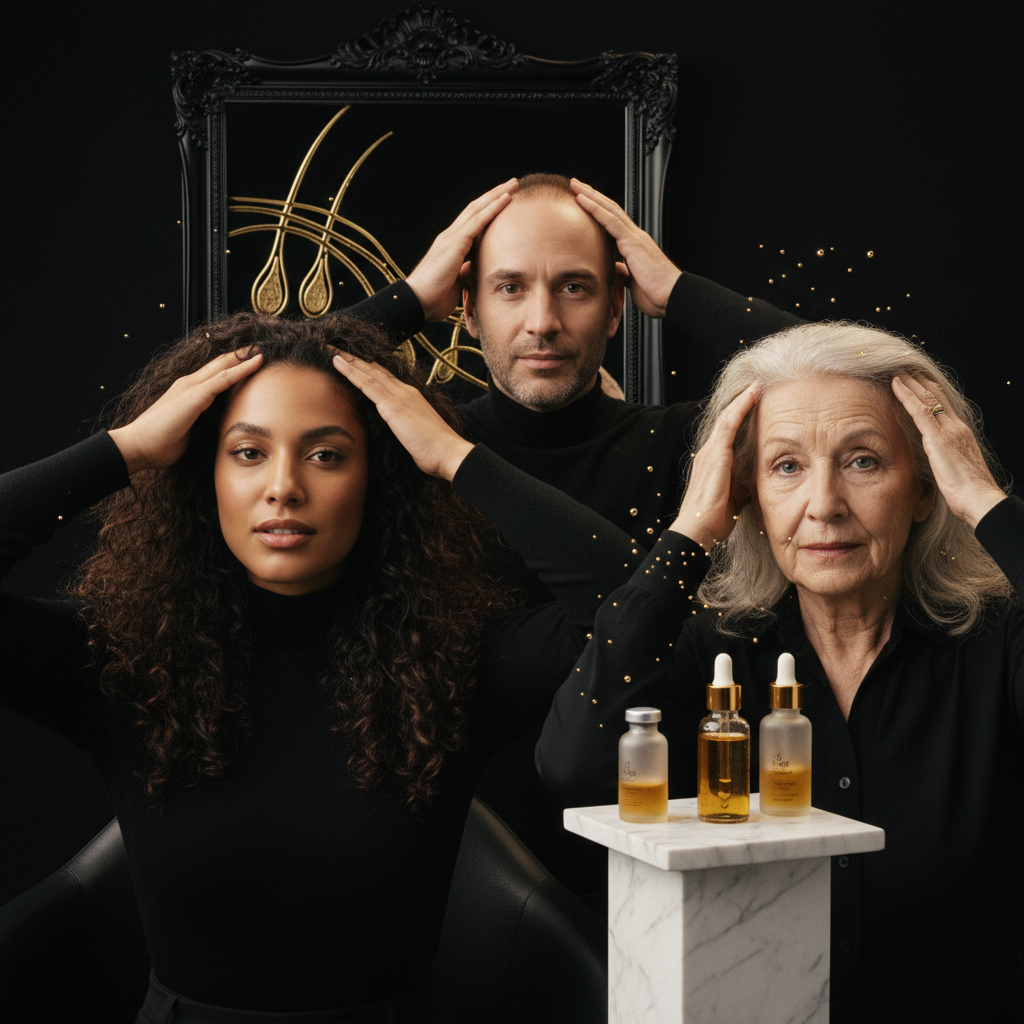
Understanding Hair Loss
Hair loss, medically known as alopecia, is a widespread condition affecting millions worldwide. It can manifest in many forms, from thinning hair to complete baldness, and can be temporary or permanent. Understanding the underlying causes is crucial for effective treatment.
Common Types of Hair Loss
- Androgenetic Alopecia (Pattern Hair Loss): This is the most common type, affecting both men and women. It's characterized by a receding hairline and thinning on the crown in men, and diffuse thinning over the scalp in women. It's primarily genetic and hormonal.
- Telogen Effluvium: This type of hair loss is often temporary and occurs when a significant number of hair follicles enter the resting (telogen) phase prematurely due to stress, illness, dietary deficiencies, or hormonal changes. Hair shedding typically begins 2-4 months after the inciting event.
- Alopecia Areata: An autoimmune condition where the immune system mistakenly attacks hair follicles, leading to sudden, patchy hair loss. It can affect the scalp and other parts of the body.
- Traction Alopecia: Caused by prolonged tension on the hair follicles, often due to tight hairstyles like braids, ponytails, or extensions.
- Anagen Effluvium: Rapid hair loss that occurs during the anagen (growth) phase, often a side effect of certain medications, such as chemotherapy.
Diagnosing Hair Loss
Accurate diagnosis is paramount for effective treatment. A healthcare professional, typically a dermatologist, will conduct a thorough examination, which may include:
- Medical History: Discussing family history, lifestyle, diet, and any recent stressors or illnesses.
- Physical Examination: Observing the pattern of hair loss, scalp health, and hair shaft quality.
- Tug Test: Gently pulling a small section of hair to see how many strands come out.
- Trichoscopy: Using a dermatoscopy to examine the scalp and hair follicles more closely.
- Blood Tests: To check for underlying conditions like thyroid imbalance, iron deficiency, or hormonal imbalances.
- Scalp Biopsy: In some cases, a small sample of scalp tissue may be taken for microscopic examination.
Treatment Approaches
Treatment for hair loss varies greatly depending on the cause, type, and severity. A multi-faceted approach is often the most effective.
Topical Treatments
- Minoxidil: An over-the-counter topical solution available in varying concentrations (e.g., 2% and 5%). It is applied directly to the scalp and is believed to work by widening blood vessels, improving blood flow to hair follicles, and prolonging the anagen phase of hair growth. Consistent use is required to maintain results.
- Caffeine-infused Shampoos and Conditioners: These products are often formulated to stimulate the scalp and nourish hair follicles. The caffeine is thought to penetrate the scalp and help counteract the effects of dihydrotestosterone (DHT), a hormone linked to androgenetic alopecia. Regular application helps maintain a healthy scalp environment, which is conducive to hair growth.
- Ketoconazole: An antifungal agent that, in some formulations, has shown anti-androgenic properties, making it beneficial for certain types of hair loss.
Oral Medications
- Finasteride: A prescription oral medication primarily used for male pattern baldness. It works by inhibiting the enzyme 5-alpha-reductase, thereby reducing the conversion of testosterone to DHT. This can slow down hair loss and, for some, stimulate new hair growth. It is generally not prescribed for women of childbearing age due to potential risks.
- Spironolactone: A diuretic with anti-androgenic effects, sometimes prescribed off-label for female pattern hair loss to block androgen receptors.
- Nutritional Supplements: Deficiencies in certain vitamins and minerals, such as iron, vitamin D, biotin, and zinc, can contribute to hair loss. Supplementation may be recommended if deficiencies are identified through blood tests. A balanced diet rich in these nutrients is always foundational.
Lifestyle and Hair Care Practices
- Gentle Hair Care: Avoid tight hairstyles that pull on the hair follicles (traction alopecia). Use wide-tooth combs and be gentle when brushing wet hair. Minimize excessive heat styling.
- Balanced Diet: Ensure adequate intake of protein, vitamins, and minerals essential for hair health. Iron-rich foods, lean proteins, and fruits and vegetables are vital.
- Stress Management: Chronic stress can lead to telogen effluvium. Practices like meditation, yoga, or regular exercise can help mitigate stress.
- Scalp Health: Maintain a clean and healthy scalp. Regular, gentle cleansing helps remove product buildup and dead skin cells, promoting an optimal environment for hair growth.
Advanced Treatments
For more severe or persistent cases, advanced treatments may be considered:
- Platelet-Rich Plasma (PRP) Therapy: This involves drawing a patient's blood, processing it to concentrate the platelets, and then injecting the platelet-rich plasma into the scalp. Platelets contain growth factors that can stimulate hair follicle activity and promote hair growth.
- Low-Level Laser Therapy (LLLT): This non-invasive treatment uses red light to stimulate hair follicles. It is believed to increase cellular activity and improve blood flow to the scalp, which can encourage hair growth.
- Hair Transplant Surgery: A surgical procedure where hair follicles are moved from a donor area (typically the back or sides of the head) to areas of thinning or baldness. This is a permanent solution for some types of hair loss.
A Note on Expectation and Consistency
Treating hair loss often requires patience and consistent adherence to the chosen treatment regimen. Results are rarely immediate and can take several months to become noticeable. Regular follow-ups with a healthcare professional are advisable to monitor progress and adjust treatment as needed.
| Treatment Type | Mechanism of Action | Common Use Cases |
|---|---|---|
| Minoxidil | Improves blood flow, prolongs anagen phase | Androgenetic alopecia, telogen effluvium |
| Finasteride | Reduces DHT production | Male androgenetic alopecia |
| PRP Therapy | Growth factor stimulation | Various types of hair loss |
| Caffeine Shampoos | Stimulates scalp, nourishes follicles | Androgenetic alopecia, general hair thinning |
| LLLT | Increases cellular activity, blood flow | Androgenetic alopecia, telogen effluvium |
It is important to understand that while many treatments can significantly improve hair density and reduce shedding, not all hair loss is fully reversible. The goal is often to stabilise hair loss and maximise existing hair growth.
Find these ingredients in Watermans products
- Biotin, you will find this ingredient in our Hair Growth Shampoo.
- Zinc, you will find this ingredient in our Hair Vitamins.