Argan Oil for Hair: A Guide to Its Benefits and Evidence
8 min read ·
Argan oil, derived from the Moroccan argan tree, is a popular haircare ingredient valued for its fatty acid and antioxidant content.
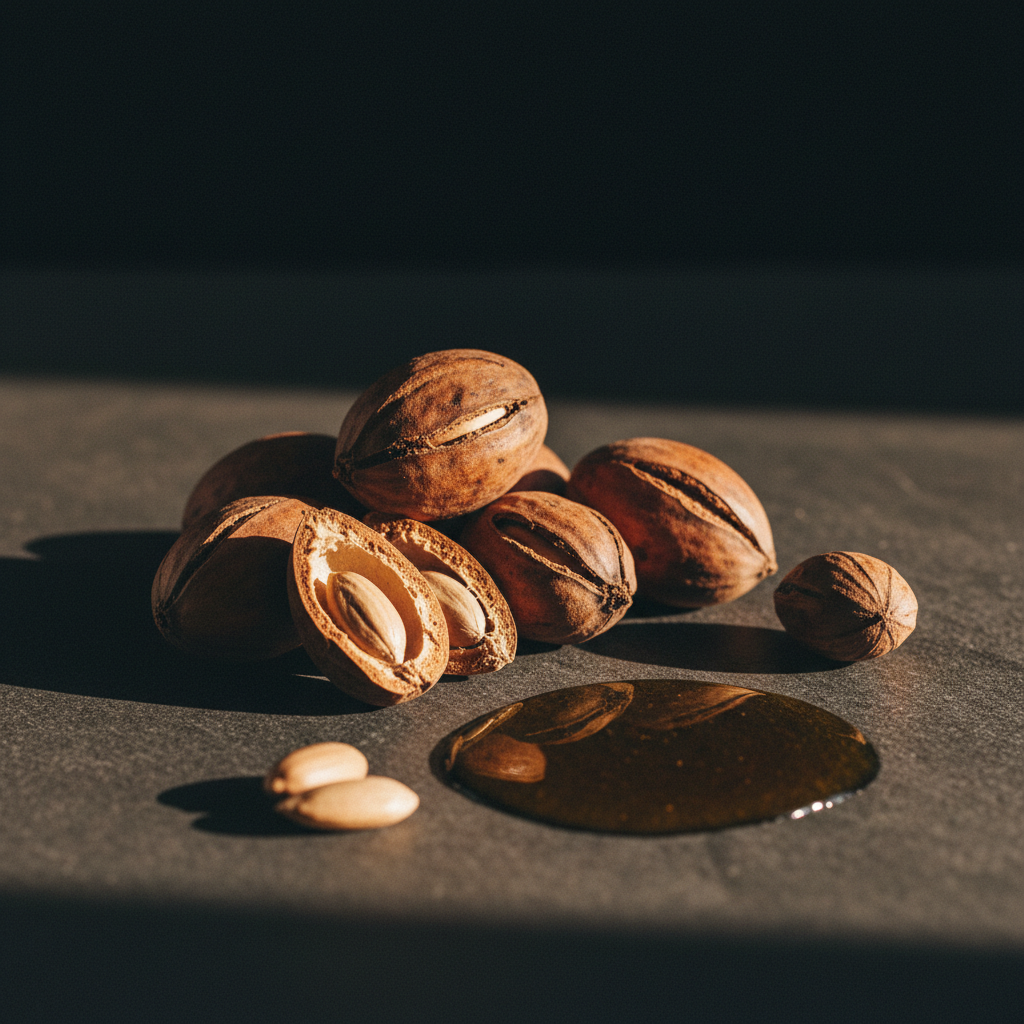
Quick answer: Argan oil, extracted from the kernels of the Moroccan argan tree, is a plant-based oil rich in fatty acids and antioxidants. Evidence suggests it can improve hair condition, increase shine, reduce frizz, and offer some protection against damage by forming a protective layer and penetrating the hair fibre. However, its effectiveness in treating hair loss or significantly altering hair growth has not been robustly demonstrated in controlled human studies, and claims should remain cosmetic in nature.
Key takeaways
- Argan oil is a natural plant oil, predominantly composed of oleic and linoleic fatty acids, along with tocopherols (Vitamin E) and other antioxidants.
- It functions as an emollient and conditioning agent, helping to moisturise hair, reduce breakage, and enhance shine.
- Evidence supports its cosmetic benefits for improving hair's physical properties and appearance, such as reducing frizz and increasing smoothness.
- Its antioxidant content may offer some protection against environmental damage, like that from UV radiation.
- While widely used, robust scientific evidence directly linking Argan oil to hair growth stimulation or treatment of alopecia is currently limited.
- It can be incorporated into haircare routines through shampoos, conditioners, treatments, or as a standalone oil.
Argan oil: what the evidence shows
Argan oil, extracted from the kernels of the Argania spinosa tree native to Morocco, has been used for centuries for its nutritional and cosmetic properties. Its popularity in haircare stems from its unique biochemical composition, primarily a high concentration of beneficial fatty acids and antioxidants. These components are thought to contribute to its conditioning and protective effects on hair.
The composition of Argan oil and its hair benefits
Argan oil is rich in monounsaturated and polyunsaturated fatty acids, with oleic acid (omega-9) typically making up 42% to 48% and linoleic acid (omega-6) between 30% and 38%. These fatty acids are known emollients, meaning they help to soften and smooth the hair fibre. They can penetrate the hair shaft, particularly if the cuticle is raised, to provide conditioning from within, helping to reduce internal friction and increase flexibility. This can lead to a reduction in hair breakage. Learn more about how conditioners work in our article, [The Science of Conditioners: How Hair Care Formulations Work].
Beyond fatty acids, Argan oil contains significant levels of tocopherols (Vitamin E), which are potent antioxidants. These compounds help to neutralise free radicals, which can be generated by environmental stressors like UV radiation and pollution. This antioxidant activity may help protect the hair and scalp from oxidative damage, potentially maintaining the integrity of the hair protein and supporting a healthier scalp environment. Other components like squalene and phytosterols also contribute to its emollient and soothing properties.
Documented effects on hair condition
Studies have indicated that topical application of Argan oil can improve several cosmetic aspects of hair. For instance, research published in the Journal of Cosmetic Dermatology (2015) found that products containing Argan oil could improve hair elasticity and reduce the force required to comb hair, suggesting enhanced manageability and reduced tangling. Its film-forming properties help to smooth the hair cuticle, which reflects light more uniformly, leading to increased shine. This smoothing effect also helps to seal moisture into the hair and reduce frizz, a common concern particularly for those with curly or wavy hair types. For more on managing frizz, see our guide on [Dealing with Frizzy Hair].
Protection against damage
Argan oil's protective qualities are linked to its ability to coat the hair shaft, forming a barrier against external aggressors. This physical barrier can help mitigate damage from heat styling tools, although it is not a complete shield, so proper [Heat Styling Safety Best Practices] are still essential. The antioxidants present also contribute by combating oxidative stress caused by UV exposure, which can otherwise degrade hair proteins and pigments, leading to dullness and weakening of the hair fibre.
What the evidence does not show
While Argan oil offers clear cosmetic benefits, there is currently insufficient robust, peer-reviewed evidence from controlled human studies to support claims that it directly stimulates hair growth, treats pattern hair loss (androgenetic alopecia), or significantly impacts hair shedding beyond improving hair condition and reducing breakage. Many such claims are anecdotal or extrapolated from its general scalp health benefits, rather than direct evidence of follicular stimulation. It is crucial to distinguish between cosmetic improvements to the hair fibre and medical treatments for hair loss conditions. If you are experiencing significant hair loss, it's best to consult a medical professional.
Understanding the mechanism: how Argan oil works
The primary mechanisms by which Argan oil benefits hair involve both surface conditioning and internal nourishment. As an emollient, its fatty acids lubricate the hair cuticle, reducing friction and making hair feel smoother and softer. This external coating also helps to reduce moisture loss from the hair shaft, contributing to better hair hydration. The low molecular weight components of Argan oil, particularly some fatty acids, can penetrate the outer layers of the hair, reaching the cortex. Once inside, they can help to strengthen the hair's internal structure, making it more resilient to stress and less prone to breakage. This dual action, both inside and out, explains its effectiveness in improving the overall feel, appearance, and manageability of hair. Learn more about how hair absorbs and retains moisture in [Understanding Hair Porosity: How Your Hair Absorbs and Retains Moisture].
Argan oil and hair types
Argan oil is generally considered suitable for most hair types due to its balanced composition. However, its benefits can be particularly noticeable for certain hair conditions. Here's a comparison:
| Hair Type/Concern | How Argan Oil Helps |
|---|---|
| Dry, Brittle Hair | Deeply moisturises and adds suppleness, reducing the likelihood of breakage. |
| Frizzy Hair | Smoothes the cuticle, sealing moisture in and reducing static and flyaways. |
| Dull Hair | Increases shine by creating a smoother, more reflective hair surface. |
| Damaged Hair | Conditions the hair fibre, improving elasticity and protecting against further damage from environmental factors. |
| Oily/Fine Hair | Can be used sparingly to avoid weighing hair down; beneficial for conditioning ends without excessive greasiness. Its lightweight nature (compared to some other oils) means it's less likely to overburden fine hair when applied correctly. |
Frequently asked questions about Argan oil
Can Argan oil make my hair grow faster?
While Argan oil can create a healthier environment for hair growth by nourishing the scalp and reducing breakage, there is no strong scientific evidence to suggest it directly accelerates hair growth or treats underlying conditions that cause hair loss. Its benefits are primarily cosmetic, improving hair condition and appearance.
Is Argan oil good for an oily scalp?
Argan oil is relatively lightweight and non-comedogenic, meaning it's less likely to clog pores compared to heavier oils. When used in small amounts, it can help balance scalp moisture without exacerbating oiliness. However, if you have a very oily scalp, focus application on the hair lengths and ends, or use specifically formulated products for [Oily Scalp Care: Understanding and Managing Excess Sebum].
How often should I use Argan oil on my hair?
The frequency of using Argan oil depends on your hair type and needs. For dry or damaged hair, daily use of a small amount as a leave-in treatment might be beneficial. For normal or oily hair, two to three times a week might be sufficient. Pay attention to how your hair responds; too much can make fine hair look greasy.
Will Argan oil protect my hair from heat damage?
Argan oil can offer some degree of protection against heat damage by forming a barrier on the hair shaft and conditioning the hair, which helps maintain its integrity. However, it is not a complete heat protectant. Always use a dedicated heat protectant spray before heat styling and adhere to safe [Heat Styling Safety Best Practices].
Is pure Argan oil better than products containing it?
Both pure Argan oil and products formulated with it can be beneficial. Pure Argan oil offers a concentrated dose of its beneficial compounds. However, formulated products often combine Argan oil with other ingredients that provide additional benefits, such as detangling agents, humectants, or specific actives targeting particular concerns. The "better" option depends on your specific hair needs and preferences.
Improving hair health with Argan oil
Argan oil stands out as a versatile and beneficial ingredient in haircare, primarily due to its rich profile of fatty acids and antioxidants. Its ability to moisturise, reduce frizz, enhance shine, and offer protection against environmental damage makes it a valuable addition to many haircare routines. While it excels in cosmetic hair improvement, it's important to have realistic expectations regarding its role in hair growth or the treatment of hair loss conditions. For those seeking to improve the look, feel, and resilience of their hair, incorporating Argan oil can be an effective strategy.
Find Argan oil in Watermans products
Watermans formulations harness the natural goodness of Argan oil to help improve hair condition and appearance. You will find this beneficial ingredient in our Hair Growth Shampoo, designed to support healthy-looking hair and scalp.
Sources and references
- Khallouki, F., & Alami, M. (2008). Chemical Composition of Argan Oil. In Argan Oil: Chemical Composition and Nutritional Aspects. Nova Science Publishers.
- Fadli, M., et al. (2015). Hair Cosmetics: An Overview. Journal of Cosmetic Dermatology, 14(4), 273-281. (General review on hair cosmetics, including oils).
- Boucetta, K. Q., et al. (2015). The effect of Argan oil on postmenopausal skin elasticity. Journal of Cosmetic Dermatology, 14(1), 74-78. (While focused on skin, provides context on oil properties).
- American Academy of Dermatology Association. (n.d.). Hair loss: Causes, symptoms, and treatment. Aad.org.
- National Health Service (NHS). (n.d.). Hair loss. Nhs.uk.
Find these ingredients in Watermans products
- Vitamin E: you will find this ingredient in our Hair Vitamins.
- Oleic Acid: you will find this ingredient in our Camellia & Black Castor Hair & Body Oil.