How to Refresh Curls Between Washes: A Practical Guide
9 min read ·
Learn how to refresh curls between washes to maintain definition and reduce frizz, extending your style for several days.
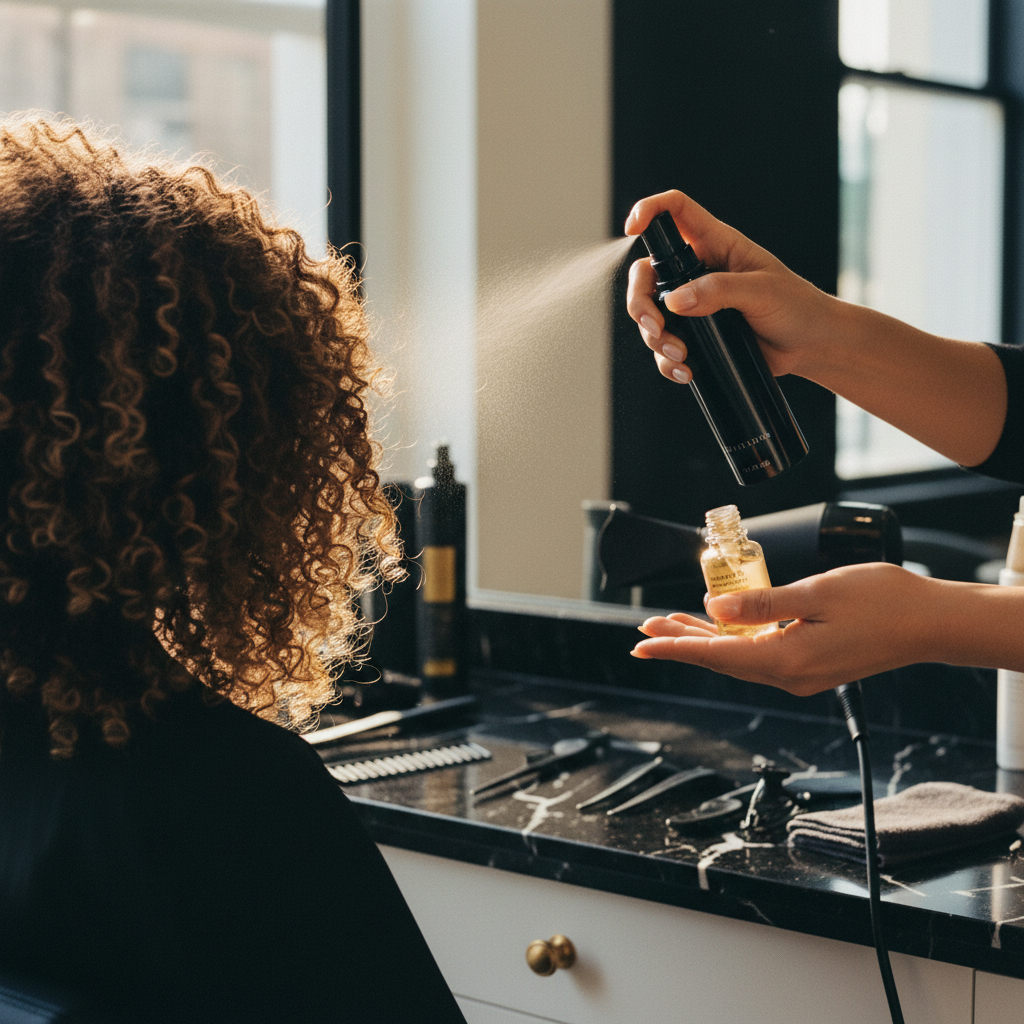
Quick answer: Knowing how to refresh curls between washes involves reintroducing a small amount of moisture and styling product to reactivate the curl pattern and combat frizz without fully washing the hair. This technique helps to maintain curl definition, reduce dryness, and extend the wear of your style for several days. Its effectiveness can vary based on your hair's porosity, curl type, and the products previously applied, making personalisation key.
Key takeaways
- Refreshing curls between washes reactivates existing products and reintroduces moisture, extending the life of your style.
- A fine mist of water is often the most important first step to dampen hair without saturating it.
- Targeted application of leave-in conditioners or curl refreshers helps redefine specific areas prone to frizz or loss of definition.
- Gentle handling, such as scrunching or finger-coiling, is crucial to reshape curls without causing frizz or breakage.
- Protecting refreshed curls overnight with silk pillowcases or "pineappling" helps preserve their integrity.
- The specific products and techniques will vary based on individual hair needs and environmental conditions.
How to refresh curls between washes: what the evidence shows
Refreshing curls between washes is a practical strategy to maintain your curl pattern and manage frizz without undergoing a full wash day. This process primarily relies on reintroducing moisture and reactivating any styling products already present in the hair fibre. The goal is to revitalise limp or frizzy curls, restoring their shape and bounce, thereby extending the time between washes.
Curly hair is inherently prone to dryness and frizz due to its structure, which makes it harder for natural scalp oils (sebum) to travel down the hair shaft evenly, as explained in articles on 'Caring for Curly Hair' and 'Dealing with Frizzy Hair'. The bends and curves in the hair fibre also create points where the cuticle can lift, leading to moisture loss and a rougher texture. When curls lose their definition, it's often because the hydrogen bonds that hold the curl's shape have been disrupted, typically by environmental humidity, friction, or simply movement throughout the day.
Scientific understanding of hair hydration, outlined in articles like 'Hair Hydration: The Science Behind Keeping Hair Moist', highlights the importance of water for maintaining hair's elasticity and pliability. When refreshing curls, a fine mist of water helps to temporarily re-form these hydrogen bonds, allowing the hair to revert to its natural curl pattern. Following this with a small amount of product (like a leave-in conditioner or curl cream) helps to lock in this moisture and provide light hold, ensuring the reformed curl pattern lasts.
Controlled research specifically on "curl refreshing" techniques is limited, as most studies focus on product efficacy for initial styling or overall hair health. However, the principles applied during refreshing align with established hair science:
- Moisture Reactivation: Water, applied sparingly, re-softens the hair and allows existing products to be distributed again. Too much water can dilute products or cause excessive swelling of the hair shaft, which might lead to frizz as the hair dries.
- Product Layering: Using a light leave-in conditioner or curl spray provides emollients and humectants. Humectants, such as glycerin or propylene glycol, draw moisture from the air or from the water mist into the hair, as discussed in 'Humectants: Understanding How They Hydrate and Protect Your Hair'. Emollients smooth the cuticle, reducing friction and enhancing shine.
- Mechanical Manipulation: Gentle scrunching or finger-coiling helps the hair fibre to clump together, reinforcing the curl pattern. This is a manual way of encouraging the hair to dry in its desired coiled shape.
Signs that your curls need refreshing include a noticeable loss of definition, increased frizz, a dry or rough feel to the hair, or tangling. The frequency with which you'll need to refresh depends on your individual hair type, local humidity, and how well your initial style was set.
What you can do to refresh curls
- Assess your curls: Identify areas that have lost definition or developed frizz. Often, these are the top layers, the hair around the face, and the ends.
- Lightly dampen: Use a fine-mist spray bottle to gently dampen the targeted sections. The aim is to make the hair just pliable, not soaking wet. This reactivates products already in your hair.
- Apply product: Dispense a small amount of leave-in conditioner, curl cream, or curl refresher spray into your palms. Emulsify it and gently scrunch or smooth it over the damp areas. Focus on mid-lengths and ends.
- Redefine: Gently reshape curls using your fingers. You can finger-coil individual curls or scrunch sections of hair upwards towards your scalp. Avoid raking your fingers through dry or damp curls, which can cause frizz.
- Allow to dry: Let your hair air dry completely. If you need to speed up the process, use a diffuser on a low heat and low speed setting, gently cupping sections of hair to preserve the curl pattern.
- Protect overnight: To maintain your refreshed curls, consider "pineappling" your hair (gathering it loosely on top of your head) or using a silk or satin pillowcase. These methods reduce friction and help preserve your curl definition.
When the cause may be something else
If your curls consistently lose definition quickly, feel excessively dry, or suffer from chronic frizz despite refreshing, the underlying cause might be more fundamental than needing a simple refresh. These issues could point to:
- Product build-up: An accumulation of styling products, natural oils, or environmental pollutants can coat the hair, preventing moisture from penetrating and weighing down curls. A clarifying wash, as described in 'How to Do a Clarifying Wash: A Guide to Deep Hair Cleansing', might be needed.
- Damage: Chemical treatments, excessive heat styling (see 'Heat Styling: Understanding Its Effects and How to Protect Your Hair'), or mechanical damage can disrupt the hair's cuticle, leading to increased porosity and difficulty holding a curl. The article 'Hair Damage: Causes, Signs, and Solutions' provides more details.
- Inadequate moisture routine: Your regular wash day routine might not be providing enough hydration. Review your use of conditioners (see 'The Science of Conditioners: How Hair Care Formulations Work') and moisturisers (see 'Hair Moisturizers: What They Are and How They Work'). 'How to Moisturise Afro Hair: A Guide to Hydration and Retention' offers specific guidance for tighter curl patterns.
- Hard water: Minerals in hard water can accumulate on the hair, making it feel rough and preventing products from working effectively. Understanding the impact of 'Hard Water and Hair Damage: Understanding the Impact on Your Hair' might be helpful.
- Scalp health issues: An unhealthy scalp can impact hair quality. For instance, an oily scalp might lead to limp roots, or dandruff can cause irritation. Refer to 'Understanding Scalp Health' or 'Dandruff: Causes and Treatments Explained'.
If you find your efforts to refresh curls are consistently ineffective, or if you notice significant hair shedding, breakage, or scalp discomfort, it's advisable to consult with a dermatologist or a trichologist. They can diagnose underlying conditions and recommend appropriate treatments or adjustments to your hair care regimen.
Comparing Refreshing Techniques
| Technique | Best for | Pros | Cons |
|---|---|---|---|
| Water-only mist | Light frizz, slight loss of definition, fine curls | Quick, reactivates existing product, adds no weight | May not be enough for very dry or frizzy hair, limited hold |
| Water + light leave-in | Moderate frizz, dry ends, medium to thick curls | Adds moisture, enhances definition, provides light hold | Can lead to product build-up if overused, potentially too heavy for fine hair |
| Water + curl gel/cream | Significant frizz, very defined curls, coarse hair | Stronger hold, maximum definition, good for humid climates | Can feel crunchy or stiff, higher risk of product build-up, may require more drying time |
| "Pineappling" | Overnight curl preservation | Protects curls from friction, maintains volume at roots | May not suit all sleeping positions, can flatten curls at the top if too tight |
| Diffusing | Speeding up drying, adding volume | Faster drying than air-drying, enhances curl clump formation | Can cause frizz if heat is too high or technique is incorrect, requires a specific tool |
Frequently asked questions about How to refresh curls between washes
How often should I refresh my curls?
The frequency of refreshing depends entirely on your hair type, environment, and how long you want to extend your wash day. Some people refresh daily, while others only do it once or twice between washes. Listen to your hair; if your curls are losing definition, feeling dry, or becoming frizzy, it's likely time for a refresh. Over-refreshing can lead to product build-up.
What products are best for refreshing curls?
For refreshing curls, water in a fine-mist spray bottle is often the most crucial component. Beyond that, light leave-in conditioners, curl refreshers, or diluted curl creams work well. Look for products that offer moisture without heavy oils or silicones, especially those with humectants. Watermans products like the 'Grow Me' Leave-In Conditioner can be suitable, providing hydration and manageability for revitalising curls.
Can I refresh my curls with just water?
Yes, you can often refresh your curls with just water. A fine mist of water helps to reactivate any styling products already in your hair and temporarily re-form the hydrogen bonds that define the curl pattern. This method works particularly well for curls that have only slightly lost definition or for fine hair types that are easily weighed down. However, it might not provide enough hold or moisture for very frizzy or dry hair.
How do I prevent my refreshed curls from getting frizzy later in the day?
To prevent frizz, ensure your hair is fully dry after refreshing, as damp hair is more prone to frizz. Using a lightweight, humidity-blocking curl product can also help. Avoid touching your hair excessively throughout the day, as this disrupts the curl pattern and lifts the cuticle. Protecting your hair in high humidity or during activities that cause friction can also make a difference.
Is refreshing curls bad for my hair?
No, refreshing curls is not inherently bad for your hair, provided you use appropriate products and gentle techniques. In fact, it can be beneficial by reintroducing moisture and extending the time between full washes, which can reduce manipulation and potential damage from excessive washing and styling. The key is to avoid over-saturating your hair or using too much product, which can lead to build-up.
How can I make my refreshed curls last longer?
To make your refreshed curls last longer, start with an effective refresh routine. Once your curls are set, protect them, especially overnight, using methods like "pineappling" or sleeping on a silk pillowcase. Avoid excessive touching, use a light hold product if needed, and consider a light bonnet or scarf in humid conditions. Understanding your hair's porosity can also help choose products that better seal in moisture for longer-lasting definition.
Conclusion
Mastering how to refresh curls between washes is an essential skill for anyone with textured hair, allowing for the maintenance of defined, hydrated curls without the need for frequent full wash days. By understanding the science behind curl structure and moisture, and employing targeted techniques with appropriate products, you can significantly extend the life of your styled hair. This approach not only saves time but also supports overall hair health by reducing mechanical stress. Watermans' range of hydrating and strengthening products, including their 'Grow Me' Leave-In Conditioner, can complement your refresh routine, supporting healthy-looking hair and scalp.
Sources and references
- American Academy of Dermatology Association. "Hair care: How to shampoo and condition." www.aad.org
- British Association of Dermatologists. "Hair and Scalp Conditions." www.bad.org.uk
- Journal of Cosmetic Science. "The science of hair care." (Various articles on hair structure, hydration, and product effects). (Specific article details vary by publication, general reference to journal content.)
- The National Institute of Environmental Health Sciences (NIEHS). "Hair Structure and Chemistry." www.niehs.nih.gov
- PubMed. (A database for biomedical literature, containing studies on hair properties and product efficacy). (Specific study details vary by topic, general reference to database content.)