Understanding Hair Porosity: How Your Hair Absorbs and Retains Moisture
9 min read ·
Understanding Hair Porosity is key to tailoring your haircare, as it describes how effectively your hair absorbs and retains moisture.
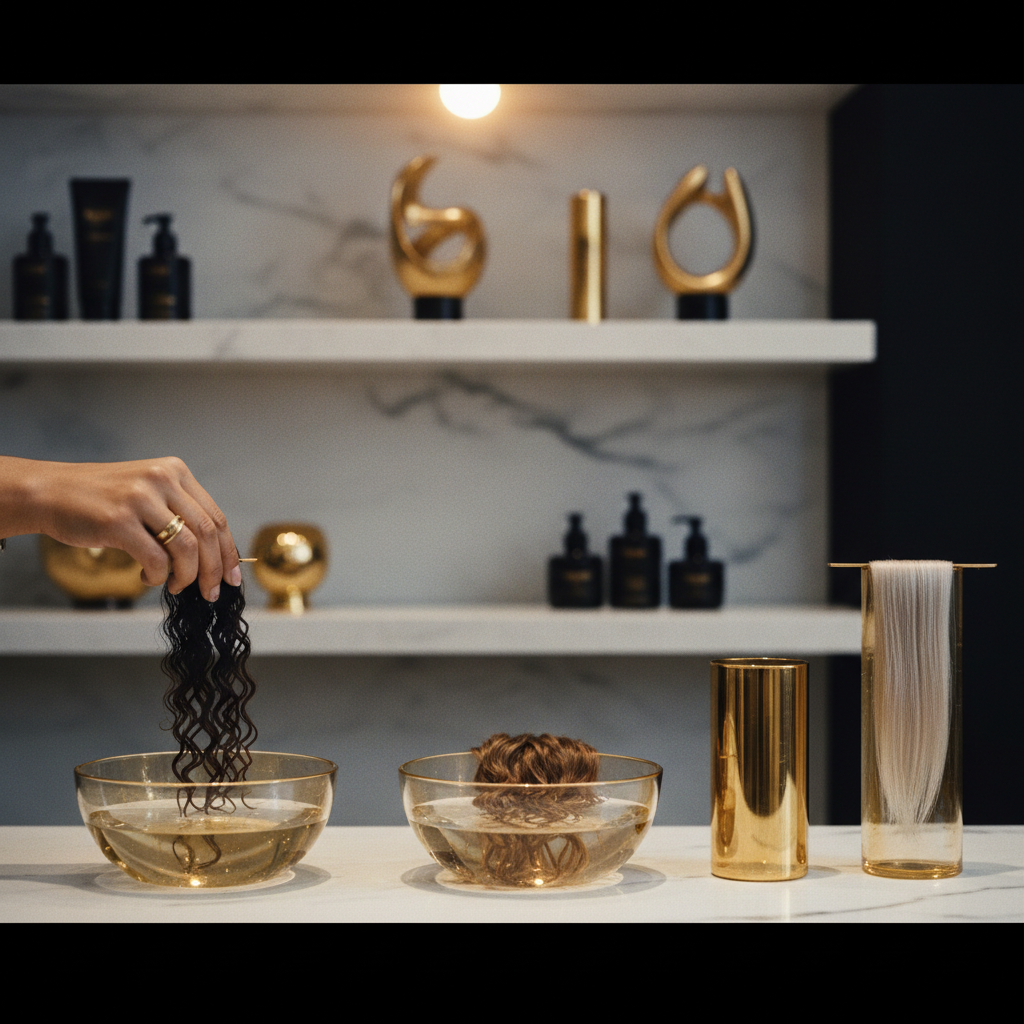
Quick answer: Understanding Hair Porosity refers to your hair's ability to absorb and hold moisture, primarily determined by the state of its outermost layer, the cuticle. This characteristic profoundly influences how your hair responds to products and treatments, making it a crucial factor in effective haircare. However, methods for assessing porosity at home can be subjective and influenced by external factors like product build-up or hair damage, so a professional assessment might offer more precision.
Key takeaways
- Hair porosity describes how easily your hair absorbs and retains moisture, linked to its cuticle layer.
- There are three main types: low (cuticles tightly closed), medium (balanced), and high (cuticles raised or damaged).
- Porosity affects how products penetrate your hair and how quickly it dries.
- Tailoring your haircare routine to your hair's porosity can improve moisture retention, reduce breakage, and enhance manageability.
- Factors like chemical treatments, heat styling, and environmental exposure can alter hair porosity over time.
Understanding Hair Porosity: what the evidence shows
Understanding Hair Porosity is fundamental to effective haircare. It refers to your hair's capacity to absorb and retain moisture, which is largely dictated by the condition of its outermost protective layer, the cuticle. The cuticle consists of overlapping, scale-like cells. When these scales lie flat, they create a smooth surface that resists water penetration. When they are raised or damaged, they allow water to enter and exit more easily.
The hair shaft is composed of three main layers: the medulla (the innermost core, not always present), the cortex (the middle layer, providing strength and colour), and the cuticle. The cuticle acts as the hair's first line of defence against environmental stressors and chemical treatments. Its integrity is central to how moisturised and healthy the hair appears and feels.
What the evidence does not show
While home tests are popular for assessing hair porosity, their accuracy can be limited. Factors like product build-up, water temperature, and the specific hair strand tested can all influence results, leading to inconsistent findings. Controlled research on the reliability of these at-home methods is limited. For the most precise assessment, a trichologist or experienced hairstylist might use more advanced techniques.
The mechanism: how hair porosity works
Hair porosity is categorised into three main types based on the cuticle's state:
- Low Porosity: Hair with low porosity has tightly closed and overlapping cuticle scales. This structure makes it challenging for moisture to penetrate the hair shaft. Once moisture is inside, however, it is well-retained. This hair type can often look very shiny due to the smooth surface reflecting light.
- Medium (Normal) Porosity: This hair type has cuticle scales that are neither too open nor too closed, allowing for a balanced exchange of moisture. It generally maintains good moisture levels, absorbs products effectively, and is often considered easy to manage and style.
- High Porosity: Hair with high porosity has raised or damaged cuticle scales, or gaps in the cuticle layer. This allows moisture to enter the hair quickly but also to escape just as rapidly. High porosity hair can often feel rough, appear dull, and be prone to frizz and breakage.
Factors that can lead to high porosity include genetics, frequent chemical treatments (such as colouring, bleaching, or perms, as discussed in 'Chemical Hair Treatments: What They Are and How They Affect Hair'), excessive heat styling, and environmental damage from UV radiation or harsh weather conditions.
Signs to look for: how to assess your hair's porosity
While laboratory tests offer precise measurements, there are several observational methods you can use at home to get an indication of your hair's porosity. For best results, ensure your hair is clean and free of product build-up.
The float test
Take a few clean, shed strands of hair (from your brush, not pulled) and place them into a glass of room-temperature water. Observe for 2 to 4 minutes.
- Sinks Quickly: Suggests high porosity, as the hair rapidly absorbed water.
- Floats in the Middle: Indicates medium porosity, with balanced absorption.
- Floats on Top: Points to low porosity, as the hair resists water absorption.
Remember that results can vary, and this test is more of an indicator than a definitive diagnosis.
The spray test
Mist a section of clean, dry hair with water. Observe how the water behaves.
- Absorbs Quickly and Darkens: High porosity, as water penetrates readily.
- Beads on the Surface for a While: Low porosity, due to resistance to water absorption.
- Gradual Absorption: Medium porosity, showing moderate water uptake.
The slide test
Take a single strand of hair between your thumb and forefinger. Gently slide your fingers up the hair shaft, towards the scalp.
- Bumpy or Rough Sensation: High porosity, indicating raised cuticles.
- Smooth Sensation: Low porosity, indicative of tightly closed cuticles.
What you can do: tailoring your haircare for porosity
Understanding your hair's porosity is a powerful tool for selecting the right products and techniques to improve its health and appearance. The goal is always to balance moisture and protein to maintain cuticle integrity and fibre strength.
For low porosity hair
Because of its tightly closed cuticles, low porosity hair resists moisture penetration but retains it well once inside. Focus on:
- Lightweight products: Opt for lightweight, water-based products that won't sit on the hair surface and cause build-up. Avoid heavy butters and oils that can create a barrier.
- Heat application: During deep conditioning, applying gentle heat (e.g., using a warm towel or a hooded dryer on a low setting) can help slightly lift the cuticles, allowing the product to penetrate more effectively. Steaming is also an effective method.
- Humectants: Ingredients like glycerine or hyaluronic acid (as discussed in 'Understanding Humectants: How They Hydrate and Protect Your Hair') can draw moisture from the air into the hair shaft.
- Clarifying shampoos: Regular use of a clarifying shampoo can prevent product build-up that might further impede moisture absorption. Consider 'How to Do a Clarifying Wash: A Guide to Deep Hair Cleansing'.
- Warm water: Wash hair with lukewarm water to help open the cuticle slightly for better cleansing and conditioning.
For medium porosity hair
Medium porosity hair is typically balanced and easier to manage. The key is to maintain this balance.
- Balanced products: Use a variety of products suitable for normal hair. You don't usually need extremely heavy or extremely light formulations.
- Regular conditioning: Continue with a good quality conditioner after shampooing. Deep condition monthly to maintain health.
- Avoid over-processing: While more resilient, medium porosity hair can still be damaged by excessive heat or chemical treatments. Maintain a healthy approach to styling and colouring.
For high porosity hair
High porosity hair readily absorbs moisture but loses it just as quickly due to its raised or damaged cuticles. The focus here is on sealing the cuticle and retaining hydration.
- Rich, emollient products: Use heavier creams, butters, and leave-in conditioners to provide lasting hydration and help seal the cuticle.
- Protein treatments: Regular protein treatments can temporarily fill gaps in the cuticle, strengthening the hair and reducing breakage. The frequency depends on the hair's condition, but bi-weekly to monthly might be beneficial.
- Sealing oils: After applying water-based moisturisers, use a sealing oil (e.g., argan, jojoba) to lock in moisture and protect the cuticle.
- Cooler rinses: Rinsing with cool water can help to flatten the cuticle, promoting shine and moisture retention.
- Minimise damage: Reduce heat styling and protect hair from sun exposure. Consider using heat protectants when heat styling is unavoidable.
Porosity and other haircare considerations
| Hair Porosity Type | Characteristics | Care Recommendations |
|---|---|---|
| Low Porosity | Tightly closed cuticles, products sit on top, takes long to dry, resists chemical treatments, shiny. | Lightweight, water-based products. Gentle heat with deep conditioners. Humectants. Clarify regularly. Warm water washes. |
| Medium Porosity | Balanced cuticles, good moisture absorption and retention, easy to style, generally healthy. | Maintain with balanced products. Regular conditioning. Avoid excessive heat/chemicals. Monthly deep conditioning. |
| High Porosity | Raised/damaged cuticles, absorbs moisture fast but loses it quickly, prone to frizz/breakage, dries quickly, often dull. | Rich, emollient products. Regular protein treatments. Sealing oils. Cooler rinses. Minimise heat/chemical damage. |
Frequently asked questions about Understanding Hair Porosity
Can hair porosity change?
Yes, hair porosity can change over time. While genetics play a role in your natural hair porosity, external factors like chemical treatments (e.g., colouring, perms), excessive heat styling, mechanical damage, and even environmental exposure (like sun or harsh winds) can raise the cuticles and increase porosity. Protecting your hair from these stressors can help maintain its natural porosity and health.
Does product build-up affect porosity tests?
Yes, product build-up can significantly affect the accuracy of at-home porosity tests, particularly the float test. Residue from conditioners, styling products, or oils can coat the hair strand, making it heavier and potentially causing it to sink even if it naturally has low or medium porosity. For accurate results, it's crucial to perform tests on freshly washed hair that is free from any product.
How does understanding hair porosity relate to hair health?
Understanding Hair Porosity is vital for maintaining hair health because it guides you in selecting appropriate products and care routines. For example, using heavy products on low porosity hair can lead to build-up and limpness, while using light products on high porosity hair might not provide enough moisture retention. Tailoring your approach ensures your hair gets the right balance of hydration and protection, leading to stronger, healthier-looking hair and less breakage.
Why does high porosity hair dry quickly?
High porosity hair dries quickly because its cuticles are raised or damaged, creating openings that allow water to evaporate rapidly from the hair shaft. While it absorbs water easily, it struggles to retain it, meaning moisture escapes as quickly as it enters. This quick drying can also contribute to frizz and dryness if not managed with appropriate sealing and conditioning products.
Is low porosity hair always healthy?
Not necessarily. While low porosity hair is often seen as healthy due to its strong, sealed cuticles, it can still experience issues. Its resistance to moisture penetration means it can become dry internally if not properly hydrated. Products can also sit on the surface, leading to build-up and a greasy appearance without truly moisturising the hair. Proper techniques are needed to ensure moisture actually enters the hair shaft.
Understanding Hair Porosity: conclusion
Understanding Hair Porosity is a cornerstone of effective haircare, offering clear insights into how your hair interacts with moisture and products. By identifying your hair's porosity type, you can move beyond generic advice and adopt a targeted approach, selecting treatments and products that genuinely meet its unique needs. This personalised strategy helps to optimise hydration, minimise damage, and foster healthier, more resilient, and better-looking hair.
Where Watermans fits
Watermans products are formulated to support overall hair health, irrespective of porosity. For those looking to improve hair condition and strength, which can be particularly beneficial for high porosity hair prone to breakage, Watermans Grow Me Hair Growth Shampoo and Conditioner provide a nourishing foundation. For enhanced moisture and repair, the Watermans Masque Me Hair Mask can offer deep conditioning. These products are designed to complement a tailored routine based on your hair's specific porosity needs.
Sources and references
- American Academy of Dermatology Association, "Hair care products: How to choose", Ongoing.
- PubMed Central, "The Biology of Hair Colour", 2007, DOI: 10.1007/s00403-007-0748-0. (General hair biology, supports cuticle structure).
- National Center for Biotechnology Information, "Hair Cosmetics: An Overview", 2015, DOI: 10.4103/0974-7753.153488. (Discusses chemical treatments and their impact on hair structure).
- The Journal of Clinical and Aesthetic Dermatology, "Hair Breakage in Women: Clinical Features and Diagnosis", 2016. (Supports effects of high porosity on breakage).