Curly Hair Styling Techniques: A Guide to Defining and Managing Curls
11 min read ·
Mastering Curly Hair Styling Techniques helps define your natural curl pattern, reduce frizz, and enhance hair health by applying products and methods suited to your unique hair type.
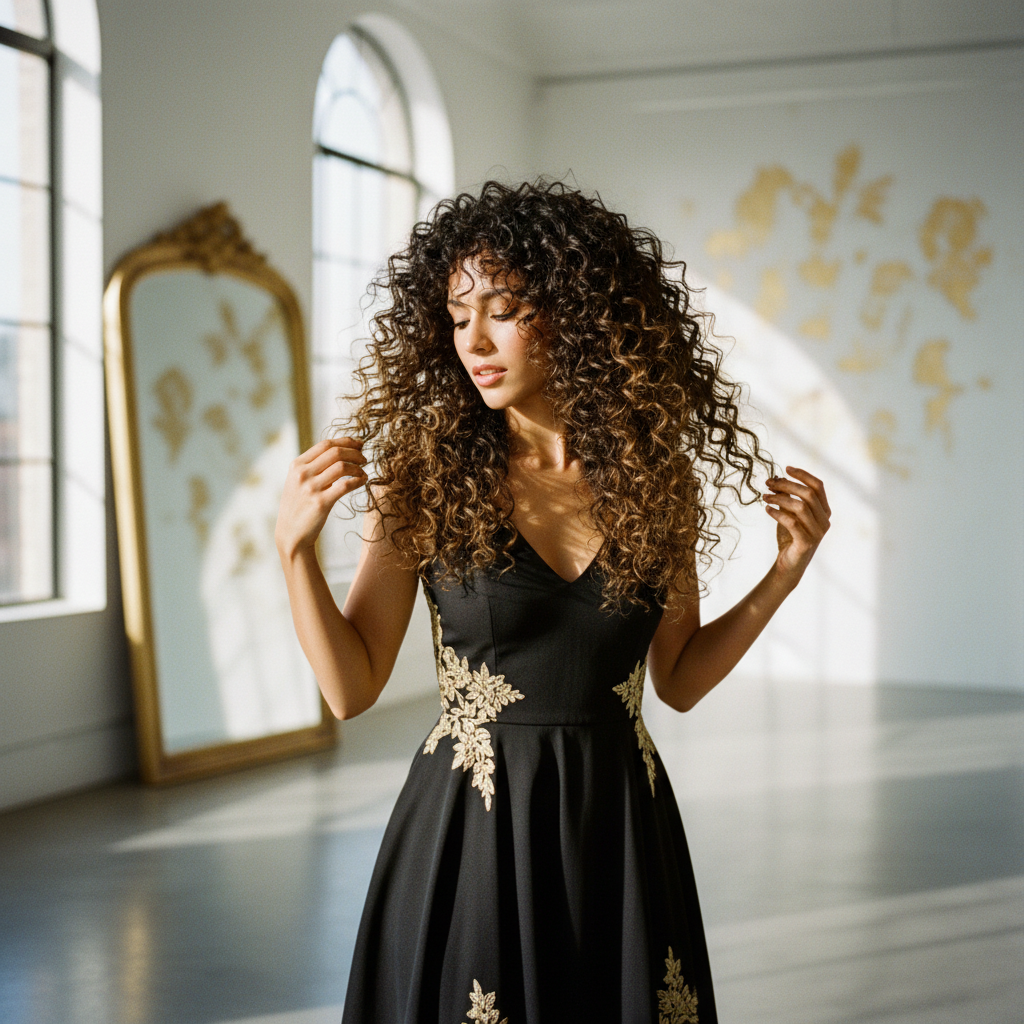
Quick answer: Curly Hair Styling Techniques are a collection of methods and product applications designed to enhance, define, and maintain the natural curl pattern, manage frizz, and improve the overall health and appearance of curly hair. These techniques are crucial because the unique structure of curly hair makes it prone to dryness and breakage, requiring specific approaches to hydration, product distribution, and gentle handling to achieve desired results. The most effective techniques vary significantly based on individual curl type, porosity, and density.
Key takeaways
- Curly Hair Styling Techniques should be tailored to your specific curl pattern, hair porosity, and density for best results.
- Starting with well-hydrated, wet hair is crucial for effective product distribution and curl clumping.
- Gentle handling, especially during detangling and product application, significantly reduces frizz and breakage.
- Understanding the role of leave-in conditioners, curl creams, gels, and oils is key to achieving desired definition and hold.
- Using a diffuser for drying can enhance curl formation and volume while minimising frizz.
- Regular moisture-focused care, alongside styling, supports the long-term health of curly hair.
Curly Hair Styling Techniques: what the evidence shows
Curly hair, with its characteristic helix shape, presents unique challenges and opportunities for styling. Unlike straight hair, where the hair follicle is round, curly hair typically emerges from an oval or elliptical follicle. This structural difference, coupled with an uneven distribution of keratin proteins, causes the hair shaft to twist and turn, forming curls, waves, or coils. This structure also means that the scalp's natural oils (sebum) struggle to travel down the entire length of the hair shaft, leaving curly hair more susceptible to dryness and, consequently, frizz and breakage.
Effective Curly Hair Styling Techniques focus on moisturising, defining, and protecting the hair to mitigate these issues. The goal is to encourage the hair's natural curl pattern, enhance shine, and reduce frizz without causing damage. Evidence suggests that a multi-step approach involving proper cleansing, conditioning, and styling product application is most beneficial. The success of any technique heavily relies on understanding your specific curl type, hair porosity (how well your hair absorbs and retains moisture), and hair density (the number of hair strands per square inch).
Why curly hair needs specific care
The unique architecture of curly hair fibres makes them inherently more fragile than straight hair. The twists and turns along the hair shaft create points of weakness where the cuticle (the hair's outer protective layer) is more prone to lifting and damage. This raised cuticle allows moisture to escape easily, leading to dryness, which in turn makes the hair stiff and susceptible to breakage. Cosmetic claims for curly hair products often focus on enhancing moisturisation, improving elasticity, and providing a protective barrier to smooth the cuticle and reduce friction, thereby supporting curl definition and reducing frizz.
The role of moisture in curly hair styling
Moisture is the cornerstone of successful Curly Hair Styling Techniques. Wet hair is more elastic and pliable, making it the ideal state for applying styling products and forming curl clumps. Water also acts as a carrier for products, helping them to distribute evenly along the hair shaft. Once the hair dries, the products form a cast or film that holds the curl pattern in place, preventing frizz and maintaining definition. Products often contain humectants, like glycerin or hyaluronic acid, which draw moisture from the air into the hair, and emollients, such as natural oils or silicones, which seal that moisture in. (You can learn more about this in our article on Humectants: Understanding How They Hydrate and Protect Your Hair and Hair Hydration: The Science Behind Keeping Hair Moist.)
Essential products and tools for Curly Hair Styling Techniques
Choosing the right products and tools is as important as the technique itself. Here's what to consider:
Products
- Leave-in conditioner: Applied after washing, a leave-in conditioner provides a foundational layer of moisture, detangles, and can protect hair from environmental stressors. It helps to smooth the cuticle and prepare the hair for styling. (See The Science of Conditioners: How Hair Care Formulations Work for more details).
- Curl cream or lotion: These products are designed to define curls, add moisture, and reduce frizz without providing a rigid hold. They typically have a creamy texture and are ideal for softer, more natural-looking curls. Ingredients often include emollients and humectants.
- Gel or mousse: For stronger hold and definition, gels and mousses create a cast around the curls. Once dry, this cast can be gently scrunched out ("scrunch out the crunch") to reveal soft, defined curls without frizz. Gels tend to offer a firmer hold than mousses. Some gels may contain film-forming polymers that provide long-lasting hold.
- Hair oil or serum: Applied as a final step, oils and serums seal in moisture, add shine, and can help to tame flyaways. They create a barrier that can protect the hair from humidity, further reducing frizz. Natural oils like argan, jojoba, or coconut oil are commonly used.
Tools
- Wide-tooth comb or detangling brush: Essential for detangling wet hair gently, starting from the ends and working up to the roots. This prevents snagging and breakage, especially important for fragile curly strands. Never brush dry curly hair, as this can disrupt the curl pattern and cause frizz.
- Microfiber towel or cotton t-shirt: Regular terrycloth towels can create friction, leading to frizz. A microfiber towel or a soft cotton t-shirt absorbs excess water gently, without roughing up the hair cuticle.
- Diffuser attachment: When blow-drying, a diffuser disperses the airflow, reducing direct heat and preventing frizz while enhancing natural curl formation and volume. Use on a low to medium heat setting to minimise potential heat damage.
- Hair clips: Used for sectioning hair during product application or for lifting roots during drying to create volume.
Common Curly Hair Styling Techniques
Most effective Curly Hair Styling Techniques begin on thoroughly wet, conditioned hair to maximise product absorption and minimise frizz.
1. Squish to Condish
This technique focuses on deep conditioning and encouraging curl clumping. After applying your regular rinse-out conditioner, add a small amount of water to your hair. Gently scrunch sections of hair upwards towards your scalp, making a "squishing" sound. This action helps water and conditioner penetrate the hair shaft more effectively and encourages curls to form defined clumps. Repeat until hair feels saturated and curls are clumping well. Rinse lightly or leave some conditioner in, depending on your hair's needs and product instructions.
2. Praying Hands Method
After applying your leave-in conditioner or curl cream, take a section of hair and place it flat between your palms, pressed together as if in prayer. Gently slide your hands down the length of the hair. This method ensures even product distribution along the hair shaft without disturbing the curl pattern, which helps to reduce frizz and enhance definition. It's particularly effective for reducing flyaways.
3. Raking and Clumping
"Raking" involves using your fingers like a comb to distribute styling products through wet hair. While effective for even coverage, for some curl types, this can separate curl clumps, leading to more frizz. To counteract this, follow raking with "clumping" techniques like scrunching or shaking the hair gently at the roots to encourage curls to reform into their natural groupings. Some individuals prefer to rake products through, then gently separate larger clumps into smaller, more defined ones while the hair is still wet.
4. Finger Coiling
This technique offers maximum curl definition. After applying styling products to a small section of wet hair, wrap the section around your finger from root to tip, creating a coil. Gently slide the hair off your finger. This manually forms very defined, individual curls. It's time-consuming but excellent for specific areas that need extra definition or for a polished look. This method also helps to ensure even product saturation for that particular curl.
5. Denman Brush Styling
Using a Denman brush (or a similar styling brush designed for curls) can help to create tension and smooth the hair cuticle while encouraging curl formation. Apply your styling products, then take small sections of wet hair and brush through them, curling the brush slightly at the ends. This technique can lead to very smooth, defined curl clumps with reduced frizz.
Drying methods for curly hair
How you dry your hair significantly impacts the final style.
Air Drying
This is the gentlest method, causing the least potential for damage. After applying products, simply allow your hair to dry naturally. To prevent frizz, avoid touching your hair while it's drying. Air drying can take several hours, depending on hair thickness and environmental humidity.
Diffusing
Using a blow dryer with a diffuser attachment allows for faster drying while maintaining curl definition and reducing frizz. Apply styling products, then gently cup sections of hair in the diffuser bowl and lift towards the scalp. Use a low to medium heat setting and low airflow. Move the diffuser around your head, drying the hair about 80 to 90% of the way, then allow it to air dry completely for less frizz.
Plopping
Plopping is a technique that uses a microfiber towel or cotton t-shirt to absorb excess water and help set the curl pattern without disturbing it. After applying styling products, flip your head over and gently "plop" your hair into the centre of the towel or t-shirt, wrapping it around your head. Leave it for 15 to 30 minutes, or longer, before air drying or diffusing. This can also help to create root volume.
When to get professional advice
While Curly Hair Styling Techniques can significantly improve the appearance and health of your hair, sometimes underlying issues may prevent desired results. If you experience persistent issues like excessive breakage, unusual hair shedding, scalp irritation, or very brittle hair despite trying various techniques and products, it's wise to consult a dermatologist or a trichologist. They can diagnose any scalp conditions, nutritional deficiencies, or hormonal imbalances that might be affecting your hair health, and provide tailored advice.
Frequently asked questions about Curly Hair Styling Techniques
What is the best product for defining curls?
The "best" product depends on your hair's needs, but curl creams, gels, and mousses are excellent for defining curls. Curl creams provide soft definition and moisture, while gels offer stronger hold and frizz control, creating a cast that can be scrunched out. Mousses provide a lighter hold and volume. Experiment with different textures and ingredients to find what works for your specific curl pattern and desired finish.
How often should I wash my curly hair?
Curly hair tends to be drier than straight hair, so it typically doesn't need to be washed daily. Washing 1 to 3 times a week is often sufficient. Over-washing can strip natural oils, leading to dryness and frizz. Co-washing (washing with conditioner only) or using a gentle, sulfate-free shampoo can help maintain moisture. Listen to your hair and scalp to determine the ideal frequency for you. (Refer to our guide on Sulfate-Free Shampoo Benefits).
Can styling techniques cause hair breakage?
Yes, improper Curly Hair Styling Techniques can unfortunately lead to hair breakage. Aggressive detangling, using fine-tooth combs on dry hair, excessive heat styling without protection, or harsh pulling and tugging can all cause the hair shaft to snap. Always be gentle when handling curly hair, especially when wet, and ensure your tools are appropriate for your hair type. Heat Styling Safety Best Practices explains how to minimise heat damage.
How can I make my curls last longer between washes?
To preserve your curls between wash days, protect them overnight. Sleeping on a silk or satin pillowcase reduces friction and frizz, or you can loosely pineapple your hair (gather it into a high, loose ponytail on top of your head). In the morning, you can refresh curls with a water mist, a leave-in conditioner spray, or a light curl revitaliser by gently scrunching. Avoid over-manipulating your hair.
What is the "curl cast" and should I remove it?
After applying gel or mousse to wet hair, as it dries, it forms a slightly stiff, crunchy layer around your curls known as a "curl cast". This cast helps lock in moisture, define the curls, and prevent frizz. Once your hair is completely dry, you can gently "scrunch out the crunch" by lightly scrunching your hair upwards. This breaks the cast, leaving you with soft, defined, frizz-free curls. Removing the cast is optional; some prefer the extra hold.
Watermans and Frojus for curly hair care
Watermans offers products designed to support overall hair health, which is vital for strong, resilient curls. The Watermans Grow Me range, for example, focuses on maintaining a healthy scalp and hair environment, which can contribute to less breakage and better growth. For those with curly hair, strong, healthy strands are more likely to hold their curl pattern and resist frizz. Watermans' gentle formulations aim to cleanse without stripping, providing a good foundation before applying your specific Curly Hair Styling Techniques. For afro, curly, or wavy hair, Frojus offers targeted products that provide intense moisture and definition, such as deeply hydrating conditioners and curl-enhancing creams, specifically formulated to meet the unique needs of these hair types. These products can be integrated into your styling routine to support curl health and enhance definition.
Conclusion
Mastering Curly Hair Styling Techniques is an art, but one rooted in scientific understanding of hair structure and proper care. By prioritising moisture, selecting the right products and tools, and applying gentle, deliberate techniques, you can transform frizzy, undefined curls into healthy, vibrant, and beautifully defined strands. Consistent effort and attention to your hair's unique needs will yield the best results, ensuring your curls are not just styled, but truly thrive. Experiment with different Curly Hair Styling Techniques to discover what works best for your hair, leading to greater confidence and healthier hair.
Sources and references
- American Academy of Dermatology Association, "Hair care tips for people with curly hair", aad.org, 2023.
- Journal of Cosmetic Science, "The Physics of Hair: From the Follicle to the Fiber", 2011.
- British Association of Dermatologists, "Hair loss and hair conditions", bad.org.uk, 2022.
- NCBI (National Center for Biotechnology Information), "Hair Cosmetics: An Overview", 2015, DOI: 10.1155/2015/309102.
- L'Oréal Research & Innovation, "Hair Structure", Science of Hair, 2021.
- PubMed, "Moisturizers for hair: a review", 2013.