Natural Oils: Understanding Their Benefits and Uses for Hair Health
9 min read ·
Natural Oils, derived from plants, have been used for centuries in haircare for their conditioning and protective properties, though individual results vary.
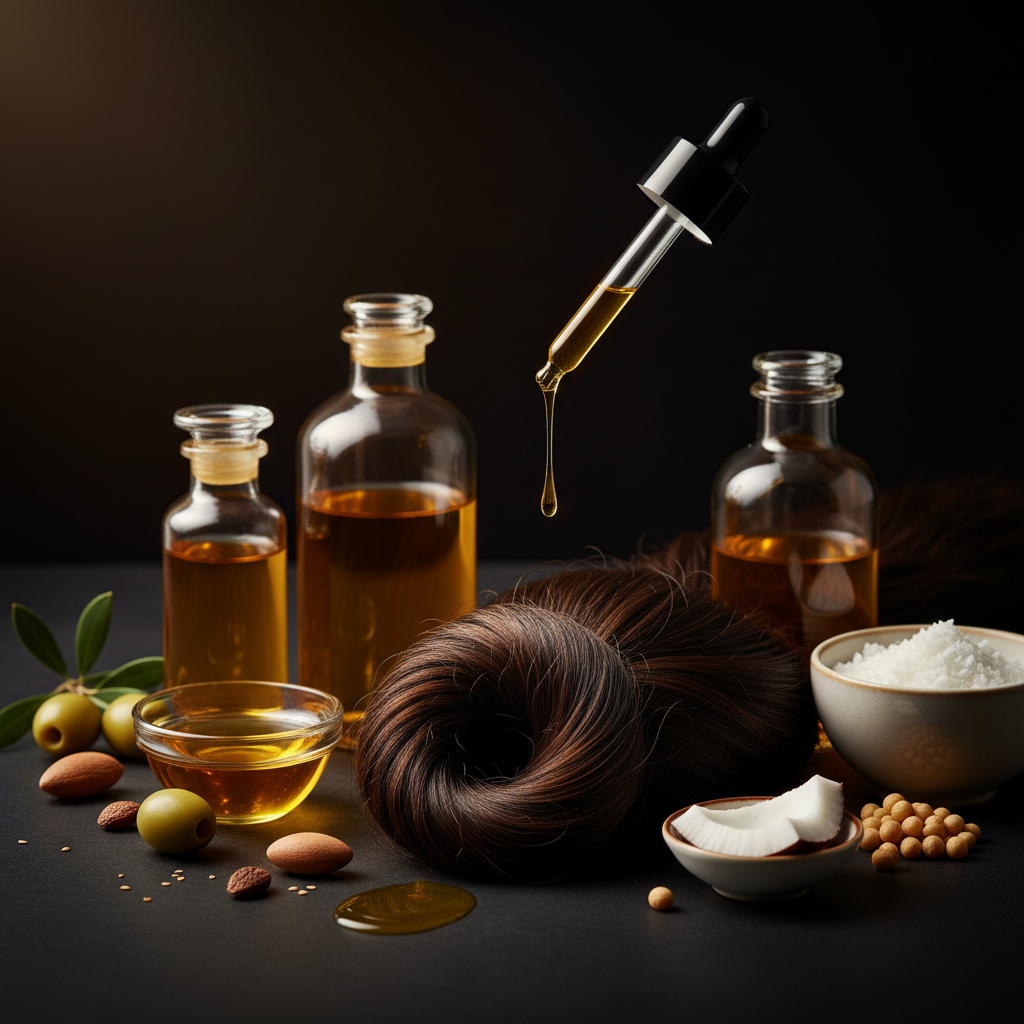
Quick answer: Natural Oils are lipid extracts from plants, widely used in haircare for their ability to moisturise, protect, and improve the feel and appearance of hair. Their efficacy depends on their specific fatty acid composition, which dictates whether they primarily penetrate the hair shaft or coat its surface. While many studies suggest benefits for hair health, individual responses to Natural Oils can vary significantly based on hair type and application methods.
Key takeaways
- Natural Oils are plant-derived lipids that can moisturise, strengthen, and protect hair fibres.
- Oils are categorised by their molecular structure: penetrating oils enter the hair shaft, while sealing oils coat the surface.
- Their benefits include reducing protein loss, enhancing shine, taming frizz, and supporting scalp health.
- Selecting the right Natural Oils depends on your hair type, porosity, and specific concerns.
- Application methods, such as pre-shampoo treatments or leave-in conditioners, influence their effectiveness.
- While widely beneficial, Natural Oils do not treat alopecia or severe hair loss conditions.
Natural Oils: what the evidence shows for hair
Natural Oils have been used for hair care across cultures for thousands of years, with modern science beginning to unravel the mechanisms behind their traditional uses. These oils are complex mixtures of fatty acids, vitamins, and other compounds extracted from seeds, nuts, and fruits. Their primary interaction with hair involves lipid replacement, cuticle smoothing, and forming a protective layer.
One of the most well-researched benefits of certain Natural Oils is their ability to penetrate the hair shaft. Hair is naturally hydrophobic (water-repelling), but it can absorb oils. The extent to which an oil penetrates depends on its molecular weight and fatty acid composition. Oils rich in lauric acid, like coconut oil, have a small molecular structure and a linear shape that allows them to pass through the outer cuticle layers and into the cortex. This internal penetration helps to reduce protein loss, which is a major contributor to hair damage from washing and styling, as noted in a study published in the Journal of Cosmetic Science in 2003.
Other Natural Oils, with larger molecules, tend to remain on the hair's surface. These oils act as emollients, filling in the gaps between the cuticle cells. This action smooths the hair's surface, leading to increased shine, reduced friction, and improved manageability. They also form a protective film that can help to prevent moisture loss from the hair shaft, thereby enhancing hydration and reducing frizz, particularly important for those dealing with Frizzy Hair. This surface coating can also offer a degree of protection against environmental stressors and mechanical damage.
Beyond direct benefits to the hair fibre, some Natural Oils also support scalp health. For example, oils with antimicrobial or anti-inflammatory properties can help maintain a healthy scalp microbiome and alleviate conditions like dryness or flakiness, contributing to overall Understanding Scalp Health. Jojoba oil, for instance, is structurally similar to sebum, the natural oil produced by the scalp, which means it can help to balance sebum production and moisturise the scalp without clogging follicles.
What Natural Oils do not show
It's important to clarify that while Natural Oils can improve hair condition and appearance, they are not a cure for follicular hair loss conditions such as alopecia. While some oils, like rosemary oil, have shown promising results in stimulating hair growth in some studies (e.g., a 2015 study in SKINmed comparing it to minoxidil for androgenetic alopecia), more extensive research is needed to definitively establish their efficacy in treating clinical hair loss. They primarily function as cosmetic treatments that enhance the health and resilience of existing hair, reducing breakage and improving cosmetic density, leading to fuller-looking hair. They cannot generate new hair follicles or reverse genetic hair loss.
The mechanism of action for Natural Oils
The effectiveness of Natural Oils stems from their unique chemical compositions, predominantly triglycerides composed of various fatty acids. These fatty acids dictate the oil's physical properties and how it interacts with hair:
- Penetration: Oils rich in saturated fatty acids with smaller molecular sizes (e.g., lauric acid in coconut oil) can penetrate the hair shaft. They bind to hair proteins, reducing protein loss during washing and improving hair strength and flexibility.
- Sealing and conditioning: Larger, often unsaturated fatty acids (e.g., oleic and linoleic acids in argan or olive oil) create a protective film on the hair surface. This film smooths the cuticle, reduces porosity, locks in moisture, and imparts shine. This is particularly beneficial for reducing Hair Damage and managing Hair Hydration.
- Scalp interaction: Some oils mimic the scalp's natural sebum (e.g., jojoba oil) or possess anti-inflammatory and antimicrobial properties (e.g., peppermint oil), helping to maintain a healthy scalp environment and balance oil production, as discussed in Sebum Regulation: Understanding and Managing Scalp Oiliness.
These mechanisms collectively contribute to healthier-looking, stronger-feeling, and better-conditioned hair.
Choosing the right Natural Oils for your hair
Selecting appropriate Natural Oils is crucial for achieving desired results. The table below outlines common oils and their primary characteristics:
| Oil Type | Primary Fatty Acid | Key Benefit | Penetration/Sealing | Hair Types Benefited |
|---|---|---|---|---|
| Coconut Oil | Lauric Acid | Reduces protein loss, moisturises | Penetrating | All, especially dry, damaged, or high porosity hair |
| Jojoba Oil | Eicosenoic Acid | Balances scalp sebum, non-greasy moisture | Penetrating | Oily scalp, dry ends, all hair types, fine hair |
| Olive Oil | Oleic Acid | Deep conditioning, adds softness | Sealing | Thick, coarse, dry, or damaged hair, low porosity hair |
| Argan Oil | Oleic, Linoleic | Adds shine, reduces frizz, conditions | Sealing | Dry, dull, frizzy, mature hair, medium to high porosity |
| Castor Oil | Ricinoleic Acid | Deep conditioning, humectant | Sealing | Dry, damaged, thick, coily hair |
| Sunflower Oil | Linoleic Acid | Lightweight conditioning, UV protection | Sealing | Fine to medium hair, general conditioning |
| Rosemary Oil | N/A (Essential Oil) | Supports scalp circulation, antimicrobial | Penetrating | All, especially for scalp stimulation and health |
Application methods for Natural Oils
The way you apply Natural Oils significantly impacts their efficacy. Consider these common methods:
- Pre-Shampoo Treatment: Apply a penetrating oil like coconut oil to dry hair 30 minutes to a few hours before shampooing. This can help reduce the swelling and damage caused by water absorption and subsequent shampooing, leading to less protein loss. Follow with a thorough hair cleansing.
- Leave-In Treatment/Conditioner: A small amount of a lightweight sealing oil, such as argan or jojoba, can be applied to damp hair after washing. This helps to seal in moisture, add shine, and reduce frizz, working similarly to a traditional leave-in conditioner. It's particularly useful for Caring for Curly Hair or Moisturizing Afro-Textured Hair.
- Scalp Treatment: Massaging a few drops of a suitable oil (e.g., jojoba for sebum balance, diluted rosemary or peppermint for stimulation) directly into the scalp can help address specific scalp concerns. This can improve scalp health, but ensure the oil isn't too heavy or applied in excess, especially for those with an Oily Scalp.
- Finishing Oil: Use a tiny amount of a lightweight sealing oil on dry hair to add gloss, smooth flyaways, and provide a polished look. This is a common technique to achieve fuller-looking hair.
Remember to start with a small amount and adjust based on your hair's response, particularly for Fine Hair, to avoid weighing it down.
When to seek professional advice
While Natural Oils are generally safe for cosmetic use, if you experience persistent scalp irritation, allergic reactions, significant hair shedding, or if you suspect an underlying condition like alopecia, it's best to consult a dermatologist or trichologist. These professionals can provide a proper diagnosis and recommend appropriate medical treatments, which Natural Oils cannot replace.
Frequently asked questions about Natural Oils
Can Natural Oils help with hair growth?
Some Natural Oils, such as rosemary and peppermint oil, have been anecdotally reported and, in some preliminary studies, shown to stimulate the scalp, which might support the appearance of healthier hair growth by improving circulation. However, for significant clinical hair loss (alopecia), these oils are not a primary treatment. They can enhance the condition of existing hair, making it less prone to breakage and supporting a healthy scalp environment.
Are Natural Oils suitable for all hair types?
Yes, there are Natural Oils suitable for nearly all hair types, but the choice depends on specific needs. Lighter oils like jojoba or argan are often better for fine or oily hair, while heavier oils like olive or castor oil can provide deep conditioning for thick, coarse, or very dry hair. Understanding your hair porosity and type is key to selecting the most beneficial oil and application method.
How often should I use Natural Oils on my hair?
The frequency of using Natural Oils depends on your hair type and concerns. For very dry or damaged hair, a pre-shampoo oil treatment can be used once or twice a week. As a leave-in or finishing oil, a small amount can be applied daily or as needed. Those with an oily scalp might opt for less frequent application or focus only on hair ends. Experimentation will help you find the optimal routine for your hair.
Can Natural Oils cause hair to become greasy?
Yes, improper use of Natural Oils can make hair appear greasy. This usually happens when too much oil is applied, especially for fine or low porosity hair, or if the oil is too heavy for the hair type. To avoid greasiness, start with a very small amount, focus on the mid-lengths and ends, and choose lighter oils if your hair is prone to becoming weighed down. A thorough cleanse with a suitable shampoo will remove excess oil.
What's the difference between essential oils and Natural Oils?
"Natural Oils" is a broad term that often refers to carrier oils, which are fatty oils extracted from plants (like coconut or olive oil) used to moisturise and condition. Essential oils, on the other hand, are highly concentrated aromatic compounds also extracted from plants. They are potent and typically used in very small, diluted amounts for their therapeutic properties, such as stimulating the scalp (e.g., rosemary or peppermint oil). Essential oils should never be applied undiluted to the hair or scalp.
Improving hair with Watermans and Natural Oils
While Natural Oils offer many benefits, Watermans products are formulated to provide targeted solutions for hair health. Many Watermans formulations incorporate beneficial botanical extracts and conditioning agents that work synergistically to support the hair and scalp. For instance, you'll find Rosemary Extract in our Hair Growth Shampoo, known for its scalp-stimulating properties, aligning with the benefits of rosemary essential oil. Our Camellia & Black Castor Hair & Body Oil contains Castor Oil, a rich emollient known for its deep conditioning properties, similar to the sealing benefits discussed for Natural Oils. By combining the natural goodness of plant-derived ingredients with advanced haircare science, Watermans aims to deliver products that support stronger-feeling, healthier-looking hair.
Sources and references
- Rele, J. S., & Mohile, R. B. (2003). Effect of mineral oil, sunflower oil, and coconut oil on prevention of hair damage. Journal of Cosmetic Science, 54(2), 175-192. (Study on protein loss prevention)
- Panahi, Y., Taghizadeh, M., Marzony, E. T., & Sahebkar, A. (2015). Rosemary oil vs. minoxidil 2% for the treatment of androgenetic alopecia: a randomized comparative trial. SKINmed, 13(1), 15-21.
- Dermatology journals, e.g., Journal of the American Academy of Dermatology, for general information on hair and scalp health.
- Professional dermatology associations, e.g., British Association of Dermatologists (BAD), American Academy of Dermatology (AAD), for general guidance on hair care and conditions.
Find these ingredients in Watermans products
- Sunflower Seed Oil: you will find this ingredient in our Heat Protection Spray.