Hair Porosity: Understanding How Your Hair Absorbs and Retains Moisture
8 min read ·
Hair Porosity refers to your hair's ability to absorb and retain moisture, which is largely influenced by the condition of its outermost layer, the cuticle.
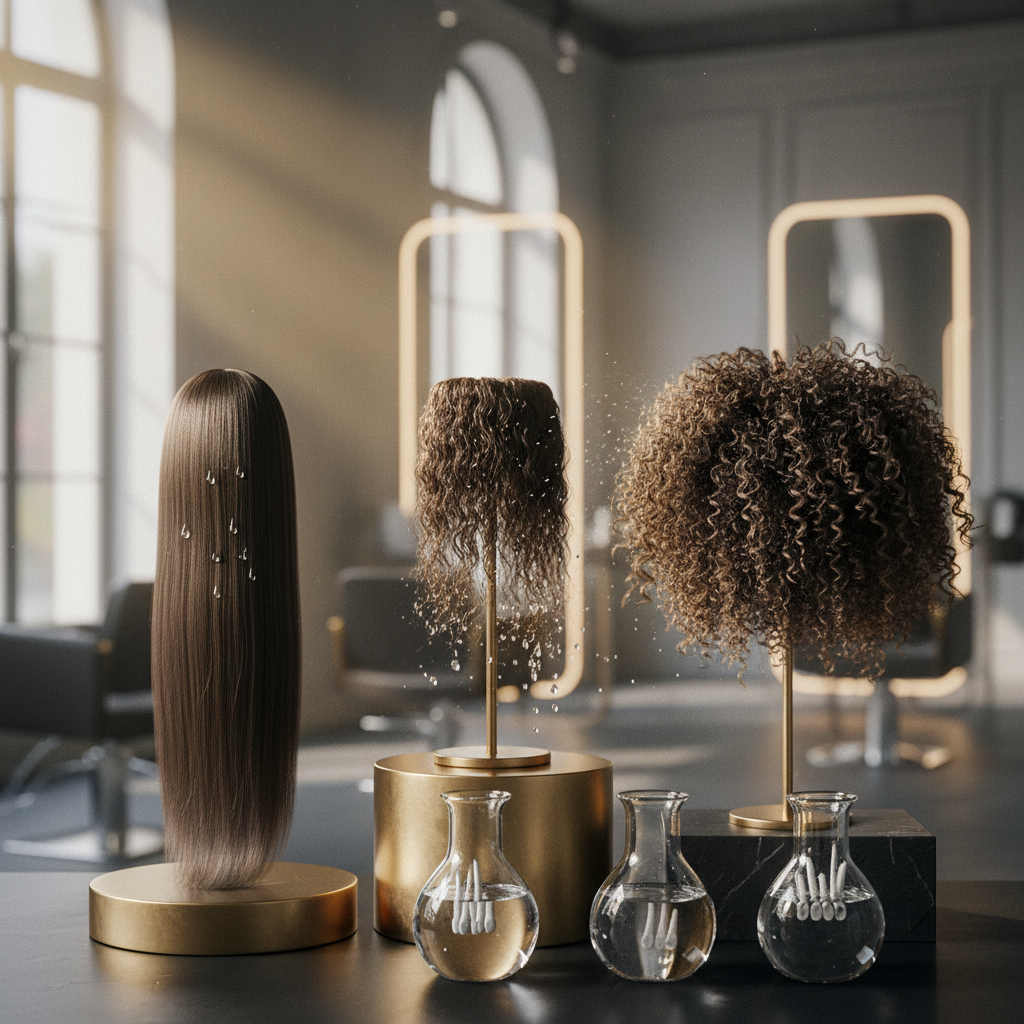
Quick answer: Hair Porosity describes how easily your hair absorbs and holds onto moisture, primarily determined by the state of its outermost layer, the cuticle. It's a key factor in choosing effective haircare products and techniques, affecting how well your hair responds to hydration. While understanding your Hair Porosity can guide product choices, it's not the only factor in hair health; other elements like strand density and texture also play a role.
Key takeaways
- Hair Porosity is about your hair's ability to absorb and retain water and products, mainly influenced by the cuticle's condition.
- It's categorised into low, normal, and high porosity, each with distinct characteristics and care needs.
- Porosity can be genetic or affected by external factors like chemical treatments and heat styling.
- Knowing your hair's porosity helps in selecting appropriate products and techniques for optimal hydration and health.
- While home tests can give an indication, they are not definitive scientific measurements.
Hair Porosity: what the evidence shows
Hair Porosity refers to the hair's capacity to absorb and retain water, oils, and other substances. This characteristic is largely dictated by the integrity and structure of the hair's outermost layer, the cuticle. The cuticle consists of overlapping, scale-like cells that protect the inner cortex. When these scales lie flat and are tightly bound, the hair is said to have low porosity. When they are slightly raised, it indicates normal porosity. If they are significantly raised, chipped, or damaged, the hair exhibits high porosity.
The mechanism behind Hair Porosity
The hair cuticle acts as a gatekeeper, controlling the movement of substances into and out of the hair shaft. Its condition directly influences how readily moisture can penetrate the hair. Factors such as genetics, chemical processing (like colouring, bleaching, or perming), heat styling, and environmental exposure can all impact the cuticle's integrity and, consequently, your hair's porosity.
- Low Porosity: Hair with low porosity has tightly packed, flat cuticles. This makes it challenging for water and products to penetrate the hair shaft. Once moisture does enter, however, it tends to be retained well. This hair type can be prone to product build-up on the surface.
- Normal Porosity: This type has a moderately compact cuticle layer that allows for a balanced absorption and retention of moisture. Hair with normal porosity typically responds well to most products and treatments.
- High Porosity: Hair with high porosity has a more open or damaged cuticle. This allows moisture to be absorbed very quickly but also lost just as rapidly. This hair type often feels dry, appears dull, and is prone to frizz and breakage due to its compromised outer layer.
Signs of different Hair Porosity types
Recognising the signs of your hair's porosity can help tailor your haircare routine.
| Characteristic | Low Porosity Hair | Normal Porosity Hair | High Porosity Hair |
|---|---|---|---|
| Moisture absorption | Water beads on surface, takes time to get fully wet | Absorbs water steadily, neither too fast nor too slow | Gets wet very quickly, absorbs products rapidly |
| Drying time | Dries slowly after washing | Dries at a moderate pace | Dries very quickly after washing |
| Product retention | Prone to product build-up, feels weighed down | Good balance of absorption and retention | Products absorb quickly but hair may still feel dry or frizzy |
| Appearance | Can look shiny but may lack volume | Often looks healthy, smooth, and shiny | Can appear dull, rough, or prone to frizz |
| Feel | Smooth, sometimes resistant to feeling moisturised | Smooth, pliable | Can feel rough, dry, or tangled |
What you can do to care for your hair based on its porosity
Care strategies vary significantly based on your hair's porosity.
- For Low Porosity Hair: Focus on techniques and products that help open the cuticle slightly for better penetration. Using warm water during washing and applying products to damp hair can be beneficial. Lightweight, humectant-rich products are often preferred to avoid build-up. Occasional clarifying shampoos, as discussed in 'How to Do a Clarifying Wash: A Guide to Deep Hair Cleansing', can help remove accumulated residue. Using gentle heat, like a warm towel, after applying a mask can also aid penetration.
- For Normal Porosity Hair: The goal is to maintain this balance. Continue with a consistent routine of cleansing and conditioning. Protect your hair from potential damage from heat styling or chemical treatments to preserve the cuticle's integrity. Explore various hair conditioning techniques to keep your hair moisturised.
- For High Porosity Hair: The priority is to seal the cuticle and prevent rapid moisture loss. Richer, heavier products like leave-in conditioners, oils, and butters can help. Acidic rinses, such as diluted apple cider vinegar (which typically has a pH around 2.9 to 3.5), can help temporarily smooth and flatten the cuticle. Protein treatments may temporarily fill gaps in the cuticle, strengthening the hair fibre, but overuse can lead to stiffness and breakage. Minimising heat and chemical treatments is crucial to prevent further damage.
When the cause may be something else and when to get professional advice
While Hair Porosity is a significant factor in hair health, it's not the sole determinant. Other conditions, such as scalp health issues, nutritional deficiencies, or hormonal changes, can also impact your hair's appearance and feel. For instance, an oily scalp might make hair feel heavy regardless of porosity, while underlying health issues could lead to hair shedding or thinning.
If you observe sudden, significant changes in your hair's texture, excessive hair shedding, unusual scalp irritation, or if home remedies don't seem to improve your hair's condition, it's wise to consult a dermatologist or a trichologist. These professionals can rule out medical conditions and provide personalised advice that goes beyond general porosity recommendations.
Frequently asked questions about Hair Porosity
Does Hair Porosity change over time?
Yes, Hair Porosity can change. While genetics play a role in your natural porosity, external factors like chemical treatments (colouring, bleaching), heat styling, mechanical damage, and environmental exposure (UV radiation) can cause the cuticle to lift or become damaged, increasing porosity over time. Proper care can help maintain or improve its condition.
Is there a best Hair Porosity type?
Generally, normal porosity is considered ideal because it strikes a good balance between moisture absorption and retention. Hair with normal porosity is often easier to manage and style. However, each porosity type has its own strengths and challenges, and with appropriate care, all hair types can be healthy and well-maintained.
How accurate are home porosity tests?
Home tests, such as the float test or spray test, can offer a general indication of your hair's porosity. However, they are not scientifically precise. Factors like product build-up, water temperature, or even the cleanliness of the hair strand can influence the results. They serve as a helpful starting point but should be combined with observing how your hair responds to different products and treatments.
Can protein treatments help with Hair Porosity?
Protein treatments are most beneficial for high porosity hair because they can temporarily fill in gaps and strengthen the compromised cuticle, reducing breakage and improving moisture retention. For low porosity hair, too much protein can lead to stiffness and further reduce flexibility. Normal porosity hair may benefit from occasional light protein treatments to maintain strength.
Does hard water affect Hair Porosity?
Hard water, which contains high levels of minerals like calcium and magnesium, can affect all hair types. These minerals can build up on the hair shaft, making it difficult for moisture to penetrate, potentially mimicking some characteristics of low porosity hair. It can also leave hair feeling dry and dull. Using a chelating shampoo, as explained in 'Chelating Shampoos Explained', can help remove these mineral deposits.
How does pH relate to Hair Porosity?
The pH level of your hair products can significantly impact the cuticle. Hair is naturally acidic, with a pH of around 4.5 to 5.5. Products with a more acidic pH (lower than 7) tend to flatten and seal the cuticle, which is beneficial for high porosity hair to reduce moisture loss. Alkaline products (higher than 7) can cause the cuticle to swell and lift, which might be useful for low porosity hair to aid product penetration, but prolonged use can lead to damage. Understanding the pH scale and hair is key to choosing appropriate products.
Conclusion
Understanding your Hair Porosity is a fundamental step towards creating an effective and personalised haircare routine. It helps you identify why your hair behaves the way it does, whether it quickly absorbs products or resists them, and why it might feel dry or prone to build-up. By aligning your product choices and application methods with your specific Hair Porosity, you can significantly improve your hair's hydration, manageability, and overall health. It's a dynamic characteristic, influenced by both genetics and lifestyle, making ongoing observation and adaptation key to beautiful, resilient hair.
Where Watermans fits
Watermans products are formulated to support healthy hair across various porosities, focusing on ingredients that cleanse effectively without stripping and condition deeply to improve moisture balance. For those with low porosity hair, our lightweight formulations help to avoid build-up while providing essential nutrients. For high porosity hair, our conditioners and masks provide rich hydration to help seal the cuticle and reduce moisture loss, contributing to stronger, more resilient hair.
Sources and references
- American Academy of Dermatology Association, "Hair loss: Diagnosis and treatment", ongoing.
- Cosmetic Ingredient Review, "Safety Assessment of Hair Conditioning Agents", various years.
- Gavazzoni Dias, M. F. R. (2015). Hair Cosmetics: An Overview. International Journal of Trichology, 7(1), 2 to 15. DOI: 10.4103/0974-7753.153927
- National Institutes of Health (NIH), National Library of Medicine (NLM), PubMed, ongoing. Www.pubmed.gov
- Robbins, C. R. (2012). Chemical and Physical Behavior of Human Hair (5th ed.). Springer. ISBN: 978-1-4614-7212-7
- The Society of Cosmetic Chemists, "Journal of Cosmetic Science", ongoing. Www.scconline.org/journals/journal-of-cosmetic-science/
- Trueb, R. M. (2009). The value of hair cosmetics for the healthy scalp. Skin Appendage Disorders, 5(2), 79-88. DOI: 10.1159/000494441