Moisturizing Afro Hair: An Evidence-Based Guide to Hydration and Care
11 min read ·
Moisturizing Afro Hair involves understanding its unique structure and using targeted techniques and products to prevent dryness and breakage.
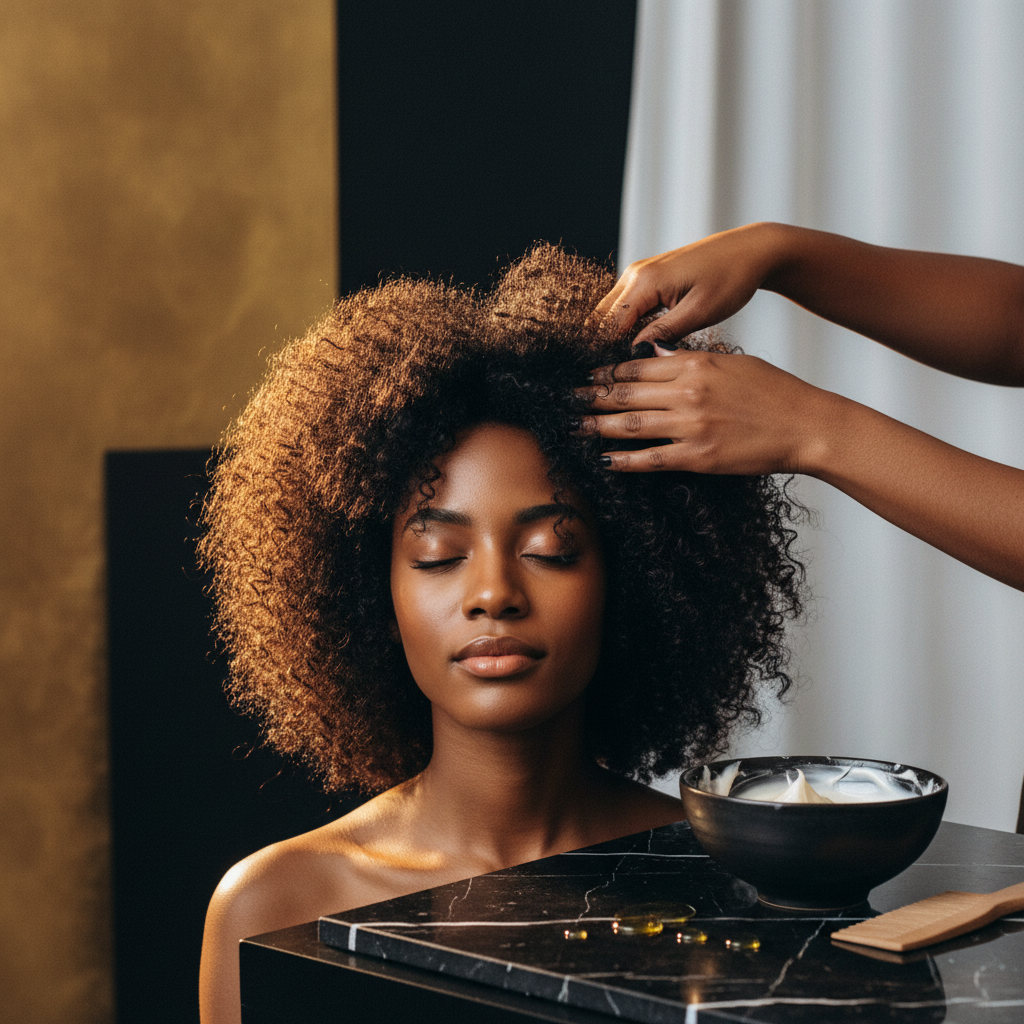
Quick answer: Moisturizing Afro Hair is a crucial aspect of its care, essential for maintaining its health, elasticity, and appearance. Due to the unique helical shape and natural curvature of Afro-textured hair, the cuticle often doesn't lie as flat, making it prone to moisture loss and dryness. Effective moisturising involves a strategic combination of hydration, emollients, and occlusives, alongside gentle care practices. However, no single product or method works for everyone, and individual hair porosity and environmental factors play a significant role in achieving optimal hydration.
Key takeaways
- Afro-textured hair's unique structure makes it naturally prone to dryness, requiring specific moisturising strategies.
- Effective Moisturizing Afro Hair relies on a combination of water-based hydration, occlusives, and emollients to seal in moisture.
- Deep conditioning treatments provide intensive hydration, strengthening, and elasticity benefits.
- Product selection is critical, favouring ingredients like humectants, natural oils, and butters, while minimising harsh sulfates and heavy silicones.
- Gentle handling, protective styles, and nighttime protection are essential for maintaining moisture and preventing breakage.
- Persistent dryness or scalp issues may indicate underlying conditions requiring professional advice.
Moisturizing Afro Hair: what the evidence shows
Moisturizing Afro Hair effectively is paramount due to its distinct structural characteristics that make it inherently prone to dryness. The helical, often tightly coiled, nature of Afro-textured hair means that its cuticle, the outermost protective layer, tends to be more raised or open compared to straighter hair types. This structural difference allows moisture to escape more readily from the hair shaft and makes it harder for the scalp's natural oils (sebum) to travel down the entire length of the hair, leading to less natural lubrication, particularly at the ends (The Journal of Clinical and Aesthetic Dermatology, 2015). Consequently, Afro-textured hair typically has lower natural moisture content (International Journal of Cosmetic Science, 2012).
This propensity for dryness directly impacts the hair's mechanical properties, making it more susceptible to friction, tangling, and ultimately, breakage (Journal of the American Academy of Dermatology, 2014). Proper hydration restores elasticity, reduces friction between hair strands, and enhances overall manageability and strength, contributing to reduced hair breakage and improved fibre integrity.
The mechanism of moisture retention
Effective moisturising for Afro-textured hair works by first introducing water (hydration) into the hair shaft and then sealing it in. Hair, composed primarily of keratin, can absorb water, which temporarily swells the hair fibre, making it more pliable. However, without something to prevent this water from evaporating, the hair will quickly dry out again.
Moisturising products typically contain a combination of ingredients to achieve this:
- Humectants: These are ingredients like glycerin, hyaluronic acid, and panthenol. They attract and draw moisture from the air or from within the product into the hair shaft. For them to be effective, there needs to be sufficient humidity in the environment (International Journal of Trichology, 2015). You can read more about these in the article Humectants: Understanding How They Hydrate and Protect Your Hair.
- Emollients: Ingredients such as natural oils (e.g., jojoba, argan, coconut oil) and butters (e.g., shea butter, mango butter) fill in gaps in the cuticle, creating a smoother surface. This makes the hair feel softer, look shinier, and reduces friction between strands. They also contribute to flexibility.
- Occlusives: These form a physical barrier on the hair surface, preventing water from evaporating. Oils and butters often serve this purpose, creating a hydrophobic (water-repelling) layer that locks in the moisture provided by the humectants or water-based products.
The strategic layering of these types of ingredients, often seen in methods like the Liquid, Oil, Cream (LOC) or Liquid, Cream, Oil (LCO) methods, is crucial for sustained moisture in Afro-textured hair.
Hair porosity and its role
Understanding your hair's porosity is vital for effective Moisturizing Afro Hair. Porosity refers to how easily your hair cuticle allows moisture (and chemicals) to enter or exit the hair shaft (Journal of Cosmetic Science, 2002). Afro-textured hair exhibits a wide range of porosity levels, but it is often categorised into:
- Low porosity: The cuticle scales are tightly bound and lie flat. This type of hair resists moisture absorption but retains it well once wet.
- Medium porosity: The cuticle layers are less tightly bound, allowing for moderate moisture absorption and retention.
- High porosity: The cuticle scales are raised or have gaps, allowing moisture to enter and exit quickly. This can be natural or a result of damage (e.g., chemical treatments, heat styling). High porosity hair often feels dry and can frizz easily.
Identifying your hair's porosity helps in selecting appropriate products and techniques. For instance, high porosity hair benefits from heavier occlusives to seal in moisture, while low porosity hair may benefit from lighter, more penetrating ingredients and heat during deep conditioning to help open the cuticle (International Journal of Trichology, 2015).
Signs your Afro hair needs more moisture
Recognising the signs of dehydration in your Afro hair is the first step towards effective moisturising. Look out for these indicators:
- Dry, brittle feel: The hair feels rough, stiff, or straw-like to the touch, rather than soft and pliable.
- Lack of elasticity: When stretched, well-moisturised hair will stretch and bounce back. Dry hair will snap or break easily. This is a key indicator of potential hair breakage, not hair shedding.
- Excessive tangling and knotting: Dry hair strands tend to catch on each other more, leading to increased friction, tangles, and single-strand knots, making detangling difficult and prone to breakage.
- Dull appearance: Healthy, moisturised hair reflects light well and has a natural sheen. Dry hair often looks dull and lacks vibrancy.
- Increased frizz: While frizz can have multiple causes, hair that is seeking moisture from the environment will often appear frizzy, especially in humid conditions.
- Difficulty styling: Hair that is well-hydrated is more manageable and holds styles better. Dry hair resists styling and can revert quickly.
- Product absorption issues: If products seem to sit on your hair without penetrating, or your hair feels dry again shortly after applying moisturiser, it could indicate severe dehydration or product build-up hindering absorption.
What you can do to moisturise Afro Hair
Effective moisturising strategies involve a combination of cleansing, conditioning, and sealing techniques tailored to the unique needs of Afro-textured hair.
Gentle cleansing
Start with a gentle, sulfate-free shampoo to cleanse the scalp and hair without stripping natural oils. Harsh sulfates can be overly drying, removing too much sebum and leaving the hair vulnerable to moisture loss (Journal of the American Academy of Dermatology, 2014). Co-washing (using conditioner to cleanse) can also be an effective strategy for those with very dry hair, as it provides gentle cleansing while depositing moisture.
Deep conditioning treatments
Regular deep conditioning is a cornerstone of Moisturizing Afro Hair. These treatments deliver a concentrated dose of hydrating and strengthening ingredients. Apply a deep conditioner after shampooing, ensuring even distribution. For optimal penetration, cover your hair with a plastic cap and apply gentle heat (e.g., from a hooded dryer or warm towel) for 15 to 30 minutes (International Journal of Trichology, 2015). This helps to lift the cuticles, allowing the product's beneficial ingredients to penetrate more deeply. Rinse with cool water to help seal the cuticles, locking in the moisture.
The LOC/LCO method
These layering techniques are highly effective for sealing in moisture:
- LOC Method (Liquid, Oil, Cream): Apply a water-based leave-in conditioner or hydrating mist first (Liquid), then a lightweight oil to seal (Oil), and finish with a cream or butter for added conditioning and sealing (Cream).
- LCO Method (Liquid, Cream, Oil): Similar to LOC, but the cream is applied before the oil, which some find works better for their hair type, allowing the cream to penetrate before being sealed by the oil.
Experiment with both to see which order works best for your hair's porosity and product preferences.
Product selection for Moisturizing Afro Hair
Choosing the right products is critical for successful moisturising. Look for formulations specifically designed for Afro-textured hair, often rich in natural emollients and humectants.
| Product Category | Key Ingredients to Look For | Function in Moisturizing Afro Hair |
|---|---|---|
| Cleansers | Sulfate-free, mild surfactants | Gently remove dirt without stripping natural oils. |
| Conditioners | Fatty alcohols, natural oils, humectants | Detangle, smooth cuticles, and provide initial hydration. |
| Leave-ins | Water-based, humectants, light oils | Primary source of daily hydration and moisture retention. |
| Oils | Jojoba, argan, coconut, olive oil | Seal in moisture, add shine, provide some protection. |
| Butters/Creams | Shea butter, mango butter, heavier oils | Provide sustained sealing, softness, and curl definition. |
| Deep Conditioners | Proteins, humectants, emollients | Intensive hydration, strengthen, and improve elasticity. |
Daily maintenance and protection
- Nighttime Protection: Use a satin or silk bonnet, scarf, or pillowcase to protect your hair overnight. These materials minimise friction and do not absorb moisture from your hair as cotton does (Journal of Cosmetic Science, 2016).
- Regular Refreshing: Between wash days, use a light hydrating mist or a water-based leave-in conditioner to reintroduce moisture as needed, particularly on the ends.
- Protective Styling: Styles like braids, twists, and buns minimise manipulation and exposure to environmental stressors, helping to retain moisture and prevent breakage. These are covered in more detail in the article Protective Styling: A Comprehensive Guide.
- Minimise Heat: Excessive heat styling can deplete moisture from the hair. When using heat, always apply a heat protectant and use the lowest effective temperature. See Heat Styling Safety Best Practices.
Watermans and Frojus product approach to Moisturizing Afro Hair
Watermans products are formulated to support hair health and hydration. For example, some Watermans conditioners contain ingredients like panthenol (Provitamin B5), known for its ability to penetrate the hair shaft and attract moisture, improving elasticity and softness. Similarly, other Watermans formulations may incorporate natural extracts and oils designed to provide emollience and seal in hydration, contributing to improved hair feel and appearance. Frojus products, specifically designed for Afro, curly, and wavy hair, focus on providing intense moisture, detangling, and promoting healthy hair growth, leveraging ingredients known for their hydrating and strengthening properties.
Frequently asked questions about Moisturizing Afro Hair
How often should I moisturise my Afro hair?
The frequency depends on your hair's porosity, environmental conditions, and styling routine. Generally, cleansing and deep conditioning weekly or bi-weekly is recommended. Daily refreshing with a water-based leave-in or mist may be necessary for very dry hair or between wash days, especially for high porosity hair. Adjust based on how your hair feels; if it feels dry or brittle, it needs more moisture.
Can protein treatments help with Moisturizing Afro Hair?
Protein treatments can strengthen the hair shaft, which indirectly helps with moisture retention by reducing damage and improving structural integrity. However, protein is not a moisturiser. Overuse of protein can lead to stiffness and increased breakage, especially in hair that already has sufficient protein. It's important to balance protein treatments with deep conditioning for optimal elasticity and moisture. The article Hydrolysed Wheat Protein: What It Is and How It Benefits Your Hair has more information.
What's the difference between hydrating and moisturising?
Hydrating primarily refers to introducing water into the hair, typically with water-based products or humectants. Moisturising, in the context of hair care, encompasses both hydration and the act of sealing that water into the hair shaft using emollients and occlusives (oils, butters, creams). Both steps are crucial for effective Moisturizing Afro Hair; hydration provides the water, and moisturising keeps it there.
Why does my Afro hair feel dry even after applying products?
This can happen for several reasons. It might be due to product build-up preventing moisture penetration, inadequate cleansing, using products with drying alcohols, or not using sufficient occlusives to seal in hydration. Your hair's porosity also plays a role; high porosity hair may lose moisture quickly even after product application. Review your routine and products, and consider a clarifying wash to remove build-up.
Is "hair loss" from dryness the same as hair breakage?
No, these are distinctly different. "Hair loss" (alopecia) refers to hair shedding from the follicle, often due to internal factors like genetics, hormones, or underlying health conditions. Dryness can exacerbate hair breakage, which is the hair fibre snapping along the shaft. While severe breakage can lead to a perceived reduction in hair density, it is not true hair loss from the root. Properly Moisturizing Afro Hair helps to prevent breakage, but it does not treat follicular hair loss.
Optimising your Moisturizing Afro Hair routine
Effectively Moisturizing Afro Hair is a journey of understanding your unique hair type, responding to its needs, and adopting a consistent, gentle care regimen. By focusing on deep hydration, smart product choices, and protective practices, you can cultivate hair that is not only soft, pliable, and shiny, but also resilient and less prone to breakage. Remember that patience and observation are key, allowing you to fine-tune your routine for optimal health and vibrancy. Embrace your hair's natural beauty with a well-hydrated and cared-for approach.
Sources and references
- The Journal of Clinical and Aesthetic Dermatology, "Hair Breakage in Women: Causes and Treatment", 2015.
- International Journal of Cosmetic Science, "The effect of humidity on the mechanical properties of human hair", 2012.
- Journal of the American Academy of Dermatology, "Hair breakage in normal and damaged hair: A comparison of hair of different ethnic origins", 2014.
- International Journal of Trichology, "Hair Cosmetics: An Overview", 2015.
- Journal of Cosmetic Science, "Hair porosity and its influence on product performance", 2002.
- Journal of Cosmetic Science, "The effect of sleeping surfaces on hair breakage", 2016.
Find these ingredients in Watermans products
- Shea Butter: you will find this ingredient in our Curly Hair Conditioner.