How To Prevent Hair Breakage: The Essential Guide
8 min read ·
Learn how to prevent hair breakage with evidence-based strategies covering cuticle protection, heat reduction, safe detangling, and hair fibre chemistry.

Quick answer: Learning how to prevent hair breakage requires minimising physical friction, moderating thermal exposure, and balancing chemical treatments to preserve the structural integrity of the hair shaft. Hair breakage occurs when mechanical stress snaps the keratin fibre, distinct from follicular shedding. The primary limitation is that once hair fibre sustains significant cuticle loss or cortex disruption, it cannot biologically self-repair; preventive habits protect existing integrity rather than permanently fusing severed bonds.
Key takeaways
- Hair breakage is mechanical fracture along the hair shaft, distinct from biological shedding from the follicle.
- The outer cuticle consists of 5 to 10 overlapping cellular layers that protect the inner cortical keratin bundles.
- Wet hair can stretch up to 30 percent before breaking, but its hydrogen bonds are weakened, making it vulnerable to tensile snapping.
- Chemical processes such as bleaching oxidise cystine, reducing mechanical tensile strength by up to 50 percent.
- Lowering heat styling below 185°C and reducing wet mechanical combing significantly minimise daily fibre loss.
How To Prevent Hair Breakage: what the evidence shows
Understanding how to prevent hair breakage begins with the physics and chemistry of the hair strand. Hair is composed primarily of alpha-keratin, a fibrous protein rich in the amino acid cystine. These protein chains are held together by strong covalent disulphide bonds, alongside weaker, temporary ionic (salt) bonds and hydrogen bonds.
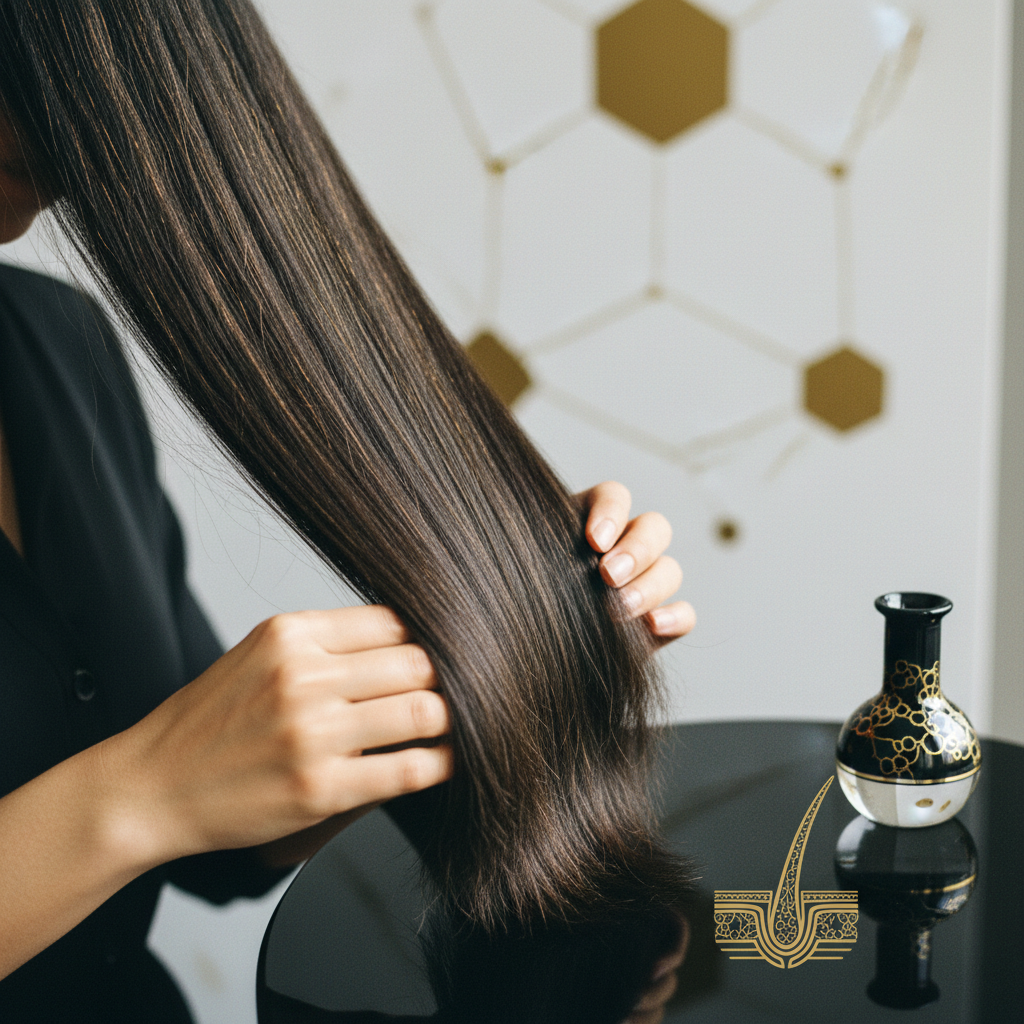
Peer-reviewed studies in cosmetic science demonstrate that mechanical snapping occurs when external tension exceeds the structural threshold of the cortex. The cuticle acts as a protective shield. When the cuticle scales lie flat, they resist friction and retain internal moisture. When exposed to excessive heat, alkaline chemicals, or rough grooming, these scales lift, chip, and erode. Without a protective cuticle envelope, the inner cortex fractures under standard grooming tension. Knowing how to prevent hair breakage relies on keeping these outer protective layers smooth and intact.
The biological mechanism of hair shaft fracture
Hair fibre fracture happens across three primary failure modes: tensile overload, fatigue failure, and thermal degradation.
Tensile stress and the wet hair paradox
When dry, healthy hair can be stretched by roughly 15 to 20 percent of its resting length before permanent deformation occurs. When submerged in water, water molecules disrupt the internal hydrogen bonds between keratin chains. While this increases elasticity (allowing hair to stretch up to 30 to 50 percent), it lowers the force required to reach the yield point. Consequently, aggressive brushing while hair is saturated causes severe tensile stress, leading to trichorrhexis nodosa (node-like fracture swellings along the shaft).
Chemical oxidation and disulphide cleavage
Bleaching, permanent tinting, and chemical relaxing raise the hair's pH (often above pH 9.0) to swell the cuticle and penetrate the cortex. Bleaching oxidises cystine into cysteic acid. This permanent cleavage of disulphide bonds reduces the fibre's natural elastic modulus. Without these covalent cross-links, everyday physical friction easily snaps the hair shaft.
Thermal structural degradation
Styling tools operating above 185°C cause rapid degradation. Heat above 200°C physically converts alpha-keratin into beta-keratin and eventually denatures the protein matrix. If hair contains residual moisture when exposed to extreme contact heat, water rapidly vaporises within the cortex, creating microscopic trapped steam bubbles. This condition, clinically termed bubble hair, leads to severe structural weakness and abrupt snapping.
| Type of Hair Stress | Primary Mechanism | Microscopic Visual Sign | Prevention Strategy |
|---|---|---|---|
| Mechanical Friction | Cuticle abrasion from rough brushing or cotton pillows | Flaking, lifted cuticle scales | Wide-tooth combs, silk/satin pillowcases, detangling from ends upward |
| Wet Tensile Stress | Disruption of hydrogen bonds under high tension | Stretched, uneven, snapping fibres | Blotting with microfibre, applying leave-in conditioning slip before combing |
| Thermal Damage | Protein denaturation and internal steam expansion | Micro-cavities, bubble hair, split ends (trichoptilosis) | Capping heat tools below 185°C, using dimethicone- or polymer-based heat protectants |
| Chemical Depletion | Oxidation of disulphide bonds into cysteic acid | Longitudinal fissures, trichorrhexis nodosa | Spacing bleaching appointments, maintaining acid-balanced pH care (pH 4.5 to 5.5) |
Signs to look for: breakage versus shedding
A frequent error in hair diagnosis is confusing fibre breakage with biological shedding. You must look at the physical strand to tell the difference:
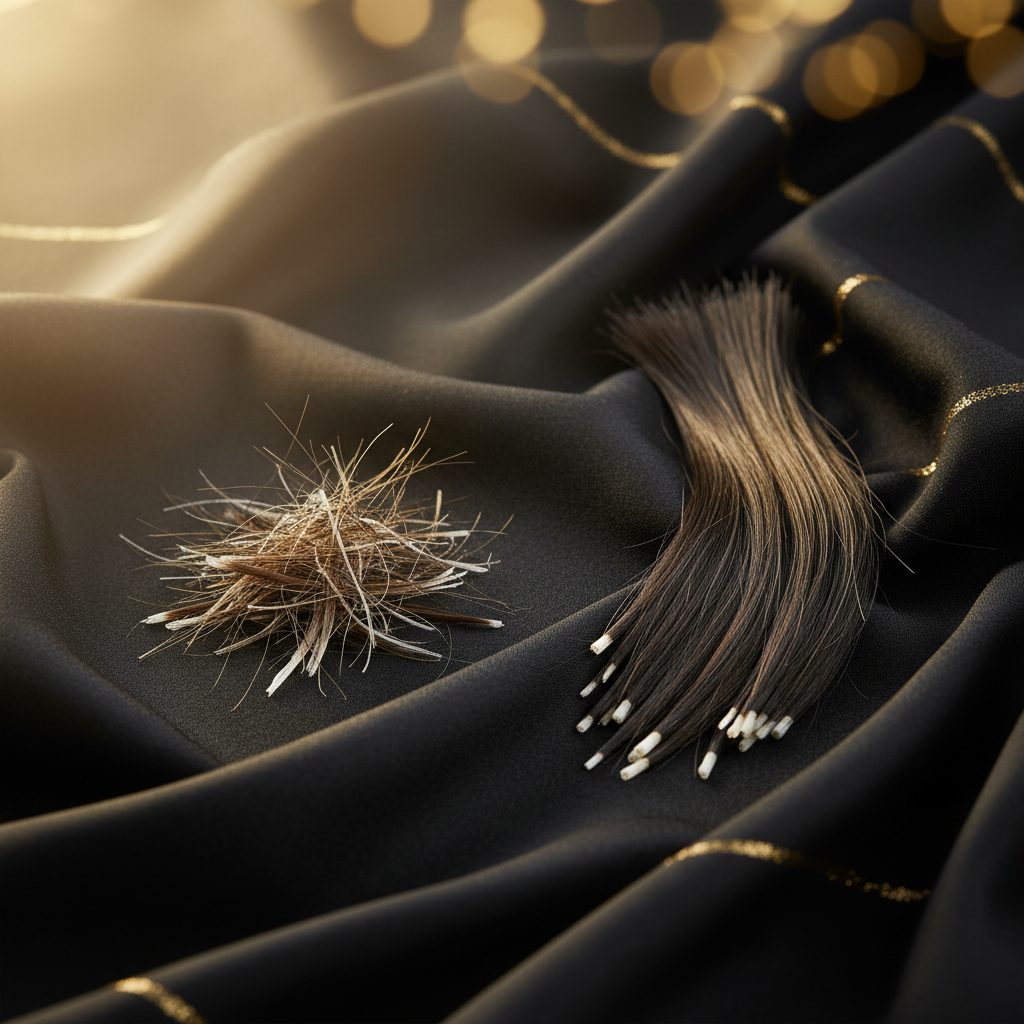
- Hair shedding (telogen effluvium or normal cycle): The shed hair is full length and possesses a tiny white, bulbous root at one end. This indicates the hair completed its growth cycle and detached naturally from the dermal papilla.
- Hair breakage: The fallen fragments are shorter than your overall hair length, vary in size, have blunt or frayed ends, and lack any white bulb. You may also observe white dots (trichorrhexis nodosa) along the strand where the fibre is ready to snap.
What you can do: evidence-based daily practices
Implementing a structured routine significantly reduces the rate of daily fracture.
1. Master wet detangling mechanics
Never drag a fine-toothed comb or stiff bristle brush through damp hair. Apply a conditioner formulated with cationic surfactants (such as behentrimonium chloride or cetrimonium chloride). These ingredients neutralise the negative electrostatic charge of wet hair, dramatically reducing wet combing friction. Use a wide-tooth comb, starting at the bottom 2 inches and moving progressively upward toward the scalp.
2. Lower styling temperatures
Keep straighteners and curling irons between 150°C and 180°C. Never apply direct contact heat to damp or wet hair. Thermal protectant sprays containing silicones (such as dimethicone or amodimethicone) or quaternary polymers slow the rate of heat transfer, distributing thermal energy evenly across the shaft.
3. Maintain an acidic product pH
Hair and scalp exist naturally at an acidic pH between 4.5 and 5.5. Washing with alkaline soaps or high-pH formulations forces the cuticle scales to flare open, increasing inter-fibre friction. Choose shampoos and conditioners buffered to a slightly acidic range to keep the cuticular layers tight and flat.
4. Reduce nocturnal mechanical friction
Standard cotton pillowcases feature coarse fibres that pull on delicate hair during sleep movements. Switching to a smooth silk or satin pillowcase reduces friction by over 30 percent, preventing morning tangling and mechanical snapping.
What the evidence does not show
There is no credible scientific evidence that topical serums or leave-in oils can permanently heal, regenerate, or re-grow a broken hair shaft. Hair is non-living keratinised tissue. Once a split end forms, it cannot biologically knit back together.
While bond-building products and protein treatments temporarily cross-link or coat damaged areas to improve tensile strength temporarily, they wash out over time. The only definitive cure for fractured ends is mechanical trimming. Furthermore, drinking excessive water or consuming arbitrary megadoses of biotin will not prevent structural breakage caused by heat tools or harsh bleach.
When the cause may be internal
While most breakage stems from grooming habits, internal physiological imbalances can alter the structural quality of hair produced by the follicle. Severe iron deficiency (ferritin below 30 ug/L), thyroid dysfunction (hypothyroidism), or marked protein deficiency can result in thinner, structurally fragile hair shafts that snap under minimal stress. If your breakage is accompanied by diffuse thinning, sudden shedding, or brittle nails, request a basic blood panel from your general practitioner.
Supporting hair condition with Watermans
When managing hair condition, using products that support scalp vitality and provide surface slip can assist your daily routine. Watermans GrowMe Shampoo and ConditionMe Conditioner are formulated to clean gently without harsh stripping agents while delivering conditioning ingredients that reduce combing friction. By providing essential surface slip, these formulations help minimise the mechanical tugging that often leads to fibre snapping.
Frequently asked questions about How To Prevent Hair Breakage
How to prevent hair breakage when brushing?
To prevent hair breakage while brushing, avoid brushing hair when it is sopping wet. Apply a detangling spray or conditioner to provide slip, use a flexible wide-tooth comb or soft detangling brush, and always start gently at the ends of the hair, gradually working your way up to the roots in small sections.
Can hair breakage be reversed once it starts?
No, hair breakage cannot be biologically reversed. Because hair strands are dead tissue, fractured shafts and split ends cannot regenerate. However, you can manage the damage temporarily using hydrolysed protein treatments to reinforce the fibre, followed by regular micro-trims to prevent the splits from travelling up the shaft.
Does sleeping on a satin pillowcase really stop breakage?
Yes, scientific testing confirms that satin and silk materials create significantly less surface friction than traditional cotton. By reducing the mechanical abrasion between your hair and the fabric as you shift during sleep, satin pillowcases help prevent tangles, cuticle fraying, and nocturnal snapping.
How often should I trim my hair to stop breakage?
Trimming every 8 to 12 weeks is generally recommended to remove damaged, split ends before they tear further up the hair shaft. Removing between a quarter-inch and a half-inch eliminates fragile tips, keeping the overall hair perimeter strong.
Protecting hair fibre for the long term
Mastering how to prevent hair breakage is ultimately an exercise in mechanical and chemical preservation. Because your hair fibre cannot heal itself, every intervention must aim to protect the delicate outer cuticle from friction, excessive heat, and chemical degradation. By adopting gentle wet-handling techniques, monitoring styling temperatures, and keeping hair well-lubricated with acid-balanced conditioners, you can preserve the structural integrity of your hair and enjoy longer, stronger strands.
Sources and references
- British Association of Dermatologists. Hair breakage and structural hair disorders. 2021.
- Journal of Cosmetic Science. Tensile properties of human hair: effect of water, heat, and chemical treatments. 2019.
- Robbins, C. R. Chemical and Physical Behavior of Human Hair. 5th Edition, Springer, 2012.
- International Journal of Trichology. Hair cosmetics: An overview. 2015.
- American Academy of Dermatology. How to stop hair damage. 2022.