The Role of Disulphide Bonds in Hair Strength: Science, Structure, and Protection
11 min read ·
Explore the role of disulphide bonds in hair strength, how chemical and heat damage breaks them, and practical steps to maintain resilient, healthy hair.
Quick answer: The Role of Disulphide Bonds in Hair Strength centres on providing permanent mechanical stability, elasticity, and fracture resistance to the hair shaft. These covalent chemical bonds link adjacent polypeptide chains within keratin proteins across the hair cortex. While hydrogen and salt bonds contribute to temporary flexibility, disulphide linkages are fundamentally responsible for tensile strength. However, once broken by chemical processing or extreme heat, disulphide bonds cannot spontaneously regenerate on their own without targeted bond-building interventions or natural new growth.
Key takeaways
- Disulphide bonds are covalent links formed between two cysteine amino acid residues, creating cystine within the hair cortex.
- These bonds provide human hair with roughly 80 to 90 percent of its permanent wet and dry tensile strength and chemical resistance.
- Chemical processes like bleaching, perming, and relaxing deliberately cleave disulphide bonds, leaving the fibre vulnerable to breakage if over-processed.
- Hydrogen and ionic (salt) bonds break easily with water and heat, but disulphide bonds resist normal washing, humidity, and mild styling.
- Damage to disulphide bonds manifests as loss of curl pattern, excessive elasticity (a spongy or gummy feel when wet), and fracture along the fibre.
The Role of Disulphide Bonds in Hair Strength: what the evidence shows
Research into hair science demonstrates that human hair consists of roughly 65 to 95 percent protein by weight, predominantly alpha-keratin. Within this fibrous structure, individual keratin intermediate filaments are held together in an organised matrix rich in the amino acid cysteine. Cysteine contains a thiol (sulphur-hydrogen) side chain. When two cysteine residues oxidise, they form a strong covalent link known as a disulphide bond, creating the composite amino acid cystine.
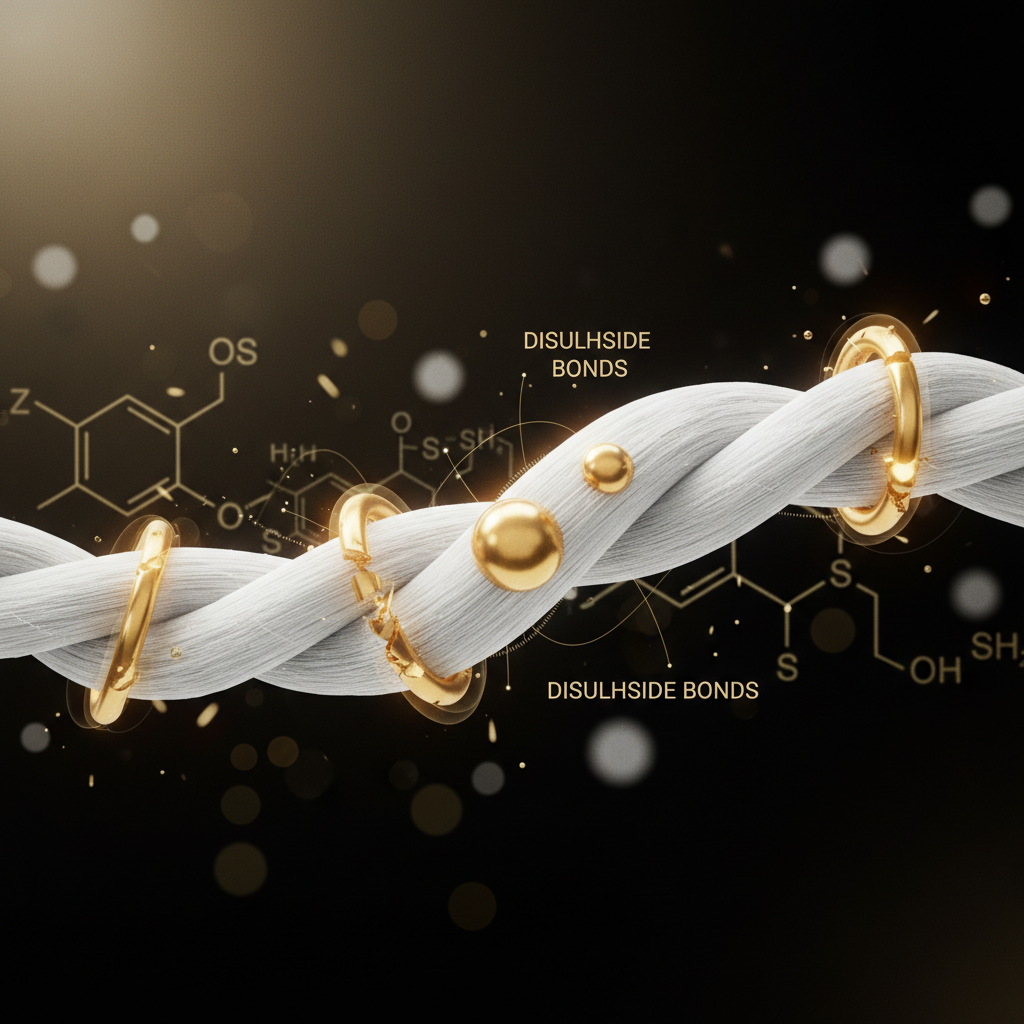
The role of disulphide bonds in hair strength is fundamentally structural. Unlike weak physical bonds such as hydrogen bonds or ionic salt bridges, disulphide linkages require substantial chemical energy or high heat to sever. In a virgin, undamaged hair strand, these bonds act like permanent cross-struts across a scaffold. They prevent the protein chains from slipping past one another under mechanical load. When you brush, pull, or style hair, disulphide cross-links allow the hair fibre to stretch up to 30 percent of its original dry length and snap back without permanent deformation.
The chemical stability of hair is also directly tied to this network. Keratin that possesses a dense disulphide network resists enzymatic degradation, swelling in water, and atmospheric weathering. When scientists measure the mechanical integrity of hair in laboratory settings using stress-strain curves, the yield slope and break point correspond directly to the intact density of cystine cross-links across the cortex.
The molecular mechanism: how disulphide cross-links function
To understand how disulphide bonds generate strength, you have to look at the three distinct types of bonds found inside every hair strand:
- Hydrogen bonds: These are physical, electrostatic attractions between hydrogen atoms and neighbouring oxygen or nitrogen atoms. They are exceptionally numerous, making up roughly one-third of hair's daily flexibility. However, hydrogen bonds break instantly in the presence of water. This is why getting your hair wet resets a blow-dry or flat-iron style.
- Salt (ionic) bonds: These bonds form between the acidic and basic side chains of amino acids. They depend entirely on pH. In hair's natural isoelectric zone (roughly pH 3.67 to 5.5), salt bonds remain stable. When hair contacts alkaline solutions (pH 8.0 and above), these bonds weaken and rupture, causing the hair shaft to swell.
- Disulphide bonds: These are true covalent bonds, meaning atoms share electrons rather than merely resting near each other via electrostatic pull. They link sulphur atoms (S-S) with a bond dissociation energy of roughly 250 to 270 kilojoules per mole. Neither cold water, steam, nor normal cosmetic shampoos can sever a covalent disulphide bond.
Because of this covalent nature, disulphide bonds dictate the permanent architecture of the hair, whether straight, wavy, or tightly coiled. The angle and frequency at which these bonds form in the hair follicle during keratinisation determine your natural curl pattern.
Structural comparison of hair bonds
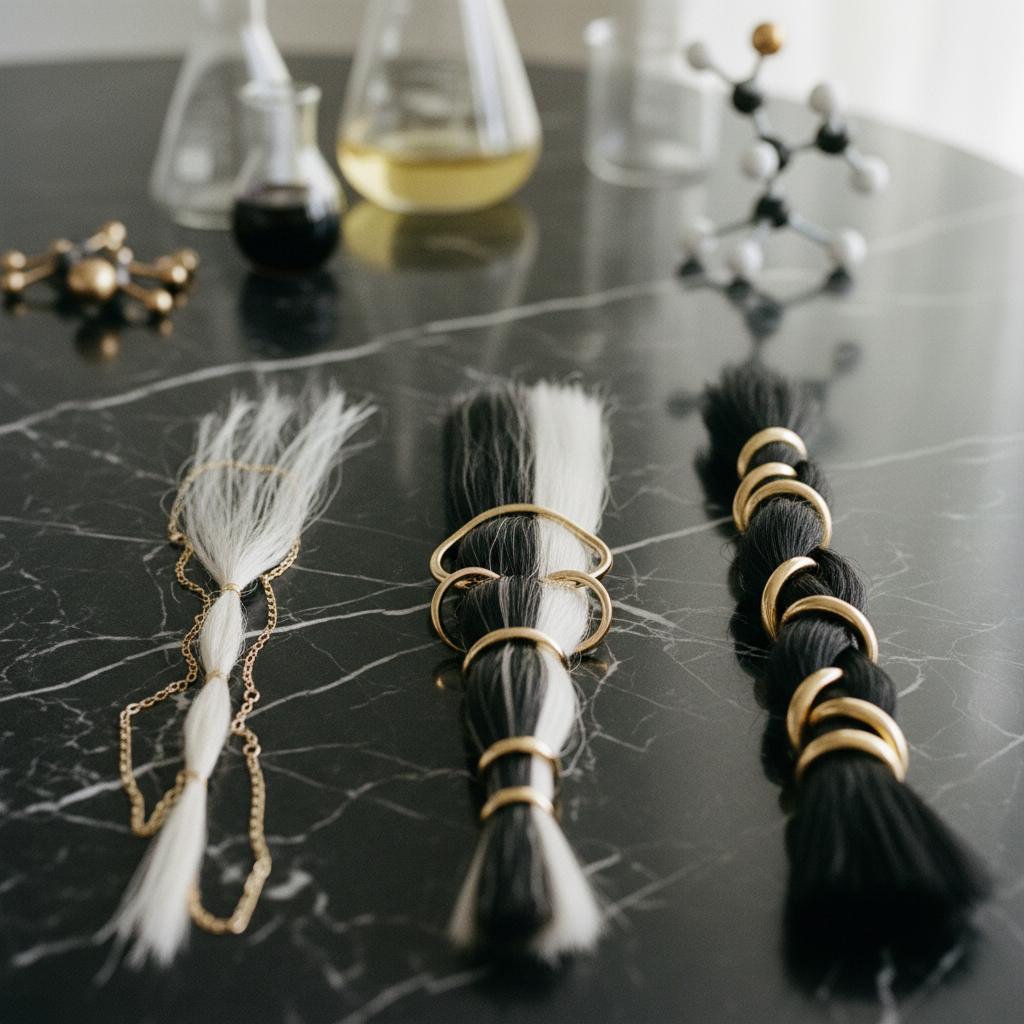
The table below outlines the differences in behaviour, stability, and cosmetic manipulation between the primary bonds found within human hair:
| Bond Type | Bond Chemistry | Relative Abundance | Agents That Break It | Role in Hair Performance |
|---|---|---|---|---|
| Disulphide Bonds | Covalent (S-S linkage) | Low to moderate (approx. 15 to 18% of amino acid pool is cystine) | Reducing agents (thiols), strong alkalis, bleaching oxidisers, heat over 200°C | Permanent tensile strength, elasticity, shape memory, resistance to breakage |
| Hydrogen Bonds | Physical electrostatic | Very high (found across all peptide backbones) | Water, moisture, humidity, mild heat | Temporary shape, daily styling flexibility, wet-state manageability |
| Salt (Ionic) Bonds | Physical ionic | Moderate to high | Extreme pH changes (sub-pH 3 or above pH 8) | Fibre diameter regulation, cortex cohesion, environmental stability |
What the evidence does not show
While disulphide bonds are vital for shaft resilience, understanding their real role requires clarifying common misconceptions in modern haircare:
- Disulphide bonds do not dictate hair shedding or hair loss: Breaking disulphide bonds leads to structural hair breakage along the hair shaft. It does not cause follicular shedding (telogen effluvium) or genetic thinning (androgenetic alopecia). The follicle produces new hair regardless of whether the visible strand has suffered bond damage.
- Topical treatments do not make hair unbreakable: Bond-repair technology and conditioning treatments can patch weak spots or form temporary secondary bridges, but no cosmetic treatment can permanently restore a degraded fibre to completely pristine, virgin condition.
- More protein is not always better: Over-depositing rigid hydrolysed proteins onto hair with severely disrupted disulphide bonds can leave the fibre stiff and brittle. True tensile strength requires a balance of internal covalent stability and cortical moisture.
How disulphide bonds are damaged in practice
Disulphide bonds withstand regular washing and cool-air drying, but several common cosmetic interventions systematically break them down:
1. Bleaching and oxidative lifting
Bleaching uses alkaline hydrogen peroxide and persulphate salts to enter the cortex and oxidise natural melanin pigments. As a destructive side effect, the bleach oxidises cystine residues. Instead of breaking cleanly and reforming, many disulphide bonds oxidise irreversibly into cysteic acid groups. Cysteic acid cannot reform a disulphide bridge. The result is a permanent loss of cortical protein density, making the hair porous, weak, and prone to snapping.
2. Chemical straightening, perms, and relaxers
Perms use reducing agents (such as ammonium thioglycolate) to deliberately sever disulphide bonds into individual cysteine thiols. The hair is reshaped on curlers, and an oxidising neutraliser (hydrogen peroxide) is applied to reconstruct the bonds in their new positions. While effective, the reformation process is never 100 percent complete. As many as 10 to 20 percent of disulphide bonds remain unlinked. Hydroxide relaxers are even more aggressive: they permanently convert cystine into lanthionine (a single sulphur bridge), permanently reducing the fibre's tensile strength.
3. Extreme thermal styling
Using hair straighteners or curling irons above 200°C directly degrades keratin. High temperatures cause the chemical cross-links in the cuticle and cortex to unravel. The heat can vaporise internal water rapidly, causing steam blisters (bubble hair) and oxidising disulphide linkages into cysteic acid without any chemical products applied.
Signs of depleted disulphide integrity
If you want to know whether a client's or your own hair has suffered disulphide degradation, look for these specific physical indicators:
- The wet stretch test: Healthy hair stretches by roughly 20 to 30 percent when wet and snaps back to its starting length. Hair with depleted disulphide bonds will either stretch out like chewing gum without returning, or snap immediately under negligible tension.
- Loss of natural curl definition: Wavy or curly hair that goes limp, fuzzy, or flat in bleached or over-processed sections has lost the internal cross-links that dictate curl formation.
- Spongy, slow-drying hair: Severely compromised disulphide structures create voids in the cortex. The hair absorbs huge volumes of water but holds it unevenly, taking hours to air-dry while feeling gummy when damp.
- Split ends and mid-shaft fractures: Rather than finding full-length shed hairs with intact root bulbs in your brush, you observe short, splintered segments of hair shaft snapping during normal combing.
Protecting and supporting fibre strength
Once disulphide bonds are broken into cysteic acid, they cannot naturally rejoin. However, you can manage and protect remaining bonds using practical measures:
- Lower heat settings: Keep thermal styling tools below 185°C. This temperature is sufficient to reshape hydrogen bonds without triggering rapid thermal degradation of cystine bridges.
- Control bleaching frequency: Avoid overlapping lightener on previously bleached hair. Re-bleaching fibres that already contain elevated cysteic acid levels leads directly to structural collapse.
- Acidify your haircare: Use shampoos and conditioners formulated close to the hair's natural isoelectric point (pH 4.5 to 5.5). While this will not regenerate severed disulphide links, it contracts the outer cuticle layer and tightens salt bonds, shielding the vulnerable cortex inside.
- Use targeted bond-building systems: Formulations containing dicarboxylic acids (such as maleic acid compounds) help bridge gaps between broken keratin chains, acting as temporary synthetic cross-links to improve wet tensile strength.
A supportive approach: Watermans haircare
While repairing severe cortex-level disulphide bond degradation requires specialised chemical re-linking protocols or trimming away irreparable damage, maintaining the external cuticle and nurturing the scalp environment prevents unnecessary strain on vulnerable hair.
Watermans GrowMe Shampoo and ConditionMe Conditioner offer a balanced, cosmetic approach for hair that feels fragile or brittle. Formulated with hydrolysed lupin protein, niacinamide, caffeine, and argan oil, the system works to smooth down raised cuticle scales, reduce surface friction, and improve combability. By minimising the mechanical force required to detangle wet hair, this routine shields structurally compromised, bond-weakened strands from everyday snapping and breakage while promoting a cleaner, more balanced environment at the scalp.
When to seek professional advice
If your hair is breaking off in clumps, snapping near the roots after a chemical service, or showing chemical burns on the scalp, consult a registered trichologist or a certified colour specialist immediately. A trichologist can assess fibre damage under a microscope to confirm whether snapping is due to cortex-level bond dissolution or a structural hair-shaft anomaly. If you notice wide patches of scalp thinning where the hair bulb is detached rather than broken along the shaft, schedule a visit with your GP or dermatologist to evaluate for potential scalp conditions or systemic telogen shedding.
Frequently asked questions about The Role of Disulphide Bonds in Hair Strength
What is the role of disulphide bonds in hair strength during wet styling?
Disulphide bonds maintain the underlying structural backbone of the hair fibre when wet. While water instantly dissolves hydrogen bonds, disulphide bonds remain intact, preventing the wet strand from disintegrating. If disulphide bonds are compromised by chemical treatments, wet hair loses its rebound elasticity and becomes highly susceptible to stretching, tearing, and snapping during detangling.
Can broken disulphide bonds repair themselves naturally?
No. Severed disulphide bonds cannot repair themselves naturally. Once the sulphur atoms are oxidised into stable cysteic acid molecules through bleach or excessive heat, the chemical transformation is permanent. Only cosmetic bond-building agents can bridge these broken chains, or the hair must simply grow out from the scalp.
How does hair bleaching specifically affect disulphide bonds?
Bleaching uses alkaline hydrogen peroxide to penetrate the cortex and lift natural colour pigments. In doing so, it oxidises cysteine residues, breaking the covalent S-S bond. Instead of reforming, these sulphur atoms bind with oxygen to form cysteic acid, directly weakening the structural strength of the hair cortex and causing increased porosity.
Can you have too many disulphide bonds in your hair?
No, your genetic code determines the number of cysteine residues present during keratin synthesis in the follicle. You cannot naturally have too many disulphide bonds. However, during chemical perming, if neutralisation is left on too long or applied unevenly, it can induce oxidative stress, causing brittle behaviour rather than true structural strength.
Does high heat break disulphide bonds permanently?
Yes. Exposing hair to temperatures exceeding 200°C without adequate thermal protection can denature keratin proteins and thermally cleave disulphide bonds. This degradation leads to irreversible structural collapse, creating permanent weak spots along the shaft known as bubble hair or localized fractures.
Understanding the lasting role of disulphide bonds
Understanding The Role of Disulphide Bonds in Hair Strength is essential for anyone looking to maintain healthy, resilient hair. These covalent links are the true architectural foundations of every strand, giving hair its elasticity, shape, and mechanical resilience against the strains of daily life. By respecting the chemical limits of these bonds, moderating heat exposure, avoiding aggressive chemical overlaps, and using supportive care, you can protect the internal integrity of your hair and keep breakage to an absolute minimum.
Sources and references
- Robbins, C. R. (2012). Chemical and Physical Behavior of Human Hair. 5th ed. Springer-Verlag.
- Wolfram, L. J. (2003). Human hair: a unique physicochemical composite. Journal of the American Academy of Dermatology, 48(6), S106-S114.
- Cruz, C. F., Costa, C., Gomes, A. C., & Cavaco-Paulo, A. (2016). Human hair characteristics and methods to investigate them. International Journal of Trichology, 8(3), 114-123.
- Popescu, C., & Höcker, H. (2007). Hair the most sophisticated biopolymer. Chemical Society Reviews, 36(8), 1282-1291.
- Society of Cosmetic Scientists (SCS). Principles of Hair Science and Keratin Cross-Linking Modules.
Find these ingredients in Watermans products
- Caffeine: you will find this ingredient in our Hair Growth Shampoo.
- Niacinamide: you will find this ingredient in our Hair Mask.