How to Grow Healthy-Looking Afro Hair: An Evidence-Based Guide
5 min read ·
Discover how to grow healthy-looking afro hair by understanding its unique structure and implementing evidence-backed care routines that focus on moisture retention and gentle handling.
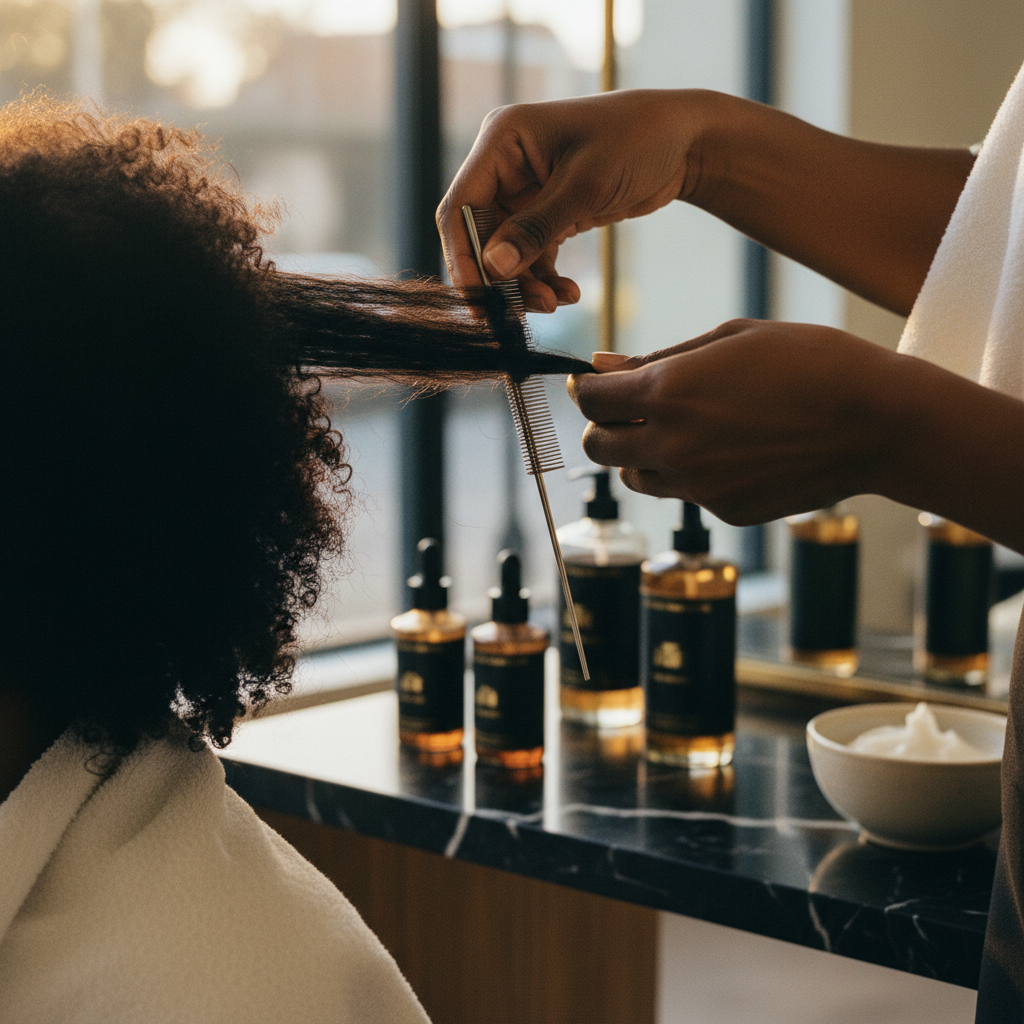
Quick answer: To grow healthy-looking afro hair, focus on consistent moisture, gentle handling, and minimising breakage. This involves using sulphate-free cleansers, regular deep conditioning, protective styling, and avoiding excessive heat. Understanding your hair's unique tightly coiled structure, which makes it prone to dryness and fragility, is key to developing a routine that supports its health and appearance. While external care can enhance the healthy look of afro hair, it cannot alter its genetic growth cycle or treat underlying medical conditions causing hair loss.
Key takeaways
- Afro-textured hair's unique structure makes it prone to dryness and breakage, requiring specific care.
- Prioritise moisture with leave-in conditioners, oils, and creams (like the LOC or LCO method) to prevent dehydration.
- Minimise mechanical stress by detangling gently when hair is damp and conditioned, using wide-tooth combs or fingers.
- Reduce heat styling and chemical treatments to preserve the hair's structural integrity and prevent damage.
- Protective styles can limit daily manipulation and exposure, supporting length retention and hair health.
- A balanced diet and addressing any underlying health issues contribute to overall hair well-being.
How to grow healthy-looking afro hair: what the evidence shows
Growing healthy-looking afro hair largely depends on understanding its unique structural characteristics and tailoring a care routine to address its specific needs. Afro-textured hair, classified as Type 4, features a tightly coiled, often elliptical or flattened fibre shape, with multiple twists and turns along its length. This structure means that the cuticle, the hair's protective outer layer, is often raised at these bends, making it more vulnerable to damage and moisture loss compared to straighter hair types.
The natural oils (sebum) produced by the scalp struggle to travel down the coiled hair shaft efficiently. This leads to afro hair being naturally drier than other hair types, increasing its susceptibility to breakage. Therefore, the core principles for maintaining and growing healthy-looking afro hair revolve around maximising moisture retention, minimising mechanical stress, and protecting the hair from environmental damage.
What does healthy-looking afro hair feel and look like?
Healthy-looking afro hair is typically soft, pliable, and exhibits a natural sheen. It retains moisture well, feels elastic, and shows minimal signs of frizz or split ends. When you stretch a strand, it should have some give before returning to its natural curl pattern without snapping. An itchy, flaky, or inflamed scalp is often an indicator of imbalance, which can impede hair health and its appearance.
The mechanisms behind healthy afro hair growth
The appearance of hair health is intrinsically linked to the integrity of the hair shaft and the condition of the scalp. For afro hair, promoting a healthy look involves strategies that support both.
Moisture retention
Moisture is fundamental. The tight coils of afro hair physically hinder the even distribution of sebum from the scalp to the ends. External hydration becomes crucial. Humectants, such as glycerin or hyaluronic acid, draw moisture from the air into the hair, while emollients (like shea butter or natural oils) help to soften and smooth the cuticle. Occlusives (such as heavier oils or butters) then seal this moisture into the hair shaft, reducing evaporation. This multi-step approach, often seen in methods like the Liquid-Oil-Cream (LOC) or Liquid-Cream-Oil (LCO) methods, helps to keep hair hydrated and less prone to brittleness and breakage.
Minimising mechanical stress and breakage
Afro hair's unique coiled structure, with its many points of curvature, makes it inherently fragile. Each bend is a potential weak point where the cuticle can lift, leading to tangling and breakage. Gentle handling is paramount. This includes:
- Detangling: Always detangle when hair is damp and saturated with a conditioner or a dedicated detangling product to provide "slip". Use fingers or a wide-tooth comb, working from the ends upwards to avoid creating larger knots.
- Cleansing: Use sulphate-free shampoos. Sulphates can be harsh detergents that strip natural oils, further dehydrating afro hair. Focus cleansing on the scalp and allow the suds to run down the hair shaft rather than vigorously scrubbing the lengths.
- Drying: Air drying or using a microfibre towel can reduce friction. If blow-drying, use a diffuser on a cool or low-heat setting.
Scalp health
A healthy scalp provides the optimal environment for follicular function. A clean, balanced, and moisturised scalp is less prone to irritation, inflammation, and conditions like dandruff, which can negatively impact hair health. Regular, gentle cleansing to remove product build-up and environmental impurities, along with targeted treatments for specific scalp conditions, supports overall hair vitality.
What you can do to grow healthy-looking afro hair
Cultivating healthy-looking afro hair requires a consistent and thoughtful routine tailored to its specific needs. Here's what you can do:
Establish a gentle cleansing routine
Wash your hair every 7 to 14 days, or as needed, using a sulphate-free shampoo. Over-washing can strip essential moisture, while under-washing can lead to product build-up and scalp issues. For deep cleansing without stripping, consider an occasional clarifying wash.
Deep condition regularly
After shampooing, apply a deep conditioner or hair mask. These products are formulated to penetrate the hair shaft more deeply, providing intense hydration and strengthening. Leave it on for 20 to 30 minutes, ideally with gentle heat (e.g., a plastic cap under a warm towel) to enhance penetration, then rinse with cool water to help seal the cuticle.
Prioritise moisture and sealing
Afro hair thrives on moisture. After cleansing and conditioning, apply a leave-in conditioner. Follow this with an oil or cream to seal in the hydration. The LOC (Liquid, Oil, Cream) or LCO (Liquid, Cream, Oil) methods are popular and effective for this. The
Find these ingredients in Watermans products
- Shea Butter: you will find this ingredient in our Curly Hair Conditioner.