How to Define Curly Hair: An Evidence-Based Guide
12 min read ·
Learning how to define curly hair involves understanding your hair's unique structure and applying specific techniques and products to enhance its natural curl pattern, reduce frizz, and improve overall appearance.
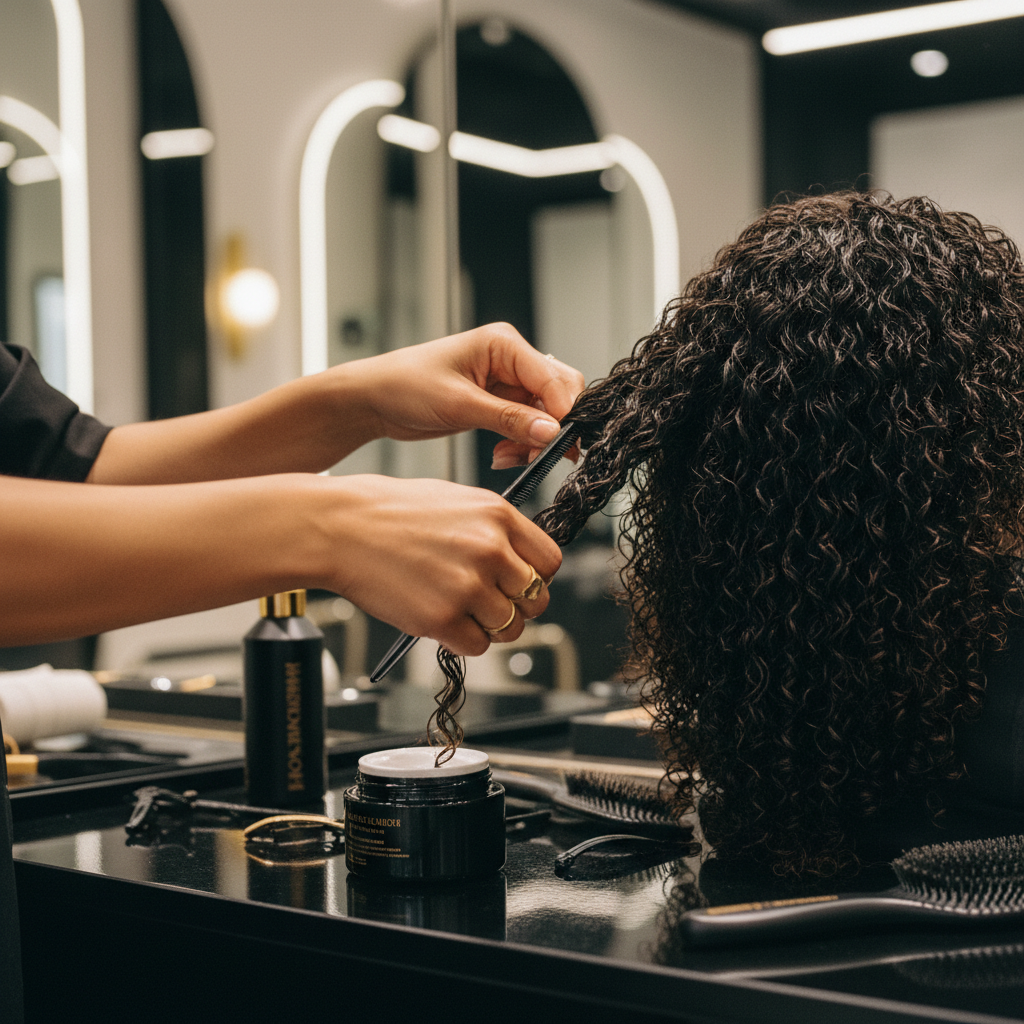
Quick answer: Learning How to define curly hair involves a combination of specific techniques and suitable products designed to enhance the natural curl pattern, minimise frizz, and improve the hair's overall appearance. This process focuses on encouraging the hair strands to clump together into well-formed curls. The main limitation is that results vary significantly based on individual hair type, porosity, and texture, meaning a universal "perfect" method doesn't exist. Instead, it requires personal experimentation to find what works best for your unique curls.
Key takeaways
- Curly hair naturally forms its shape due to the elliptical cross-section of the hair fibre and uneven keratin distribution.
- Defining curls involves optimising moisture, encouraging curl clumping, and setting the pattern to reduce frizz.
- Techniques like scrunching, finger coiling, and using a Denman brush help shape curls during the styling process.
- Specific product types, such as leave-in conditioners, curl creams, and gels, are crucial for hydration, definition, and hold.
- Proper drying methods, particularly air drying or diffusing, are essential to preserve the defined curl pattern and prevent frizz.
- Protecting curls overnight and refreshing them on non-wash days can extend the longevity of defined styles.
How to define curly hair: what the evidence shows
To effectively define curly hair, the focus is on enhancing its natural structure and minimising frizz, which often occurs due to a raised hair cuticle. Curly hair fibres have an elliptical (oval) cross-section, unlike straight hair which is round, and an uneven distribution of keratin proteins. This unique structure causes the hair to bend and twist as it grows, forming curls, waves, or coils. The goal of defining curls is to support this natural formation by ensuring adequate hydration, promoting curl clumps, and then setting that pattern until the hair is dry.
Water is the ultimate curl definer. When hair is wet, the hydrogen bonds within the hair fibre break, allowing the hair to be reshaped. As it dries, these bonds reform, locking in the new shape. This is why applying products to soaking wet or very damp hair is crucial; it helps the hair form its natural curl clumps more easily before the hydrogen bonds reset. The process involves encouraging these clumps, coating them with products that provide moisture and hold, and then drying the hair gently to preserve the shape.
The mechanism of curl definition
Defining curly hair works by manipulating the hair fibre in its most flexible state (wet) and then holding that shape as it dries. The key steps include:
- Hydration: Curly hair tends to be drier than straight hair because the natural oils (sebum) from the scalp struggle to travel down the bends and curves of the hair shaft. Well-hydrated hair is more elastic, less prone to frizz, and better able to form defined curl patterns. Leave-in conditioners and curl creams provide this essential moisture (see also: Hair Hydration: The Science Behind Keeping Hair Moist).
- Clump formation: When wet, individual hair strands naturally group together. Techniques like raking, praying hands, or scrunching help encourage these strands to form larger, more uniform curl clumps. The goal is to avoid separating these natural groupings prematurely.
- Hold and cast: Styling gels, mousses, or foams contain film-forming polymers. These polymers create a flexible "cast" around the formed curl clumps as the hair dries. This cast acts like a scaffold, holding the curl pattern in place and protecting it from humidity until the hair is completely dry. Once dry, the cast can be gently broken, leaving soft, defined curls without frizz.
- Drying: Slow, gentle drying, either by air or using a diffuser with low heat and speed, is vital. High heat and strong airflow can disrupt the delicate curl pattern and lead to frizz. The cast formed by styling products helps protect the curls during this crucial phase.
Signs of well-defined curly hair
Well-defined curly hair typically displays several characteristics:
- Clear, consistent curl pattern: Curls are distinct, uniform, and follow their natural shape without becoming amorphous or frizzy.
- Reduced frizz: The outer layer of the hair (cuticle) lies flat, reflecting light and preventing a fuzzy appearance.
- Bounce and elasticity: The curls have spring and movement, indicating good hydration and healthy hair fibres.
- Softness (after breaking the cast): Once the gel cast is scrunched out, the hair should feel soft and moisturised, not stiff or crunchy.
- Longevity: Defined curls tend to hold their shape for several days, requiring minimal refreshing.
Conversely, poorly defined curls often appear frizzy, lack a clear pattern, and may feel dry or brittle.
What you can do: A step-by-step guide to defining curls
Learning how to define curly hair is a process that benefits from consistency and attention to detail. These steps are a general guide, and you may need to adjust them based on your hair's specific needs (see also: Caring for Curly Hair).
- Start with clean, conditioned, and wet hair: After washing your hair with a gentle shampoo and thoroughly conditioning it, gently squeeze out excess water. Hair should be soaking wet, not just damp. This helps hair clump naturally. Detangle thoroughly with a wide-tooth comb or a detangling brush while the conditioner is still in your hair, then rinse.
- Apply leave-in conditioner: Section your hair if it's thick or long. Apply a small amount of leave-in conditioner evenly from mid-lengths to ends. This provides a foundational layer of moisture and prepares the hair for styling products. Make sure to cover all strands. You can use methods like the "praying hands" technique to smooth it onto your hair without disturbing curl clumps.
- Layer curl cream (optional, but recommended for more hydration): If your hair is particularly dry or you desire extra moisture and clump enhancement, apply a curl cream. Distribute it thoroughly, ensuring each curl clump is coated. Again, use gentle smoothing motions to avoid separating curls.
- Apply styling gel, mousse, or foam: This is the most crucial step for hold and definition. Work the chosen styler through your hair using scrunching motions. Ensure even distribution. For very defined curls, you can finger coil individual sections or use a Denman brush to create defined ribbons of hair. Don't be afraid to use a generous amount, particularly with gel, as too little will not provide adequate hold or frizz control.
- Encourage curl formation: Gently scrunch and pulse your hair upwards towards your scalp. This encourages the natural curl pattern to form and brings the curls closer to their root. You can also gently shake sections of hair to encourage definition.
- Remove excess water (gently): Use a microfiber towel or a cotton T-shirt to gently blot and scrunch out excess water. Avoid rubbing, as this can disrupt the curl pattern and cause frizz. The aim is to remove drips, not to dry the hair.
- Dry your hair:
- Air drying: This is the gentlest method. Allow your hair to air dry completely without touching it. This minimises frizz but can take several hours.
- Diffusing: For faster drying and added volume, use a diffuser attachment on your hairdryer. Use a low heat and low air setting. Gently place sections of hair into the diffuser bowl, lifting them towards the scalp. Hold the diffuser still for a few moments before moving to the next section. Dry until your hair is 80 to 90% dry, then let it air dry the rest of the way to minimise frizz.
- "Scrunch out the crunch": Once your hair is completely dry (and ideally for a few hours after to ensure internal drying), if you used a gel that formed a "cast" (a hard, crunchy feeling), gently scrunch your hair with your hands. You can also add a few drops of a lightweight hair oil to your palms before scrunching to add shine and softness. This breaks the cast, leaving soft, defined, and frizz-free curls.
When the cause may be something else: factors affecting curl definition
Sometimes, despite your best efforts, curls may struggle with definition. This can be due to underlying factors:
- Hair damage: Chemical treatments, excessive heat styling (see also: Heat Styling: Understanding Its Effects and How to Protect Your Hair), or mechanical damage can alter the hair's protein structure, leading to loss of curl pattern and increased frizz (see also: Hair Damage: Causes, Signs, and Solutions).
- Product build-up: Accumulation of silicones, heavy oils, or waxes can weigh hair down and prevent curls from forming properly. Regular clarifying washes can help (see also: How to Do a Clarifying Wash: A Guide to Deep Hair Cleansing).
- Hard water: Minerals in hard water can accumulate on the hair, making it feel rough, dull, and difficult to manage, which impacts curl definition (see also: Hard Water and Hair Damage: Understanding the Impact on Your Hair).
- Hair porosity: High porosity hair, which has a more open cuticle, can struggle to retain moisture, leading to frizz and less defined curls. Low porosity hair can be prone to product build-up. Understanding your hair porosity helps in choosing the right products (see also: Understanding Hair Porosity: How Your Hair Absorbs and Retains Moisture).
- Hormonal changes or certain medical conditions: While not directly causing a lack of definition, these can affect hair health and texture, potentially impacting how well curls form.
When to get professional advice
If you consistently struggle to achieve curl definition despite trying various techniques and products, or if you notice significant changes in your hair texture or health, it may be beneficial to consult a professional stylist specialising in curly hair or a trichologist. They can assess your hair and scalp health, identify any underlying issues, and provide personalised recommendations.
Common mistakes affecting curl definition
Understanding common pitfalls can help you refine your curl defining routine.
| Mistake | Impact | Solution |
|---|---|---|
| Rubbing hair with a terrycloth towel | Creates friction, roughens the cuticle, leads to frizz | Use a microfiber towel or cotton T-shirt; gently blot, do not rub |
| Applying products to dry or slightly damp hair | Ineffective product distribution, less definition, more frizz | Always apply styling products to soaking wet hair |
| Not using enough styler | Lack of hold, curls won't last, increased frizz | Ensure thorough coating, especially with gels; don't be afraid to use more |
| Touching hair while drying | Disrupts curl pattern, causes frizz | Hands off until hair is completely dry |
| Over-manipulating hair | Can lead to frizz, breakage, and loss of definition | Be gentle, use a wide-tooth comb for detangling, and avoid excessive brushing |
| Rinsing out too much conditioner | Hair lacks moisture and slip, making it harder to define and increasing frizz | Leave a small amount of conditioner in, especially for dry hair |
Frequently asked questions about How to define curly hair
How often should I define my curly hair?
Most people define their curls on wash days, which can range from once or twice a week to every few days, depending on hair type and scalp condition. The definition typically lasts until the next wash, though many people refresh their curls on non-wash days to extend the style. Experiment to find a schedule that suits your hair and lifestyle.
Can heat styling help define curly hair?
While direct heat styling with curling irons can create curls, it often uses high temperatures that can damage the natural curl pattern over time and lead to heat damage. For naturally curly hair, using a diffuser on a low heat setting is a gentle way to encourage definition and volume without the harsh effects of direct heat (see also: Heat Styling Safety Best Practices).
Why are my curls not holding definition?
Several factors can cause curls to lose definition. These include insufficient hydration, not using enough styling product with hold (like gel), touching your hair too much while it's drying, or hair damage. Additionally, product build-up or hard water can weigh down curls, making them difficult to define. Re-evaluating your product choices and technique can help improve hold.
Does hair porosity affect how to define curly hair?
Yes, hair porosity significantly impacts curl definition. High porosity hair, which has an open cuticle, absorbs moisture quickly but loses it just as fast, leading to frizz and less definition without adequate sealing products. Low porosity hair can struggle to absorb products but retains moisture well once it penetrates. Adjusting product types and application methods based on your porosity is key to achieving optimal definition.
What's the difference between curl definition and frizz control?
Curl definition refers to the clear, well-formed shape of individual curls or clumps. Frizz control focuses on smoothing the hair cuticle to prevent a fuzzy, unruly appearance. While they are closely related (well-defined curls often have less frizz), a product might offer good frizz control without creating strong definition, and vice versa. Optimal results usually come from products that address both aspects.
How can I make my defined curls last longer?
To make your defined curls last longer, protect them overnight using a satin or silk pillowcase or bonnet to reduce friction. Avoid touching your hair excessively during the day. On non-wash days, you can refresh curls with a light mist of water mixed with leave-in conditioner, gently scrunching to reactivate the curl pattern. Minimise humidity exposure if possible.
Conclusion
Learning How to define curly hair is an art and a science, blending an understanding of your hair's unique structure with effective techniques and suitable products. It's about more than just aesthetics; it's about fostering hair health and allowing your natural curl pattern to flourish. By focusing on adequate hydration, promoting curl clump formation, and using styling products that provide hold, you can consistently achieve beautiful, frizz-free, and long-lasting definition. Remember that consistency, patience, and a willingness to experiment with different approaches are your best allies in mastering the art of defining your curls.
Watermans Products for Curl Definition
Watermans products are formulated with ingredients that support overall hair health, which is foundational for good curl definition. While no single product guarantees curl definition independently, integrating Watermans shampoo and conditioner into your routine can help create an optimal environment for your curls.
For instance, Watermans Grow Me Shampoo and Conditioner are designed to nourish the scalp and hair, promoting healthy hair growth and strength. Healthy hair is more receptive to styling and better able to hold its natural curl pattern. Using these products to cleanse and condition your hair can ensure your curls start with a clean, hydrated base, reducing dryness and supporting elasticity. After washing and conditioning, you would then proceed with your preferred leave-in, curl cream, and gel to complete your curl definition routine.
Sources and references
- American Academy of Dermatology Association, "Hair care products: How to choose", 2023. Aad.org
- Gavazzoni Dias, M. F. (2015). Hair Cosmetics: An Overview. International Journal of Trichology, 7(1), 2 to 15. DOI: 10.4103/0974-7753.153493
- PubMed Central, "The Biology of Human Hair Follicles", 2005. Ncbi.nlm.nih.gov/pmc/articles/PMC1410214/
- National Center for Biotechnology Information (NCBI), "Hair Shaft Damage from Cosmetic Procedures", 2007. Ncbi.nlm.nih.gov/books/NBK482377/
- British Association of Dermatologists, "Hair Loss", 2023. Bad.org.uk