Hair Texture: Understanding Your Hair's Natural Characteristics
12 min read ·
Hair Texture describes the natural pattern of a hair strand, from straight to coily, and it is primarily determined by the shape of the hair follicle.
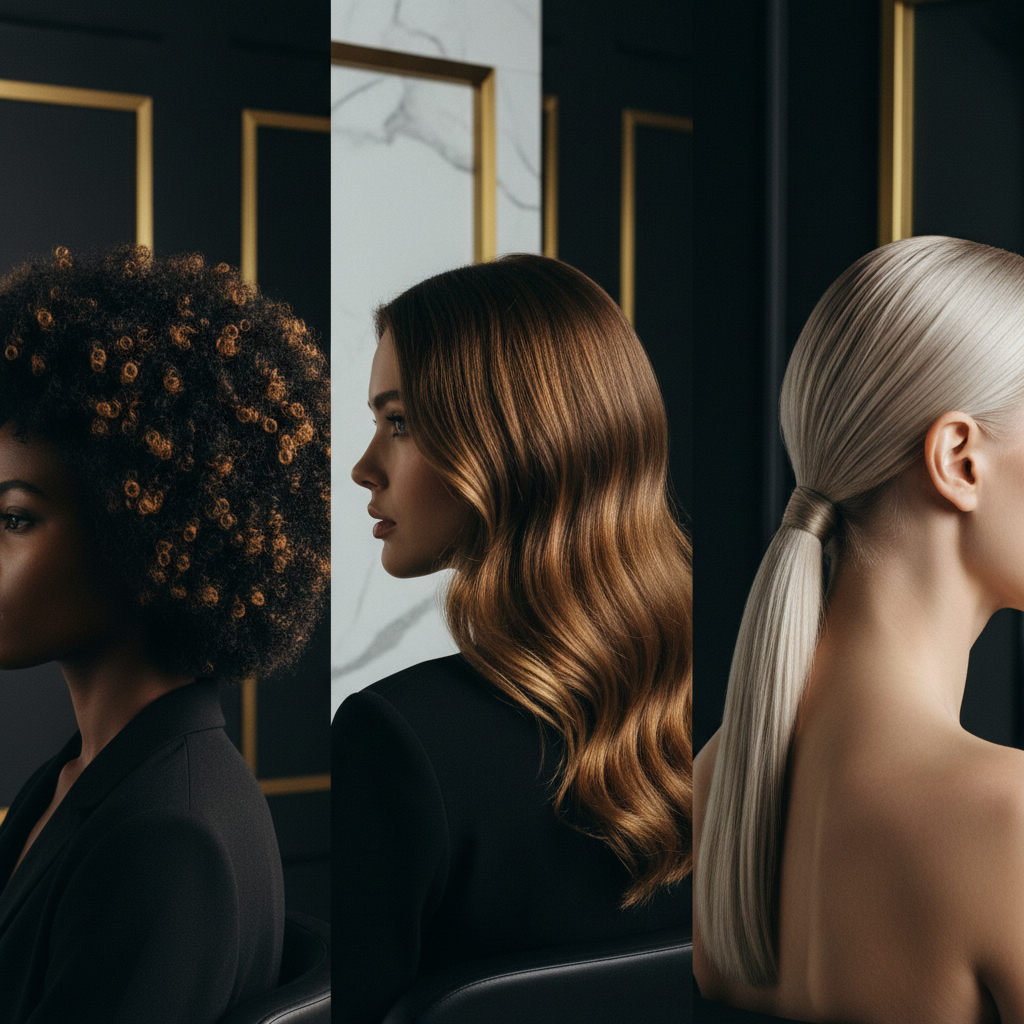
Quick answer: Hair Texture refers to the natural pattern and shape of individual hair strands as they emerge from the scalp. This characteristic, largely determined by genetics and the shape of the hair follicle, dictates whether your hair is straight, wavy, curly, or coily. While often discussed in terms of cosmetic appearance, understanding your Hair Texture is crucial for effective hair care, as different textures have distinct needs regarding moisture, cleansing, and styling. The primary limitation is that Hair Texture alone doesn't define all hair properties, such as density or porosity.
Key takeaways
- Hair Texture describes the shape of the hair strand (straight, wavy, curly, coily) and is primarily genetic.
- The cross-sectional shape of the hair follicle determines Hair Texture: round follicles produce straight hair, oval follicles produce wavy to curly hair, and elliptical follicles produce coily hair.
- Different Hair Textures have distinct care requirements, influencing product choice, washing frequency, and styling techniques.
- Hair Texture impacts how natural oils distribute along the hair shaft, with straight hair often appearing oilier than coily hair.
- Changes in Hair Texture can occur due to hormonal shifts, chemical treatments, or damage, but these are typically not permanent alterations to the underlying genetic pattern.
Hair Texture: what the evidence shows
Hair Texture is a fundamental biological characteristic that dictates the natural shape of a hair strand, distinguishing it as straight, wavy, curly, or coily. This characteristic is primarily inherited, meaning it's determined by genetics. The key biological factor influencing Hair Texture is the shape of the hair follicle itself. Research indicates that a hair follicle's cross-sectional shape directly correlates with the emerging hair's pattern: round follicles produce straight hair, oval follicles tend to yield wavy to curly hair, and highly elliptical or flattened follicles result in coily hair (Journal of Cosmetic Science, 2007; British Journal of Dermatology, 2011).
Beyond its shape, the orientation of the hair follicle within the scalp also plays a role. Straight hair follicles typically grow perpendicular to the scalp surface, whereas curly and coily hair follicles grow at an angle, often with a curve, causing the hair shaft to bend as it grows. The distribution of keratin, the primary protein in hair, also varies across textures, contributing to the hair's structural integrity and curl pattern (Experimental Dermatology, 2009).
Understanding your Hair Texture is essential for effective hair care because each pattern behaves differently. For instance, straight hair allows natural scalp oils (sebum) to travel easily down the shaft, often making it prone to appearing oily quickly. In contrast, the intricate bends and twists of curly and coily hair make it harder for sebum to lubricate the entire strand, leading to increased dryness and a greater need for moisture (International Journal of Trichology, 2017).
The mechanism behind different Hair Textures
The curl of a hair strand is created by several interacting factors at the follicular level. At its core, the differential growth rate and distribution of keratinocytes (cells that produce keratin) on opposite sides of the hair follicle influence the bending of the hair shaft. In curly and coily hair, the cells on the inner curve of the follicle reproduce faster than those on the outer curve, causing the hair to coil. This differential growth is genetically programmed.
Furthermore, the distribution of specific types of keratin and associated proteins varies. For example, some studies suggest that curly hair has an asymmetrical distribution of ortho- and para-cortex cells within the hair shaft, contributing to its curl pattern. The disulfide bonds, which are critical for hair's structural strength, are also distributed differently, influencing how the hair can be shaped and how it responds to humidity and chemical treatments.
How Hair Texture impacts hair care
Recognising your Hair Texture helps you choose appropriate products and routines. For example, straight hair might benefit from lighter conditioners and more frequent washing to manage oiliness, while curly and coily Hair Textures often require rich, moisturising products and less frequent washing to combat dryness and reduce frizz. The challenge for curly and coily hair often lies in retaining moisture due to its structure, which makes it more prone to breakage if not properly hydrated (Skin Research and Technology, 2018). For more on managing this, you could explore articles like 'Hair Hydration: The Science Behind Keeping Hair Moist' or 'Caring for Curly Hair'.
Chemical treatments like perms or relaxers physically alter the disulfide bonds within the hair shaft to change its Hair Texture. While these treatments can effectively modify the curl pattern, they can also weaken the hair structure, making it more susceptible to damage. Heat styling, discussed in 'Heat Styling: Understanding Its Effects and How to Protect Your Hair', also temporarily reshapes these bonds.
Can Hair Texture change?
While your fundamental Hair Texture, determined by genetics, is largely permanent, its appearance and characteristics can undergo temporary or even long-term alterations due to various factors. These changes don't typically mean your follicle suddenly becomes a different shape, but rather that the hair it produces is affected.
Factors influencing Hair Texture appearance
- Hormonal Fluctuations: Significant hormonal shifts, such as those occurring during puberty, pregnancy, menopause, or due to certain medical conditions, can temporarily influence the thickness, growth rate, and perceived texture of hair. For instance, some individuals report curlier or wavier hair during pregnancy due to increased hormone levels.
- Ageing: As we age, hair follicles can shrink, and hair production can slow. Hair may become finer, lose some of its natural pigment (turning grey), and its texture might appear less defined or more prone to frizz due to changes in the hair's internal structure and cuticle integrity (Journal of Investigative Dermatology, 2004).
- Chemical Treatments: Processes like perming, relaxing, or colouring physically alter the hair's internal structure and its disulfide bonds, leading to a temporary or semi-permanent change in its curl pattern. These changes are a result of altering the hair fibre, not the follicle, and the new growth from the scalp will typically revert to the original Hair Texture. For information on how these treatments impact hair, see 'Chemical Hair Treatments: What They Are and How They Affect Hair'.
- Damage: External factors such as excessive heat styling, harsh chemical exposure, or mechanical stress can damage the hair's cuticle and cortex, leading to a change in its feel and appearance. Damaged hair might become rougher, drier, or lose its defined curl pattern, appearing more frizzy or unmanageable. This is often breakage, not a change in Hair Texture. Learn more in 'Hair Damage: Causes, Signs, and Solutions'.
- Environmental Factors: Humidity can significantly affect the appearance of Hair Texture, particularly for wavy and curly types, causing the hair to swell and frizz. This is due to the hair's hygroscopic nature, meaning it absorbs moisture from the air.
- Scalp Health: A healthy scalp environment is crucial for optimal hair growth. Conditions like inflammation or excessive build-up can impact the hair follicle, potentially affecting the quality of the hair strand as it emerges. While not directly changing Hair Texture, it can influence how the hair behaves. Refer to 'Understanding Scalp Health: A Foundation for Thriving Hair'.
It's important to differentiate between a true, genetically driven change in Hair Texture and temporary alterations in appearance or condition. The underlying genetic blueprint for your hair's curl pattern remains constant, but how that pattern manifests can be influenced by internal and external factors.
Classifying Hair Texture
While the science identifies the biological factors, the cosmetic industry uses classification systems to help people understand their Hair Texture for styling and product selection. The most widely referenced system categorises hair into four types: Straight (Type 1), Wavy (Type 2), Curly (Type 3), and Coily (Type 4), with further sub-classifications (A, B, C) based on the tightness of the wave, curl, or coil.
| Hair Texture Type | Characteristics | Needs and Considerations |
|---|---|---|
| Type 1: Straight | No curl pattern, lies flat from root to tip. Shiny due to smooth cuticle. | Prone to oiliness (sebum spreads easily). Can lack volume. Benefits from light products. |
| Type 2: Wavy | Gentle 'S' shape, ranging from loose waves to more defined patterns. Can be fine or coarse. | Prone to frizz, especially in humidity. Needs moisture without weighing down. |
| Type 3: Curly | Distinct spiral or loop pattern, from loose curls to tight corkscrews. | Prone to dryness and frizz. Requires hydration and curl-defining products. |
| Type 4: Coily | Tightly coiled, often Z-shaped or tiny spirals. Dense, but can be fine. | Most prone to dryness and shrinkage. Needs rich moisture, protective styling, and gentle handling. |
This system, while helpful, is a general guide. Many people have a combination of textures on their head, and factors like hair density (the number of strands per square inch) and hair porosity (how well hair absorbs and retains moisture) also significantly influence care routines. For a deeper understanding of porosity, see 'Understanding Hair Porosity: How Your Hair Absorbs and Retains Moisture'.
What you can do to care for your Hair Texture
Caring for your Hair Texture effectively involves tailoring your routine to its specific needs. The goal is always to maintain the hair's health, integrity, and appearance.
- Cleansing: Straight and wavy Hair Textures might require more frequent washing (every 1 to 3 days) to manage oiliness, using lighter shampoos. Curly and coily textures often benefit from less frequent washing (every 3 to 7 days or longer) with moisturising, sulfate-free shampoos or co-washing to preserve natural oils. The article 'Choosing the Right Shampoo: A Comprehensive Guide to Hair Cleansing' can provide further guidance.
- Conditioning and Moisturising: All Hair Textures benefit from conditioner. Straight hair may need lightweight formulas to avoid being weighed down, while curly and coily hair typically thrives with rich, deep conditioners and leave-in moisturisers to combat dryness. Refer to 'The Science of Conditioners: How Hair Care Formulations Work' and 'Hair Moisturizers: What They Are and How They Work'. For Afro-textured hair, 'How to Moisturise Afro Hair: A Guide to Hydration and Retention' offers specific advice.
- Styling: Heat styling should be minimised for all hair types but is particularly damaging to curly and coily Hair Textures due to their inherent dryness and fragility. When using heat, always apply a heat protectant. Air-drying or gentle diffused drying is often preferred. Protective styles can be beneficial for curly and coily hair to reduce manipulation and breakage. Explore 'Protective Styling: A Comprehensive Guide'.
- Brushing and Detangling: Straight and wavy hair can typically be brushed when dry. Curly and coily hair should almost exclusively be detangled when wet and saturated with conditioner, using a wide-tooth comb or fingers to prevent breakage. See 'How to Detangle Afro Hair Without Breakage: An Evidence-Based Guide'.
Frequently asked questions about Hair Texture
Can my Hair Texture change permanently?
No, your genetically determined Hair Texture is largely permanent. While factors like hormonal shifts, chemical treatments, or damage can temporarily alter the appearance or feel of your hair, the fundamental pattern that grows from your follicles does not permanently change. New hair growth will typically revert to your original Hair Texture once these influencing factors are removed or resolved.
Is Hair Texture the same as hair type?
Not quite. Hair Texture specifically refers to the curl pattern of the individual hair strand (straight, wavy, curly, coily). Hair type is a broader term that can encompass Hair Texture along with other characteristics like hair density (how much hair you have), hair porosity (how well your hair absorbs moisture), and the diameter of individual strands (fine, medium, coarse).
How does Hair Texture affect product absorption?
Hair Texture significantly impacts product absorption, largely due to differences in cuticle structure and overall hair health. Straight hair, with its tightly laid cuticles, can sometimes resist product penetration if formulas are too heavy. Curly and coily Hair Textures, often with more lifted cuticles and increased surface area from their bends, can be more porous and absorb products readily, yet also lose moisture faster. Understanding Hair Porosity is key here.
Why is my hair frizzy if I have a particular Hair Texture?
Frizz is common across many Hair Textures, particularly wavy, curly, and coily hair, and it occurs when the hair's outer cuticle layer is raised, allowing moisture from the air to enter and swell the hair shaft unevenly. This can be exacerbated by dryness, damage, humidity, or aggressive styling. Effective frizz management involves proper hydration, using anti-humectant products in humid climates, and gentle handling. See 'Dealing with Frizzy Hair' and 'How to Reduce Frizz in Hair'.
Does Hair Texture influence how often I should wash my hair?
Yes, Hair Texture plays a significant role. Straight hair often needs more frequent washing (daily or every other day) because scalp oils travel easily down the smooth shaft, making it appear greasy faster. Wavy hair may need washing every 2 to 3 days. Curly and coily Hair Textures, due to their structure, tend to be drier and benefit from less frequent washing (every 3 to 7 days or more) to retain essential moisture and natural oils.
Understanding your Hair Texture for optimal care
Your Hair Texture is a unique, genetically determined feature of your hair, guiding its natural shape, behaviour, and fundamental care requirements. Recognising whether your hair is straight, wavy, curly, or coily provides the foundation for selecting appropriate cleansing, conditioning, and styling strategies. While its appearance can be influenced by internal and external factors, the inherent Hair Texture remains consistent from the follicle. Embracing and understanding your Hair Texture allows for a more effective and nurturing approach to hair health, ensuring your hair thrives in its natural state.
Watermans and Hair Texture
Watermans offers products designed to support overall hair health, irrespective of Hair Texture, by focusing on nourishing the scalp and strengthening the hair fibre. Their formulations aim to provide essential nutrients and hydration, which are beneficial for all Hair Textures, especially when addressing concerns like hair shedding or breakage. For those with curly or coily Hair Textures, the Frojus range is specifically formulated to meet the unique needs of afro, curly, and wavy hair, providing intensive moisture and helping to define natural curl patterns.
Sources and references
- Journal of Cosmetic Science, 2007, 58(3), 291-304. The Hair Fibre: A Brief Review on its Structure and the Biochemistry of its Mechanical Properties.
- British Journal of Dermatology, 2011, 165(Suppl 2), 12-18. The biology of human hair: a new look at a old friend.
- Experimental Dermatology, 2009, 18(1), 86-97. Hair follicle shape is a determinant of hair shape and orientation.
- International Journal of Trichology, 2017, 9(3), 105-112. Ethnic Hair: A Review of Structure and Hair Care Practices.
- Skin Research and Technology, 2018, 24(1), 123-130. Biophysical characteristics of different ethnic hair types.
- Journal of Investigative Dermatology, 2004, 123(2), 298-306. Changes in human hair follicle dimensions with age.
- American Academy of Dermatology Association (AAD). Hair loss: Diagnosis and treatment.
- National Institutes of Health (NIH). Hair Biology: The growth and regulation of hair follicles.