Understanding Trichorrhexis Nodosa and Hair Breakage: Causes, Signs, and Recovery
10 min read ·
Learn the biological mechanisms behind trichorrhexis nodosa, why it causes sudden hair breakage instead of hair loss, and how to protect fragile strands.
Quick answer: Understanding Trichorrhexis Nodosa and Hair Breakage begins with recognising that this condition is structural fibre damage, not true follicular hair loss. Trichorrhexis nodosa occurs when trauma strips the protective cuticle, causing cortical fibres to splay into fragile, paintbrush-like nodes that snap under minimal tension. While acquired cases respond well to gentle handling and stopping chemical processing, congenital forms linked to metabolic disorders require medical diagnosis, as cosmetic changes alone cannot correct an underlying genetic defect.
Key takeaways
- Trichorrhexis nodosa is the most common hair shaft defect, characterised by tiny, brush-like swelling nodes along the hair fibre.
- It is a cause of hair breakage, not follicular shedding or alopecia; the hair bulb remains intact and rooted in the scalp.
- Most cases are acquired, triggered by repeated physical trauma, heat styling above 185°C, or aggressive chemical processing like bleaching and relaxing.
- Rare congenital forms can signal inborn metabolic conditions such as argininosuccinic aciduria, requiring specialist paediatric or dermatological care.
- Recovery requires cutting off damaged ends, eliminating mechanical friction, lowering wash frequency, and restoring fibre lubrication.
Understanding Trichorrhexis Nodosa and Hair Breakage: what the evidence shows
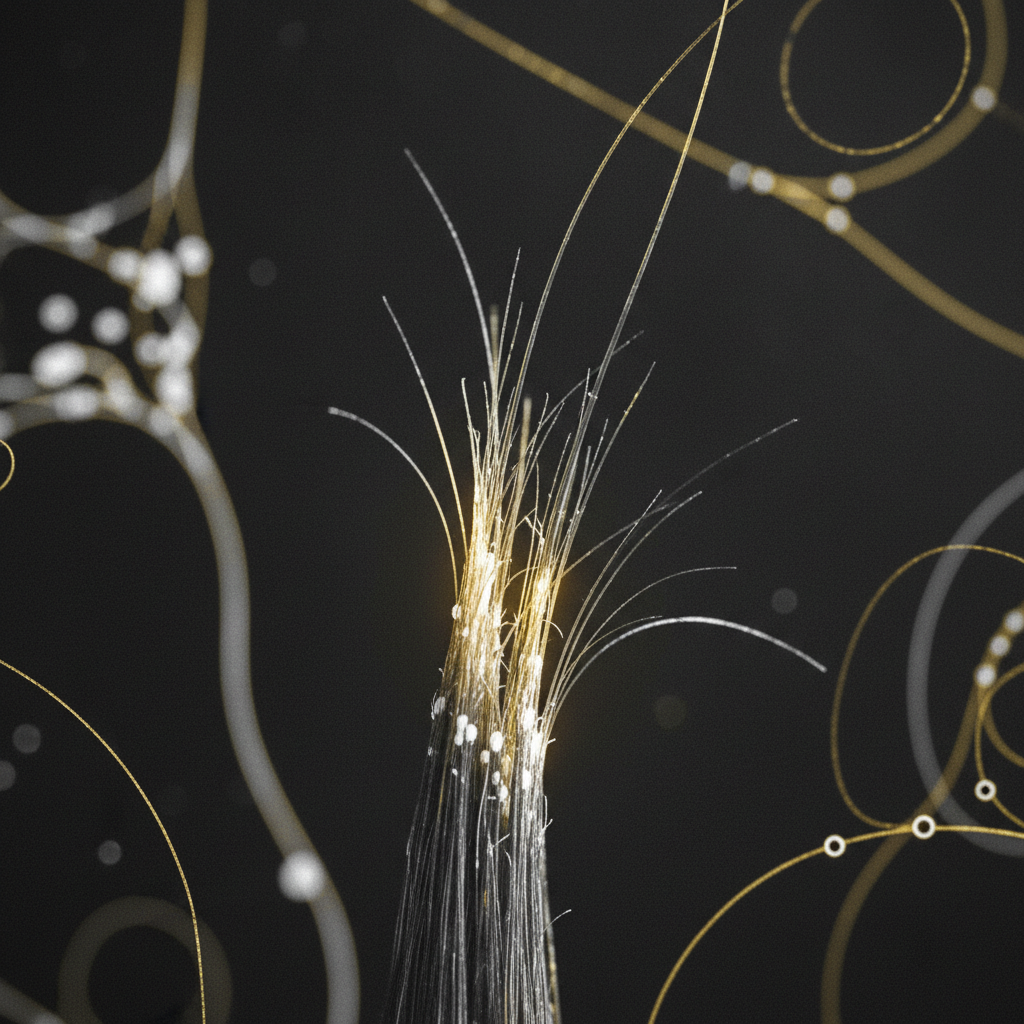
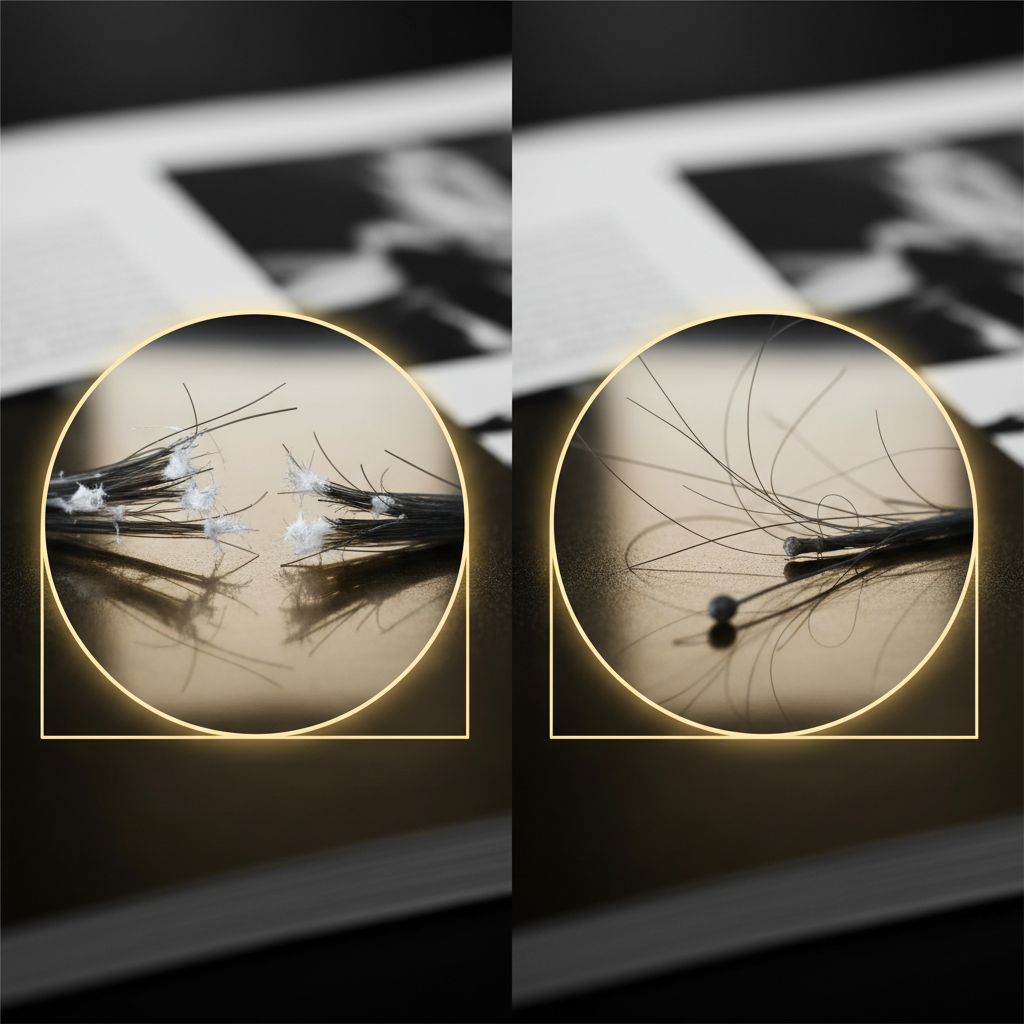
Understanding Trichorrhexis Nodosa and Hair Breakage requires a clear look at hair anatomy. Trichorrhexis nodosa (TN) is an acquired or congenital defect of the hair shaft. Under light microscopy or dermoscopy, affected strands reveal distinctive white or grey specks along the shaft. These nodes represent sites where the protective outer cuticle has worn away completely, causing the parallel keratin fibres of the cortex to separate, swell, and splay outwards. When viewed closely, two damaged sections resemble two interlocked paintbrushes or brooms pushed against each other.
Dermatological literature identifies trichorrhexis nodosa as the single most common structural abnormality responsible for localized or diffuse hair breakage. It primarily affects the distal ends of longer hair fibres, though in severe cases or fragile curly hair types, nodes can appear just a few millimetres from the scalp.
Researchers classify the condition into three primary presentations:
- Proximal trichorrhexis nodosa: Common in individuals of African ancestry or those with tightly coiled hair, typically developing within a few centimetres of the scalp. It usually results from chemical relaxers, hot combs, or tight mechanical styling applied to naturally vulnerable hair geometries.
- Distal trichorrhexis nodosa: Frequently observed in Asian and Caucasian hair, affecting the ends of long hair shafts. It correlates directly with cumulative exposure to ultraviolet radiation, blow-drying, bleaching, and repetitive brushing over years.
- Congenital trichorrhexis nodosa: A rare, inherited presentation present from infancy or early childhood. This form is often linked to metabolic disorders, abnormal sulphur metabolism, or ectodermal dysplasias.
Importantly, acquired TN does not damage the follicle. The dermal papilla continues producing hair at its normal rate of roughly 1 to 1.25 centimetres per month. However, because the hair breaks off at the node as quickly as it emerges, patients frequently mistake this severe breakage for a total halt in hair growth.
The mechanical and biochemical breakdown
Hair fibre integrity depends on a healthy cuticle layer composed of 5 to 10 overlapping scales glued together by the cell membrane complex (CMC). In healthy hair, 18-methyleicosanoic acid (18-MEA) forms a hydrophobic lipid barrier on the cuticle surface, repelling water and minimising friction during combing.
When hair undergoes repeated insults, this protective system fails:
- Alkaline swelling: Chemical lifting agents, permanent dyes (pH 9.0 to 10.5), and sodium hydroxide relaxers (pH 12.0 to 14.0) break disulphide bonds within the cortex and strip the surface 18-MEA layer. This leaves the cortex permanently hydrophilic and swollen.
- Thermal denaturation: Exposing wet or damp hair to flat irons above 185°C vaporises trapped water, forming structural vacuoles (bubble hair) and degrading alpha-keratin into disorganized beta-keratin.
- Mechanical shear stress: Brushing dry, chemically weakened hair creates friction coefficients that fracture the brittle cuticle edges. Once the cuticle is breached, transverse mechanical stress causes the cortical macrofibrils to split longitudinally, forming the classic node.
Differentiating structural breakage from true hair loss
A frequent diagnostic challenge in salons and clinics is distinguishing between severe breakage and shedding disorders. Misdiagnosis leads to incorrect treatments, such as applying scalp stimulators to hair shafts that simply need physical protection.
| Feature | Trichorrhexis Nodosa (Breakage) | Telogen Effluvium (Shedding) | Alopecia Areata (Hair Loss) |
|---|---|---|---|
| Primary Site | Hair shaft | Follicular shedding | Follicular autoimmune attack |
| Strand Ends | Broken, frayed, no bulb attached | White keratin bulb present at root | Exclamation mark hairs, tapered roots |
| Shaft Appearance | Tiny white nodes, frayed paintbrush tips | Uniform shaft diameter | Tapered near scalp, fractured |
| Scalp Density | Normal follicular opening count | Diffuse thinning, reduced density | Smooth, bare round or oval patches |
| Pull Test Result | Broken fragments without bulbs | Intact club hairs with bulbs | Anagen or dystrophic hairs at patch borders |
| Main Causes | Heat, bleach, relaxers, friction | Systemic illness, stress, deficiency | Autoimmune disruption |
The clinical signs to look for
Identifying trichorrhexis nodosa early prevents extensive fibre loss. You or your stylist can look for specific physical indicators:
- White flecks along the strand: Often mistaken for nits (head lice) or dry scalp flakes, these tiny white dots are fixed in place on the hair shaft and cannot be slid up or down the fibre.
- Rough, uneven texture: Running your fingers down an individual strand feels bumpy or beaded rather than smooth.
- Uneven perimeter length: Hair looks thin, ragged, or "chewed" at the ends despite regular cuts, with broken fragments littering clothing, pillows, or wash basins.
- Lack of length retention: The hair roots visibly show growth (such as visible regrowth lines on tinted hair), but the overall length of the hair never increases.
- Snapping during detangling: The hair produces an audible snap when brushed or combed, even under light tension.
When the cause may be an underlying medical issue
While over 90 percent of trichorrhexis nodosa cases stem from cosmetic and physical trauma, congenital or metabolic drivers must be ruled out when breakage occurs in infants, young children, or adults without a history of heat and chemical styling.
Key medical associations include:
- Argininosuccinic aciduria: An autosomal recessive urea cycle disorder caused by a deficiency of argininosuccinate lyase. Children present with cognitive delays, seizures, hyperammonemia, and marked trichorrhexis nodosa due to deficient arginine incorporation in hair keratin.
- Menkes kinky hair syndrome: An X-linked recessive copper transport defect marked by developmental regression, hypopigmentation, and twisted, fragile hair showing both pili torti and trichorrhexis nodosa.
- Trichothiodystrophy (TTD): A rare genetic neurodevelopmental condition characterized by sulphur-deficient, brittle hair that shows an alternating "tiger-tail" banding pattern under polarizing microscopy.
- Thyroid dysfunction and iron deficiency: Severe hypothyroidism slows cellular metabolism in the matrix, producing a weaker, poorly formed hair shaft that breaks easily when exposed to everyday grooming.
If hair breaks spontaneously in early childhood, or if hair breakage is accompanied by lethargy, brittle nails, unusual rashes, or developmental concerns, arrange an immediate medical review with a GP or paediatrician.
Practical steps to repair and protect damaged hair
Cosmetic chemistry cannot fuse split cortical macrofibrils back together permanently. However, you can halt the progression of trichorrhexis nodosa by combining mechanical preservation with targeted conditioning.
1. Prune the affected nodes
Because a node represents complete structural failure, the hair will inevitably snap at that point. Trimming the hair above the highest visible node halts the longitudinal splitting from migrating further up the shaft toward the scalp.
2. Cease all chemical services
Pause all bleaching, permanent hair dyeing, perming, and chemical relaxing for a minimum of 3 to 6 months. When you do reintroduce colour, opt for deposit-only, semi-permanent formulations that do not require ammonia or high-volume peroxide developers.
3. Manage wet elasticity and washing friction
Hair swells by up to 16% in diameter and 2% in length when wet, rendering the hydrogen bonds pliable and susceptible to stretching fatigue.
- Wash hair with lukewarm water rather than hot water.
- Apply a low-friction, sulphate-free shampoo focused strictly on the scalp. Allow lather to rinse through the mid-lengths without bunched scrubbing.
- Never brush wet hair with a fine-toothed comb. Use a wide-toothed comb or flexible detangling brush, working from ends upward.
4. Rebuild the hydrophobic surface layer
Use rinse-out conditioners and leave-in serums rich in cationic surfactants (such as cetrimonium chloride or behentrimonium methosulfate), hydrolysed plant proteins, and silicones (amodimethicone or dimethicone). These ingredients temporarily coat the exposed cortex, smooth lifted cuticle edges, and reduce combing friction by up to 60%.
5. Control heat exposure
Eliminate curling tongs and flat irons entirely during the recovery phase. If blow-drying is necessary, keep the device moving constantly, maintain a distance of at least 15 centimetres, use a diffuser or nozzle pointing down the cuticle, and keep temperatures well below 150°C. Always apply a certified thermal protectant containing heat-stable polymers.
Supporting hair condition with Watermans
When managing hair breakage, maintaining a calm, well-nourished scalp environment is just as crucial as protecting the shaft. While broken hair strands must be handled gently and trimmed, the new growth emerging from the scalp needs optimal conditions from the very start.
Watermans Grow Me Shampoo and Condition Me Conditioner are formulated without harsh sulphates, providing a gentle cleanse that reduces the mechanical stripping common with conventional clarifying products. Featuring ingredients like biotin, rosemary, hydrolysed lupin protein, and allantoin, this routine supports stronger-feeling hair while delivering deep surface slip to prevent detangling friction. Using a moisture-rich conditioner creates a protective barrier over compromised shafts, helping keep brittle ends supple and less prone to snapping.
When to seek professional advice
Consult a qualified trichologist or dermatologist if you notice sudden, widespread breakage without a clear history of heat or chemical damage. Professional evaluation using a dermatoscope can quickly confirm trichorrhexis nodosa and exclude conditions such as monilethrix, pili torti, or trichorrhexis invaginata (bamboo hair, seen in Netherton syndrome). A doctor should also investigate if breakage is accompanied by unexplained fatigue, sudden weight fluctuations, dry skin, or hair loss across other body areas.
Frequently asked questions about Understanding Trichorrhexis Nodosa and Hair Breakage
Can trichorrhexis nodosa be permanently cured with hair treatments?
No cosmetic treatment can permanently re-bond severed cortical fibres once a node has fully formed. Hair products can temporarily coat, smooth, and lubricate the shaft to prevent nearby intact hairs from breaking, but the structural weakness remains. The only permanent physical solution for an established node is trimming the hair above the point of damage, followed by modified styling habits.
What is the primary difference in Understanding Trichorrhexis Nodosa and Hair Breakage versus split ends?
Split ends (trichoptilosis) involve longitudinal separation of the hair shaft at the very tip, where the fibre bifurcates into two or more strands. Trichorrhexis nodosa involves focal, microscopic swelling along the mid-lengths or ends of the shaft where the cuticle has vanished, creating a distinct node that snaps transversely under light strain.
Can tight hairstyles cause trichorrhexis nodosa?
Yes. Excessive tension from tight ponytails, braids, weaves, or extensions exerts continuous traction on the hair fibre. When combined with mechanical friction from elastics or metal clips, this physical strain weakens the cuticle and induces localised nodes, causing proximal or mid-shaft breakage.
How long does it take for hair to recover from trichorrhexis nodosa?
Recovery time depends directly on the length of your hair and the rate of new growth. Because scalp hair grows roughly 1 to 1.25 centimetres per month, replacing damaged sections usually requires 6 to 12 months of careful maintenance, regular micro-trims, and the avoidance of harsh thermal or chemical processes.
Conclusion
Mastering the fundamentals of Understanding Trichorrhexis Nodosa and Hair Breakage allows you to stop treating superficial fibre damage as mysterious hair loss. Trichorrhexis nodosa is an acute mechanical vulnerability caused by a compromised cuticle, not an inactive follicle. By pruning compromised ends, reducing thermal and chemical aggression, and introducing lubricating conditioners, you can protect the integrity of the cortex and allow new, resilient hair to grow through safely.
Sources and references
- American Academy of Dermatology Association. Hair Breakage and Shaft Disorders.
- British Association of Dermatologists. Trichorrhexis Nodosa and Fragile Hair Management Guidelines.
- National Center for Biotechnology Information (NCBI). Argininosuccinic Aciduria and Metabolic Hair Manifestations.
- Journal of the European Academy of Dermatology and Venereology. Dermoscopic evaluation of structural hair shaft abnormalities.
- Sinclair, R. Healthy Hair: What Is It? Journal of Investigative Dermatology Symposium Proceedings, 2007.
Find these ingredients in Watermans products
- Copper: you will find this ingredient in our Hair Vitamins.