Chemical Relaxer Damage: Science, Symptoms, and Recovery
9 min read ·
Understand the causes, structural mechanisms, and rehabilitation strategies for Chemical Relaxer Damage, from bond cleavage to effective breakage prevention.
Quick answer: Chemical Relaxer Damage occurs when alkaline chemical straightening treatments break the natural disulphide bonds within the hair cortex, leading to structural weakness, cuticle degradation, and fibre snapping. Hair relaxers operate at extreme pH levels between 12 and 14, stripping natural lipids and making strands porous, brittle, and prone to severe breakage. While proper neutralisation and deep conditioning mitigate immediate risks, chemical alteration permanently alters the internal keratin matrix, meaning broken bonds cannot be naturally re-formed.
Key takeaways
- Chemical relaxers permanently restructure afro-textured and tight-curly hair by cleaving roughly 30% of cystine disulphide bonds, converting them into lanthionine.
- The extreme alkaline pH (12 to 14) of lye and "no-lye" relaxers strips the 18-methyleicosanoic acid (18-MEA) lipid layer, driving moisture loss and extreme porosity.
- True follicular hair loss from relaxers only occurs if chemical burns scar the scalp; the vast majority of visible thinning is mid-shaft fibre breakage rather than shedding from the root.
- Overlapping fresh relaxer onto previously processed strands is the leading cause of catastrophic breakage and mechanical failure.
- Once internal protein bonds are severed and converted, the shaft cannot be restored to its virgin state; damage management focuses on protein balance, lubrication, and growing out the processed fibre.
Chemical Relaxer Damage: what the evidence shows
Peer-reviewed dermatological research consistently confirms that Chemical Relaxer Damage alters the mechanical and structural properties of human hair fibres. A study published in the Journal of the American Academy of Dermatology demonstrated that chemically relaxed hair exhibits a significantly lower tensile strength and break-force threshold compared to untreated curly or straight hair.
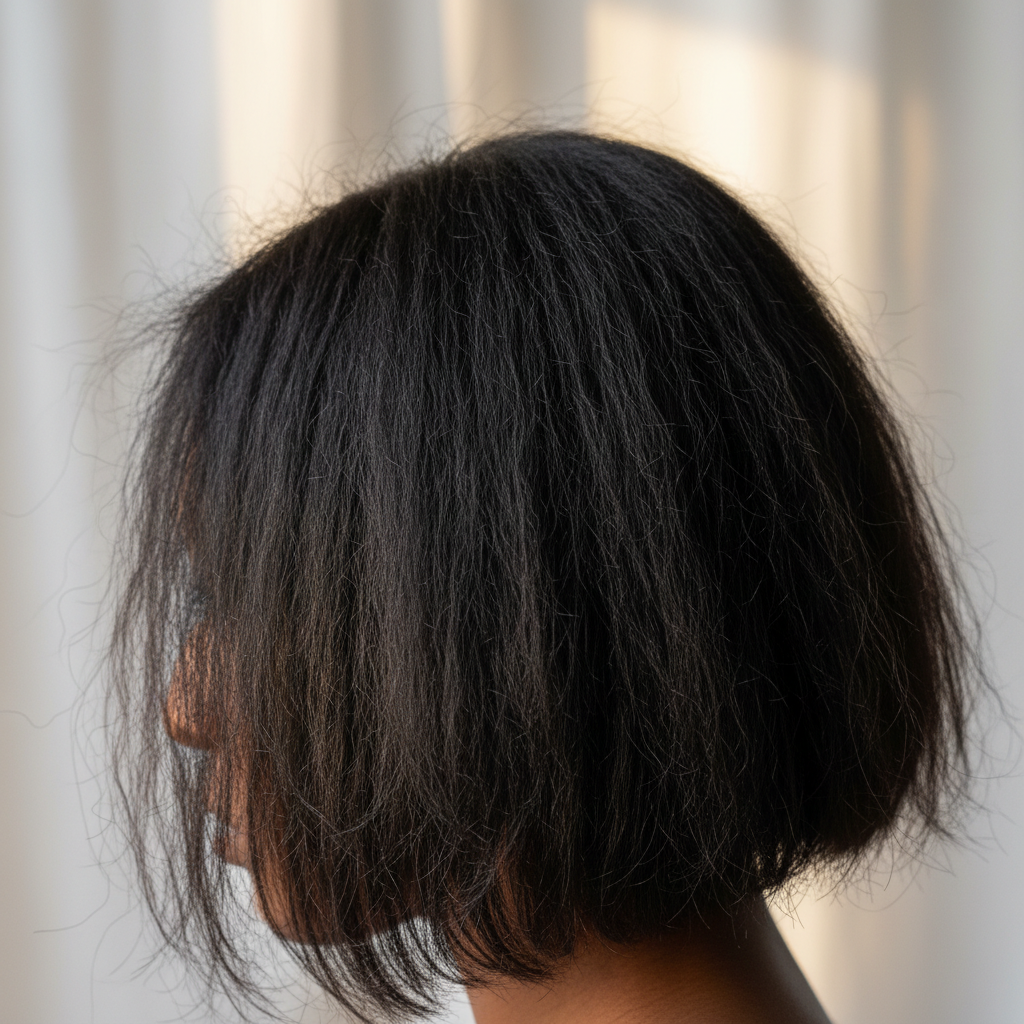
Under scanning electron microscopy, relaxed fibres reveal severe cuticular erosion. Healthy human hair features tightly shingled cuticle scales coated with a hydrophobic lipid layer known as 18-MEA. Relaxer formulations strip this lipid barrier almost instantly upon contact. The cuticle margins lift, crack, and eventually flake away, exposing the fibrous inner cortex to environmental moisture swings, heat, and friction.
Research also shows that the type of relaxer alters the specific pattern of degradation. Sodium hydroxide (lye) relaxers act quickly, penetrating the shaft efficiently, but carry a high risk of acute scalp irritation if left on too long. Calcium hydroxide with guanidine carbonate ("no-lye") relaxers are milder on the scalp, but cosmetic science studies show they deposit microscopic calcium carbonate salts onto the hair shaft. These mineral deposits leave the fibre stiff, dry, and exceptionally vulnerable to chronic snapping if not thoroughly cleared with chelating cleansers.
What the evidence does not show
There is no scientific evidence that chemical relaxers cause hereditary pattern baldness (androgenetic alopecia). While widespread cultural discussion often conflates all relaxer use with baldness, controlled trichological studies show that relaxers primarily cause mechanical breakage, not follicular miniaturisation.
Furthermore, evidence does not show that chemical relaxers inevitably cause scarring alopecia (such as central centrifugal cicatricial alopecia, or CCCA). While early observational studies suggested a correlation between relaxer frequency and CCCA, later controlled case studies published by the British Association of Dermatologists and American research registries found no statistically significant causal link. Relaxers can certainly trigger acute chemical burns and contact dermatitis, but routine chemical processing alone does not automatically cause primary inflammatory scarring alopecias.
Finally, no topical treatment, bond-building serum, or natural oil can reverse lanthionisation. Once disulphide bonds convert to lanthionine, that specific chemical restructuring is permanent.
The biochemical mechanism of relaxer processing
To understand how chemical relaxers damage hair, you must examine how they alter keratin. Afro-textured hair possesses an asymmetric, elliptical cross-section with high intrinsic curl patterns stabilised by strong disulphide bonds between neighbouring cysteine amino acid units.
Untreated Hair:
[Keratin Chain], Cystine (Disulphide Bond), [Keratin Chain]
 │
 (High pH Alkali Applied)
 ▼
Relaxed Hair:
[Keratin Chain], Lanthionine (Monosulphide), [Keratin Chain] + Broken Bonds
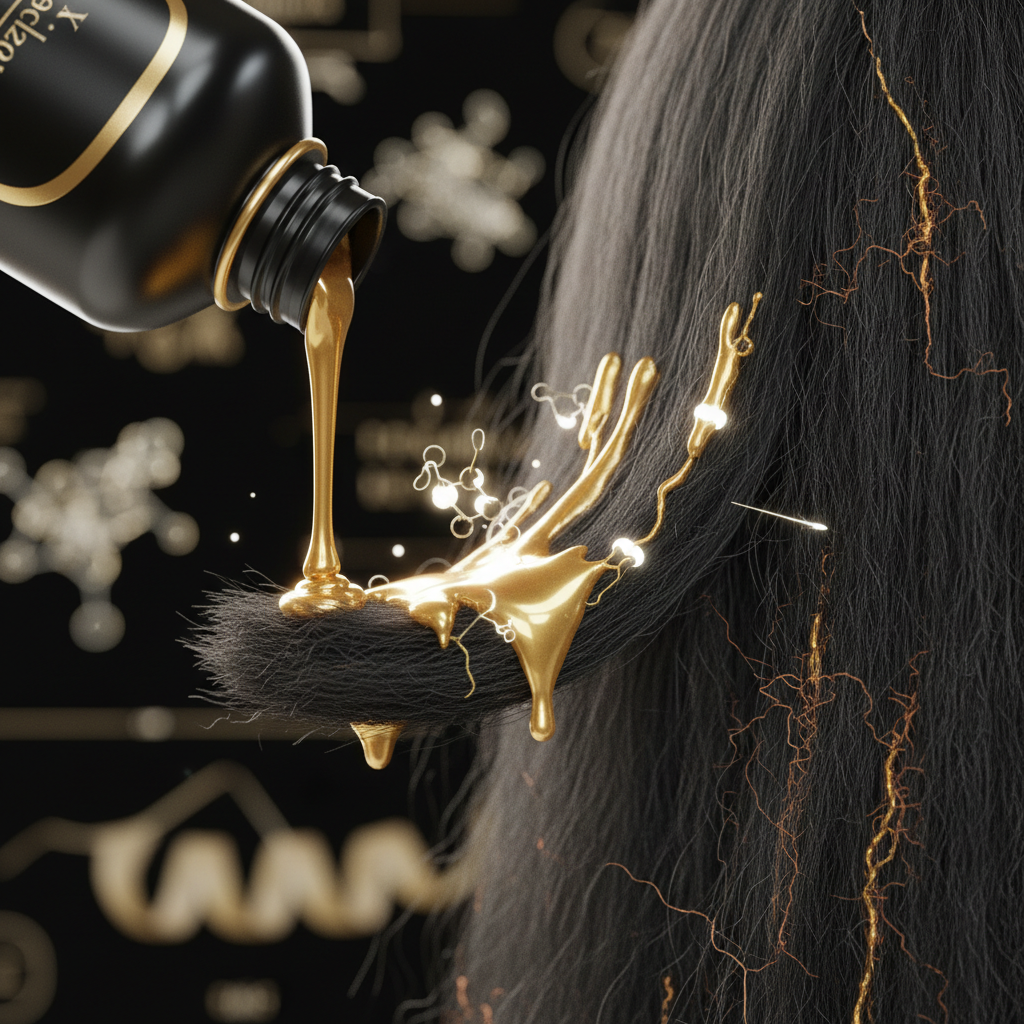
- Alkaline swelling: Relaxers deploy a strong base (pH 12 to 14). This intense alkalinity causes the hair fibre to swell drastically, lifting the protective cuticular scales and allowing the chemicals to flood the cortex.
- Lanthionisation: The hydroxide ions attack the disulphide bonds within the keratin. They break the strong covalent bond and replace roughly one-third of the cystine with a weaker, single-sulphur bridge called lanthionine.
- Tensile reduction: This lanthionine bridge lacks the elasticity and mechanical resilience of native cystine. The hair achieves a straightened profile, but at the cost of its elasticity. It can no longer stretch and return to its original form without snapping.
Recognising the signs of Chemical Relaxer Damage
Chemical damage manifests across the hair shaft and the scalp in distinct ways:
- High wet elasticity loss: When wet, damaged hair feels spongy, gummy, or excessively stretchy, snapping under gentle tension without springing back.
- Trichorrhexis nodosa: The formation of microscopic white nodes or "swelling points" along the shaft where the cuticle has stripped away and cortical fibres have frayed, resembling two paintbrushes pressed together.
- Demarcation breakage: Snapping concentrated precisely where the newly relaxed hair meets previously processed hair. This junction is structurally weak and sensitive to torque.
- Chemical burns and crusted scabs: Scalp inflammation, open sores, weeping, or persistent burning sensations occurring during or shortly after chemical application.
- Extreme porosity: Strands absorb water immediately upon wetting but dry out almost instantly, feeling rough, straw-like, and dull due to absent cuticular lipids.
Comparing relaxer types and damage profiles
| Characteristic | Sodium Hydroxide (Lye) | Guanidine Carbonate / Calcium Hydroxide (No-Lye) | Ammonium Thioglycolate |
|---|---|---|---|
| Typical pH Range | 12.5 to 14.0 | 12.0 to 13.5 | 9.0 to 9.6 |
| Primary Mechanism | Hydroxide lanthionisation | Hydroxide lanthionisation | Disulphide reduction (thio-cleavage) |
| Scalp Irritation Risk | High (penetrates quickly) | Moderate to Low (gentler on skin) | Low to Moderate |
| Hair Fibre Impact | Fast bond cleavage; preserves surface softness | Leaves calcium salt residue; hair feels drier | Slower action; primarily used on looser curl patterns |
| Breakage Pattern | Acute breakage from over-timing | Chronic breakage from mineral stiffness | Breakage from over-processing or improper neutralisation |
How to manage and rehabilitate relaxed hair
If you are dealing with Chemical Relaxer Damage, the first priority is mechanical preservation and moisture retention. You cannot reverse broken bonds, but you can protect the surviving structural integrity of the shaft.
- Rebalance protein and moisture: Use hydrolysed proteins (such as wheat, silk, or keratin amino acids) every 3 to 4 weeks to temporarily plug micro-fissures in the porous cortex. Follow protein treatments with emollient-rich deep conditioners to prevent stiffness.
- Cease overlapping applications: If touching up new growth, apply protective base creams to the previously relaxed hair and the scalp. Ensure relaxer is applied solely to virgin regrowth (typically 1 to 2 centimetres), avoiding the fragile line of demarcation.
- Normalise the pH: Immediately following any chemical service, an acid-balanced neutralising shampoo (pH 4.5 to 5.5) must be used systematically to halt hydroxide activity and bring the fibre back to its iso-electric point.
- Reduce thermal and mechanical stress: Blow-dryers, flat irons, and tight styling compound chemical weakness. Switch to heat-free setting methods (such as roller sets or wrap styles) and detangle only when hair is lubricated with a slippery leave-in product using a wide-tooth comb.
- Incorporate gentle scalp care: A nourished scalp environment supports healthy new growth. Watermans Grow More Elixir provides a nutrient-dense, leave-in topical option formulated with biotin, lupin protein, and rosemary, ideal for conditioning the scalp surface between treatments without harsh alcohols or greasy residues that could clog the follicle.
When the cause is something else
Not all breakage or thinning in chemically treated hair stems solely from the relaxer formulation. Other contributing factors often compound or mimic Chemical Relaxer Damage:
- Traction alopecia: Persistent pulling from tight braids, heavy extensions, or tight ponytails worn to manage new growth puts high tension on the follicle, causing true hair loss along the hairline.
- Telogen effluvium: Sudden, diffuse hair shedding across the entire scalp, typically triggered 2 to 3 months after physiological stressors, nutritional deficiencies (such as ferritin or vitamin D), hormonal shifts, or severe illness.
- Central Centrifugal Cicatricial Alopecia (CCCA): A progressive scarring alopecia starting at the crown or vertex. If you notice shiny, smooth patches on the scalp devoid of follicular openings, this indicates inflammatory follicular destruction rather than simple relaxer breakage.
When to seek professional advice
Consult a qualified trichologist or dermatologist immediately if you experience persistent scalp pain, weeping lesions, crusting, or patchy hair loss with scalp smoothness. These symptoms indicate chemical burns or secondary infections that require prescription anti-inflammatories or antimicrobial care.
If you notice severe breakage along the line of demarcation, consult a licensed, curl-specialist stylist. They can safely perform a corrective protein treatment, evaluate whether a transition to natural texture is warranted, or trim broken ends to stop splits traveling up the shaft.
Frequently asked questions about Chemical Relaxer Damage
Can Chemical Relaxer Damage be reversed?
No, Chemical Relaxer Damage cannot be reversed. Relaxers permanently break disulphide bonds within the cortex and turn them into lanthionine bridges. While deep conditioning treatments and hydrolysed protein masks can temporarily coat the fibre, reinforce porous areas, and reduce further snapping, the altered internal structure remains permanently weakened until the treated hair grows out and is cut off.
Does a relaxer burn always mean permanent hair loss?
A relaxer burn does not automatically mean permanent hair loss. Most chemical burns affect only the superficial epidermis, healing fully within 1 to 2 weeks without harming the deeper hair follicles. However, if a severe, deep-dermal chemical burn occurs and destroys the follicular stem cells located in the dermal papilla, scar tissue will replace the follicle, causing localised, irreversible bald patches.
How often should new growth be relaxed to prevent breakage?
New growth should ideally be relaxed every 8 to 12 weeks, depending on your growth rate. Processing more frequently than every 8 weeks increases the likelihood that the stylist will accidentally overlap the alkaline product onto previously processed strands. Waiting at least 8 to 12 weeks allows approximately 2 to 3 centimetres of visible virgin growth, making precise application much easier.
What is the difference between hair shedding and relaxer breakage?
Hair shedding involves the entire hair fibre releasing naturally from the scalp follicle, complete with a tiny white keratin bulb at the root. Chemical relaxer breakage involves the hair snapping somewhere along the shaft due to structural weakness. Hair lost through breakage has blunt or split ends, lacks a root bulb, and generally appears in shorter, uneven fragments.
A balanced approach to chemical treatments
Navigating Chemical Relaxer Damage requires an understanding of how high-alkali chemicals alter the fundamental biochemistry of your hair. When disulphide bonds are converted and protective cuticles are stripped, the hair fibre requires consistent structural support, reduced heat, and gentle mechanical handling. By understanding the limits of chemical processing, avoiding overlapping applications, and supporting the scalp as healthy new growth emerges, you can protect the integrity of your hair and manage chemical treatments with confidence.
Sources and references
- Journal of the American Academy of Dermatology: Structural and mechanical changes in hair fibres caused by chemical relaxers (2007).
- International Journal of Dermatology: Central centrifugal cicatricial alopecia and chemical hair straighteners: evaluating the evidence (2011).
- British Association of Dermatologists: Guidelines for the management of alopecia and scalp disorders related to hair processing (2018).
- Cosmetics & Toiletries: Chemistry of hair relaxation: lanthionisation versus thio-cleavage (2015).
- Journal of Cosmetic Science: Morphological changes of human hair cuticle and cortex after alkaline treatments (2013).
Find these ingredients in Watermans products
- Biotin: you will find this ingredient in our Hair Growth Shampoo.
- Vitamin D: you will find this ingredient in our Hair Vitamins.