How to Care for Afro Hair: An Evidence-Based Guide
10 min read ·
Understand how to care for afro hair with this evidence-based guide, focusing on techniques and products to support its unique structure and minimise breakage.
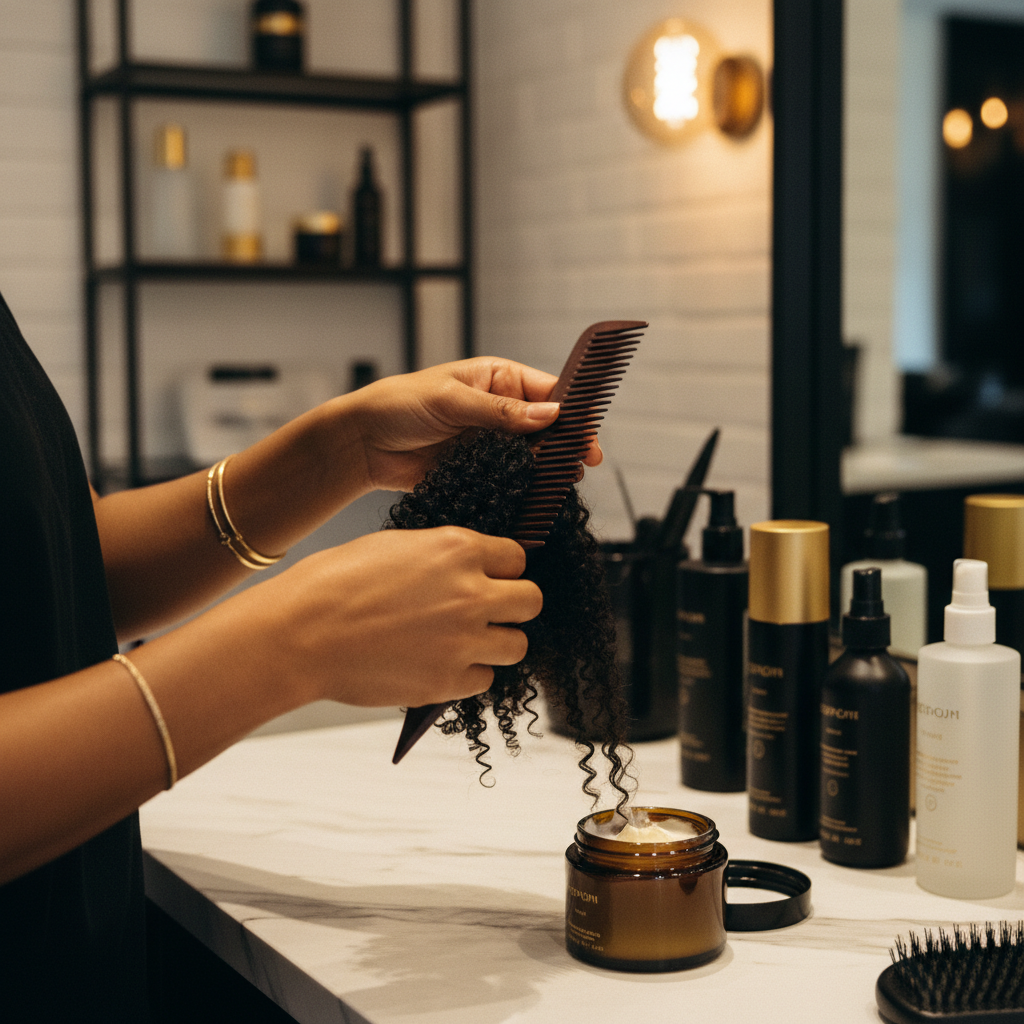
Quick answer: How to care for afro hair primarily involves prioritising moisture, gentle handling, and protective practices due to its unique coiled structure, which makes it prone to dryness and breakage. This guide will outline evidence-informed strategies for cleansing, conditioning, moisturising, and styling, supporting the health and appearance of afro-textured hair. However, individual hair characteristics vary, so personal adjustment to these general principles is often needed for optimal results.
Key takeaways
- Afro-textured hair's unique coiling means natural scalp oils struggle to reach the hair shaft, making dryness a primary concern.
- Gentle handling, especially during cleansing and detangling, is crucial to prevent mechanical damage and breakage.
- Moisture retention is paramount; use water-based products, seal moisture, and consider protective styles.
- Sulfate-free shampoos and rich conditioners are recommended to cleanse effectively without stripping essential moisture.
- Understanding your hair's porosity can help you choose the most effective products and application methods for hydration.
- Professional advice should be sought for persistent scalp issues or significant hair shedding.
How to care for afro hair: what the evidence shows
Afro-textured hair, often characterised by tight coils and high density, possesses unique structural properties that necessitate specific care routines to maintain its health and minimise breakage. The distinct helical shape of the hair strand means that the cuticle layers may not lie as flat as in straighter hair types. This structure, combined with fewer cuticle layers in some areas of the hair shaft, can lead to increased vulnerability to mechanical damage and moisture loss. Additionally, the natural sebum produced by the scalp struggles to travel down the highly coiled strand, leaving the mid-lengths and ends of the hair naturally drier and more susceptible to environmental stressors.
Evidence suggests that practices aimed at enhancing moisture, reducing friction, and gentle manipulation are key to effective afro hair care. These strategies help to support the hair fibre's integrity and promote its healthy appearance.
The mechanism: why afro hair needs specific care
The unique characteristics of afro hair, classified as type 4 in some hair typing systems, stem from its distinctive elliptical cross-section and high degree of curl. Each curve and bend in the hair strand represents a point of potential weakness. Studies on hair fibre properties demonstrate that highly coiled hair has a higher propensity for fracture under tensile stress compared to straighter hair types. This is because the force applied during brushing or styling concentrates at these curves, leading to damage if not handled carefully.
Furthermore, the raised cuticle structure, often associated with higher porosity, allows water to enter and exit the hair shaft more readily. While this can make the hair feel softer when wet, it also means moisture can evaporate quickly, leading to dryness and a rougher texture once dry. This rapid moisture loss can contribute to frizz and a dull appearance. Effective care for afro hair therefore focuses on replenishing and sealing in moisture, as well as minimising physical stress on the delicate hair fibre.
What you can do: A routine for healthy afro hair
Caring for afro hair effectively involves a consistent routine focused on hydration, gentle cleansing, and protective styling. Here’s a breakdown of evidence-informed practices:
-
Pre-poo treatment: Before shampooing, apply a conditioning treatment such as a lightweight oil (e.g., jojoba, argan) or a specific pre-shampoo product to dry hair. This creates a barrier, helping to protect the hair from the potential stripping effects of shampoo and aids in detangling. Leave it on for at least 30 minutes. This step is particularly beneficial for hair with high porosity, as it can reduce the amount of water absorbed during washing, thus preventing excessive swelling and damage.
-
Gentle cleansing: Shampooing should focus on the scalp to remove dirt, product buildup, and excess sebum, allowing the lather to rinse through the hair lengths without aggressive scrubbing. Opt for sulfate-free shampoos, which are less likely to strip the hair's natural moisture. Products like Watermans GrowMe Shampoo are formulated to cleanse gently while supporting scalp health. For insights into clarifying, see "How to Do a Clarifying Wash: A Guide to Deep Hair Cleansing" and for general guidance, "Choosing the Right Shampoo: A Comprehensive Guide to Hair Cleansing". Depending on individual needs and product usage, cleansing frequency typically ranges from every 7 to 14 days.
-
Conditioning and detangling: After shampooing, apply a generous amount of moisturising conditioner. This provides the necessary 'slip' to detangle the hair gently. Work in small sections, using your fingers or a wide-tooth comb to detangle from the ends upwards. Rinse with cool water to help smooth the cuticle and lock in moisture. For more details, refer to "The Science of Conditioners: How Hair Care Formulations Work" and "Choosing the Right Hair Conditioner".
-
Deep conditioning: Incorporate a deep conditioner or hair mask into your routine weekly or bi-weekly. These treatments deliver intensive hydration and nutrients to the hair shaft. Apply after shampooing and conditioning, cover with a plastic cap, and allow it to penetrate for 20 to 30 minutes. Gentle heat (from a warm towel or indirect heat) can enhance product absorption. Rinse thoroughly. Watermans Masque Me is designed for deep conditioning benefits.
-
Moisturising and sealing: This is a critical step for how to care for afro hair. Due to its natural dryness, afro hair benefits greatly from layered moisture. The LOC (Liquid, Oil, Cream) or LCO (Liquid, Cream, Oil) methods are popular techniques:
- Liquid: Start with water or a water-based leave-in conditioner to hydrate the hair. This is your primary source of moisture.
- Oil: Apply a lightweight oil (e.g., jojoba, argan, grapeseed) to help seal in the liquid moisture. Oils do not moisturise on their own but help to reduce transepidermal water loss from the hair shaft. Watermans Hair Oil can be used for this purpose.
- Cream: Finish with a richer cream or butter to further seal and provide conditioning benefits. This layering helps to keep the hair hydrated for longer. See "Moisturizing Afro-Textured Hair" and "Hair Hydration: The Science Behind Keeping Hair Moist" for further information.
- Protective styling: Low-manipulation or protective styles (e.g., braids, twists, buns) can significantly reduce daily friction and breakage, allowing the hair to retain length. Ensure styles are not too tight, which can cause tension alopecia. Read "Protective Styling: A Comprehensive Guide" for more details.
Table: Product Choices for Afro Hair Care
| Hair Care Step | Recommended Product Characteristics | Example Ingredients |
|---|---|---|
| Cleansing | Sulfate-free, moisturising, gentle lather | Cocamidopropyl betaine, decyl glucoside, plant extracts |
| Conditioning | Rich, creamy, good slip for detangling, humectants | Cetearyl alcohol, behentrimonium methosulfate, glycerin, panthenol |
| Deep Conditioning | Intensive moisturisers, proteins (if hair needs strengthening), emollients | Shea butter, argan oil, hydrolysed wheat protein, amino acids |
| Leave-in/Liquid | Water-based, lightweight, humectant-rich, pH balanced | Water, aloe vera, glycerin, hyaluronic acid, rosewater |
| Oil (Sealing) | Non-comedogenic, light to medium viscosity, high in fatty acids | Jojoba oil, argan oil, grapeseed oil, sweet almond oil |
| Cream (Sealing) | Rich emollients, occlusive agents, provide lasting moisture and definition | Shea butter, mango butter, coconut oil (for some), waxes, cetyl alcohol |
Signs to look for
- Excessive dryness: Hair feels rough, stiff, or brittle to the touch, often appearing dull. This indicates a need for increased moisture.
- Breakage: Short, snapped pieces of hair, especially during detangling or styling. This is different from hair shedding (which involves the entire strand with a bulb at the root). Breakage signals mechanical stress or lack of elasticity due to dryness.
- Frizz: Hair strands do not lie smoothly, creating a halo effect or general puffiness. This is often a sign of insufficient moisture or cuticle damage. See "Dealing with Frizzy Hair" for more information.
- Tangles and knots: Frequent knotting, especially single-strand knots (fairy knots), can indicate dryness and friction between coiled strands.
When the cause may be something else
While dryness and breakage are common concerns, sometimes other factors can affect hair health:
- Nutritional deficiencies: A lack of essential vitamins and minerals (e.g., iron, zinc, biotin, vitamin D) can impact hair growth and strength. Discuss any concerns with a healthcare professional.
- Hormonal imbalances: Conditions such as thyroid disorders or polycystic ovary syndrome (PCOS) can influence hair growth cycles and lead to shedding or thinning.
- Medical conditions and medications: Certain illnesses or treatments can affect overall hair health. Always consult a doctor if you suspect a medical cause.
- Hard water: Water with high mineral content can leave deposits on the hair, making it feel dry, dull, and more prone to breakage. For more information, see "Hard Water and Hair Damage: Understanding the Impact on Your Hair".
- Alopecia: Conditions like central centrifugal cicatricial alopecia (CCCA) or traction alopecia, common in afro-textured hair, cause permanent hair loss by damaging hair follicles. These require dermatological diagnosis and treatment. Traction alopecia specifically results from prolonged tension on the hair follicles, often due to tight hairstyles. It presents as thinning or hair loss along the hairline or where braids/weaves are attached.
When to get professional advice
If you experience persistent scalp irritation, excessive hair shedding (telogen effluvium), significant hair thinning, or any signs of patchy hair loss, it's important to consult a dermatologist or trichologist. These professionals can diagnose underlying conditions and recommend appropriate medical treatments or management strategies. Self-treating can sometimes worsen certain conditions.
Frequently asked questions about How to care for afro hair
How often should I wash afro hair?
Most experts recommend washing afro hair every 7 to 14 days. This frequency helps to cleanse the scalp and hair without stripping essential moisture, which is crucial for how to care for afro hair. Adjust this based on your activity level, product use, and how quickly your scalp becomes oily, but avoid over-washing which can lead to excessive dryness.
What is hair porosity and why is it important for afro hair care?
Hair porosity refers to your hair's ability to absorb and retain moisture. Afro hair often has high porosity, meaning its cuticles are more open, allowing moisture in and out easily. Understanding your porosity helps you choose products that effectively hydrate and seal the hair. For example, high porosity hair benefits from heavier butters and oils to seal in moisture, while low porosity hair might prefer lighter liquids and gentle heat during deep conditioning. See "Understanding Hair Porosity: How Your Hair Absorbs and Retains Moisture" for more information.
Can heat styling be used on afro hair?
Heat styling should be used sparingly and with extreme caution on afro hair, as its delicate structure is highly susceptible to heat damage, which can lead to breakage and loss of curl pattern. Always use a heat protectant, keep temperatures low, and limit frequency. Air drying or low-heat drying with a diffuser is generally preferred. Consult "Heat Styling Safety Best Practices" and "Heat Styling: Understanding Its Effects and How to Protect Your Hair".
What are the best ingredients to look for in afro hair products?
Look for hydrating ingredients like water, glycerin, hyaluronic acid, aloe vera, and emollients such as shea butter, mango butter, and various natural oils (e.g., jojoba, argan, sweet almond). Avoid products with high concentrations of drying alcohols (e.g., isopropyl alcohol) and harsh sulfates in shampoos. For more information, read "Humectants: Understanding How They Hydrate and Protect Your Hair" and "Sulfate-Free Shampoo Benefits".
Conclusion
Mastering how to care for afro hair involves understanding its unique structure and inherent needs for moisture and gentle handling. By embracing a routine centred on hydration, thoughtful cleansing, deep conditioning, and protective styling, you can significantly enhance the health, strength, and appearance of your hair. Consistency and patience are vital, and observing how your hair responds to different techniques and products will help you refine your personal care regimen for optimal results.
Sources and references
- American Academy of Dermatology Association, "Hair care tips for people with textured hair", aad.org, 2023
- PubMed Central, "Hair Breakage in Normal and Damaged Hair: A Systematic Review", 2017
- International Journal of Trichology, "African hair: its structure, properties, and care", 2011
- British Association of Dermatologists, "Traction Alopecia", bad.org.uk, 2023
- Journal of Cosmetic Science, "The effect of water hardness on the hair fibre", 2018
Find these ingredients in Watermans products
- Biotin: you will find this ingredient in our Hair Growth Shampoo.
- Zinc: you will find this ingredient in our Hair Vitamins.
- Aloe Vera: you will find this ingredient in our Curly Hair Conditioner.