Hair Shaft Disorders: Causes, Diagnosis, and Management
9 min read ·
Hair shaft disorders cause structural weakness, breakage, and unusual textures. Learn about causes, signs, microscopic diagnosis, and practical care.
Quick answer: Hair shaft disorders are structural abnormalities affecting the hair fibre rather than the follicle itself, leading to physical weakness, unusual texture, slow apparent growth, or increased fragility. Hair Shaft Disorders can be congenital (inherited genetic mutations affecting keratinisation) or acquired through physical, thermal, and chemical grooming trauma. While acquired types respond well to gentler handling and conditioning, congenital disorders cannot be permanently cured by topical treatments, requiring clinical identification under light microscopy to distinguish fibre breakage from genuine follicular hair loss.
Key takeaways
- Hair shaft disorders alter the fibre's physical integrity, cuticle layers, or internal cortex without necessarily affecting the follicular growth cycle.
- Conditions are divided into two main groups: those with increased hair fragility (prone to breaking) and those without increased fragility (unusual texture, curl, or shape).
- Breakage caused by shaft defects is often mistaken for hair loss, but the hair bulb remains intact within the scalp.
- Congenital forms often appear in infancy or early childhood and may indicate underlying systemic or genetic syndromes.
- Acquired forms develop primarily from grooming damage, such as chemical processing, excessive heat styling, and harsh brushing.
- Polarised light microscopy and trichoscopy are the standard non-invasive diagnostic tools used by dermatologists and trichologists.
Hair Shaft Disorders: what the evidence shows
Hair shaft disorders represent a wide spectrum of morphological defects found along the length of the hair fibre. Clinical studies categorise these conditions based on whether the defect causes structural fragility (leading to snapping and apparent thinning) or merely alters the hair's shape, direction, or visual appearance.
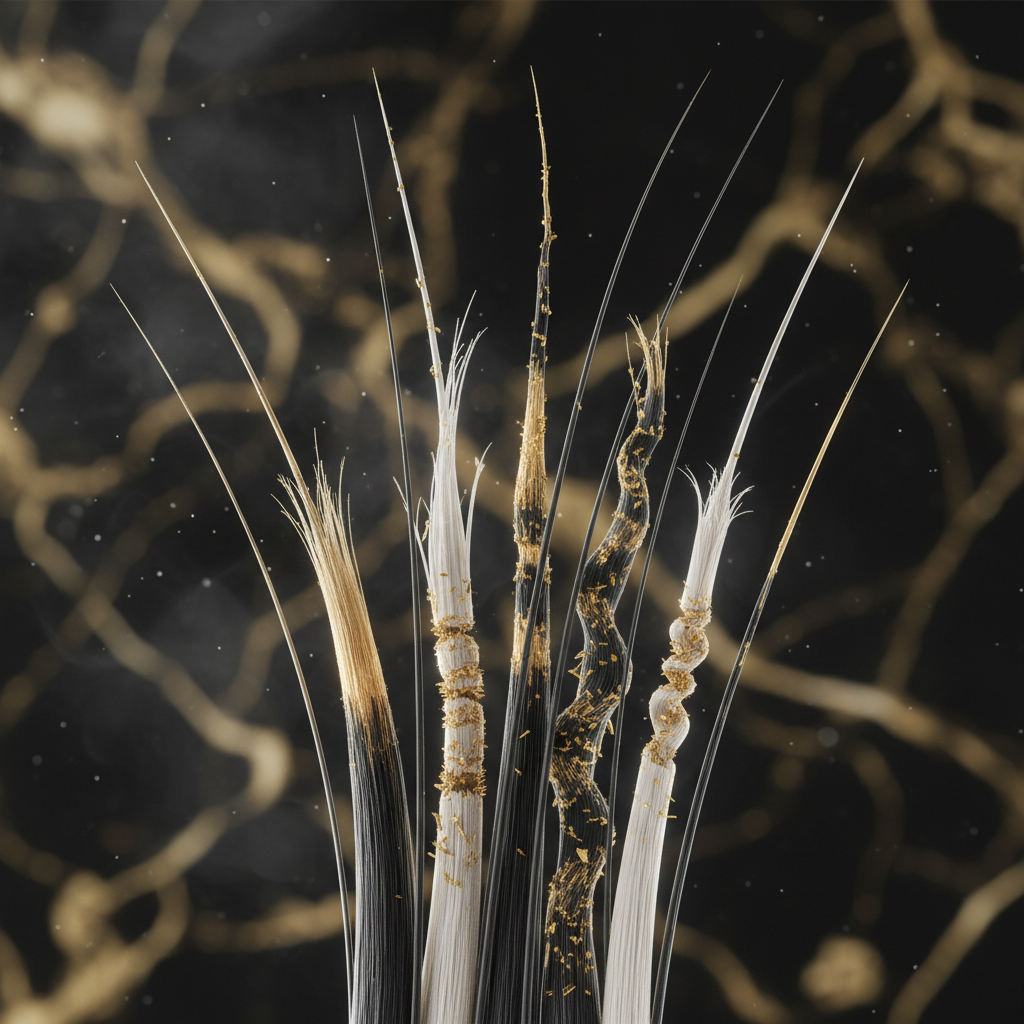
When a patient experiences widespread snapping along the shaft, they frequently report that their hair has stopped growing. In reality, the hair follicle continues its natural anagen (growth) phase, but the weakened fibre breaks before it can gain visible length. Identifying whether a shaft defect is present helps prevent misdiagnosing the condition as anagen effluvium or androgenetic alopecia.
Research shows that congenital hair shaft disorders arise from specific mutations altering hair proteins, including trichohyalin, transglutaminases, and high-sulfur keratins. In contrast, acquired hair shaft abnormalities stem from external trauma stripping away the protective cuticle layer (the outermost 6 to 10 overlapping cellular scales), exposing the underlying cortex to moisture loss and mechanical stress.
Understanding the mechanisms and types
The human hair shaft relies on an orderly arrangement: an outer protective cuticle, an intermediate cortex filled with longitudinal keratin filaments bound by disulfide bonds, and occasionally a central medulla. A breakdown anywhere in this architecture produces characteristic shaft patterns.
Disorders associated with increased fragility
These conditions cause the fibre to snap under minimal tension:
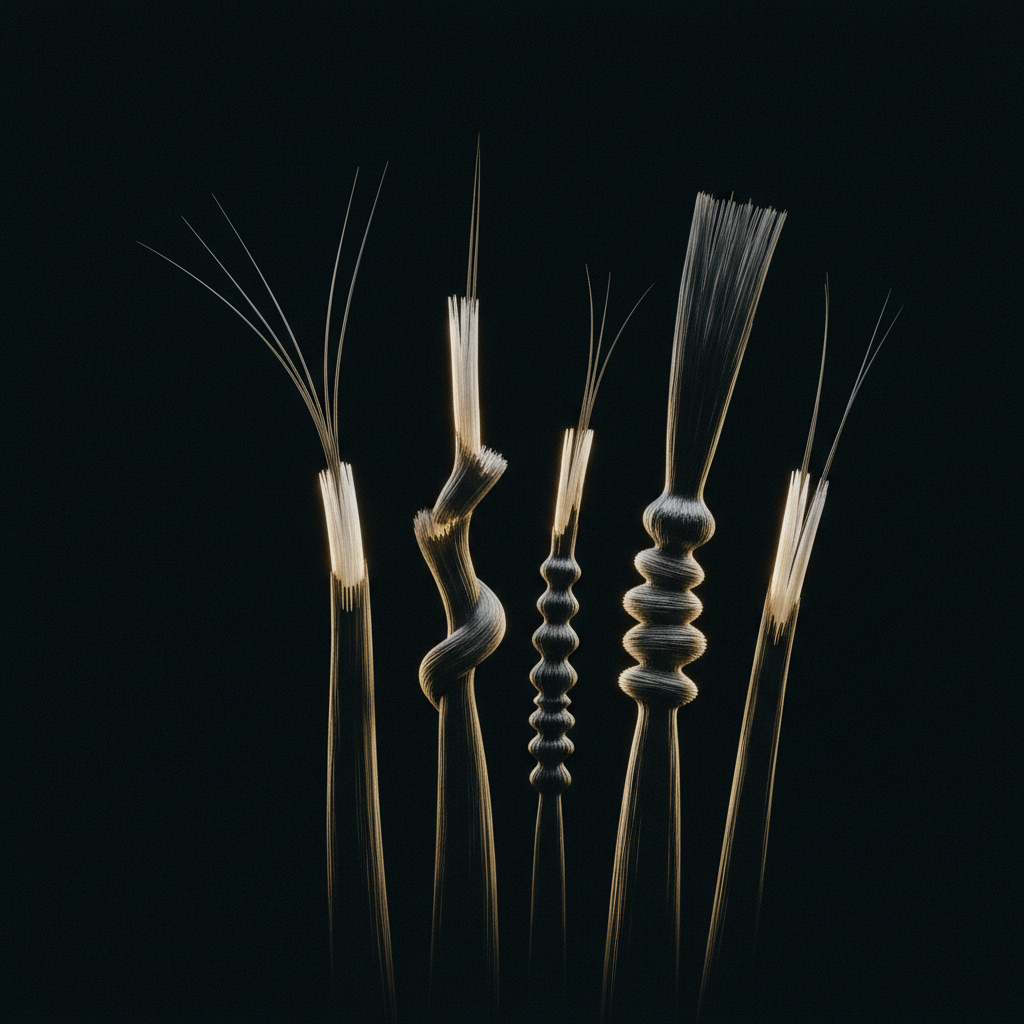
- Trichorrhexis nodosa: The most common defect. The cuticle fractures, allowing cortical fibres to splay outwards into brush-like swellings that look like two paintbrushes pushed together end-to-end. It can be congenital (such as in argininosuccinic aciduria) but is overwhelmingly acquired through excessive heat, bleaching, or friction.
- Monilethrix: An autosomal dominant or recessive condition characterised by regular beaded nodes along the shaft separated by thin, unmedullated internodes. The hair easily breaks at these thin weak points, usually leaving a patchy, stubbly scalp.
- Trichorrhexis invaginata (bamboo hair): The shaft exhibits an invagination where the softer distal segment folds into the harder proximal segment like a ball-and-socket or bamboo joint. This is a hallmark feature of Netherton syndrome.
- Pili torti: The fibre is flattened and twisted through 180 degrees on its longitudinal axis at irregular intervals. It often breaks readily, though milder forms may only cause dry, unmanageable hair.
Disorders without increased fragility
These conditions change the appearance, texture, or growth pattern of hair without making it unusually brittle:
- Pili annulati: The hair displays alternating light and dark bands under reflected light due to air-filled cavities inside the cortex. The fibre remains structurally sound and does not break prematurely.
- Uncombable hair syndrome (pili trianguli et canaliculi): Caused by mutations in genes such as PADI3, TCHH, or TGM3. Under cross-section, the hair appears triangular, kidney-shaped, or heart-shaped with a distinct longitudinal groove, making it impossible to brush flat.
- Woolly hair: Characterised by tightly coiled, fine hair in non-African ancestry that does not merge easily into smooth locks.
| Condition | Primary mechanism | Fragility level | Primary origin |
|---|---|---|---|
| Trichorrhexis nodosa | Cuticle loss and cortical splaying | High (breaks easily) | Acquired (trauma) or genetic |
| Monilethrix | Alternating beaded and constricted nodes | Very high | Congenital (keratin mutations) |
| Trichorrhexis invaginata | Ball-and-socket telescopic invagination | High | Congenital (Netherton syndrome) |
| Pili torti | Twisting around the longitudinal axis | Variable (often fragile) | Congenital or acquired |
| Pili annulati | Internal air-filled cortical cavities | Normal to low | Congenital (autosomal dominant) |
| Uncombable hair syndrome | Triangular cross-section with longitudinal canal | Normal | Congenital |
What the evidence does not show
Topical cosmetic products, serums, and vitamins cannot rewrite the genetic code responsible for congenital shaft disorders. If a person has monilethrix or uncombable hair syndrome, applying nutritional oils, taking oral biotin, or using specialty shampoos will not change the underlying cross-sectional geometry formed inside the follicle.
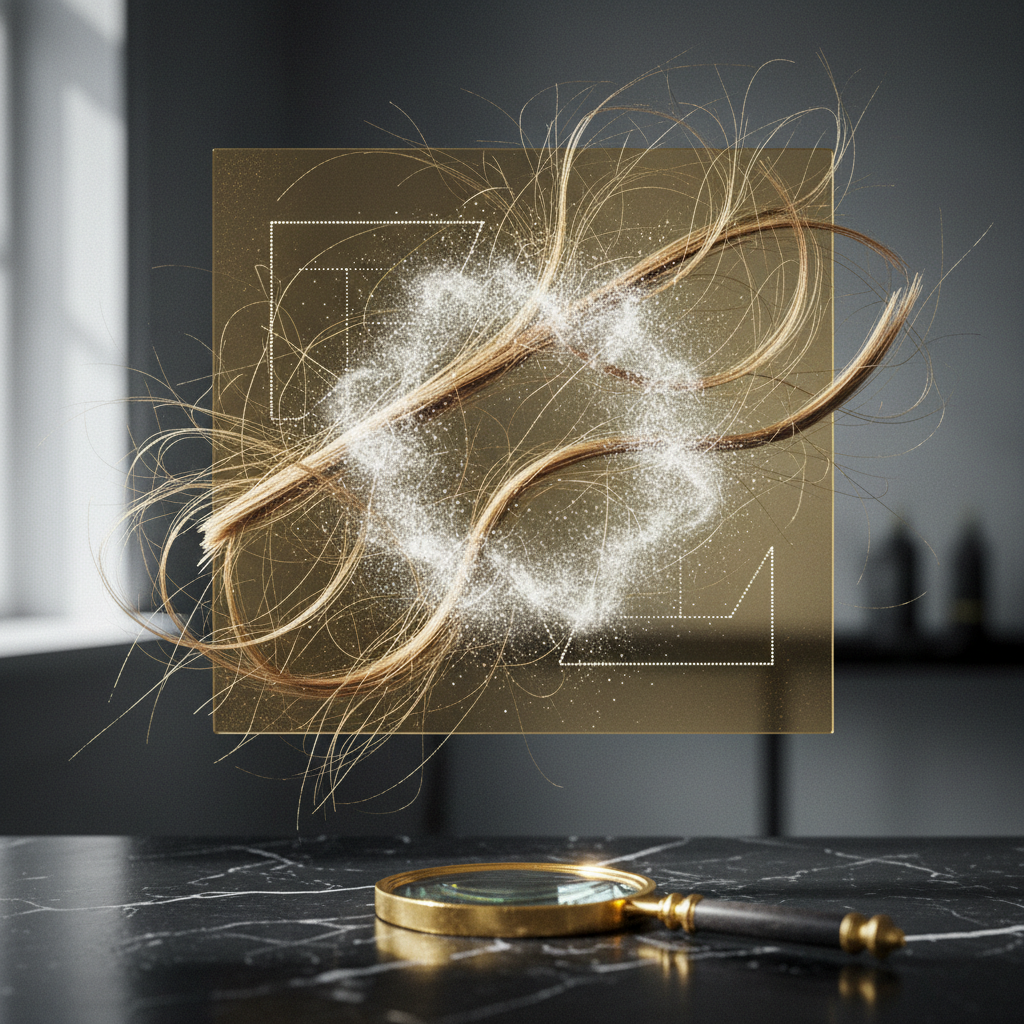
Furthermore, evidence does not show that hair shaft disorders inevitably worsen with age. In fact, many congenital types, including uncombable hair syndrome and certain forms of pili torti, naturally improve after puberty as changes in follicle diameter and sebum production alter the hair's behaviour.
Finally, shaft breakage must never be confused with follicular hair loss. Shampoos and scalp treatments designed to support the scalp microbiome or reduce follicular shedding will not directly repair cracked keratin bonds further down the fibre.
Common signs to look for
Recognising a shaft abnormality requires observing how the hair behaves during routine care:
- Uneven, frizzy lengths that seem stuck at a specific short length despite healthy scalp skin.
- Hair breaking off cleanly when gently brushed, combed, or touched.
- Tiny white or pale specks visible along the fibre, which are often mistaken for head lice nits or dandruff but cannot be slid along the shaft.
- Extremely wiry, coarse, or spun-glass textures that resist all attempts at smoothing or styling.
- Localised patches of coarse, brittle stubble that appear early in life.
Practical steps to manage and protect fragile fibres
For acquired conditions like secondary trichorrhexis nodosa, management focuses entirely on minimising mechanical and environmental degradation:
- Eliminate high-temperature styling: Heat over 180 degrees Celsius denatures keratin and drives water out of the cortex rapidly, leading to steam blisters and shaft fracture.
- Minimise chemical oxidation: Bleaching agents, permanent dyes, and chemical relaxers cleave the disulfide cystine bonds that give the cortex its tensile strength.
- Reduce wet friction: Hair swells when wet, lifting the cuticle scales and lowering elastic resistance. Detangle gently using wide-tooth tools after applying a slip-enhancing conditioner.
- Maintain surface lubrication: Conditioners containing cationic surfactants (such as cetrimonium chloride or behentrimonium methosulfate) coat the shaft, smoothing down exposed cuticles, neutralising negative static charge, and decreasing grooming friction.
Gentle cosmetic support from Watermans
While cosmetic formulas cannot cure genetic defects, maintaining an optimal scalp environment and reducing mechanical resistance along the fibre helps preserve fragile hair.
Watermans Grow Me Shampoo provides a gentle, sulphate-free cleanse that avoids stripping delicate fibres of their natural lipid barriers. Paired with Watermans Condition Me Conditioner, which incorporates hydrolysed lupin protein, cholesterol, and natural emollients, it helps smooth the cuticle layer. This surface-level conditioning provides slip and flexibility, reducing the daily friction and snagging that trigger breakage in vulnerable shafts.
When the cause may be something else
Before assuming a hair shaft disorder is present, consider alternative causes of hair breakage and shedding:
- Traction alopecia: Persistent mechanical tension from tight braids, extensions, or ponytails strains both the follicle and the root base, pulling fibres loose or causing breakage near the scalp perimeter.
- Telogen effluvium: Sudden, diffuse shedding where intact fibres with small white keratin bulbs shed from the follicle, typically occurring 2 to 3 months after a physiological or psychological stressor.
- Nutritional deficiencies: Severe zinc, iron, or protein deficiencies can reduce the structural quality of newly generated hair, mimicking acquired shaft weakness.
- Tinea capitis: A fungal infection of the scalp that invades the hair shaft (endothrix or ectothrix), making it brittle and causing it to snap flush with the skin, leaving black dot patterns.
When to seek professional advice
Consult a dermatologist or qualified trichologist if:
- A child presents with persistently sparse, bristly, or unmanageable hair that fails to grow normally.
- Hair breakage is accompanied by red, scaly, itchy, or painful scalp patches.
- You notice structural abnormalities paired with other physical symptoms, such as dental issues, brittle nails, hearing difficulties, or skin rashes (which can indicate an underlying neuroectodermal or metabolic syndrome).
- Routine changes to gentler haircare practices do not reduce ongoing breakage over a period of 3 to 6 months.
A professional will perform dermoscopy, trichoscopy, or clip a small sample of hair for examination under light or polarised microscopy to achieve an accurate, definitive diagnosis.
Frequently asked questions about Hair Shaft Disorders
What is the most common hair shaft disorder?
Acquired trichorrhexis nodosa is the most common of all Hair Shaft Disorders. It typically develops after cumulative chemical processing, rough mechanical grooming, or repeated heat exposure that chips away the protective cuticle layer, causing internal cortical fibres to fray outwards into brush-like swellings that snap easily under light tension.
Can Hair Shaft Disorders be permanently cured?
It depends on the cause. Acquired forms can be resolved over time by cutting off damaged ends and adopting gentle haircare routines while fresh, undamaged hair grows in. Congenital forms caused by inherited genetic mutations cannot be permanently cured, though many improve naturally following puberty.
How do doctors diagnose a hair shaft disorder?
Clinicians diagnose these conditions using non-invasive trichoscopy (a magnified digital dermatoscope) and optical light microscopy. A small sample of clipped hairs is examined under brightfield or polarised light to evaluate the shape, cuticle integrity, twists, nodules, and cross-sectional geometry of the fibre.
Is breakage from a hair shaft disorder the same as hair loss?
No. Breakage from a hair shaft defect involves physical snapping along the length of the fibre, leaving the hair root resting safely within the follicle. Follicular hair loss, such as alopecia areata or telogen effluvium, involves the entire fibre detaching from the scalp bulb.
Can diet changes repair an abnormal hair shaft?
A balanced diet provides essential amino acids and micronutrients for producing healthy keratin, but it cannot alter congenital shaft disorders. If hair fragility stems from a diagnosed nutritional deficiency, correcting that deficiency will improve the structural strength of new growth emerging from the scalp.
Summary
Hair Shaft Disorders provide clear insight into the complex structural engineering of human hair. Whether inherited through rare genetic variations or acquired via daily styling stress, these conditions remind us that the visible hair shaft is a non-living, proteinaceous fibre that requires gentle handling once it emerges from the skin. By distinguishing between true follicular hair shedding and structural fibre breakage, you can choose the correct clinical evaluation and targeted hair preservation methods.
Sources and references
- British Association of Dermatologists. Guidelines and clinical resources on hair and scalp disorders.
- National Center for Biotechnology Information (NCBI) Bookshelf. Hair Shaft Anomalies, StatPearls Publishing, 2023.
- Journal of the American Academy of Dermatology. Structural hair shaft abnormalities: Evaluation and diagnostic approach, 2018.
- Pediatric Dermatology. Uncombable hair syndrome and related conditions: Genetic characterisation and clinical manifestations, 2016.
- World Congress of Hair Research. Diagnostic microscopy for structural hair defects and fragile hair disorders.
Find these ingredients in Watermans products
- Zinc: you will find this ingredient in our Hair Vitamins.