Understanding Scalp Sebum and Follicle Health
9 min read ·
Explore the science of scalp sebum, its protective functions, and how lipid oxidation impacts follicle health, shedding, and the scalp microbiome.
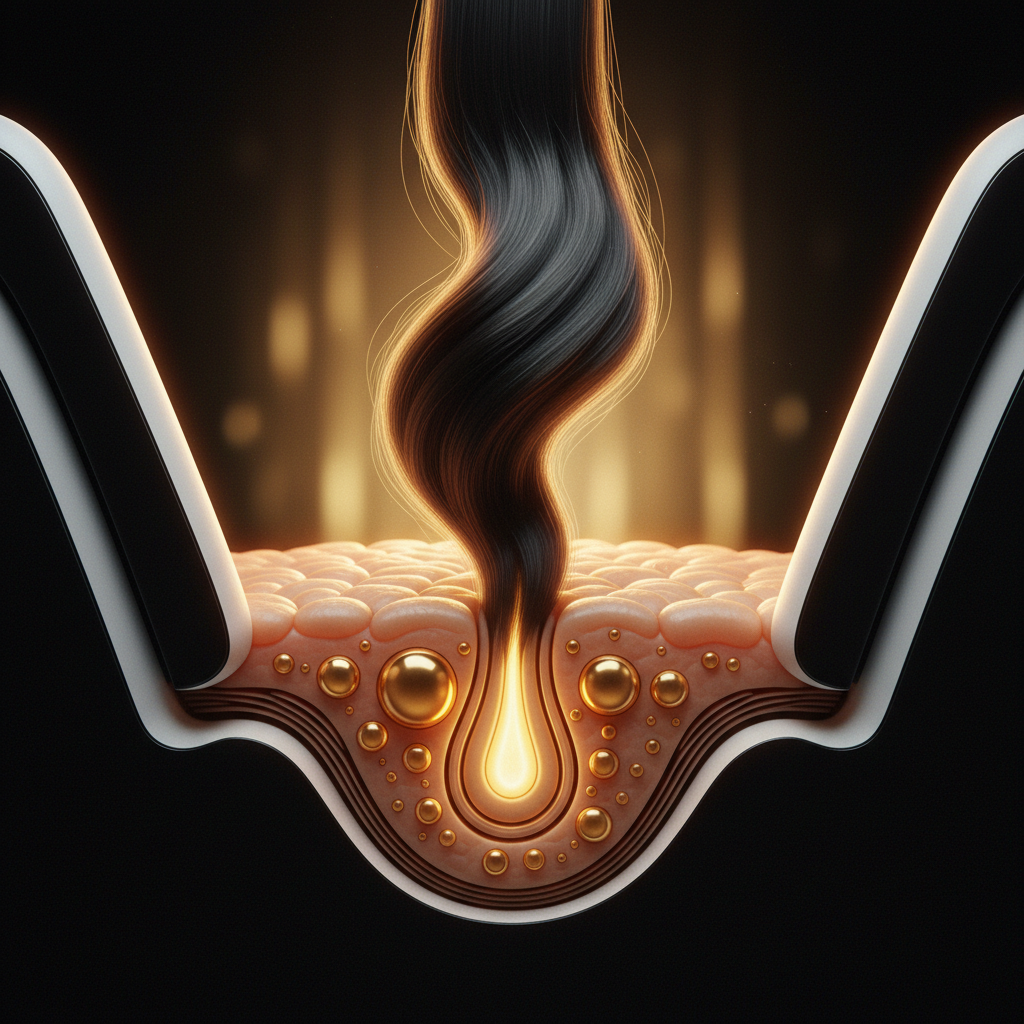
Quick answer: Understanding Scalp Sebum and Follicle Health begins with recognising that sebum is an essential physiological lipid barrier, not dirt. Produced by sebaceous glands attached to each hair follicle, sebum lubricates hair fibres and protects skin integrity at an acidic pH of 4.5 to 5.5. However, chronic hypersecretion or lipid oxidation creates an inflammatory microenvironment that destabilises follicular anchorage, exacerbates microbial overgrowth like Malassezia, and worsens shedding. Balancing sebum removal without stripping natural moisture is vital for sustainable hair density.
Key takeaways
- Sebum is a complex mixture of triglycerides, wax esters, squalene, and free fatty acids designed to maintain skin barrier integrity and antimicrobial defence.
- Follicles share an anatomical channel (the infundibulum) with sebaceous glands, making the follicular canal directly vulnerable to lipid buildup and oxidation.
- Excess sebum does not physically "choke" follicles out of existence, but oxidised lipids trigger micro-inflammation that can disrupt the hair growth cycle.
- The scalp microbiome feeds on sebum triglycerides, releasing irritating free fatty acids that fuel conditions such as seborrhoeic dermatitis.
- Effective scalp care focuses on regular, pH-balanced cleansing rather than harsh degreasing, which often causes reactive irritation.
Understanding Scalp Sebum and Follicle Health: what the evidence shows
When exploring the biology of hair growth, understanding scalp sebum and follicle health requires looking beneath surface aesthetics. Human skin has the highest concentration of sebaceous glands on the face and scalp, averaging roughly 400 to 900 glands per square centimetre. These glands produce sebum holocrine-style, meaning whole cells disintegrate to release their lipid content into the follicular infundibulum.
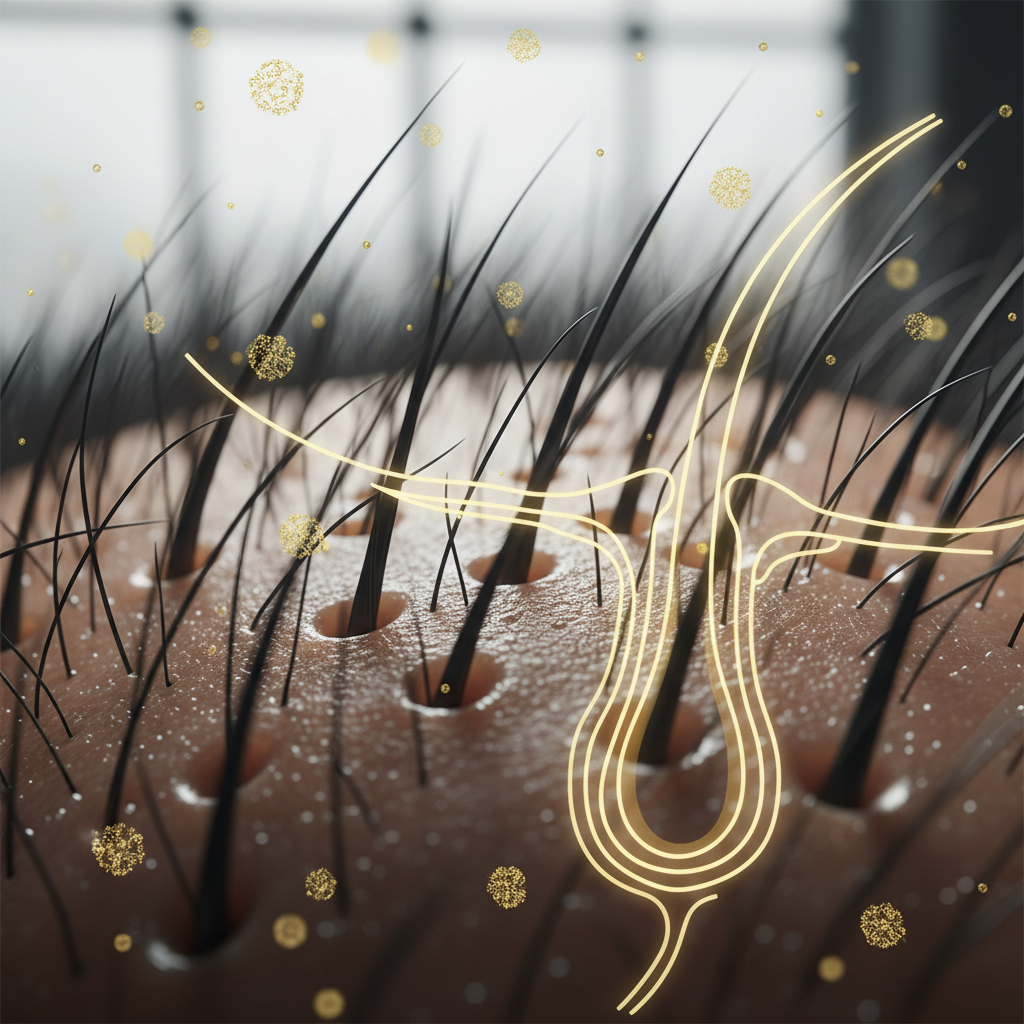
Sebum is not a metabolic waste product. In healthy proportions, it forms an emulsion with sweat to create the acid mantle. This thin surface film maintains a physiological pH between 4.5 and 5.5, which repels pathogenic bacteria while supporting commensal microflora.
Clinical research shows that when sebum production accelerates, problems emerge downstream. The culprit is not the liquid volume alone, but what happens when that lipid pool sits exposed to oxygen and ultraviolet radiation. Squalene and unsaturated fatty acids undergo peroxidation, generating squalene monohydroperoxide and oxidised free fatty acids. Clinical studies associate high concentrations of these oxidised lipids with heightened scalp itch, erythema, and increased rates of telogen hair shedding.
[Sebaceous Gland]
 ↓ (Lipid Secretion)
[Follicular Infundibulum]
 ↓ (Microbial Lipases from Malassezia)
[Squalene Oxidation & Oleic Acid Release]
 ↓ (Barrier Disruption)
[Perifollicular Micro-Inflammation]
 ↓ (Telogen Transition)
[Increased Hair Shedding]
What the evidence does not show: debunking the sebum plug myth
Popular salon myths often claim that sebum hardens into concrete-like "plugs" that physically strangle hair roots and cause genetic pattern hair loss (androgenetic alopecia). The dermatological evidence does not support this claim.
Sebum is semi-fluid at body temperature (around 37 degrees Celsius). While it mixes with desquamated keratinocytes to form soft follicular casts, it does not physically obstruct the dermal papilla from producing a new hair fibre.
Furthermore, sebum overproduction does not directly cause androgenetic alopecia. Both conditions share a common trigger, dihydrotestosterone (DHT), which binds to receptors in both hair follicles and sebaceous glands. However, excess oil is an accompanying symptom of high androgen sensitivity rather than the primary driver of follicular miniaturisation. Simply stripping all oil from your scalp will not reverse or stop genetic pattern loss.
The biological mechanism: sebum, oxidation, and the microbiome
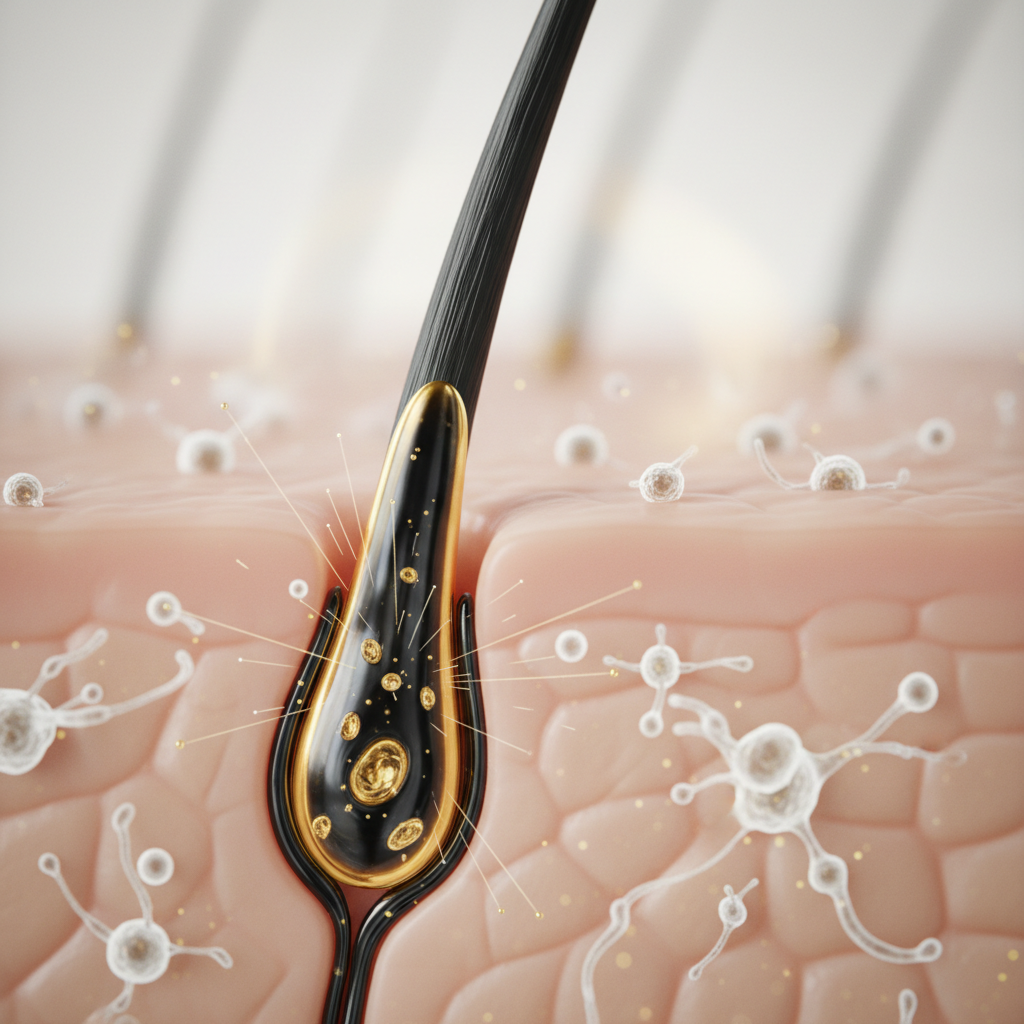
To understand how sebum interacts with follicular stability, one must examine the scalp microbiome.
1. Sebum composition and lipid breakdown
Human sebum is unique in the mammalian world due to its high concentration of squalene (around 12%) and wax esters (around 26%). It also contains roughly 57% triglycerides and fatty acids, alongside small amounts of cholesterol.
Commensal yeasts, primarily Malassezia globosa and Malassezia restricta, reside permanently on the scalp. These yeasts lack the ability to synthesise their own fatty acids. Instead, they produce lipase enzymes that cleave sebum triglycerides into free fatty acids for nutrition.
2. Inflammatory cascade and barrier disruption
Malassezia consumes saturated fatty acids and leaves behind unsaturated fatty acids, notably oleic acid. In individuals sensitive to oleic acid, this substance penetrates the stratum corneum, disrupting cell cohesion and breaking down the skin barrier. The immune system responds by initiating an inflammatory response, leading to rapid cellular turnover, visible flaking (dandruff), and perifollicular inflammation.
3. Impact on follicular anchoring
Micro-inflammation around the upper follicle compromises the integrity of the outer root sheath. When the anchoring tissue suffers persistent inflammatory stress, follicles enter the catagen (regression) and telogen (resting) phases prematurely. This shift leads to telogen effluvium, visible as an increase in daily hair shedding rather than broken fibres.
Sebum profiles and follicular outcomes compared
The state of your sebum directly alters your follicular environment. The table below outlines how lipid states correlate with scalp symptoms.
| Sebum state | Lipid characteristics | Scalp microbiome impact | Effect on follicles |
|---|---|---|---|
| Balanced | Intact squalene, standard fatty acid ratio, pH 4.5 to 5.5 | Stable Cutibacterium and Malassezia balance | Stable anchoring; normal anagen-to-telogen ratio |
| Hyperseborrhoea | High volume, elevated free fatty acids | Malassezia proliferation; rapid lipase activity | Mild perifollicular redness; potential oxidative stress |
| Oxidised buildup | High squalene peroxides, degraded wax esters | Microbial dysbiosis; loss of bacterial diversity | Elevated hair shedding; premature transition to telogen |
| Hyposeborrhoea (Dry) | Insufficient lipid film, elevated transepidermal water loss | Compromised barrier; opportunistic colonization | Follicular irritation from mechanical friction; brittle shaft base |
Signs of sebum-induced follicular stress
Recognising when sebum is compromising your scalp health helps prevent avoidable shedding. Common indicators include:
- Rapid re-greasing: The scalp feels oily, limp, or heavy within 12 to 24 hours of thorough washing.
- Follicular tenderness: A tender, stinging, or aching sensation at the hair roots (trichodynia), often triggered by localised micro-inflammation.
- Yellowish, greasy scale: Clinging flakes around hair shafts, distinct from the light, dry flakes associated with simple scalp xerosis (dehydration).
- Scalp odour: A sour or stale scent caused by lipid oxidation and microbial degradation of sebum fats.
- Increased wash-day shed: A rise in the volume of intact, white-bulbed telogen hairs lost during cleansing.
What you can do: balancing scalp sebum and follicle health
Maintaining an optimal lipid environment requires a consistent, biologically sound routine. The goal is regulation, not eradication.
1. Wash according to your physiological sebum rate
The myth that daily or alternate-day washing causes hair loss is inaccurate. If your scalp produces high volumes of sebum, leaving that lipid pool to oxidise for five to seven days promotes inflammation. Wash as frequently as your scalp demands, typically every one to two days for naturally oily scalps, using a mild surfactant system that preserves baseline hydration.
2. Use clarifying and balancing agents
Incorporate targeted ingredients that reduce microbial load and break down lipid build-up without stripping the skin:
- Salicylic acid (0.5% to 2%): A lipid-soluble beta-hydroxy acid that penetrates the sebum-filled follicular canal to dissolve dead cells.
- Niacinamide (2% to 4%): Clinically shown to help regulate topical sebum excretion rates while strengthening barrier lipids.
- Zinc PCA: Reduces surface sebum and restricts microbial activity without drying the surrounding tissue.
3. Avoid excessive scalp oiling
Applying heavy carrier oils (such as coconut, olive, or argan oil) directly to an oily, inflamed scalp can exacerbate issues. These lipids supply extra fuel for Malassezia lipases, worsening inflammation and destabilising follicle anchorage. Keep rich oils confined to the hair mid-lengths and ends.
Watermans: supporting a balanced scalp environment
Targeted cosmetic formulations can assist in maintaining an ideal scalp environment. Watermans focuses on clarifying the scalp while delivering essential botanicals and conditioning nutrients.
Watermans GrowMe Shampoo is formulated to remove excess sebum, sweat, and environmental debris without stripping the scalp of its vital moisture barrier. By incorporating ingredients such as biotin, rosemary extract, caffeine, and niacinamide, it purifies the follicular opening, supporting the appearance of thicker, fuller-looking hair and refreshed roots. Pairing it with a lightweight, non-comedogenic conditioner helps maintain fibre strength and cuticular shine without congesting the scalp.
When the cause is something else
Excessive oiliness or hair loss does not always originate from simple hygiene or surface sebum. Several internal conditions mimic or amplify these issues:
- Endocrine fluctuations: Polycystic ovary syndrome (PCOS), congenital adrenal hyperplasia, or changes during menopause can drive systemic androgen levels up, accelerating sebum flow and triggering follicular miniaturisation simultaneously.
- Nutritional deficiencies: Severe zinc or essential fatty acid deficiencies can manifest paradoxically as an oily yet flaky, irritated scalp.
- Autoimmune disorders: Conditions like scalp psoriasis cause thick, silvery plaques that resemble extreme seborrhoeic buildup but involve rapid T-cell-mediated keratinocyte proliferation.
When to consult a medical professional
Cosmetic adjustments have limits. You should arrange a consultation with a GP, dermatologist, or qualified trichologist if you encounter:
- Intense erythema (redness), swelling, or oozing crusts on the scalp.
- Sudden, patchy hair shedding (suggestive of alopecia areata) rather than diffuse shedding.
- Thinning that forms an identifiable pattern along the hairline or crown.
- Persistent scaling and itching that fails to respond to over-the-counter clarifying or anti-dandruff shampoos within four weeks.
- Symptoms of systemic hormonal imbalance, such as sudden adult acne or irregular menstrual cycles alongside scalp changes.
Frequently asked questions about Understanding Scalp Sebum and Follicle Health
Can sebum buildup permanently destroy hair follicles?
No. Sebum buildup does not permanently close or destroy hair follicles. However, prolonged lipid accumulation causes oxidative stress and feeds yeast populations, triggering micro-inflammation. This inflammation can force hairs out of the active growth phase into the shedding phase prematurely. Once the scalp barrier is cleared and calmed, the follicle retains its normal capacity to produce new hair fibres.
How often should you wash your hair for optimal scalp sebum regulation?
Your washing cadence should match your individual sebum production rate. Individuals with naturally high lipid secretion typically benefit from washing daily or every other day using a gentle, pH-balanced cleanser. Leaving heavy sebum on the scalp for days allows lipids to oxidise, which increases the likelihood of follicular irritation and shedding.
Does understanding scalp sebum and follicle health explain genetic hair loss?
Understanding scalp sebum and follicle health clarifies why oily scalps often accompany genetic thinning, but sebum does not cause androgenetic alopecia. Both excess sebum production and follicle miniaturisation are stimulated by dihydrotestosterone (DHT) interacting with specific cellular receptors. While addressing sebum improves scalp health, it cannot halt genetic miniaturisation on its own.
Does brushing your hair help distribute sebum down the follicle?
Gentle brushing with a clean, smooth-bristled brush can help move natural sebum away from the congested follicular opening and down the dry length of the hair fibre. However, vigorous brushing against an inflamed, sensitive scalp can cause mechanical breakage along the hair shaft and aggravate fragile follicular roots.
Scalp equilibrium and hair vitality
Achieving genuine hair density demands an accurate perspective on dermatological biology. Understanding Scalp Sebum and Follicle Health shows that the oils produced by your skin are an active biological ecosystem, not an inconvenience to be eliminated. By balancing regular, non-stripping hygiene, controlling lipid oxidation, and preserving the delicate acid mantle, you protect follicular anchor points and create the best conditions for strong, resilient hair growth.
Sources and references
- American Academy of Dermatology Association. "Dandruff: How to treat." AAD Public Health Resources.
- Journal of Investigative Dermatology. "The Role of Sebaceous Lipids in Scalp Health and Barrier Function."
- British Association of Dermatologists. "Seborrhoeic Dermatitis: Patient Information Leaflet."
- International Journal of Cosmetic Science. "Scalp condition impacts hair growth and retention via oxidative stress."
- NHS. "Hair loss (alopecia): Causes, diagnosis and treatments."
Find these ingredients in Watermans products
- Zinc: you will find this ingredient in our Hair Vitamins.
- Oleic Acid: you will find this ingredient in our Camellia & Black Castor Hair & Body Oil.
- Niacinamide: you will find this ingredient in our Hair Mask.
- Zinc PCA: you will find this ingredient in our Hair Growth Serum.