Hair Shedding vs Hair Breakage: Causes, Signs, and Solutions
10 min read ·
Learn the difference between Hair Shedding vs Hair Breakage, how to identify the white root bulb, and targeted steps to protect your scalp and hair fibre.
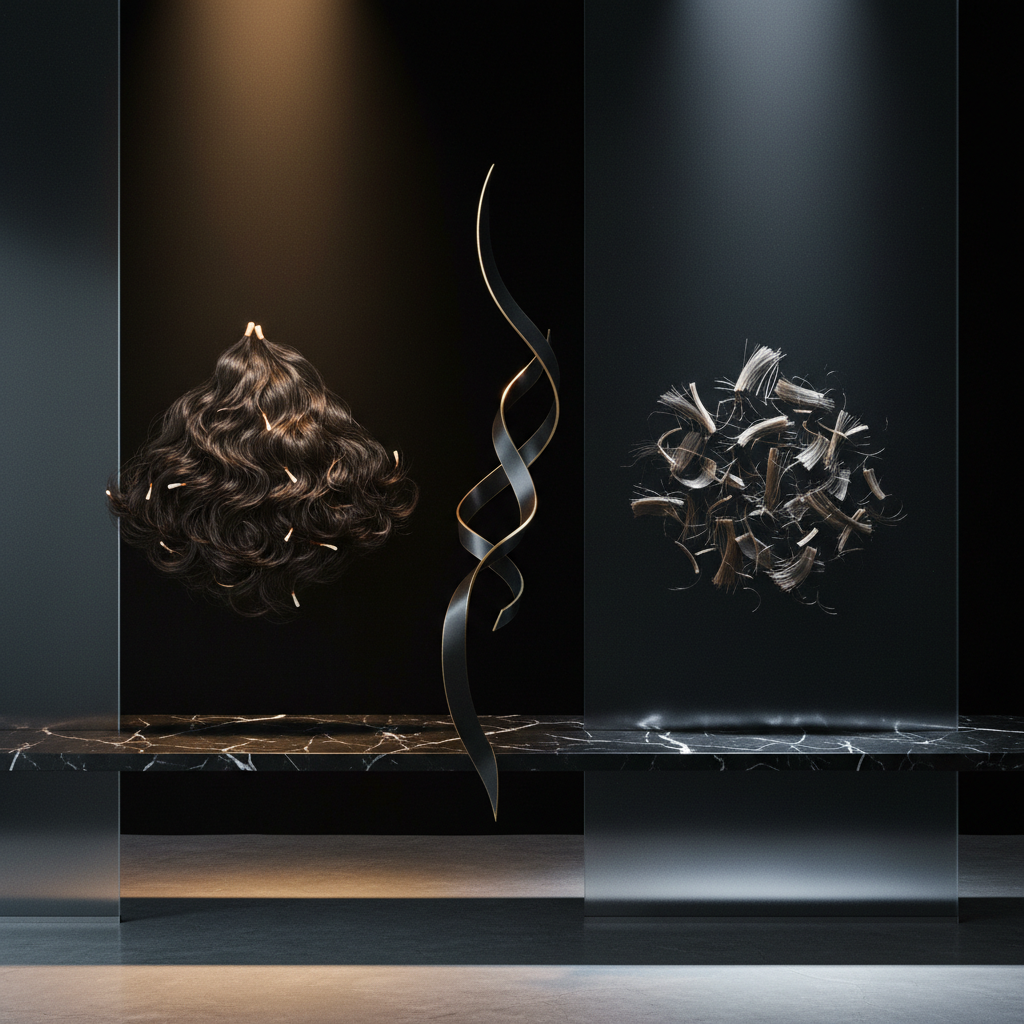
Quick answer: Understanding Hair Shedding vs Hair Breakage comes down to where the hair separates. Shedding occurs at the follicle when a full-length hair completes its natural growth cycle, typically showing a small white bulb at the root. Breakage happens along the hair shaft when mechanical, chemical, or thermal stress snaps the structural keratin fibre. While daily shedding of 50 to 100 hairs is biologically normal, breakage indicates physical cuticle compromise, though severe shedding can sometimes signal an underlying physiological issue.
Key takeaways
- Shed hairs come out from the follicle at full length and almost always display a tiny, bulbous white root.
- Broken hairs are shorter fragments of varying lengths, lack a root bulb, and often feature frayed or split ends.
- Shedding is driven by systemic and biological triggers such as hormones, stress, nutritional shifts, and natural telogen cycles.
- Breakage is caused by external structural damage, including heat styling, bleaching, friction, and chemical processing.
- Treatments must match the issue: topical cuticle conditioners cannot stop biological shedding, and follicle supplements cannot mend a snapped hair fibre.
Hair Shedding vs Hair Breakage: what the evidence shows
Dermatologists and trichologists treat shedding and breakage as entirely distinct clinical phenomena. Hair shedding (clinically termed telogen effluvium when excessive) is an internal process involving the hair growth cycle. At any given time, roughly 85 to 90 percent of your scalp hairs sit in the anagen (active growth) phase, while 10 to 15 percent rest in the telogen phase. Once the telogen phase finishes, the hair releases naturally from the dermal papilla. Clinical research published by the British Association of Dermatologists confirms that losing between 50 and 100 telogen hairs per day is standard baseline turnover for a healthy scalp.
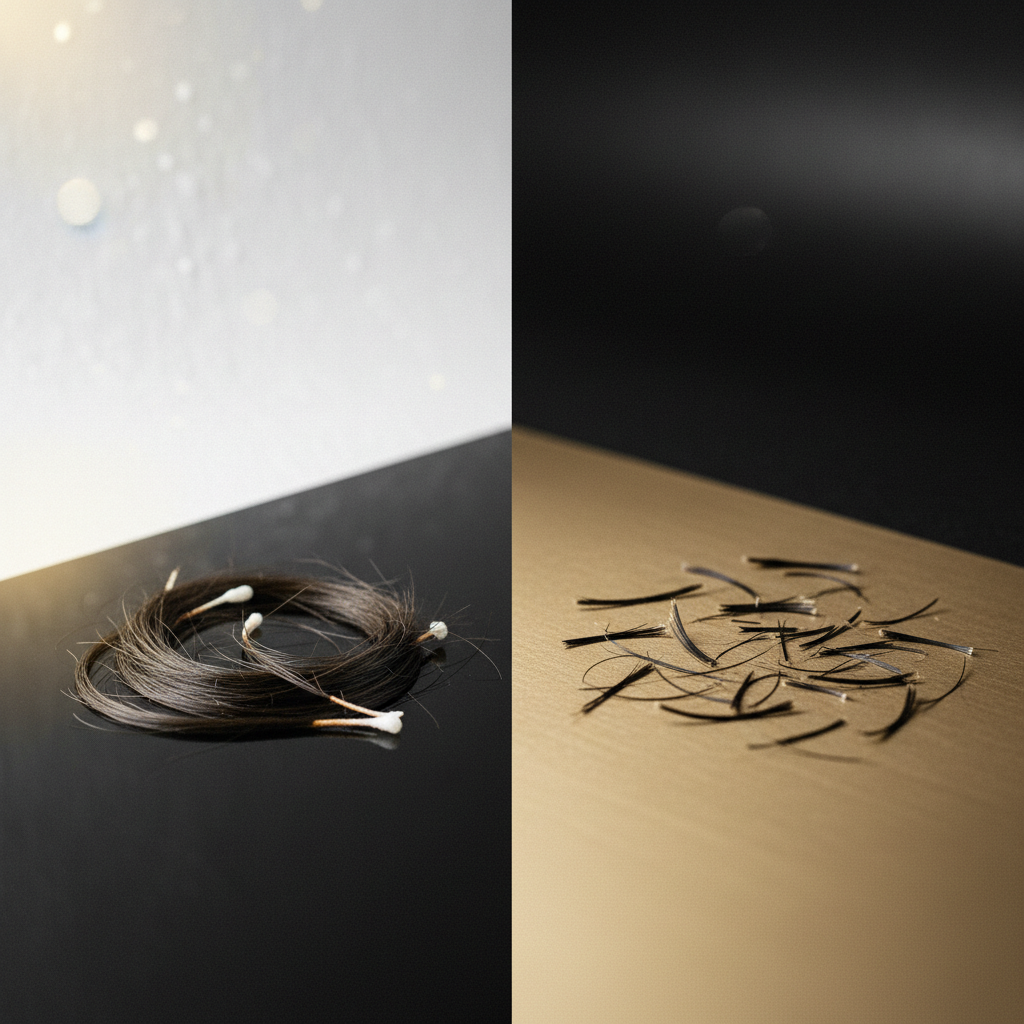
Hair breakage, by contrast, is a mechanical failure of the hair shaft. Hair fibres are composed of an outer cuticle (overlapping scales of keratinised cells), an inner cortex (which provides tensile strength and elasticity), and sometimes a central medulla. Scanning electron microscopy studies reveal that when the protective cuticle layer is eroded by bleaching, high heat (above 185°C), or rough brushing, the cortex becomes exposed. Without its protective casing, cortical keratin bonds weaken, leading to fractures along the shaft known as trichorrhexis nodosa.
The fundamental distinction in Hair Shedding vs Hair Breakage is therefore root involvement versus fibre integrity. One is an expulsion of an entire hair organ unit; the other is the structural snapping of dead protein filament.
| Diagnostic feature | Hair shedding | Hair breakage |
|---|---|---|
| Separation point | Scalp follicle (dermal papilla) | Anywhere along the hair shaft |
| Length of fallen strands | Full length of your current hair | Short, uneven fragments or pieces |
| Root bulb present? | Yes, small white or translucent bulb | No bulb; raw, frayed, or split ends |
| Primary driver | Hormones, stress, illness, genetics, cycle | Bleach, heat, friction, rough detangling |
| Effect on scalp density | Diffuse thinning across the scalp | Thinned ends, uneven layers, frizz |
| Primary corrective route | Scalp health, medical review, nutrition | Conditioning agents, protein, reduced heat |
The mechanisms: why hair sheds and why it breaks
To address either condition effectively, you need to understand the biological and physical mechanisms at play.
The biological shedding cycle
Every hair follicle operates independently through four distinct phases: anagen (growth), catagen (transition), telogen (rest), and exogen (shedding). During exogen, proteolytic enzymes release the base of the hair shaft from the follicular base. If your body experiences a major physiological stressor, such as childbirth, rapid weight loss, severe viral illness, or high psychological stress, an abnormally high percentage of anagen follicles can prematurely shift into telogen. Around two to three months later, these hairs shed simultaneously. This process does not damage the follicle itself, meaning regrowth typically occurs once the trigger resolves.
The mechanical breakage process
Hair fibre strength relies on disulphide bonds, hydrogen bonds, and salt linkages within the cortical keratin chains. Water temporarily disrupts hydrogen bonds, which is why wet hair has higher elasticity but lower tensile strength, making it vulnerable to overstretching and snapping. Chemical treatments like permanent dyes and relaxers break disulphide bonds to alter colour or shape. If these bonds are not properly maintained, the fibre loses its structural resilience. When combined with friction from cotton pillowcases or high-tension hairstyles, the weakened fibre fractures cleanly or splits upward.
What the evidence does not show
There are persistent myths surrounding both issues that lead people to choose the wrong solutions.
Scientific evidence does not show that hair products or frequent washing cause true hair shedding. Washing simply dislodges hairs that have already separated from the follicle days earlier during the exogen phase. If you wash your hair every four days instead of daily, you will observe a larger accumulation of shed strands in the drain, but the biological rate of loss remains unchanged.
Furthermore, evidence does not show that deep conditioning masks, hair oils, or bond-building treatments can stop shedding at the scalp. Conditioners and lipids work exclusively on the dead fibre of the hair shaft by smoothing the cuticle and reducing friction. They cannot alter follicular cycles beneath the dermis. Conversely, taking oral biotin or multivitamins will not fix physical breakage if your hair is snapping due to flat irons or chemical bleach.
Clear signs: how to diagnose what you are seeing
You can easily determine whether you are dealing with shedding or breakage using a simple visual inspection:
- Perform the white paper test: Collect 10 to 15 fallen strands from your brush or bathroom counter and lay them across a clean sheet of white paper (or dark paper for very blonde hair).
- Examine the ends: Look closely at both ends of each strand. If you see a tiny, rounded white or clear bead at one end, that strand is a shed hair. If both ends are blunt, jagged, split, or tapered without a bulb, it is a broken fragment.
- Check the length: Measure the strands against your overall hair length. If the fallen strands match your total hair length, you are observing shedding. If they are an assortment of short, jagged lengths, you are dealing with breakage.
- Assess your hair profile: If your ponytail circumference has noticeably shrunk near the scalp, shedding is the primary culprit. If your hair appears thin, sparse, and frizzy at the ends while remaining thick at the roots, breakage is occurring.
Practical steps to take
Once you have identified whether you are managing shedding, breakage, or a combination of both, you can apply targeted remedies.
Managing hair breakage
- Lower your heat settings: Keep thermal styling tools below 185°C. Heat above this threshold degrades structural keratin and melts lipid layers within the cuticle.
- Improve lubrication: Use rinse-out conditioners and leave-in products formulated with fatty alcohols, cetyl esters, and hydrolysed proteins to reduce friction between strands during combing.
- Detangle with care: Never rip a fine-tooth comb through wet hair. Use a wide-tooth comb or flexible wet-brush, working slowly from the ends upward toward the roots.
- Switch sleep surfaces: Cotton pillowcases create abrasive friction as you move during sleep. Silk or satin pillowcases allow hair fibres to glide without catching.
Supporting a healthy shedding cycle
- Optimise scalp hygiene: Keep the scalp microbiome balanced by cleansing regularly. Sebum build-up and scalp inflammation (such as seborrhoeic dermatitis) can exacerbate shedding.
- Check foundational nutrition: Ensure adequate dietary intake of ferritin (stored iron), vitamin D, zinc, and dietary protein.
- Manage stress spikes: Because cortisol shifts follicles from anagen to telogen, addressing chronic systemic stress helps stabilise shedding cycles over a three to six-month window.
Targeted support: Watermans scalp and fibre care
When dealing with hair thinning and fibre fatigue, combining scalp stimulation with surface protection yields the best cosmetic outcomes. Watermans focuses on dual-action formulas designed to support the scalp environment while reinforcing fragile strands.
Watermans Grow Me Shampoo delivers scalp-stimulating ingredients, including biotin, rosemary extract, caffeine, and niacinamide, alongside hydrolysed lupin protein. While topical washes do not cure clinical alopecia, this blend supports a clean, invigorated scalp environment while improving strand resilience. Paired with Watermans Condition Me Conditioner, which uses cholesterol, shea butter, and niacinamide to restore surface slip, the routine reduces mechanical friction during washing and brushing, directly cutting down on avoidable hair breakage.
When the cause may be something else
Not all hair loss fits neatly into basic telogen shedding or heat breakage. Several underlying medical conditions alter hair density and require clinical evaluation:
- Androgenetic alopecia: Pattern hair loss driven by dihydrotestosterone (DHT) causes follicular miniaturisation. Hairs shed progressively thinner and shorter over successive cycles rather than falling out in sudden diffuse clumps.
- Alopecia areata: An autoimmune condition where T-cells attack the hair bulb, resulting in smooth, circular patches of total hair loss.
- Traction alopecia: Persistent mechanical tension from tight braids, weaves, or ponytails physically pulls the hair follicle out, causing localised inflammation and potential permanent scarring.
- Trichorrhexis invaginata: A genetic hair shaft disorder (often linked to Netherton syndrome) where the hair fibre folds into itself like a bamboo stalk, causing extreme fragility independent of styling habits.
When to seek professional advice
Consult a GP, dermatologist, or qualified trichologist if you notice any of the following warning signs:
- Sudden, widespread shedding that persists continuously for more than three months.
- Hair falling out in distinct, round, coin-sized patches.
- Scalp symptoms including burning, tenderness, visible erythema (redness), scaling, or pustules.
- Noticeable widening of your central parting accompanied by miniaturised, wispy hairs at the temples.
- A sudden loss of eyebrow or body hair alongside scalp shedding.
A medical professional can conduct blood tests (evaluating ferritin, thyroid-stimulating hormone, and full blood count) or perform a clinical dermoscopy (trichoscopy) to provide an accurate diagnosis.
Frequently asked questions about Hair Shedding vs Hair Breakage
How do I tell the difference between Hair Shedding vs Hair Breakage on wet hair?
Check the ends of the fallen strands. Shed hair will have a tiny, visible white or translucent bulb at the root end and will match your full hair length. Broken hair has no root bulb, tends to be much shorter than your full length, and often shows frayed, stretched, or split tips where the shaft fractured under tension.
Can severe hair breakage cause bald spots on the scalp?
Breakage rarely causes completely smooth bald spots because the snapping occurs along the shaft, leaving short stubble near the scalp. However, extreme chemical damage or high-tension styles can snap hairs very close to the roots, creating the appearance of patchy, uneven thinning. Completely smooth skin usually indicates follicular shedding or an alopecia condition.
How much shedding is normal during a wash?
Losing between 50 and 100 hairs per day is biologically normal. If you wash your hair every three to four days, it is entirely normal to see 150 to 300 hairs come away in the shower and brush combined. These are hairs that detached naturally over preceding days and were held in place by surrounding strands until washed.
Can a damaged hair shaft recover from breakage?
Because the hair shaft consists of non-living keratinised tissue, broken fibres cannot biologically heal or fuse back together. Cosmetic treatments, hydrolysed proteins, and conditioning agents can temporarily coat the cuticle, smooth rough edges, and prevent the split from travelling further up the shaft, but trimming away fractured ends is the only permanent fix.
Does brushing wet hair cause shedding or breakage?
Brushing wet hair primarily causes breakage. When hair is saturated with water, its internal hydrogen bonds are disrupted, making the strand significantly more elastic and weaker under tension. Aggressive brushing stretches the cortex beyond its elastic limit, causing the fibre to snap. It does not accelerate biological shedding from the follicle.
Final thoughts on Hair Shedding vs Hair Breakage
Distinguishing between Hair Shedding vs Hair Breakage is the essential first step in resolving hair density concerns. Shedding is a biological, follicular process governed by your internal health and natural cellular cycles, whereas breakage is a physical breakdown of the external keratin shaft caused by mechanical and environmental stress. By inspecting the ends of fallen strands for a root bulb and evaluating their length, you can pinpoint the exact issue. Aligning your routine, whether that means adjusting chemical habits to stop breakage or supporting scalp health and seeking medical guidance for prolonged shedding, ensures you protect both your hair follicles and your lengths.
Sources and references
- British Association of Dermatologists: Telogen Effluvium Guidelines and Patient Information (2021).
- Gavazzoni Dias, M. F. "Hair Cosmetics: An Overview." International Journal of Trichology, 2015. DOI: 10.4103/0974-7753.153450.
- Robbins, C. R. Chemical and Physical Behavior of Human Hair. 5th ed., Springer-Verlag, 2012.
- Sinclair, R. "Healthy Hair: What Is It?" Journal of Investigative Dermatology Symposium Proceedings, 2007. DOI: 10.1038/sj.jidsymp.5650046.
- Trüeb, R. M. "Shampoos: Ingredients, benefits and adverse effects." Journal of the European Academy of Dermatology and Venereology, 2018. DOI: 10.1111/jdv.15182.
Find these ingredients in Watermans products
- Niacinamide: you will find this ingredient in our Hair Mask.
- Shea Butter: you will find this ingredient in our Curly Hair Conditioner.