Understanding Scalp Psoriasis and Eczema: Causes, Symptoms, and Care
9 min read ·
Explore the biological differences between scalp psoriasis and eczema, their unique symptoms, and evidence-based strategies for effective scalp management.
Quick answer: Understanding Scalp Psoriasis and Eczema begins with recognising that they are two distinct inflammatory conditions requiring very different management strategies. Scalp psoriasis is an autoimmune-mediated disorder producing thick, well-defined plaques with silvery-white scales. Scalp eczema, most commonly seborrhoeic dermatitis or atopic eczema, involves an impaired skin barrier, fungal sensitivity, and yellowish, greasy or weeping flakes. While neither condition can be cured permanently by cosmetic products alone, accurate clinical identification allows targeted anti-inflammatory and barrier-repair routines that keep flares under control.
Key takeaways
- Psoriasis stems from accelerated keratinocyte turnover (a 3 to 4 day cycle instead of 28 to 30 days), leading to stacked, silvery plaques.
- Eczema on the scalp is usually seborrhoeic dermatitis, driven by an inflammatory reaction to Malassezia yeast metabolites and sebum breakdown.
- Plaque borders offer the clearest visual clue: psoriasis has sharply demarcated edges, whereas eczema presents with diffuse, indistinct borders.
- Neither condition directly destroys the hair follicle, but vigorous scratching or mechanical descaling can cause temporary telogen shedding and hair breakage.
- Over-the-counter anti-dandruff shampoos can soothe mild seborrhoeic dermatitis, but moderate to severe scalp psoriasis typically demands prescription keratolytic or topical corticosteroid treatments.
Understanding Scalp Psoriasis and Eczema: what the evidence shows
Dermatological research shows that distinguishing between these two inflammatory skin disorders is crucial because their underlying biological pathways diverge significantly. When dermatologists approach understanding scalp psoriasis and eczema, they look past the surface flakes to evaluate systemic immune involvement, barrier integrity, and fungal ecology.
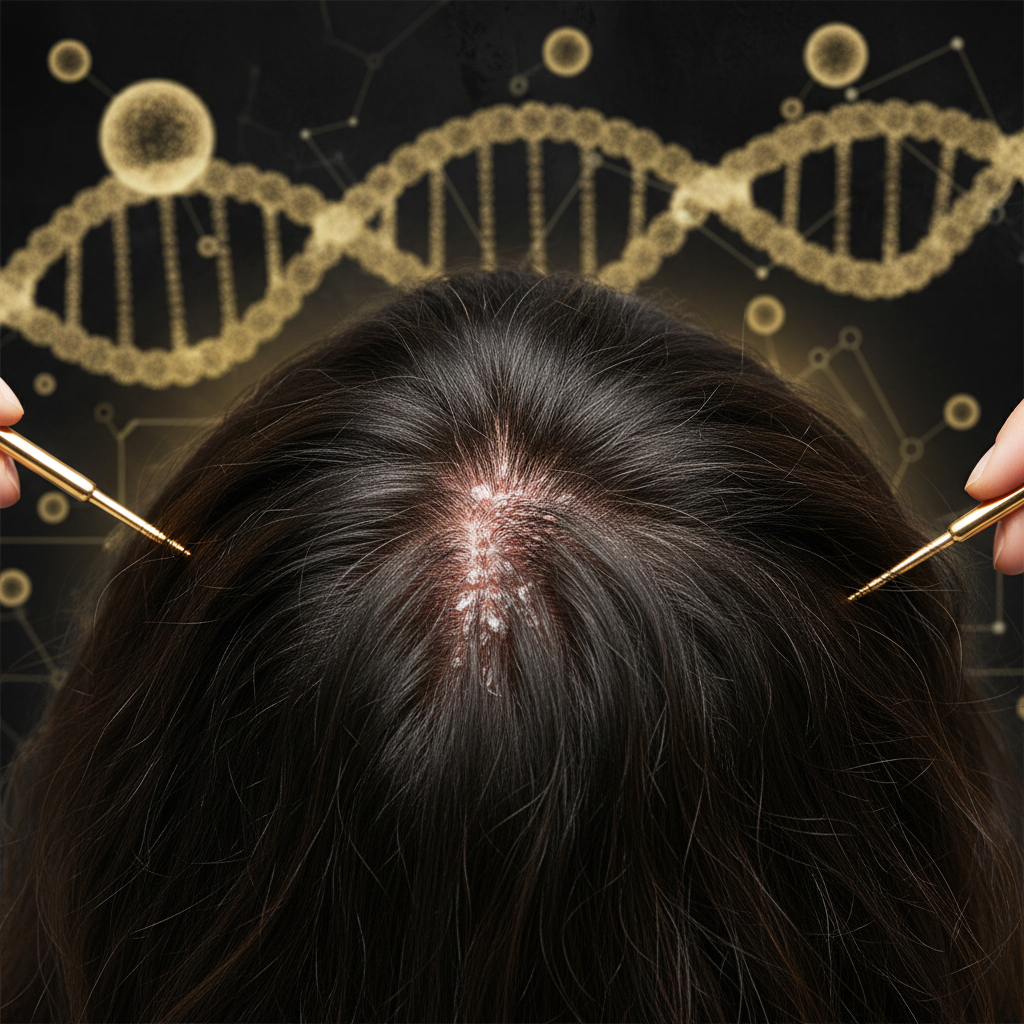
Scalp psoriasis affects roughly 50% to 80% of people with plaque psoriasis worldwide. Clinical trials confirm that it is driven primarily by the IL-23/IL-17 immune axis. T-cells trigger an overproduction of pro-inflammatory cytokines, speeding up the epidermal renewal process from roughly 28 days down to just 3 to 5 days. Because dead skin cells cannot shed quickly enough, they pile up into thick, indurated plaques anchored to the scalp.
Scalp eczema, by contrast, most frequently takes the form of seborrhoeic dermatitis in adults or atopic dermatitis in children and reactive adults. In seborrhoeic dermatitis, the barrier function of the stratum corneum is disrupted by oleic acid, a byproduct generated when Malassezia yeast metabolises scalp sebum. This creates localized irritation, erythema, and fine, yellowish, greasy scaling rather than dry, cohesive crusts.
+-----------------------------------------------------------------------------------+
| Feature | Scalp Psoriasis | Scalp Eczema (Seborrhoeic) |
+-----------------------------------------------------------------------------------+
| Primary Driver | Autoimmune (IL-17/IL-23 axis) | Barrier defect + Malassezia|
| Scale Appearance | Thick, silvery-white, dry | Thin, yellowish, greasy |
| Plaque Margins | Sharply demarcated, distinct | Diffuse, blended margins |
| Extent Beyond Hairline| Often extends past the hairline | Usually stays inside hairline|
| Auspitz Sign | Positive (pinpoint bleeding) | Negative |
| Itch Intensity | Mild to burning or sore | Intense, relentless itch |
| Follicle Impact | Potential temporary telogen effl| Potential breakage, telogen|
+-----------------------------------------------------------------------------------+
The biological mechanisms behind each condition
Understanding the cellular mechanics helps explain why a treatment that clears eczema can sometimes aggravate psoriasis, and vice versa.
Scalp psoriasis: hyperkeratosis and parakeratosis
In healthy scalp skin, basal cells divide, mature, lose their nuclei, and shed imperceptibly as microscopic squames. In psoriasis, systemic immune signals flood the scalp with tumour necrosis factor-alpha (TNF-alpha), interleukin-17, and interleukin-22. Keratinocytes proliferate at an uncontrolled rate.
This leads to two histological hallmarks:
- Hyperkeratosis: marked thickening of the stratum corneum.
- Parakeratosis: retention of cell nuclei in the stratum corneum, creating brittle, silvery scales that adhere tenaciously to the skin and hair shafts. Dilated capillaries sit just beneath these scales, which explains the Auspitz sign: pinpoint bleeding when a plaque is forcibly detached.
Scalp eczema: lipid depletion and microbial irritation
Scalp eczema involves an impaired barrier. In atopic eczema, mutations in the filaggrin gene (FLG) or ceramide deficiencies compromise the lipid matrix between corneocytes, permitting moisture loss and allergen penetration.
In seborrhoeic dermatitis, lipophilic Malassezia globosa and Malassezia restricta consume triglycerides from sebum, releasing free fatty acids. In susceptible individuals, these irritant fatty acids penetrate the stratum corneum, triggering epidermal inflammation, hyper-proliferation, and spongiosis (intercellular oedema in the epidermis).
Clinical signs: what to look for on the scalp
To separate scalp psoriasis from eczema during an examination, examine the scale texture, margin definition, and surrounding areas.
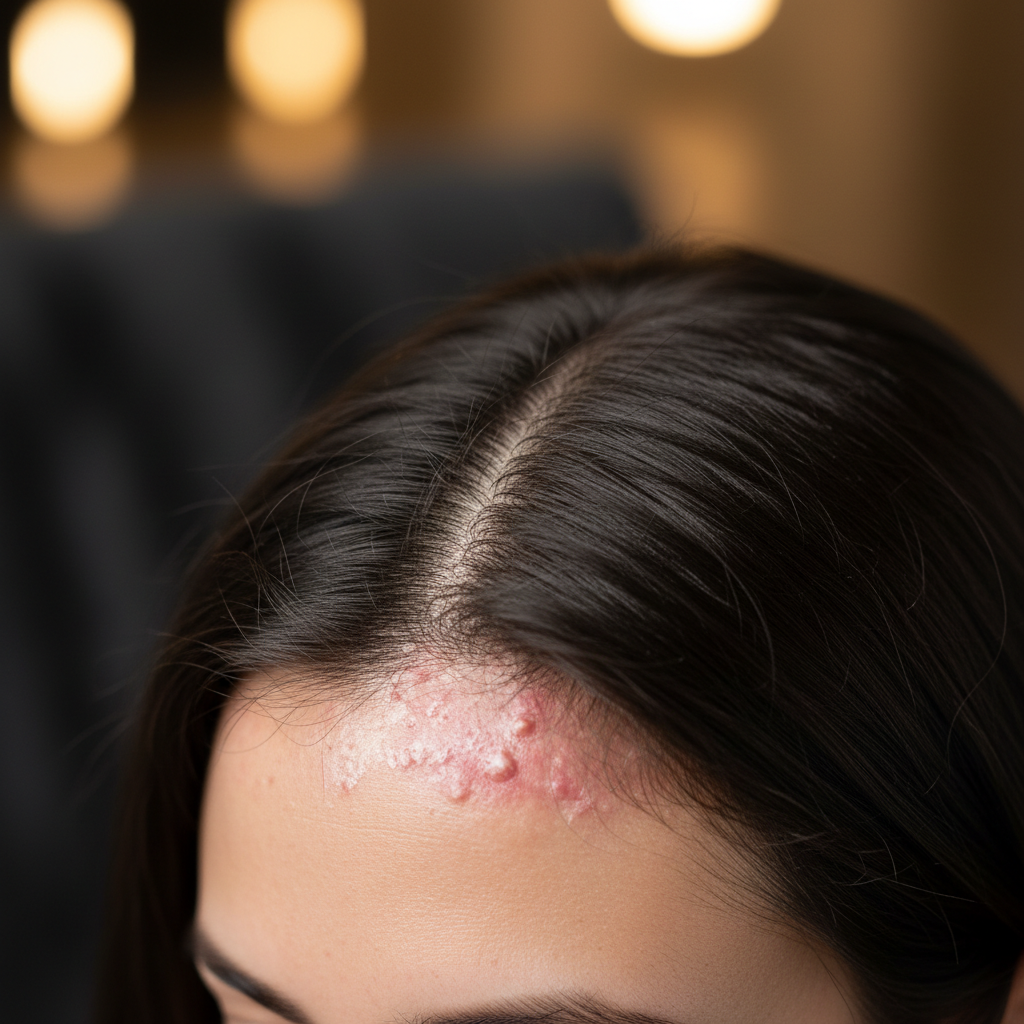
- Scale colour and density: Psoriasis displays micaceous, silvery scales that feel rough, raised, and dense like dried plaster. Eczema features softer, oily, yellowish flakes or thin, powdery white scales.
- Borders: Part the hair and trace the edge of the redness. Psoriasis stops abruptly, showing a clear, raised border that frequently creeps past the frontal hairline onto the forehead, behind the ears, or down the nape. Eczema fades gradually into normal skin without a clear line of demarcation.
- Sensory feedback: Eczema almost always causes an urgent, distracting itch that worsens with heat and sweat. Psoriasis often feels tight, burning, or tender, though some individuals do experience intense itching.
- Extracutaneous clues: Check the elbows, knees, and nails. Pitting, ridging, or yellow-brown "oil drop" discoloration of the fingernails strongly indicates psoriasis. Flexible creases, such as the antecubital and popliteal fossae (creases of the elbows and knees), are classic sites for atopic eczema.
What the evidence does not show
There is no scientific evidence that either scalp psoriasis or scalp eczema is contagious. Neither condition can be passed between individuals through touch, shared combs, salon equipment, or pillows.
Furthermore, controlled clinical research does not support the claim that poor hygiene causes either condition. Washing your hair less often will not cure eczema, nor will over-washing scrub away psoriasis plaques. In fact, aggressive scrubbing can induce the Koebner phenomenon in psoriasis patients, where physical trauma causes fresh psoriatic lesions to erupt along the injured skin.
Finally, while severe inflammation can trigger temporary hair shedding (telogen effluvium) or hair breakage from friction, neither condition causes permanent scarring alopecia unless secondary bacterial infections take hold due to intense scratching.
What you can do: evidence-based management
Managing either condition requires balancing active medical treatment with scalp barrier support.
For scalp psoriasis
- Keratolytics: Topical agents containing salicylic acid (2% to 10%) or urea help soften and dissolve dense scales so subsequent treatments can reach the scalp.
- Topical corticosteroids and vitamin D analogues: Prescription solutions or foams containing betamethasone dipropionate and calcipotriol reduce epidermal proliferation and quiet inflammation.
- Coal tar formulations: Coal tar (1% to 5%) suppresses DNA synthesis in epidermal cells and alleviates inflammation, though it carries an odour and can stain lighter hair.
- Gentle descaling: Never pick or scrape plaques dry. Apply an emollient or botanical scalp oil to soften scales for 30 to 60 minutes before washing, then loosen them gently with a wide-tooth comb.
For scalp eczema
- Antifungal shampoos: Formulations containing ketoconazole (1% to 2%), zinc pyrithione, piroctone olamine, or selenium sulphide reduce Malassezia colonisation, directly curbing the inflammatory cascade.
- Mild topical corticosteroids: Low-potency hydrocortisone or non-steroidal calcineurin inhibitors (such as tacrolimus or pimecrolimus) help calm severe atopic eczema flares on delicate scalp skin.
- Barrier restoration: Use sulphate-free, neutral-to-mildly-acidic shampoos (pH 4.5 to 5.5) to protect natural lipids without leaving heavy residues that feed yeast.
Daily scalp support and cosmetic care
When navigating persistent scalp irritation, cosmetic care should focus on soothing the skin barrier and maintaining hair fibre strength without interfering with prescribed treatments. Look for gentle, nutrient-rich formulations that nourish the scalp microenvironment.
Watermans approaches hair and scalp wellness from a botanical and nutritional standpoint. While Watermans products are cosmetic and not designed to treat, cure, or diagnose clinical conditions like psoriasis or eczema, maintaining a clean, balanced scalp environment supports overall hair vitality. Formulations containing ingredients like biotin, rosemary, niacinamide, and allantoin provide cosmetic hydration, improve the feel of stressed hair fibres, and help reduce hair breakage caused by routine friction and combing. Always check with your dermatologist before introducing new cosmetic products alongside prescription topical therapies.
When the cause may be something else
If symptoms do not respond to typical therapies, consider alternative diagnoses:
- Tinea capitis: A fungal dermatophyte infection common in children that causes patchy hair loss, broken "black dot" hairs, and scaling. It requires systemic oral antifungals, as topicals cannot penetrate the hair shaft.
- Contact dermatitis: An allergic or irritant reaction to hair dyes (such as paraphenylenediamine, or PPD), preservatives (like methylisothiazolinone), or fragrances. Patch testing can confirm the offending allergen.
- Lichen planopilaris or Frontal Fibrosing Alopecia: Scarring alopecias that involve follicular erythema, scaling around individual hair bases, and permanent follicular loss. Immediate dermatological referral is critical.
When to get professional advice
Consult an NHS GP, board-certified dermatologist, or qualified trichologist if:
- Flaking and erythema spread rapidly across the face, neck, or body.
- The scalp oozes clear fluid, crusts with honey-coloured discharge, or shows signs of secondary bacterial infection (impetiginisation).
- You notice distinct patches of hair loss alongside redness and scaling.
- Over-the-counter medicated shampoos show no improvement after 3 to 4 weeks of consistent use.
- The scalp pain, burning, or itching disturbs your sleep or daily activities.
Frequently asked questions about Understanding Scalp Psoriasis and Eczema
Can scalp psoriasis or eczema cause permanent hair loss?
Neither condition typically destroys the hair follicle. However, chronic scratching can snap hair shafts near the root, mimicking hair loss when it is actually hair breakage. Intense inflammation can also trigger telogen effluvium, an acute shedding phase where hairs enter the resting cycle prematurely. Once the inflammation subsides and mechanical trauma stops, hair generally regrows normally.
How does understanding scalp psoriasis and eczema help in choosing the right shampoo?
Understanding scalp psoriasis and eczema prevents you from using counterproductive treatments. Scalp eczema (seborrhoeic dermatitis) responds best to antifungals like ketoconazole or piroctone olamine that target Malassezia yeast. In contrast, scalp psoriasis requires keratolytics like salicylic acid or coal tar to lift thick, compact plaques so anti-inflammatory topicals can penetrate. Using the wrong product can fail to clear the condition or dry out the scalp further.
Can diet cure these scalp conditions?
Dietary changes cannot cure scalp psoriasis or eczema, as both are complex conditions driven by genetics, immunology, and barrier function. Some individuals find that reducing ultra-processed foods or alcohol helps lessen systemic inflammatory flares, and maintaining adequate levels of vitamin D and omega-3 fatty acids supports overall skin barrier health. However, dietary modifications should complement, not replace, clinical medical management.
Is hard water a factor in scalp eczema or psoriasis flares?
Hard water contains high levels of dissolved calcium and magnesium (often above 200 mg/L), which can react with cleansing surfactants to form insoluble curd. This residue can disrupt the skin's protective acid mantle (which naturally sits around pH 4.5 to 5.5) and strip essential lipids, exacerbating eczema irritation. While hard water does not cause psoriasis, the mineral buildup can leave skin feeling drier and tighter.
A balanced approach to scalp wellness
Gaining confidence in understanding scalp psoriasis and eczema transforms how you approach scalp discomfort. While both conditions can be frustrating, distinguishing between the immune-driven hyperkeratosis of psoriasis and the barrier-disrupted, yeast-sensitive inflammation of eczema is the key to lasting relief.
Work closely with a medical professional to establish an accurate diagnosis and appropriate prescription regimen. Complement that medical foundation with mindful hair practices: wash with lukewarm water, avoid mechanical picking, maintain a balanced scalp pH, and use gentle, strengthening hair products that protect the hair fibre from breakage while the skin heals.
Sources and references
- National Health Service (NHS). "Psoriasis." 2022.
- National Health Service (NHS). "Seborrhoeic dermatitis." 2023.
- British Association of Dermatologists (BAD). "Psoriasis - an overview." Clinical Guidelines, 2021.
- National Institute for Health and Care Excellence (NICE). "Psoriasis: assessment and management." Clinical Guideline CG153, 2017.
- Journal of the American Academy of Dermatology (JAAD). "Joint AAD-NPF guidelines of care for the management and treatment of psoriasis with topical therapy and alternative approaches." 2021.
- Borda, L. J., & Wikramanayake, T. C. "Seborrheic Dermatitis and Dandruff: A Comprehensive Review." Journal of Clinical and Investigative Dermatology, 2015.
Find these ingredients in Watermans products
- Biotin: you will find this ingredient in our Hair Growth Shampoo.
- Zinc: you will find this ingredient in our Hair Vitamins.
- Oleic Acid: you will find this ingredient in our Camellia & Black Castor Hair & Body Oil.
- Niacinamide: you will find this ingredient in our Hair Mask.