Dandruff vs Dry Scalp: How to Identify and Treat Each Condition
9 min read ·
Learn the real differences in Dandruff vs Dry Scalp, from underlying causes and flake types to targeted treatments for long-term scalp health.
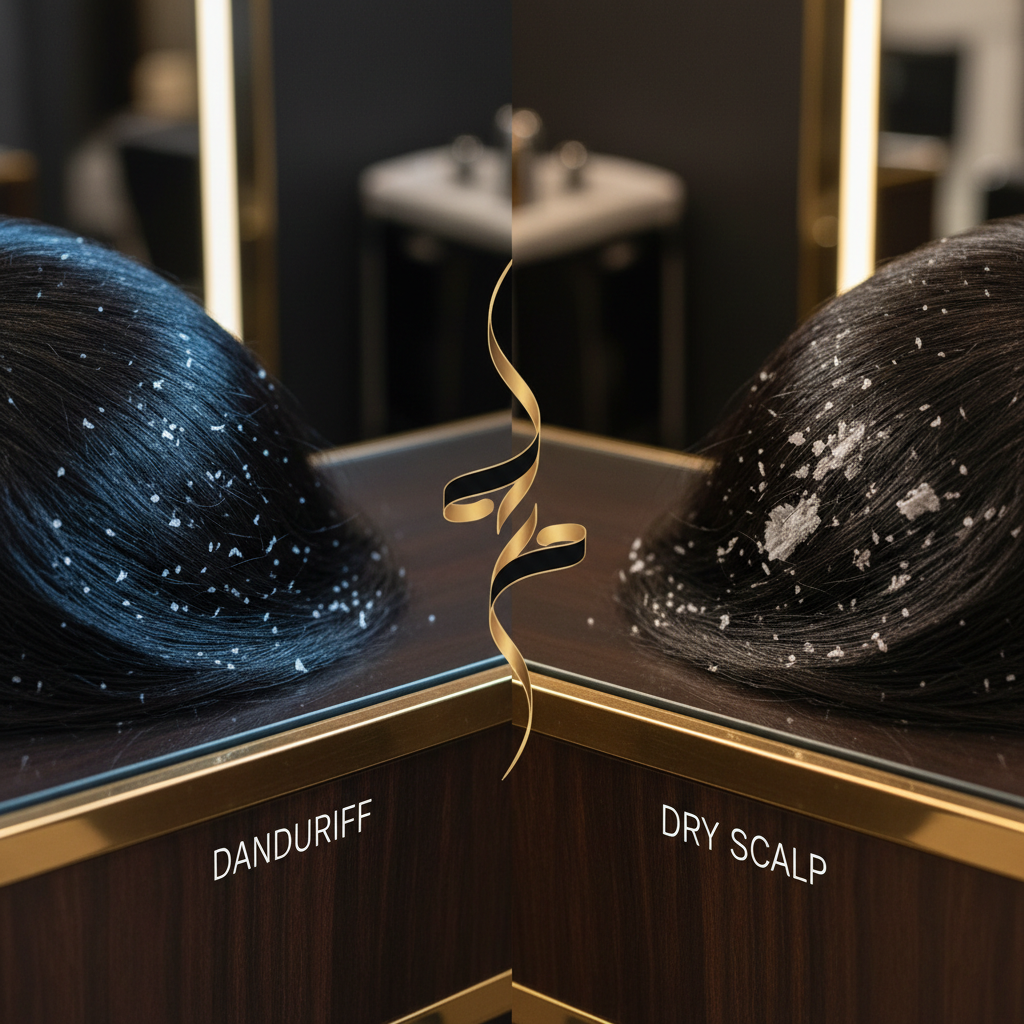
Quick answer: The debate around Dandruff vs Dry Scalp comes down to excess oil versus a lack of moisture. Dandruff stems from an overgrowth of Malassezia yeast feeding on sebum, producing large, oily, yellowish flakes and an inflamed scalp. In contrast, dry scalp is a moisture-barrier deficit causing tiny, dry, white flakes and tightness without excess oil. While visual differences are clear, both conditions can cause persistent itching, meaning an incorrect diagnosis often leads to treatments that make the underlying irritation worse.
Key takeaways
- The root cause differs: Dandruff involves fungal metabolism of sebum, whereas dry scalp is an epidermal barrier issue driven by dehydration or harsh cleansing.
- Flake appearance gives the clue: Dandruff flakes are typically large, greasy, and yellow or greyish white. Dry scalp flakes are small, powdery, and pure white.
- Oil levels tell the story: Dandruff thrives on an oily scalp, while dry scalp usually coexists with dry skin on the face, hands, or body.
- Treatment paths diverge: Antifungal agents and sebum regulators resolve dandruff. Hydrating humectants, barrier-supporting lipids, and gentle washing resolve dry scalp.
- Misdiagnosis backfires: Applying heavy oils to active dandruff feeds the yeast, while stripping a dry scalp with harsh clarifying agents worsens flaking.
Dandruff vs Dry Scalp: what the evidence shows
Clinical dermatology categorises dandruff (pityriasis capitis) as a mild, non-inflammatory form of seborrhoeic dermatitis. Research demonstrates that dandruff requires three core factors: natural sebum production, the presence of lipophilic yeasts from the genus Malassezia (predominantly M. Globosa and M. Restricta), and individual skin barrier sensitivity.
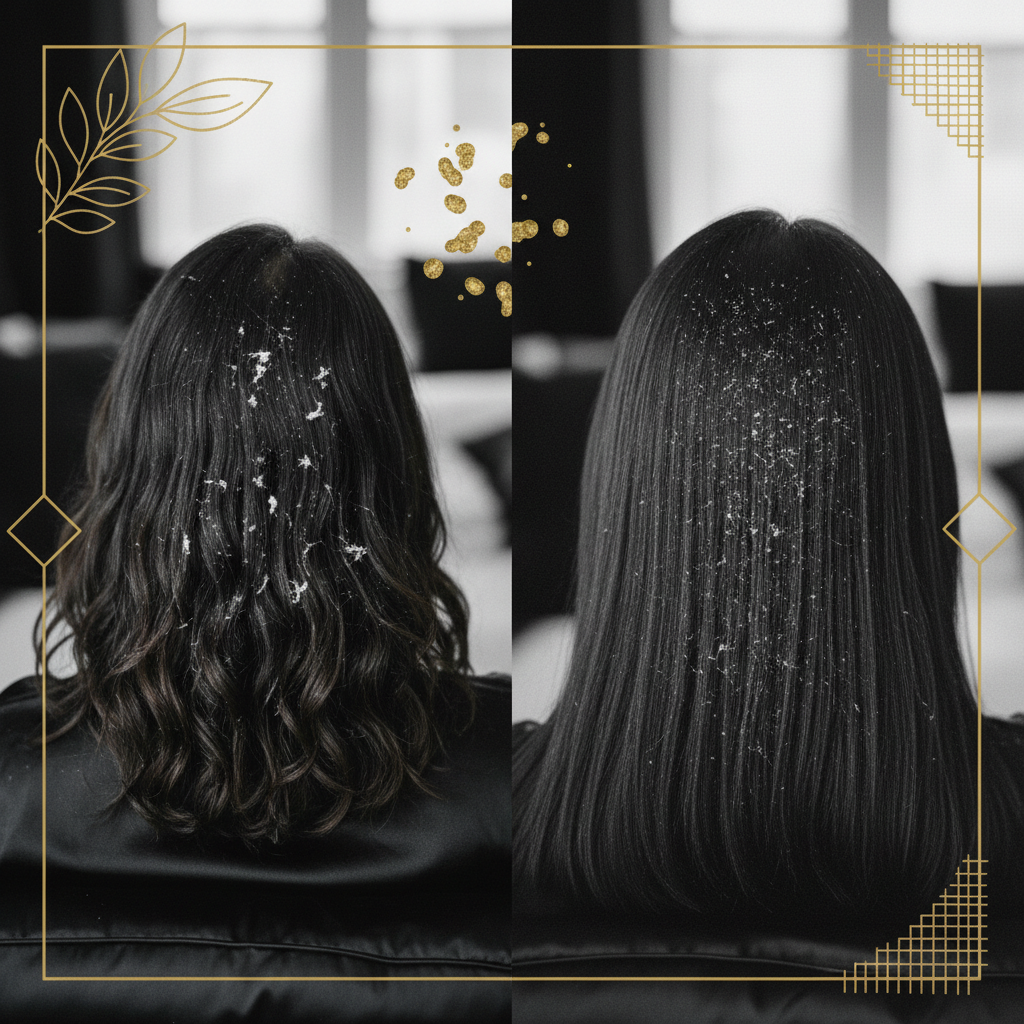
When Malassezia consumes triglycerides in your scalp sebum, it releases free fatty acids, particularly oleic acid. In individuals sensitive to oleic acid, this chemical byproduct breaches the stratum corneum, the skin's outermost barrier. The immune system reacts, triggering rapid, disordered turnover of epidermal cells. Instead of shedding invisibly as single corneocytes every 28 to 30 days, skin cells clump together in rafts of hundreds or thousands, shedding rapidly in 7 to 14 days as visible flakes.
Dry scalp (xerosis of the scalp) operates along an entirely different biological pathway. It is not caused by microbial overgrowth. Instead, it occurs when the scalp loses transepidermal water due to depleted natural moisturising factors (NMFs) and insufficient intercellular lipids (ceramides, cholesterol, and free fatty acids). Without adequate water retention, desquamation enzymes fail to degrade the protein bonds between corneocytes properly, causing them to detach unevenly in small, dry clusters.
| Feature | Dandruff (Pityriasis Capitis) | Dry Scalp (Scalp Xerosis) |
|---|---|---|
| Primary cause | Malassezia yeast metabolising sebum | Barrier disruption, moisture loss, harsh detergents |
| Flake texture | Oily, sticky, clumped | Dry, loose, powdery |
| Flake size & colour | Large; yellowish to dull white | Small; bright white |
| Scalp condition | Greasy, shiny, often pink or irritated | Dull, tight, under-lubricated |
| Pruritus (itching) | Moderate to severe, persistent | Mild to moderate, often worse after washing |
| Skin elsewhere | Often oily T-zone or seborrhoeic zones | Dry hands, dry legs, seasonal xerosis |
| Core treatment | Antimicrobial / antifungal washes, salicylic acid | Gentle surfactants, humectants, barrier lipids |
What the evidence does not show
Popular hair forums often claim that poor hygiene causes dandruff. Peer-reviewed dermatological studies show this is incorrect. Malassezia is a normal, commensal resident of virtually every human adult scalp. Dandruff is an individual inflammatory reaction to microbial byproducts, not a sign of poor cleanliness. While infrequent washing allows sebum and oleic acid to accumulate, over-washing with harsh, high-pH soaps does not cure the issue and can actively inflame the tissue.
Conversely, another persistent myth claims that dry scalp always leads to hair shedding. Scalp xerosis damages surface comfort, but controlled studies show it does not disrupt the follicular bulb or alter the anagen-to-telogen cycle on its own. Any shedding associated with dry scalp or dandruff almost always stems from mechanical trauma, specifically vigorous scratching that fractures the hair fibre or damages the outer root sheath.
Signs to look for: how to tell them apart
To distinguish between these two conditions at home or in the salon chair, examine three variables: the behaviour of the flakes, the skin texture, and the response to washing.
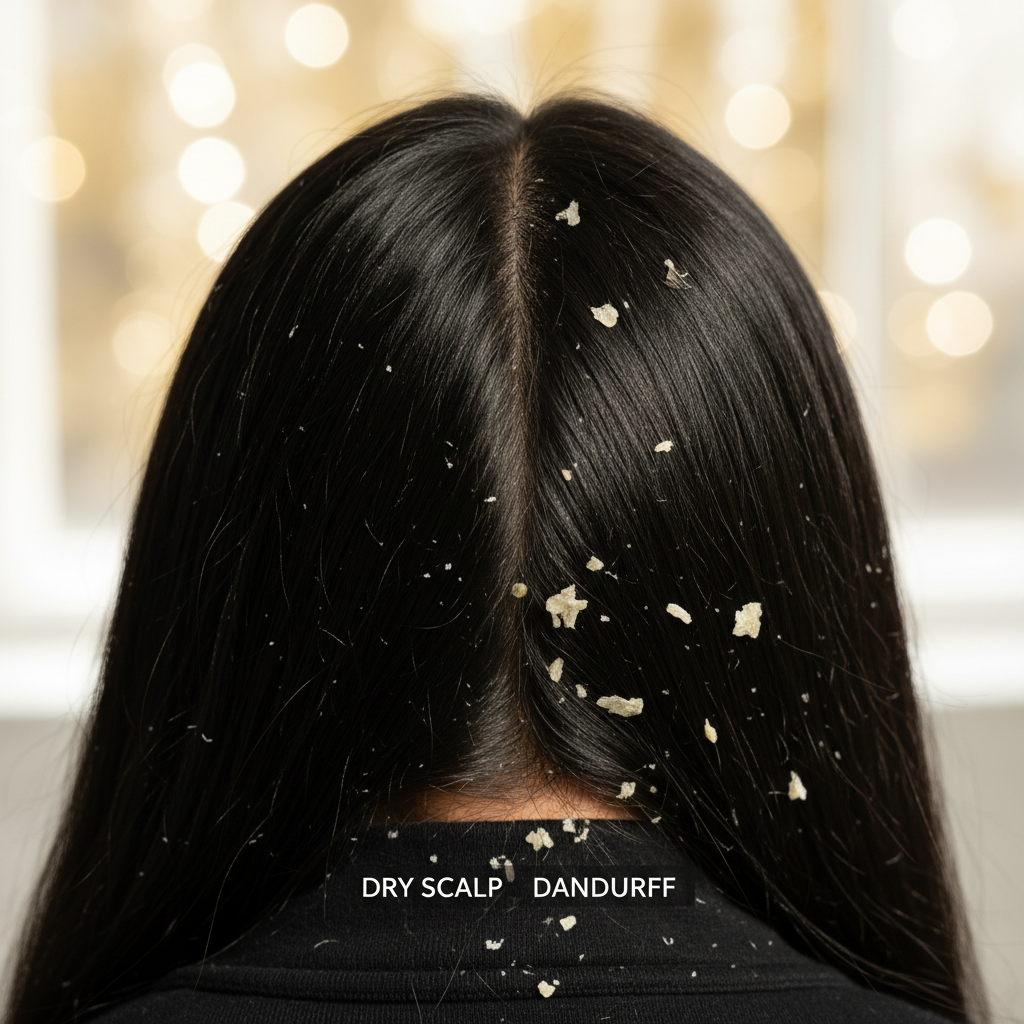
- The touch test: Scrape a few flakes onto a dark surface. Rub them between your fingers. If they smear, feel waxy, or clump together, you are looking at dandruff. If they crumble like fine dust or blow away easily, your scalp is dry.
- The wash response: Pay attention to how your head feels two hours after using a regular clarifying shampoo. If the tightness intensifies and tiny flakes fall as your hair dries, dehydration is the culprit. If the scalp feels temporarily refreshed but develops large flakes alongside greasy roots within 24 to 48 hours, dandruff is active.
- Distribution: Dandruff clusters along high-sebum zones: the crown, the anterior hairline, and behind the ears. Dry scalp tends to be uniform across the entire head, frequently accompanied by dryness on the shins, elbows, or cheeks.
What you can do: evidence-based treatment strategies
Resolving flaking requires aligning your routine with the actual biological driver. Applying the wrong regimen will aggravate the condition.
If you have dandruff
- Target the yeast: Use an evidence-based clarifying shampoo containing ketoconazole (1% to 2%), piroctone olamine (0.5% to 1%), or zinc pyrithione. These actives downregulate Malassezia populations without disrupting beneficial flora.
- Dissolve the glue: Look for formulas containing salicylic acid (1.5% to 3%). Salicylic acid acts as a keratolytic agent, breaking the intercellular bonds that hold oily flakes together, allowing them to rinse away cleanly.
- Observe contact time: Antifungal and keratolytic shampoos must stay on the scalp for 3 to 5 minutes before rinsing. Washing them out immediately prevents the active ingredients from penetrating the sebum layer.
- Avoid raw kitchen oils: Do not rub olive oil, coconut oil, or butter into an active dandruff breakout. Oleic acid feeds Malassezia, accelerating fungal growth and worsening inflammation.
If you have dry scalp
- Lower the water temperature: Hot showers strip protective sebum and melt the lipid bilayer of the stratum corneum. Wash with lukewarm water (around 37°C to 38°C) to conserve barrier integrity.
- Switch to gentle surfactants: Replace high-foaming sodium lauryl sulphate cleansers with milder alternatives based on glucosides, isethionates, or betaines.
- Hydrate the stratum corneum: Use leave-on scalp serums rich in humectants like glycerin, hyaluronic acid, panthenol (provitamin B5), and urea (2% to 5%). These ingredients bind moisture directly within the epidermal cells without feeding yeast.
- Wash less aggressively: If your roots do not produce excess sebum, reduce washing frequency to two or three times a week to allow natural moisture levels to stabilise.
When the cause may be something else
If flaking resists basic interventions, the cause may be a distinct dermatological condition that mimics dandruff or xerosis:
- Plaque psoriasis: Presents as sharply demarcated, thick, silvery scales over intensely red plaques. Psoriasis is an autoimmune disorder driven by T-cells that accelerates skin cell replacement to just 3 to 5 days. It frequently extends beyond the hairline onto the forehead and neck.
- Contact dermatitis: An allergic or irritant response to hair dyes (particularly paraphenylenediamine, or PPD), fragrances, or preservatives like methylisothiazolinone. It features sudden, intense itching, burning, redness, and micro-blisters that weep before flaking.
- Tinea capitis: A contagious fungal infection caused by dermatophytes (such as Trichophyton or Microsporum species). Unlike dandruff, tinea capitis invades the hair shaft, producing distinct round patches of scaly skin accompanied by broken, stubby hairs and localised hair loss.
When to get professional advice
Consult a GP, dermatologist, or qualified trichologist if you observe any of the following symptoms:
- Flaking accompanied by thick crusting, oozing, or yellow fluid.
- Intense redness, swelling, or heat radiating from the scalp.
- Flaking paired with patchy hair breakage or sudden hair shedding.
- Symptoms that fail to improve after 3 to 4 weeks of targeted over-the-counter care.
- Pain or soreness that interrupts sleep or daily activities.
A medical professional can perform a scalp scrape, dermatoscopy, or biopsy to identify underlying pathogens and prescribe prescription-strength topicals, such as topical corticosteroids, calcineurin inhibitors, or oral antifungals.
Supporting scalp balance with Watermans
Maintaining a balanced follicular environment is critical whether your scalp leans oily or dry. For those seeking general scalp maintenance and stronger-feeling hair, cosmetic formulations can help nurture the skin without stripping essential moisture.
Watermans focuses on non-greasy, scalp-friendly botanicals and nutrients designed to support the scalp barrier. Incorporating balanced ingredients like biotin, rosemary, and niacinamide helps refresh the surface and improve the hair's overall appearance, providing a clean, calm foundation for ongoing hair wellness.
Frequently asked questions about Dandruff vs Dry Scalp
How do I tell Dandruff vs Dry Scalp apart quickly?
Look at flake size, flake texture, and scalp oiliness. Dandruff presents with larger, greasy, yellowish or grey flakes that cling to the roots on an oily scalp. Dry scalp produces small, fine, white, powdery flakes that shake loose easily, accompanied by a feeling of tight skin and an absence of excess oil.
Can having a dry scalp turn into dandruff?
No. Scalp xerosis cannot transform into dandruff on its own because they are driven by separate biological mechanisms. However, an individual with a naturally dry scalp can develop a secondary Malassezia sensitivity if heavy, occlusive oils are applied inappropriately, providing a food source for fungal reproduction.
Does washing your hair every day help with dandruff or make dry scalp worse?
Daily washing helps dandruff by removing excess sebum and reducing the food supply for Malassezia yeast. For a dry scalp, however, daily washing with conventional shampoos can strip remaining barrier lipids and worsen dehydration. Dry scalp requires milder, less frequent cleansing, whereas dandruff benefits from consistent, targeted washing.
Can Dandruff vs Dry Scalp cause permanent hair loss?
Neither condition directly causes permanent hair loss or damages the stem cells within the dermal papilla. However, unmanaged itching can lead to forceful scratching, which causes mechanical breakage along the fibre or temporary telogen shedding due to localised scalp trauma. Treating the underlying cause prevents hair fibre damage.
A balanced approach to scalp health
Understanding the distinction between Dandruff vs Dry Scalp is the first step toward lasting comfort and healthy hair growth. By identifying whether your scalp is reacting to fungal byproducts or suffering from simple dehydration, you can select targeted ingredients that address the root cause rather than guessing. Respect your skin's protective barrier, treat visible flakes with the correct biological tools, and seek clinical advice whenever irritation persists.
Sources and references
- British Association of Dermatologists. Seborrhoeic Dermatitis Guidelines, 2019.
- Dawson, T. L. "Malassezia globosa and restricta: Breakthrough Understanding of the Etiology and Treatment of Dandruff and Seborrheic Dermatitis through Whole-Genome Analysis." Journal of Investigative Dermatology Symposium Proceedings, 2007.
- NHS. Dandruff Overview and Management, 2022.
- Ranganathan, S., & Mukhopadhyay, T. "Dandruff: the most commercially exploited skin disease." Indian Journal of Dermatology, 2010.
- Ro, B. I., & Dawson, T. L. "The role of sebaceous metabolism in the pathogenesis of dandruff and seborrheic dermatitis." Journal of Clinical and Investigative Dermatology, 2005.
Find these ingredients in Watermans products
- Zinc: you will find this ingredient in our Hair Vitamins.
- Oleic Acid: you will find this ingredient in our Camellia & Black Castor Hair & Body Oil.
- Niacinamide: you will find this ingredient in our Hair Mask.
- Panthenol (Provitamin B5): you will find this ingredient in our Heat Protection Spray.