Scalp Psoriasis: Understanding, Management, and Care
14 min read ·
Scalp Psoriasis is a chronic, non-contagious autoimmune condition causing rapid skin cell growth on the scalp, leading to red, scaly patches.
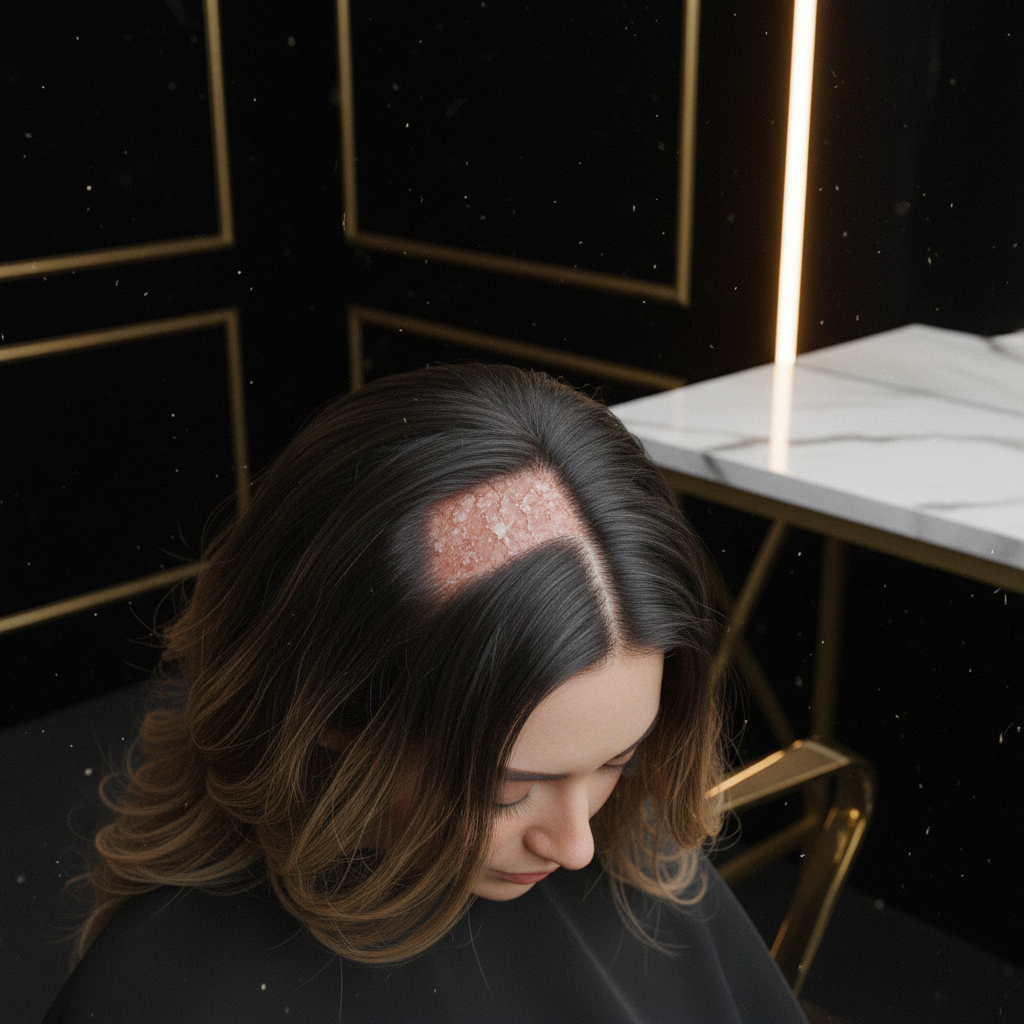
Quick answer: Scalp Psoriasis is a chronic, non-contagious autoimmune skin condition characterised by accelerated skin cell growth on the scalp, resulting in distinctive red patches covered with silvery scales. It's a form of plaque psoriasis and while there's no outright cure, symptoms are manageable through various medical and lifestyle interventions, often requiring professional diagnosis and a tailored care plan to minimise discomfort and flare-ups. The key limitation is that treatments manage, rather than cure, the condition.
Key takeaways
- Scalp Psoriasis is an autoimmune condition where the immune system mistakenly targets healthy skin cells, causing them to proliferate too quickly.
- It results in thick, red patches with silvery scales on the scalp, which can be itchy, dry, and sometimes painful.
- It is not contagious, and while it doesn't cause permanent hair loss, vigorous scratching or severe inflammation can lead to temporary hair shedding or breakage.
- Diagnosis typically involves a visual examination by a healthcare professional, occasionally supported by a skin biopsy.
- Management involves a range of treatments from topical applications to systemic medications, chosen based on severity, alongside careful haircare and lifestyle adjustments.
- Distinguishing Scalp Psoriasis from other scalp conditions like seborrheic dermatitis or fungal infections is crucial for effective treatment.
Scalp Psoriasis: what the evidence shows
Scalp Psoriasis is a prevalent, chronic autoimmune skin condition that specifically affects the scalp. It represents a localised manifestation of plaque psoriasis, the most common form of psoriasis, which affects approximately 80 to 90% of individuals with the condition (National Psoriasis Foundation, 2023). In this condition, your immune system mistakenly triggers an accelerated growth cycle of skin cells. Normal skin cells mature and shed over roughly 28 to 30 days. With Scalp Psoriasis, this process can dramatically shorten to just 3 to 4 days, leading to a rapid build-up of cells that form the characteristic thick, scaly plaques.
This condition can manifest solely on the scalp or occur concurrently with psoriasis on other body areas. While the precise cause of this immune system dysregulation is not fully understood, current research suggests a combination of genetic predisposition and environmental factors. For example, having a close family member with psoriasis increases your likelihood of developing the condition (American Academy of Dermatology Association, 2023).
The mechanism behind Scalp Psoriasis
At its core, Scalp Psoriasis is an inflammatory disorder driven by an overactive immune response. Specific immune cells, particularly T-cells, become hyperactive. These T-cells release chemical messengers, known as cytokines, which send signals to skin cells (keratinocytes) to grow and reproduce at an abnormally rapid rate. This rapid proliferation, combined with ongoing inflammation, creates the visible symptoms: the thickened skin, redness, and scaling. The skin barrier in affected areas is often compromised, contributing to dryness, cracking, and increased sensitivity. This disruption makes the scalp more vulnerable to irritation and can intensify symptoms like itching (National Eczema Association, 2022, though referencing eczema, the mechanism of barrier dysfunction is relevant here).
Common triggers and exacerbating factors
While Scalp Psoriasis is a chronic condition, certain factors can trigger or worsen flare-ups. These are not causes of psoriasis itself, but rather elements that can exacerbate existing symptoms:
- Stress: Psychological stress can influence the immune system, potentially leading to or worsening psoriasis flares (British Association of Dermatologists, 2023).
- Infections: Certain infections, such as streptococcal throat infections (strep throat), can sometimes trigger a flare-up or the initial onset of psoriasis in genetically susceptible individuals. Other infections, including viral ones, may also play a role (National Psoriasis Foundation, 2023).
- Skin Injury (Koebner phenomenon): Trauma to the skin, including cuts, scrapes, insect bites, sunburn, or even vigorous scratching, can induce new psoriasis plaques at the site of injury. This is known as the Koebner phenomenon (American Academy of Dermatology Association, 2023).
- Certain Medications: Some prescription drugs are known to exacerbate psoriasis in certain individuals. These include beta-blockers (used for high blood pressure or heart conditions), lithium (for bipolar disorder), antimalarial drugs, and some non-steroidal anti-inflammatory drugs (NSAIDs) (National Psoriasis Foundation, 2023).
- Weather: Cold, dry weather conditions often worsen psoriasis symptoms, as the lack of humidity can dry out the skin. Conversely, warmer, more humid climates may offer some relief for many individuals (Psoriasis Association, 2022).
- Lifestyle Factors: Habits such as heavy alcohol consumption and smoking have been linked to an increased risk of developing psoriasis and can worsen its severity. This is likely due to their systemic inflammatory effects and impact on immune function (British Association of Dermatologists, 2023).
What Scalp Psoriasis looks and feels like
The symptoms of Scalp Psoriasis can range from mild, fine scaling that resembles dandruff, to extensive, thick plaques covering large areas of the scalp. The key signs include:
- Red Patches: Inflamed areas of skin that are typically distinct, well-defined, and often raised. The redness may be less obvious on darker skin tones, appearing as purple or brownish patches.
- Silvery-White Scales: These are thick, dry, and can be crumbly. They are often more adherent to the scalp than the flakes seen in common dandruff (Psoriasis Association, 2022). Attempting to remove these scales can sometimes reveal pinpoint bleeding underneath.
- Dryness and Cracking: The affected skin can become very dry, leading to cracking and sometimes bleeding, especially if the skin is stretched or scratched.
- Intense Itching: This is a very common and often distressing symptom, ranging from mild to severe. Persistent itching can significantly disrupt sleep, concentration, and overall quality of life.
- Burning or Soreness: The inflamed areas of the scalp can feel tender, painful, or have a burning sensation.
- Temporary Hair Shedding: While Scalp Psoriasis does not cause permanent hair loss (alopecia), vigorous scratching, forceful removal of scales, or severe inflammation of the hair follicles can lead to temporary hair shedding or breakage of the hair fibre along the shaft. This is usually reversible, and hair typically regrows once the condition is under control and inflammation subsides. It is important to differentiate this temporary shedding from permanent hair loss conditions.
Diagnosing Scalp Psoriasis
Diagnosis of Scalp Psoriasis is typically made by a dermatologist or other healthcare professional. This usually involves a thorough physical examination of the scalp, skin, and nails, along with a review of your medical history and symptoms. The characteristic appearance of the plaques and scales is often sufficient for diagnosis.
In some instances, to confirm the diagnosis or to rule out other scalp conditions that can look similar (such as seborrhoeic dermatitis, contact dermatitis, or fungal infections like tinea capitis), a skin biopsy may be performed. During a biopsy, a small tissue sample is taken from an affected area of the scalp under local anaesthetic for microscopic examination by a pathologist (American Academy of Dermatology Association, 2023).
What you can do to manage Scalp Psoriasis
Managing Scalp Psoriasis focuses on reducing inflammation, slowing down the excessive skin cell growth, and removing existing scales to alleviate discomfort and improve scalp health. Since it is a chronic condition, treatments aim to control symptoms and prevent flare-ups rather than providing a complete cure. An effective approach often involves a combination of medical therapies and careful daily haircare practices.
Medical treatment approaches
Treatment choices are individualised, depending on the severity of the condition, its impact on your quality of life, and your response to previous therapies. It's essential to consult a healthcare professional for a tailored treatment plan.
Topical Treatments
These are often the first line of defence for mild to moderate Scalp Psoriasis and are applied directly to the affected areas:
- Corticosteroids: These are powerful anti-inflammatory medications that reduce redness, itching, and scaling. They come in various strengths and formulations (solutions, foams, gels, shampoos, creams) and are typically applied once or twice daily for a limited period (British Association of Dermatologists, 2023).
- Vitamin D Analogues (e.g., calcipotriol): These compounds help to normalise skin cell growth. They can be used alone or in combination with topical corticosteroids and are generally applied once or twice daily (National Institute for Health and Care Excellence [NICE], 2020).
- Salicylic Acid: As a keratolytic agent, salicylic acid helps to soften and loosen the thick scales, making them easier to remove. It is commonly found in medicated shampoos, lotions, and ointments, aiding in gentle exfoliation (Psoriasis Association, 2022).
- Coal Tar: A long-standing treatment, coal tar helps reduce inflammation, itching, and scaling. It is available in various concentrations in shampoos, creams, and ointments. Its mechanism involves slowing down skin cell growth and reducing inflammation (NICE, 2020).
- Tazarotene: This is a topical retinoid (a derivative of vitamin A) that helps to normalise skin cell growth and reduce inflammation. It is sometimes used in combination with corticosteroids to enhance efficacy (American Academy of Dermatology Association, 2023).
Phototherapy
For more widespread or severe Scalp Psoriasis, phototherapy, particularly narrowband ultraviolet B (UVB) light, can be effective. This treatment involves exposing the scalp to controlled doses of UVB light, which works by slowing down the rapid growth of skin cells and suppressing inflammation. It typically requires multiple sessions per week over several weeks, administered under strict medical supervision in a clinic setting (NICE, 2020).
Systemic Medications
When topical treatments and phototherapy are insufficient or for severe cases, systemic medications that work throughout the body may be prescribed. These are typically reserved for moderate to severe cases due to their potential side effects and require careful medical monitoring.
- Oral Medications: Examples include methotrexate, cyclosporine, and apremilast. These drugs work by either suppressing the immune system broadly or targeting specific pathways involved in inflammation. They require regular monitoring of blood tests due to potential side effects affecting the liver, kidneys, or blood counts (British Association of Dermatologists, 2023).
- Biologic Drugs: These advanced medications are administered via injection or infusion and specifically target particular components of the immune system that drive psoriasis. Biologics are generally used for severe psoriasis that has not responded adequately to other treatments and represent a significant advancement in managing the condition (NICE, 2020).
Haircare and lifestyle management
Beyond medical treatments, adopting certain haircare practices and making lifestyle adjustments can significantly help in managing Scalp Psoriasis symptoms and reducing the frequency and severity of flare-ups:
- Gentle Hair Cleansing: Use mild, fragrance-free shampoos and conditioners, ideally formulated for sensitive scalps. Avoid harsh scrubbing or aggressive washing, which can irritate the scalp, potentially triggering the Koebner phenomenon or worsening inflammation. You may find insights in "Hair Cleansing and Conditioning" or "Choosing the Right Shampoo for Your Hair Type" (Psoriasis Association, 2022).
- Avoid Scratching: While the urge to scratch can be intense due to itching, it's crucial to resist. Scratching can worsen irritation, damage the skin barrier, lead to infections, and contribute to temporary hair shedding. Your doctor may recommend specific anti-itch treatments.
- Moisturise the Scalp: Regularly moisturising your scalp, especially after washing, can help reduce dryness, flaking, and discomfort. Look for lightweight, non-comedogenic scalp moisturisers or oils recommended by your dermatologist. Ingredients like shea butter, coconut oil, or jojoba oil may offer relief (Journal of Clinical and Aesthetic Dermatology, 2017, for general skin barrier function).
- Careful Scale Removal: While it's important to remove scales to allow topical treatments to penetrate, do so gently. Using salicylic acid shampoos or emollients first to soften scales, then a fine-toothed comb with gentle pressure, can help. Never pick or aggressively scrape scales off (Psoriasis Association, 2022).
- Manage Stress: Stress is a well-known trigger for psoriasis flares. Incorporating stress-reducing techniques such into your daily routine, such as mindfulness, meditation, yoga, or regular exercise, can be beneficial (British Association of Dermatologists, 2023).
- Avoid Triggers: Identify and try to avoid personal triggers where possible. This might include certain medications, excessive alcohol, or smoking.
- Hair Styling: Minimise heat styling. If you use heat, apply a heat protectant and use the lowest effective temperature (refer to "Heat Styling Safety Best Practices"). Tight hairstyles that pull on the hair and scalp can also exacerbate irritation. Be gentle when brushing or combing your hair, using a wide-toothed comb or soft brush.
What the evidence does not show for Scalp Psoriasis
Despite many anecdotal claims, robust scientific evidence does not support certain approaches for Scalp Psoriasis:
- Dietary Cures: While a balanced diet is good for overall health, no specific diet has been scientifically proven to cure or universally alleviate Scalp Psoriasis (National Psoriasis Foundation, 2023). Some individuals report benefits from anti-inflammatory diets, but these are not universally effective nor a primary treatment.
- Cosmetic Shampoos and Conditioners as Sole Treatment: Regular cosmetic shampoos and conditioners, even those marketed for "sensitive scalps," are generally not sufficient as the sole treatment for Scalp Psoriasis. While gentle products are important for supportive care, medicated products specifically formulated with active ingredients (like coal tar or salicylic acid) are usually necessary to manage the condition effectively.
- Permanent Hair Loss: As noted earlier, Scalp Psoriasis itself does not cause permanent hair loss. While temporary shedding or breakage can occur, the follicles remain intact, and hair typically regrows once the inflammation is controlled. Claims of permanent alopecia directly from Scalp Psoriasis are unsubstantiated (American Academy of Dermatology Association, 2023).
When to get professional advice
You should consult a doctor or dermatologist if you suspect you have Scalp Psoriasis or if you experience any of the following:
- New or worsening red, scaly patches on your scalp.
- Intense itching or pain that affects your daily life or sleep.
- Signs of infection, such as increased redness, warmth, swelling, pus, or fever.
- Temporary hair shedding or breakage associated with your scalp condition.
- If over-the-counter treatments are not effective after a few weeks of consistent use.
- If you are experiencing emotional distress or impact on your quality of life due to your scalp condition (American Academy of Dermatology Association, 2023).
A healthcare professional can provide an accurate diagnosis, differentiate Scalp Psoriasis from other conditions, and recommend an appropriate, evidence-based treatment plan.
Comparison of Scalp Psoriasis and Seborrhoeic Dermatitis
Distinguishing Scalp Psoriasis from seborrhoeic dermatitis is important, as they can sometimes look similar but require different management strategies.
| Feature | Scalp Psoriasis | Seborrhoeic Dermatitis |
|---|---|---|
| Appearance of Scales | Thick, silvery-white, dry, well-defined plaques | Greasy, yellowish, often flaky, less defined patches |
| Colour of Skin | Bright red (or purple/brown on darker skin tones) | Reddish to yellowish-brown |
| Location | Primarily scalp, often extends beyond hairline | Scalp (especially hairline, behind ears), face, chest |
| Itching | Often intense and persistent | Variable, can be itchy |
| Underlying Cause | Autoimmune disorder, rapid cell turnover | Overgrowth of Malassezia yeast, inflammatory response |
| Hair Involvement | Temporary shedding from scratching/inflammation | Rarely causes hair thinning, no direct loss from condition |
| Key Characteristic | Distinct, raised plaques | Greasy appearance, diffuse scaling |
Frequently asked questions about Scalp Psoriasis
Can stress cause Scalp Psoriasis?
Stress does not cause Scalp Psoriasis in isolation, but it is a well-established trigger for flare-ups in individuals already predisposed to the condition. High levels of psychological stress can influence the immune system, leading to an exacerbation of symptoms. Managing stress through relaxation techniques, exercise, and sufficient sleep can therefore be a helpful part of a comprehensive management plan, working alongside medical treatments to reduce flare frequency and severity.
Is Scalp Psoriasis contagious?
No, Scalp Psoriasis is absolutely not contagious. It is an autoimmune condition resulting from an internal immune system dysfunction and genetic predisposition, not an infection. You cannot catch it from another person, nor can you pass it on through contact, sharing combs, or close personal interaction. This understanding helps to dispel common misconceptions and reduce stigma associated with the condition.
Will Scalp Psoriasis lead to permanent hair loss?
Scalp Psoriasis itself does not typically cause permanent hair loss. While vigorous scratching, aggressive removal of scales, or severe inflammation can lead to temporary hair shedding (telogen effluvium) or hair breakage, the hair follicles remain intact. Once the underlying inflammation is controlled and the scalp heals, hair usually regrows. It's important to treat the condition effectively to minimise these temporary effects on hair density and condition.
How can I remove the scales gently?
Gently removing scales is crucial for effective treatment penetration. Start by applying a scale-softening product, such as an emollient containing salicylic acid or urea, for a recommended period. After softening, gently comb the hair with a fine-toothed comb, moving slowly and without force. Avoid picking or scratching, as this can worsen irritation or lead to injury. Your dermatologist can recommend specific techniques and products for gentle scale removal to aid in managing your Scalp Psoriasis.
What's the difference between Scalp Psoriasis and dandruff?
The main difference lies in their appearance and cause. Dandruff (pityriasis capitis) typically presents as fine, white, loose flakes with some mild itch, often due to an overgrowth of yeast on the scalp. Scalp Psoriasis, on the other hand, involves thicker, silvery-white scales that are often adherent to well-defined, red, inflamed patches. Psoriasis is an autoimmune condition with an accelerated cell turnover, making it a more complex inflammatory disorder than common dandruff. A healthcare professional can provide an accurate diagnosis.
Conclusion
Scalp Psoriasis is a chronic autoimmune condition that significantly impacts the scalp, presenting as red, scaly, often itchy patches. While not curable, it is highly manageable with a combination of medical treatments and attentive daily haircare practices. Understanding its autoimmune nature, recognising triggers, and adhering to a personalised treatment plan developed with a healthcare professional are key to controlling symptoms, improving scalp comfort, and maintaining overall well-being. Effective management focuses on reducing inflammation, normalising skin cell turnover, and alleviating discomfort to minimise the impact of Scalp Psoriasis on daily life.
Sources and references
- American Academy of Dermatology Association. (2023). Psoriasis: Diagnosis and treatment. aad.org
- British Association of Dermatologists. (2023). Psoriasis. bad.org.uk
- Journal of Clinical and Aesthetic Dermatology. (2017). The Role of Moisturizers in Healthy Skin. (General article on skin barrier, not specific to psoriasis).
- National Eczema Association. (2022). Skin Barrier Dysfunction. (General article on skin barrier, not specific to psoriasis but mechanism is relevant).
- National Institute for Health and Care Excellence (NICE). (2020). Psoriasis: assessment and management. nice.org.uk
- National Psoriasis Foundation. (2023). About Psoriasis. psoriasis.org
- Psoriasis Association. (2022). Scalp Psoriasis. psoriasis-association.org.uk
Find these ingredients in Watermans products
- Vitamin D — you will find this ingredient in our Hair Vitamins.
- Shea Butter — you will find this ingredient in our Curly Hair Conditioner.