Hair Breakage vs Shedding: How to Identify and Treat Both
9 min read ·
Learn how to tell Hair Breakage vs Shedding apart by examining the root bulb, fibre length, and damage patterns to apply the right hair care routine.
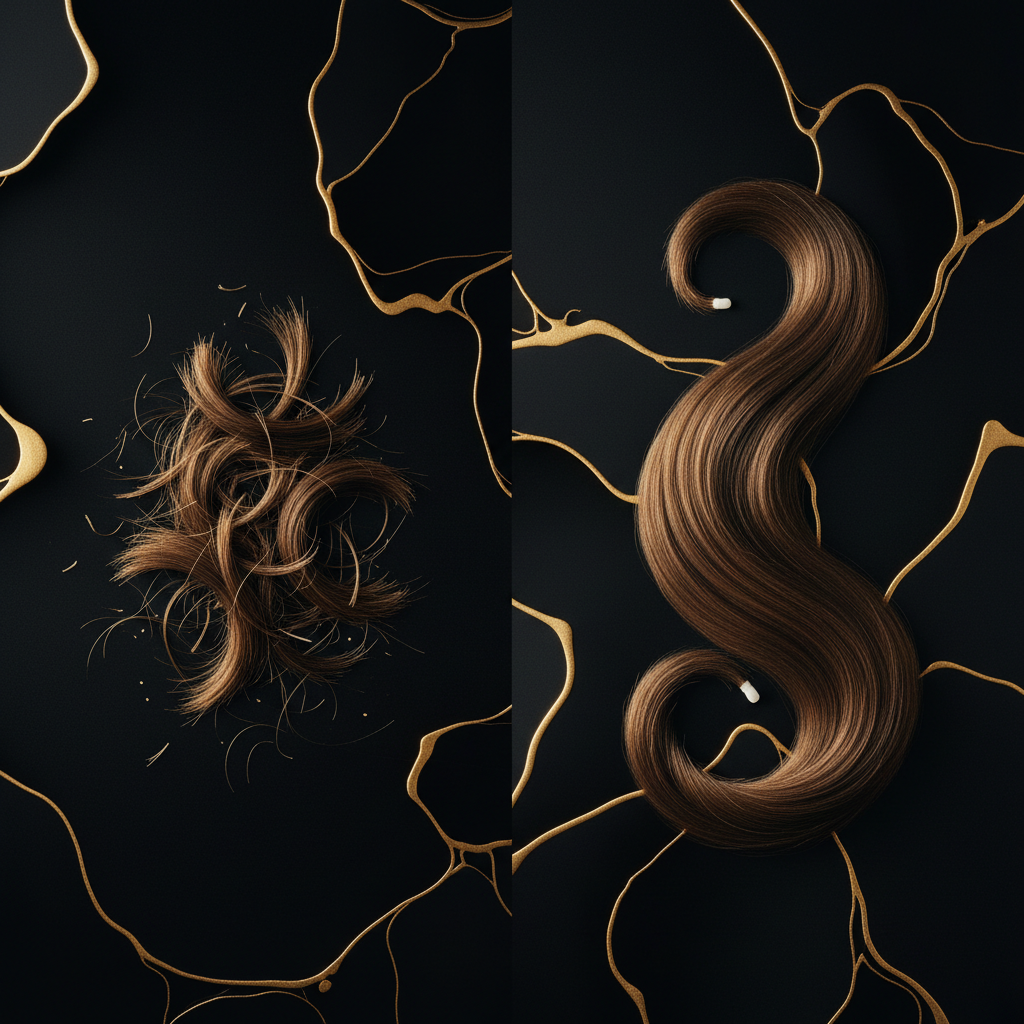
Quick answer: Understanding Hair Breakage vs Shedding comes down to identifying where the hair strand separates. Shedding is a natural biological process where an entire strand falls from the follicle, complete with a tiny white bulb at its root. Breakage is structural damage occurring along the hair shaft, leaving behind uneven, snapped fragments without a root bulb. While shedding reflects your internal biological cycle, breakage reflects external mechanical or chemical trauma. Treatments differ radically, so an accurate diagnosis is critical.
Key takeaways
- Shedding originates inside the hair follicle, whereas breakage represents physical failure along the fibre shaft.
- A shed hair strand has a visible white bulb (the keratinised root tip) at one end; a broken strand has fractured, blunt, or split ends with no bulb.
- Shedding between 50 and 100 hairs per day is physiologically normal for adults.
- Breakage is caused by external stressors including heat styling, chemical processing, UV radiation, and mechanical friction.
- Shedding spikes are often driven by physiological triggers such as systemic stress, nutritional gaps, hormonal shifts, or illness.
- Cosmetic products can strengthen the fibre to stop breakage, but true follicular shedding requires nutritional, medical, or lifestyle evaluation.
Hair Breakage vs Shedding: what the evidence shows
The distinction in Hair Breakage vs Shedding is one of the most fundamental concepts in trichology. Stylists and dermatologists frequently see clients panic over sudden volume loss, believing their hair is falling out from the scalp when the hair shaft is simply snapping under tension.
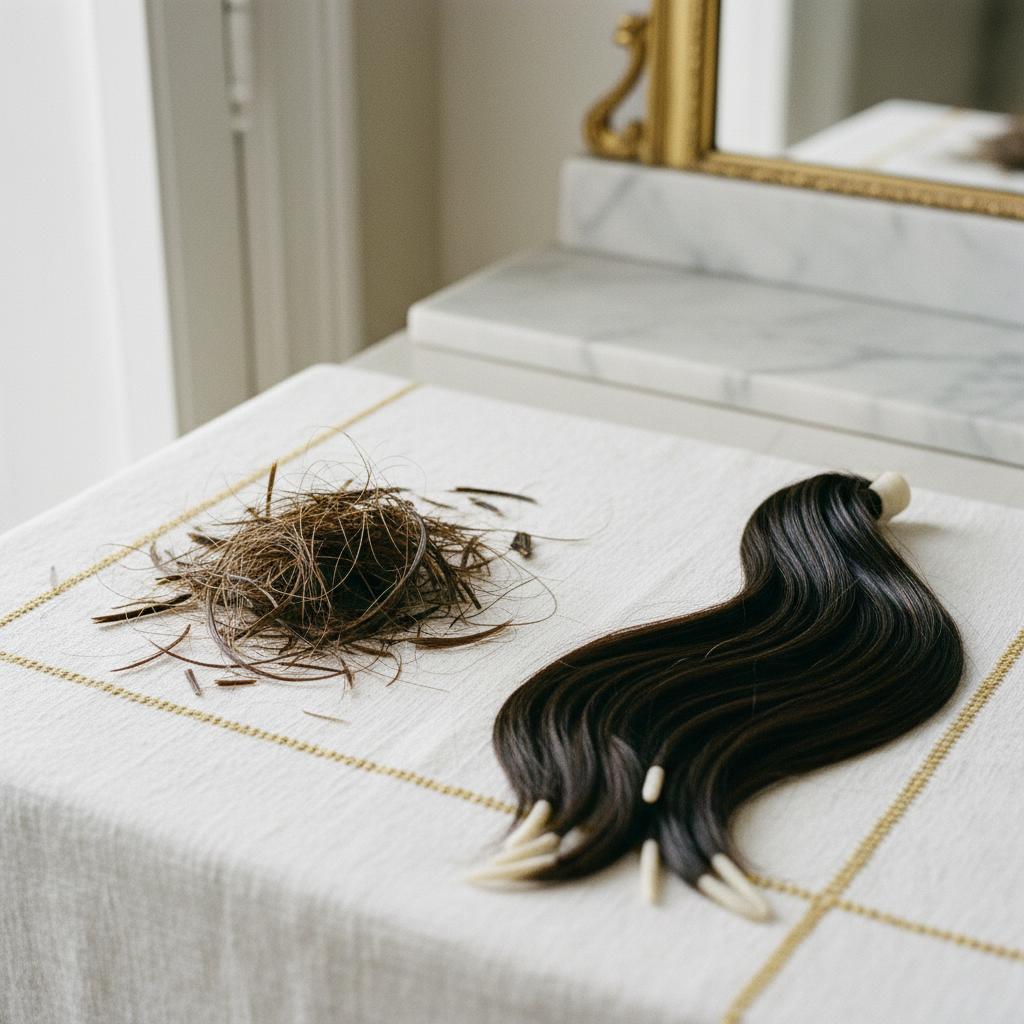
Hair shedding (known clinically as telogen release) occurs at the base of the follicle. Each follicle on your head undergoes an independent life cycle consisting of anagen (active growth, lasting 2 to 7 years), catagen (transition, lasting 2 to 3 weeks), and telogen (resting, lasting 2 to 4 months). At the end of telogen, the follicle sheds the club hair (exogen phase) to make way for a new anagen strand. Losing between 50 and 100 telogen hairs each day is entirely normal and expected.
In contrast, hair breakage is an engineering failure of the hair fibre. The hair shaft consists of three layers: an outer protective cuticle of overlapping keratin scales, a structural cortex containing parallel keratin protein chains and melanin, and an inner medulla. When chemical processes (like bleaching, which oxidises disulphide bonds) or mechanical stressors (such as tight brushing or high-heat styling) strip away the cuticle, the cortex loses its tensile strength. Once the applied strain exceeds the fibre's elastic limit, the strand fractures along the shaft.
Breakage does not decrease the number of follicles producing hair. It simply reduces the length, density, and cosmetic fullness of the mid-lengths and ends.
The physical differences: how to test your strands
You can easily distinguish between broken and shed hair using a simple visual and tactile check at home or in the salon.
- Examine the ends: Pick up individual fallen hairs from your brush or clothing. Lay the strand against a contrasting background under bright light. If one end features a tiny, firm, off-white bead or teardrop shape, that is the root bulb (club hair). This hair was shed naturally from the follicle. If neither end has a bulb, and the strand looks frayed, snapped, or blunt, the hair broke along the shaft.
- Check the strand length: Shed hairs are usually the full length of your current hair cut. Broken hairs typically vary wildly in length, often presenting as short, jagged fragments measuring between 1 and 10 centimetres.
- Assess the texture and elasticity: Gently take a single wet strand between your fingers and stretch it. Healthy hair can stretch up to 30 percent of its dry length before bouncing back. Hair suffering from structural fatigue will snap immediately with minimal tension, indicating brittle, breakage-prone keratin bonds.
| Feature | Hair Shedding | Hair Breakage |
|---|---|---|
| Origin point | Follicle beneath the scalp | Along the hair shaft (cortex/cuticle) |
| White bulb visible? | Yes, always present at root end | No, absent on both ends |
| Length of fallen strands | Uniform, full-length hairs | Irregular, often short, snapped shards |
| Primary causes | Hormones, stress, illness, genetics, telogen cycle | Bleaching, heat styling, rough detangling, dryness |
| Impact on scalp | Diffuse thinning, wider parting | Frizzy halo, thin ends, uneven layers |
| Effective solution | Internal health, time, topical scalp support | Protein conditioners, gentle handling, heat protection |
Biological mechanisms of hair shedding
When shedding rises noticeably above the baseline of 100 hairs daily, the condition is usually acute or chronic telogen effluvium. Under physiological or psychological shock, a larger proportion of active anagen follicles prematurely enter the telogen phase.
Common triggers include:
- Severe physical stress or high-grade fever.
- Postpartum hormone changes (as elevated oestrogen levels crash after delivery).
- Rapid weight loss or crash dieting with inadequate dietary protein.
- Micronutrient deficiencies, particularly serum ferritin (iron storage), vitamin D, and zinc.
- Thyroid dysregulation (both hypothyroidism and hyperthyroidism).
Because the telogen resting phase lasts roughly 60 to 90 days before the fibre detaches, shedding events typically appear two to three months after the triggering incident. Once the underlying trigger resolves, follicles naturally cycle back into anagen, regrowing normal fibres over subsequent months.
Structural causes of hair breakage
Hair breakage occurs when external damage wears away the hydrophobic lipid layer (18-methyleicosanoic acid) and the outer cuticle scales, leaving the inner cortex unprotected. Without a sealed cuticle, moisture escapes, cortex proteins degrade, and tensile resilience drops.
Key causes of mechanical and chemical breakage include:
- Chemical processing: Bleaching agents lift cuticles and oxidise the cystine bonds that give keratin its rigidity. Permanent straightening and relaxers deliberately sever these bonds, leaving hair structurally weakened if over-processed.
- Thermal degradation: Flat irons and curling wands operating above 180 degrees Celsius cause the moisture inside the cortex to vaporise rapidly, forming micro-cavities (bubble hair) that fracture easily under tension.
- Frictional trauma: Aggressive brushing on wet hair, rough cotton pillowcases, and abrasive towel drying place high friction loads on delicate fibres. Hair is weakest when wet, as water breaks temporary hydrogen bonds and swells the shaft.
- Environmental wear: Chronic UV exposure oxidises keratin proteins and degrades amino acids like tryptophan and cystine, leaving hair brittle.
Corrective actions: treating breakage versus managing shedding
Choosing the right intervention depends entirely on whether you are dealing with broken fibres or follicular shedding.
How to stop hair breakage
- Incorporate bond-builders and protein treatments: Use hydrolysed proteins (such as wheat, soy, or keratin) to temporarily fill gaps in damaged cuticles. Follow with rich emollient conditioners to restore slip.
- Lower the heat: Keep hot styling tools under 185 degrees Celsius and always coat damp hair in a silicone- or polymer-based thermal protectant before applying heat.
- Revise wet hair habits: Never brush soaking-wet hair with a fine-tooth comb. Instead, use a wide-tooth comb or flexible detangling brush, working upwards from the ends to the roots. Squeeze excess water using a soft microfibre towel instead of rubbing.
- Schedule regular micro-trims: Trimming split ends every 8 to 12 weeks stops vertical fissures from travelling further up the shaft.
How to support excessive shedding
- Check internal biomarkers: Request blood tests from your GP to evaluate full blood count, serum ferritin, vitamin D3, and thyroid-stimulating hormone (TSH).
- Prioritise dietary protein: Hair is composed of roughly 85 to 90 percent keratin protein. Aim for a balanced intake of complete proteins, alongside iron-rich leafy greens and healthy fats.
- Maintain scalp hygiene: Wash the scalp regularly to prevent sebum buildup, oxidative stress, and fungal overgrowth (such as Malassezia) that can cause follicular inflammation.
- Practise patience: Because follicular cycles are slow, improvements in excessive shedding take three to six months to become visible.
Supporting hair density with Watermans
When managing hair maintenance, using targeted topicals helps create the ideal environment for resilient growth. Watermans Grow Me Shampoo and Conditioner are formulated with clean, active botanicals, biotin, rosemary, caffeine, and niacinamide.
While no cosmetic wash can alter systemic health conditions or reverse medical alopecia, topical caffeine and niacinamide support surface microcirculation on the scalp. Simultaneously, conditioning emollients reduce friction along the hair shaft, reinforcing fibre elasticity and curbing avoidable breakage during daily grooming.
When to seek medical advice
Certain symptoms demand a professional consultation with a registered trichologist or dermatologist:
- Sudden, patchy hair loss that leaves circular, completely smooth bald spots (indicative of alopecia areata).
- Burning, itching, flaking, or pain on the scalp accompanying hair loss (potential signs of scarring alopecia or scalp infection).
- Shedding that continues unabated for longer than six months without signs of stabilisation.
- Severe diffuse thinning across the crown or widening of the central parting (suggesting androgenetic alopecia).
Frequently asked questions about Hair Breakage vs Shedding
How can I tell Hair Breakage vs Shedding apart quickly?
The easiest indicator is checking for a white bulb. Shed hairs detach from the follicle and carry a small, bulbous root at one tip. Broken hairs snap along the shaft, lack a root bulb entirely, and are generally shorter and more jagged.
Does brushing cause hair breakage or shedding?
Brushing causes both, depending on your technique. Gentle brushing lifts hairs that have already entered the exogen phase and were ready to shed. Aggressive brushing, especially on wet or tangled hair, stretches the fibre past its breaking point, snapping healthy shafts mid-length.
Can hair breakage make you look like you are going bald?
Yes. Severe breakage along the crown or hairline can snap strands down to a few millimetres. While your follicles remain active beneath the scalp, the short, fractured hairs give the visual appearance of thinning or bald patches.
Will broken hair grow back normally?
Yes. Breakage does not harm the underlying follicle. As long as the root is healthy, the hair will continue to grow at its normal rate of roughly 1 to 1.25 centimetres per month. Trimming broken ends prevents further damage as new length emerges.
Concluding thoughts on Hair Breakage vs Shedding
Distinguishing between Hair Breakage vs Shedding is the first step toward reviving your hair. Shedding is driven from within, requiring patience, hormonal balance, and sound nutrition, while breakage is a physical breakdown solved with gentle handling, thermal care, and targeted conditioning. By identifying where your strands are separating, you can tailor your routine to protect your length and support healthy, steady growth.
Sources and references
- British Association of Dermatologists. Telogen Effluvium: An Overview. 2021.
- Robbins, C. R. Chemical and Physical Behavior of Human Hair. 5th ed., Springer, 2012.
- Sinclair, R. Healthy hair: what is it? Journal of Investigative Dermatology Symposium Proceedings, 2007.
- Dawber, R. Hair and Scalp Disorders: Common Presenting Signs, Differential Diagnosis, and Management. Informa Healthcare, 2004.
- Gavazzoni Dias, M. F. Hair cosmetics: An overview. International Journal of Trichology, 2015. DOI: 10.4103/0974-7753.153450.
Find these ingredients in Watermans products
- Zinc: you will find this ingredient in our Hair Vitamins.
- Niacinamide: you will find this ingredient in our Hair Mask.