Scalp Health for Growth: The Science of an Optimal Follicle Environment
9 min read ·
Discover the real science of Scalp Health for Growth. Learn how follicular microcirculation, barrier function, and inflammation impact hair retention and vitality.

Quick answer: Prioritising Scalp Health for Growth ensures that hair follicles operate within an unhindered, well-nourished environment. The scalp functions as living skin where cellular turnover, sebum balance, and microcirculation directly influence the quality of emerging hair fibres. However, while optimal scalp care supports healthy hair production and reduces premature shedding caused by inflammation or oxidative stress, it cannot alter underlying genetic programming or revive follicles destroyed by scarring alopecia.
Key takeaways
- The scalp is metabolically active skin requiring a balanced barrier, steady blood flow, and a controlled microbiome.
- Chronic scalp inflammation, dandruff, and oxidative stress can disrupt the hair cycle, leading to increased shedding (telogen effluvium) or weaker fibres.
- Hair growth occurs from the follicle bulb, meaning cosmetic topical routines support external hair emergence rather than rewriting genetic growth rates.
- Maintaining a slightly acidic scalp pH (around 4.5 to 5.5) protects against microbial overgrowth and barrier breakdown.
- When scalp conditions involve persistent scaling, pain, pustules, or sudden bald patches, consult a GP or dermatologist immediately.
Scalp Health for Growth: what the evidence shows
Research published in the International Journal of Trichology and the British Journal of Dermatology confirms that the condition of the scalp directly affects the quality and retention of hair fibres. When oxidative stress, fungal overgrowth, or inflammatory cascades alter the scalp surface, the hair follicle matrix experiences metabolic strain.
Studies examining conditions like seborrhoeic dermatitis and pityriasis capitis (dandruff) show that surface inflammation impairs the hair cuticle during pre-emergence. As the hair fibre forms inside an inflamed follicular infundibulum, the outer cuticle suffers structural defects before it even emerges above the skin surface. This leads to weaker strands that are vulnerable to premature breakage and early transition into the telogen (resting) shedding phase.
Optimising Scalp Health for Growth does not increase the biological maximum density of hair follicles, which is fixed before birth. Instead, it ensures that active follicles remain in the anagen (growth) phase for their full natural duration and produce hair with intact tensile strength.
What the evidence does not show
It is critical to separate physiological support from unrealistic claims:
- Cosmetics cannot cure genetic baldness: No clarifying shampoo, scalp scrub, or botanical oil can reverse androgenetic alopecia (pattern hair loss) driven by systemic hormones like dihydrotestosterone (DHT), though dedicated topical formulas may support a healthy environment alongside clinical therapies.
- Over-cleansing does not accelerate growth rate: Washing the scalp excessively does not speed up biological growth, which averages roughly 1 to 1.25 centimetres per month. In fact, over-cleansing can strip protective surface lipids.
- Breakage is not shedding: Breakage happens when the external shaft snaps under mechanical stress. Shedding occurs at the follicle base. While a healthy scalp produces stronger initial fibres, it cannot prevent physical damage caused by aggressive heat styling or chemical processing further down the shaft.
Biological mechanisms connecting the scalp to hair growth
To understand why scalp care matters, consider the underlying biology:
1. Follicular microcirculation
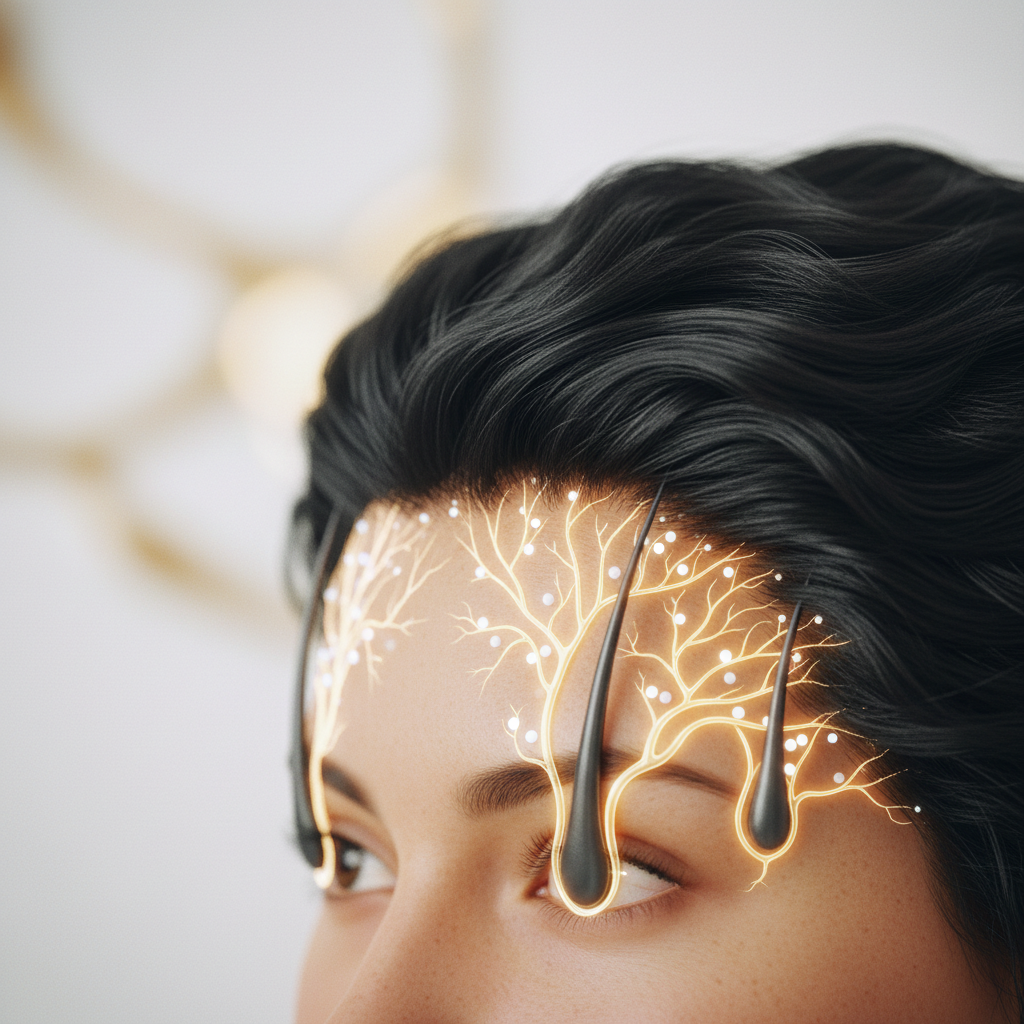
Hair follicles are among the most metabolically active structures in the human body. During the anagen phase, the dermal papilla requires a continuous supply of oxygen, amino acids, and micronutrients delivered via microscopic capillary networks. Poor microcirculation or vascular compression can limit nutrient availability, shortening the active growth phase.
2. The scalp microbiome and lipid barrier
The human scalp maintains a distinct ecosystem dominated by Cutibacterium acnes, Staphylococcus epidermidis, and lipophilic yeasts of the Malassezia genus. When excess sebum accumulates or the epidermal barrier fails, Malassezia hydrolyses sebum triglycerides into free fatty acids, particularly oleic acid. In susceptible individuals, this triggers irritation, scaling, and cytokine release, destabilising the follicle anchor.
3. Oxidative stress
Lipid peroxidation on the scalp surface releases free radicals that damage follicular epithelial cells. Clinical investigations demonstrate that elevated levels of reactive oxygen species (ROS) trigger premature catagen entry, effectively forcing growing hairs into an early shedding phase.
Comparing scalp conditions and their impact on hair
The table below outlines common scalp environments and how they affect the hair growth cycle:
| Scalp Condition | Primary Characteristics | Direct Impact on Hair | Primary Management Goal |
|---|---|---|---|
| Balanced Scalp | Supple skin, minimal flakes, neutral scent, balanced sebum (pH 4.5 to 5.5). | Hair emerges with intact cuticles; normal anagen-to-telogen ratio (85:15). | Maintain barrier function and clean follicular openings. |
| Seborrhoeic Dermatitis | Greasy yellow scales, erythema (redness), pruritus, Malassezia proliferation. | Pre-emergent cuticle damage, inflammatory telogen effluvium. | Antifungal actives, anti-inflammatory care, regular cleansing. |
| Dry / Flaky Scalp | Tightness, small white dry flakes, compromised lipid barrier, lower hydration. | Increased cuticle friction, dull hair emergence, minor mechanical itching damage. | Gentle surfactant cleansing, humectants, barrier restoration. |
| Folliculitis | Perifollicular pustules, tenderness, bacterial or fungal infection. | Risk of follicular scarring and permanent localised hair loss if untreated. | Medical antimicrobial evaluation, avoidance of heavy pore-clogging oils. |
Signs of an unhealthy scalp environment
You do not need specialised clinic equipment to spot early signs of scalp distress. Watch for these physical indicators:
- Persistent itchiness (pruritus): Frequent scratching physically tears the epidermal surface and can dislodge telogen hairs prematurely.
- Perifollicular redness: A pink or red halo around the base of individual hairs indicates active inflammation around the upper follicle.
- Tender roots: Scalp dysaesthesia (a burning or tender sensation often felt when moving hair) frequently correlates with elevated local neurogenic inflammation.
- Excessive sebum buildup: A waxy coating at the base of the hair shaft that traps environmental pollutants and dead keratinocytes.
- Diffusely increased shedding: Finding higher numbers of hairs with intact white bulbs on your pillow or in the shower drain often points to systemic stress or inflammatory disruptions.
Practical steps to improve your scalp environment
Building a routine for scalp health involves simple, consistent habits:
- Cleanse with intention: Wash your scalp regularly based on your personal sebum production and lifestyle. Leaving heavy oils and sebum on the scalp for prolonged periods fuels fungal overgrowth. Use lukewarm water rather than hot water to protect skin lipids.
- Incorporate manual stimulation: Daily scalp massage using fingertips for four to five minutes can increase local blood flow to the dermal papilla and mechanically stimulate follicle stretch responses.
- Maintain the acid mantle: Use cleansers and leave-in products formulated close to the scalp's natural pH of 4.5 to 5.5 to discourage opportunistic microbes.
- Exfoliate gently: If you experience product buildup, use mild chemical exfoliants such as salicylic acid once weekly. Avoid aggressive physical scrubs that scratch the delicate skin.
- Nourish systemically: Follicles construct keratin from dietary proteins, iron, zinc, and B vitamins. Deficiencies directly restrict follicle energy production.
When shedding has an internal cause
Sometimes a clean, well-tended scalp still experiences excessive hair shedding. In these cases, the root cause is systemic rather than dermatological. Telogen effluvium is frequently triggered by events that occurred two to three months prior, including severe psychological stress, childbirth, rapid weight loss, high fevers, or thyroid dysfunction.
Similarly, female and male pattern hair loss stems from follicle-level genetic sensitivity to androgens. Topical scalp hygiene supports hair cosmetic quality during these events, but internal triggers require targeted medical or nutritional diagnosis.
When to seek professional clinical advice
Consult a GP, dermatologist, or registered trichologist if you notice any of the following symptoms:
- Sudden, patchy hair shedding leaving distinct round, smooth bald spots.
- Severe burning, swelling, or pain across the scalp.
- Yellow crusting, pus-filled blisters, or open sores around hair follicles.
- Hair shedding accompanied by unexplained weight changes, fatigue, or extreme joint pain.
- Unresponsive, severe flaking that does not improve after four weeks of dedicated anti-dandruff care.
Targeted support: Watermans scalp formulas
For those seeking to optimise their daily topical routine, the Watermans range offers evidence-informed formulations designed to support the scalp environment. Watermans Grow Me Shampoo combines gentle surfactants with caffeine, biotin, rosemary, and niacinamide to invigorate the scalp without stripping its essential barrier. Following with the leave-in Watermans Grow More Scalp Elixir delivers concentrated nutrients directly to the skin surface between washes. While cosmetic products do not treat clinical hair disorders, maintaining clean follicular openings and supporting skin vitality creates the ideal foundation for fuller-looking, resilient hair.
Scalp Health for Growth: the long-term view
Achieving lasting Scalp Health for Growth is an ongoing practice rather than an overnight fix. Because hair fibres take time to form and emerge from the skin, changes made to your scalp care routine today will show visible results in the hair shaft over the coming three to six months. By managing surface inflammation, balancing sebum, supporting circulation, and seeking medical guidance when warning signs appear, you establish the best biological foundation for strong, vibrant hair.
Frequently asked questions about Scalp Health for Growth
How often should I wash my scalp for optimal growth?
Wash frequency depends on your skin type and environment. Oily scalps benefit from daily or alternate-day washing to prevent sebum buildup, while dry or textured hair types may only require washing once or twice weekly. The goal is to keep the scalp clean and free from irritation without causing dryness.
Can a dry scalp cause hair loss?
A dry scalp alone rarely causes true follicular hair loss. However, severe dryness can cause persistent itching. Vigorous scratching can physically break hair shafts or cause mechanical damage to the upper follicle, leading to temporary thinning and breakage.
Does scalp massage really promote Scalp Health for Growth?
Yes, clinical studies indicate that standardized scalp massage enhances blood flow to the follicle and stimulates dermal papilla cells through mechanical stress. This encourages nutrient delivery and supports healthy hair thickness, provided it is performed gently without pulling hair fibres.
Will regular scalp exfoliation speed up hair growth?
No. Exfoliation clears away dead keratinocytes, excess sebum, and cosmetic residue, helping prevent folliculitis and inflammation. While this creates a clearer path for hair emergence, it does not speed up the biological rate at which the follicle generates the hair shaft.
Can clogged scalp pores stop hair from growing?
Clogged follicular openings do not permanently stop a hair from growing, but accumulated sebum and debris can breed bacteria or fungi. This causes local inflammation, which can weaken the emerging fibre and trigger premature shedding if left unmanaged.
Sources and references
- British Journal of Dermatology: "The role of the scalp microbiome in health and disease", 2018.
- International Journal of Trichology: "Scalp condition impacts hair growth and retention via oxidative stress", 2018.
- Dermatology and Therapy: "Standardized Scalp Massage Results in Increased Hair Thickness by Inducing Stretching Forces on Dermal Papilla Cells", 2016.
- National Institute for Health and Care Excellence (NICE): "Alopecia areata and Telogen Effluvium Clinical Knowledge Summaries", 2021.
- Journal of Investigative Dermatology: "Oxidative stress in the human hair follicle: from biology to clinic", 2015.
Find these ingredients in Watermans products
- Zinc: you will find this ingredient in our Hair Vitamins.
- Oleic Acid: you will find this ingredient in our Camellia & Black Castor Hair & Body Oil.
- Niacinamide: you will find this ingredient in our Hair Mask.