Understanding Hair Follicle Miniaturisation: Science, Signs, and Solutions
7 min read ·
Understanding Hair Follicle Miniaturisation explains how DHT shrinks hair follicles over time, turning thick strands into fine fuzz, and how to spot early signs.
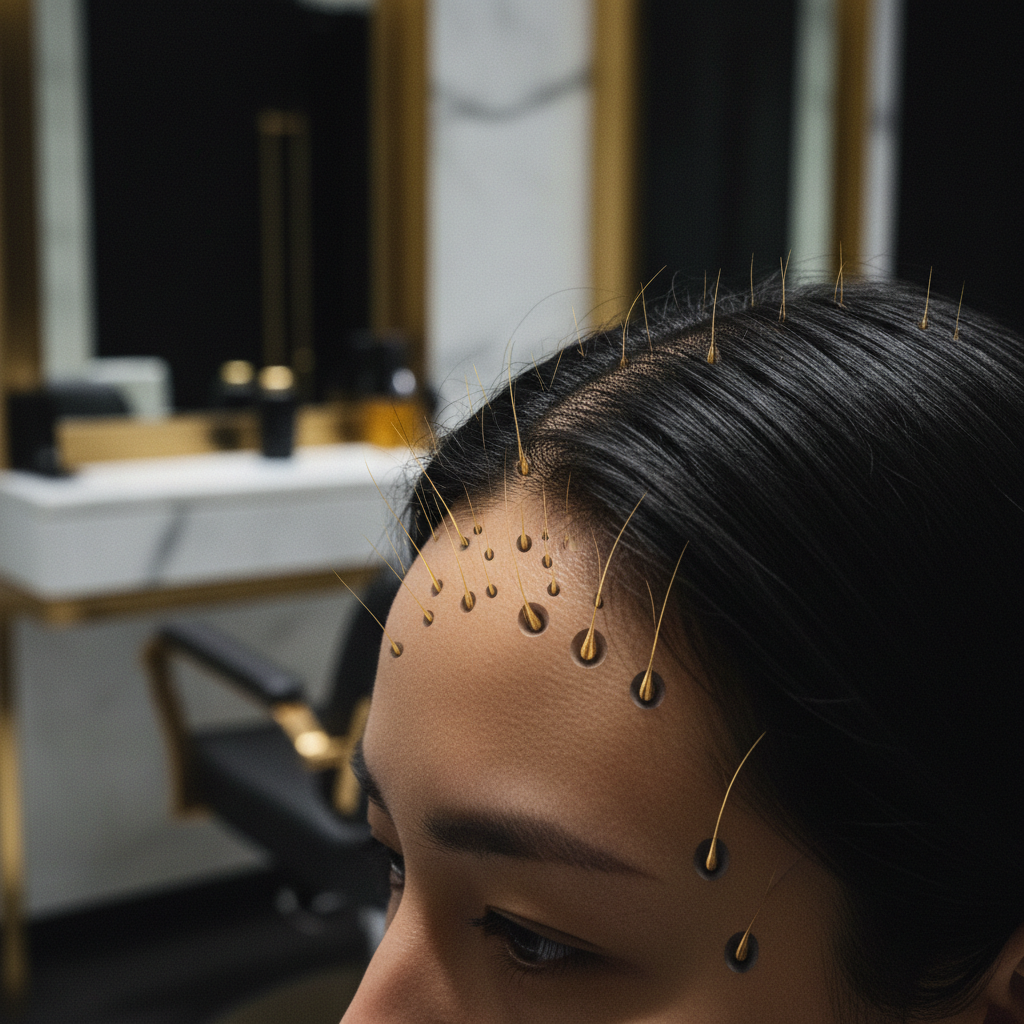
Quick answer: Understanding Hair Follicle Miniaturisation means recognising the progressive biological process where individual hair follicles shrink over successive growth cycles, producing finer, shorter fibres until they may stop producing visible hair entirely. Driven primarily by genetic sensitivity to dihydrotestosterone (DHT) in androgenetic alopecia, it alters terminal hairs into wispy vellus-like hairs. While medical therapies can slow or partially reverse early miniaturisation, advanced stages often result in permanent follicular fibrosis, making early detection and targeted intervention critical for preserving overall hair density.
Key takeaways
- Follicle miniaturisation is the hallmark physical mechanism behind pattern hair loss (androgenetic alopecia) in both men and women.
- It changes thick, pigmented "terminal" hairs into thin, faint "vellus-like" hairs across repeated growth cycles.
- The growth phase (anagen) shortens from years to months, while the resting phase (telogen) lengthens.
- Miniaturisation is distinct from standard shedding (telogen effluvium) and mechanical breakage along the shaft.
- Early intervention can arrest or partially reverse the shrinkage, but fully fibrosed, dormant follicles cannot be revived.
Understanding Hair Follicle Miniaturisation: what the evidence shows
Understanding Hair Follicle Miniaturisation requires examining how hair follicles change at the cellular level under hormonal influence. In genetically susceptible individuals, hair follicles on the scalp possess androgen receptors that bind to dihydrotestosterone (DHT), a potent derivative of testosterone converted by the enzyme 5-alpha reductase.
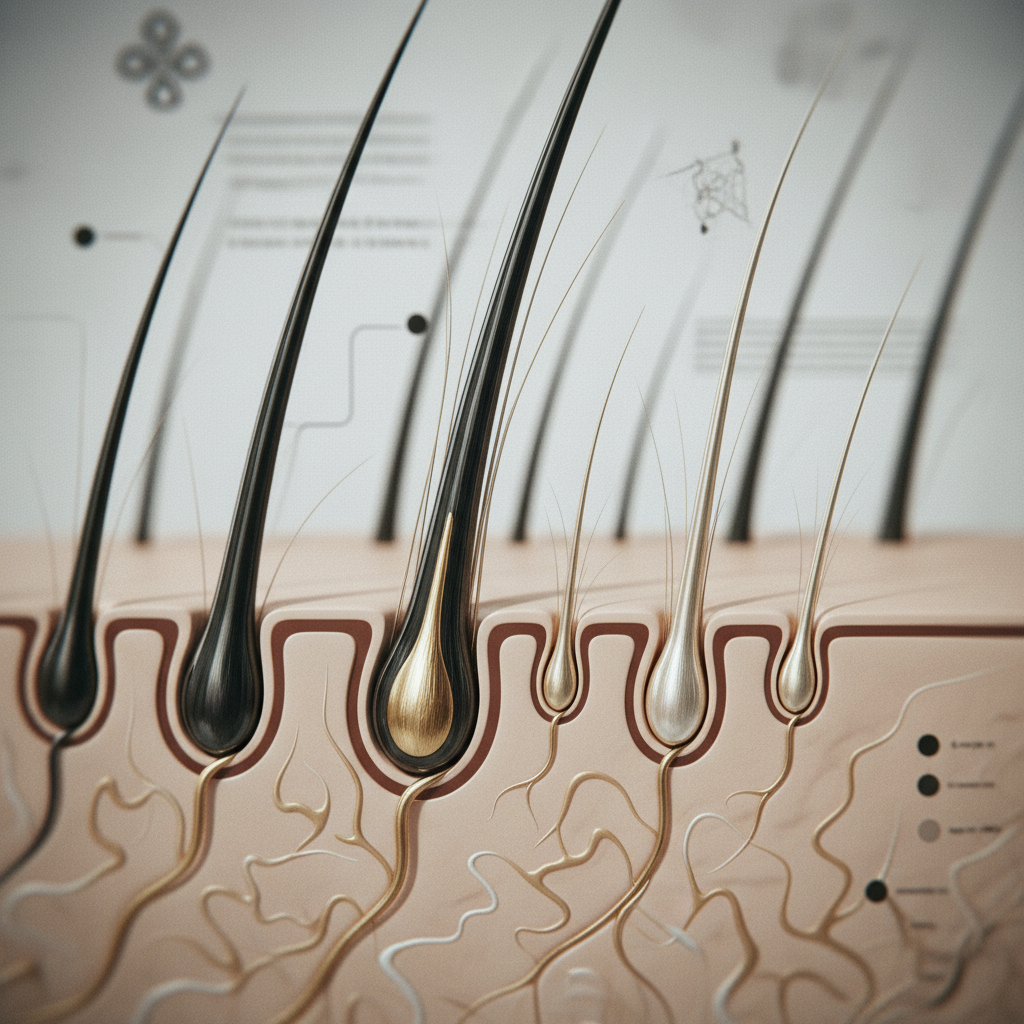
When DHT binds to these follicular receptors, it triggers a cascade of intracellular signalling pathways that alter the hair growth cycle. The active growth phase, known as anagen, normally lasts between two and seven years. Under the influence of DHT, the anagen phase progressively shortens with each consecutive cycle, sometimes down to just a few weeks or months.
Concurrently, the dermal papilla, which sits at the base of the follicle and supplies it with nutrients, contracts in volume. Because the dermal papilla determines the size of the hair matrix and the resulting fibre diameter, the follicle produces a progressively narrower, weaker, and less pigmented shaft. Over several cycles, a coarse terminal hair (typically 60 to 80 microns in diameter) is reduced to a vellus-like hair measuring under 30 microns.
Eventually, the latency period (the time between a hair shedding in telogen and a new hair emerging in anagen) stretches out. Left unchecked, the dermal sheath collapses, and follicular fibrosis sets in, permanently extinguishing the follicle's capacity to produce hair.
| Characteristic | Healthy Terminal Hair | Miniaturised Hair | Breakage (Hair Shaft Damage) |
|---|---|---|---|
| Average Diameter | 60 to 80 microns | Under 30 microns | Normal diameter, but frayed or fractured |
| Anagen Duration | 2 to 7 years | Weeks to months | Normal (follicle unaffected) |
| Bulb Status | Intact, robust root | Diminished, shallow root | No root attached (broken along shaft) |
| Reversibility | Maintenance phase | Partially reversible early on | Easily corrected with conditioning and care |
| Primary Driver | Healthy biology | DHT, genetics, micro-inflammation | Heat tools, chemical processing, friction |
What the evidence does not show
Research into follicular biology clarifies what miniaturisation is not. The evidence shows that miniaturisation is not caused by poor scalp circulation alone, clogged sebum pores, or wearing tight hats.
Scientific studies demonstrate that while local micro-inflammation often surrounds miniaturising follicles, simple surface oil or hygiene practices do not cause genetic shrinking. Furthermore, miniaturisation does not occur overnight. It is a slow, multi-year process. If you wake up and notice hundreds of full-thickness hairs coming out in the shower over a span of two weeks, that indicates excessive shedding (telogen effluvium) or another physiological trigger, not rapid follicular miniaturisation.
Signs to look for: identifying miniaturised hair
You can identify the early stages of miniaturisation before noticeable bald patches appear by watching for specific structural shifts in your hair:
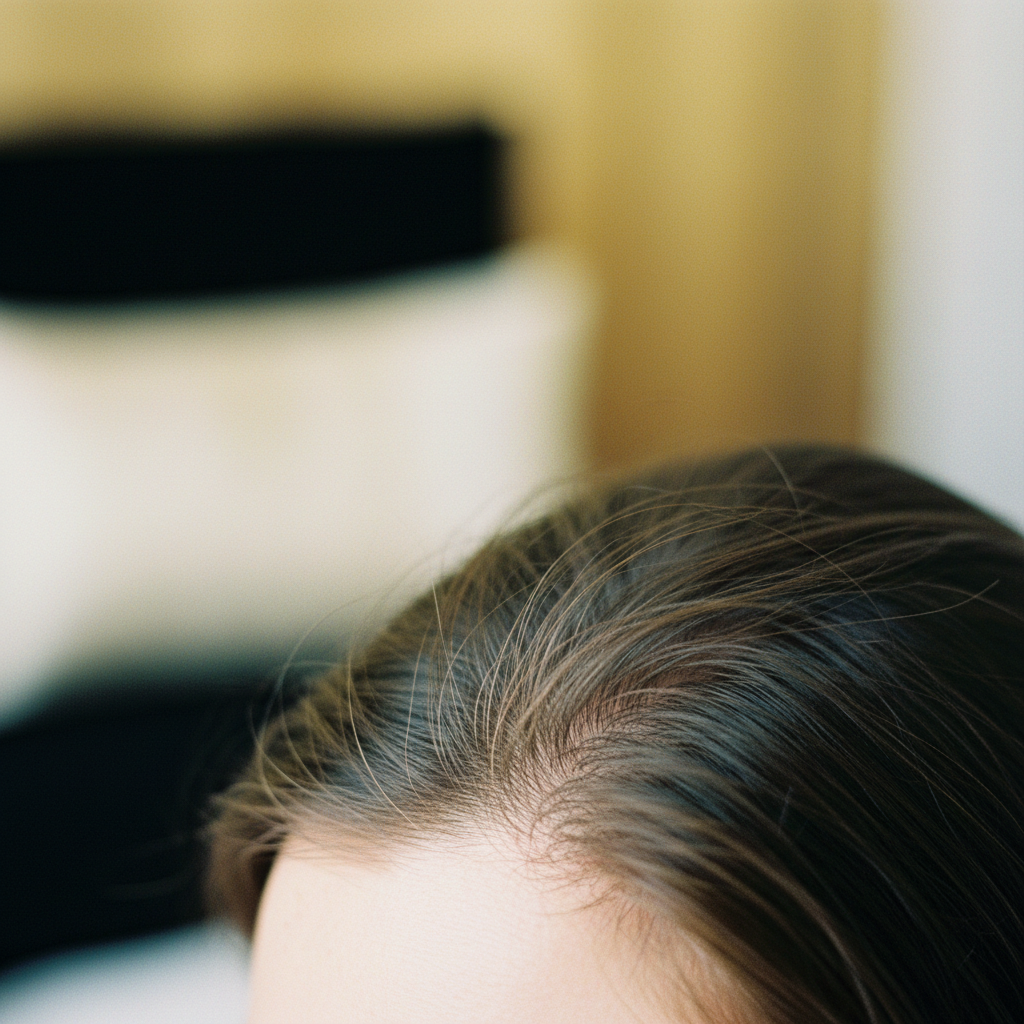
- Diameter variation (anisotrichosis): The most reliable clinical sign. When viewing the scalp under a dermatoscope, a mix of thick and very thin hairs emerging from the same area indicates active miniaturisation.
- Single-hair follicular units: Healthy scalp follicles naturally grow in groupings of two, three, or four hairs. As miniaturisation takes hold, these groupings reduce to solitary hairs.
- Lack of length: Hairs in affected areas (such as the temples, crown, or central parting) seem unable to grow past a few inches because their anagen phase has become severely compressed.
- Lighter colour and texture: Miniaturised fibres often lose their deeper pigmentation and feel soft, fuzzy, or flyaway compared to the hair at the back of your head.
What you can do to support the scalp and follicles
Managing miniaturisation depends on acting while the follicles are still biologically active.
Evidence-based interventions
Dermatologists often rely on clinically proven medical treatments to manage androgenetic alopecia. Topical treatments like minoxidil work by widening follicular blood channels and prolonging the anagen phase. Oral or topical 5-alpha reductase inhibitors help reduce the local conversion of testosterone into DHT, preventing the hormonal trigger from binding to the receptor.
Cosmetic care and scalp environment
While cosmetic products do not treat internal genetic alopecia, maintaining an optimal scalp environment supports general hair vitality. High-quality shampoos and leave-in scalp tonics can remove environmental build-up, soothe micro-inflammation, and improve the appearance of thinning strands.
A well-formulated routine keeps the scalp hydrated and comfortable, reducing secondary stressors that could exacerbate shedding. Incorporating gentle scalp massage can also promote local tissue pliability and relieve tension.
When the cause may be something else
Thinning hair does not always stem from androgenetic miniaturisation. It is vital to distinguish between true follicular shrinkage and other common hair concerns:
- Telogen Effluvium: A temporary disruption caused by severe stress, illness, nutritional deficiencies (such as iron or vitamin D), or hormonal changes post-pregnancy. Hairs shed diffusely across the entire scalp, but the follicles retain their normal size and diameter when new growth resumes.
- Alopecia Areata: An autoimmune condition causing smooth, circular, distinct patches of sudden loss.
- Mechanical Breakage: Weakened hair fibres that snap along the shaft due to bleach, chemical relaxers, or excessive heat styling. Unlike miniaturisation, the root remains anchored and healthy within the scalp, and the fibre retains its original thickness at the base.
When to seek professional advice
If you notice a widening parting, receding hairline, or marked diameter variation across your scalp, consult a qualified trichologist or dermatologist. They can use trichoscopy (magnified scalp analysis) to measure the percentage of miniaturised hairs.
A professional assessment is especially important if you experience burning, itching, or redness alongside hair changes, as these can indicate scarring alopecias that require immediate medical treatment to prevent permanent damage.
Supporting hair density with Watermans
Cosmetics cannot alter genetic sensitivity to hormones, but giving your hair the best external environment helps maximise the appearance of fullness. Watermans offers revitalising scalp-focused haircare designed to nourish the hair you have.
Watermans GrowMe Shampoo and ConditionMe Conditioner deliver nutrient-rich botanicals, caffeine, biotin, and rosemary directly to the scalp surface. By improving moisture, strengthening individual fibres against mechanical breakage, and cleansing away daily debris without stripping essential oils, this daily routine helps thinning or delicate hair look visibly denser, thicker, and fuller.
Frequently asked questions about Understanding Hair Follicle Miniaturisation
Can miniaturised hair follicles be restored to normal?
Yes, but only if addressed early. Understanding Hair Follicle Miniaturisation highlights that while follicles are still alive, medical therapies and targeted scalp care can stimulate the dermal papilla and extend the anagen growth phase. However, if a follicle has remained dormant for years and developed scar tissue (fibrosis), it can no longer produce visible hair fibres.
Does DHT affect all hair follicles on the head equally?
No. Follicles located at the temples, crown, and vertex possess higher concentrations of androgen receptors and are genetically programmed to respond to DHT. Follicles situated around the occipital region (the back and lower sides of the head) generally lack these sensitive receptors, which is why hair in these zones rarely undergoes miniaturisation.
How quickly does follicle miniaturisation happen?
Miniaturisation is an inherently gradual process that typically takes several years. Each hair cycle spans two to six years; a follicle usually requires three or more complete cycles of progressive shrinking before a visible loss in overall scalp density becomes evident to the naked eye.
Is hair miniaturisation permanent without treatment?
In cases of genetic pattern loss, miniaturisation is progressive and permanent unless actively managed. Without interventions to address DHT binding or prolong the active growth cycle, the follicle will continue to produce increasingly finer strands until it ceases production entirely.
A realistic perspective on Understanding Hair Follicle Miniaturisation
Mastering the essentials of Understanding Hair Follicle Miniaturisation allows you to separate real biological hair loss from everyday shedding and cosmetic breakage. Recognising the slow transition from terminal to vellus hair gives you the best chance to intervene while the hair matrix is still responsive. By combining professional medical advice with gentle, scalp-supporting habits, you can take meaningful control over the long-term health and appearance of your hair.
Sources and references
- British Association of Dermatologists. "Pattern Hair Loss (Androgenetic Alopecia)." bad.org.uk, 2022.
- National Institute for Health and Care Excellence (NICE). "Alopecia, androgenetic: Summary." cks.nice.org.uk, 2023.
- Sinclair, Rodney. "Male pattern androgenetic alopecia." The BMJ, 1998; 317:865-869.
- Whiting, David A. "Diagnostic and predictive value of horizontal sections of scalp biopsy specimens in male pattern androgenetic alopecia." Journal of the American Academy of Dermatology, 1993; 28(5):755-763.
- Trüeb, Ralph M. "Molecular mechanisms of androgenetic alopecia." Experimental Gerontology, 2002; 37(8-9):981-990.
Find these ingredients in Watermans products
- Vitamin D: you will find this ingredient in our Hair Vitamins.