Treating Dry Flaky Scalp: An Evidence-Based Guide to Causes, Care, and Barrier Repair
9 min read ·
Learn the science of Treating Dry Flaky Scalp: identify root causes, distinguish dryness from dandruff, rebuild the skin barrier, and restore healthy roots.
Quick answer: Successfully Treating Dry Flaky Scalp requires distinguishing between dehydrated skin and microbial dandruff. Simple dryness stems from barrier impairment, lipid depletion, or environmental triggers, whereas dandruff involves an overgrowth of Malassezia yeasts feeding on sebum. The most effective approach for dry flaking involves gentle cleansing at a skin-neutral pH (4.5 to 5.5), replacing harsh anionic surfactants with mild alternatives, and replenishing barrier lipids. However, cosmetic treatments cannot resolve underlying medical conditions like scalp psoriasis or chronic seborrhoeic dermatitis.
Key takeaways
- Flakes are not all identical: small, white, dry flakes indicate scalp dehydration, while large, yellowish, oily flakes usually indicate seborrhoeic dermatitis.
- Harsh, high-pH shampoos strip natural ceramides and sebum, accelerating trans-epidermal water loss (TEWL) and triggering flaking.
- Water temperature plays a direct role: hot showers melt protective surface lipids and irritate sensitive nerve endings in the scalp.
- Exfoliation should be gentle and chemical rather than abrasive: over-scrubbing with physical granules tears fragile scalp tissue.
- If scaling is thick, silvery, persistent, or accompanied by bleeding when removed, consult a dermatologist or trichologist.
Treating Dry Flaky Scalp: what the evidence shows
Clinical research demonstrates that the scalp is an extension of facial skin, possessing a delicate barrier layer known as the stratum corneum. When this barrier is disrupted, moisture escapes rapidly, causing corneocytes (surface skin cells) to detach prematurely in visible clusters. Successfully Treating Dry Flaky Scalp depends on identifying whether your symptoms stem from a simple hydration deficit or an inflammatory microbiome disturbance.
Dermatological studies show that topical formulations containing humectants (such as glycerin, panthenol, and hyaluronic acid) draw water into the upper epidermal layers. When combined with light physiological lipids, these ingredients reduce trans-epidermal water loss by up to 30 percent over two to four weeks. Clinical trials also reveal that washing hair with warm rather than hot water preserves the intercellular lipid matrix, preventing the tight, itchy sensation that precedes flaking.
Furthermore, balanced scalp care requires maintaining an acid mantle between pH 4.5 and 5.5. Cleansers with an alkaline pH (7.0 or higher) swell the hair cuticle and degrade epidermal barrier enzymes, directly aggravating dry flaking. Selecting acidic or skin-neutral cleansers remains a foundational step supported by cosmetic dermatology.
Dry scalp versus dandruff: understanding the mechanism
A dry scalp occurs when the stratum corneum lacks sufficient water and natural moisturising factors (NMFs). Environmental aggressors like central heating, cold winter winds, low humidity, and frequent use of degreasing shampoos strip the intercellular lipids (ceramides, cholesterol, and free fatty acids). Without these lipids, surface skin cells shrivel, lose adhesion, and shed as tiny, powdery white flakes. Itching is common, but erythema (redness) is typically minimal.
In contrast, classical dandruff (pityriasis capitis) and seborrhoeic dermatitis are driven by the proliferation of Malassezia yeasts. These lipophilic microorganisms consume triglycerides in natural sebum, releasing irritating free fatty acids such as oleic acid. This irritant triggers an accelerated cell turnover cycle, dropping turnover time from the standard 28 days down to 7 to 14 days. Cells clump together with excess oil, forming larger, greasy, yellowish flakes accompanied by noticeable inflammation.
Treating dry flaking with harsh anti-dandruff formulations designed to strip oil often worsens the situation. If your scalp is already starved of lipids, strong clarifying agents damage the skin barrier further.
| Feature | Dry Scalp | Dandruff (Seborrhoeic Dermatitis) |
|---|---|---|
| Flake appearance | Small, loose, dry, powdery white | Larger, oily, sticky, yellowish |
| Scalp condition | Tight, dry, minimally red | Greasy, shiny, prone to red patches |
| Primary cause | Moisture loss, impaired barrier function | Malassezia yeast overgrowth, excess sebum |
| Fibre impact | Hair shafts often feel rough and parched | Hair can appear limp or oily at roots |
| Core solution | Hydration, barrier repair, mild surfactants | Antifungals, zinc pyrithione, piroctone olamine |
| pH consideration | Strictly pH 4.5 to 5.5 to retain moisture | Antimicrobial agents with balanced pH |
Signs to look for on your scalp
Recognising the precise physical indicators on your scalp ensures you apply the correct remedy:
- Sensation of tightness: If your scalp feels drawn or uncomfortably tight within two hours of washing, lipid depletion is present.
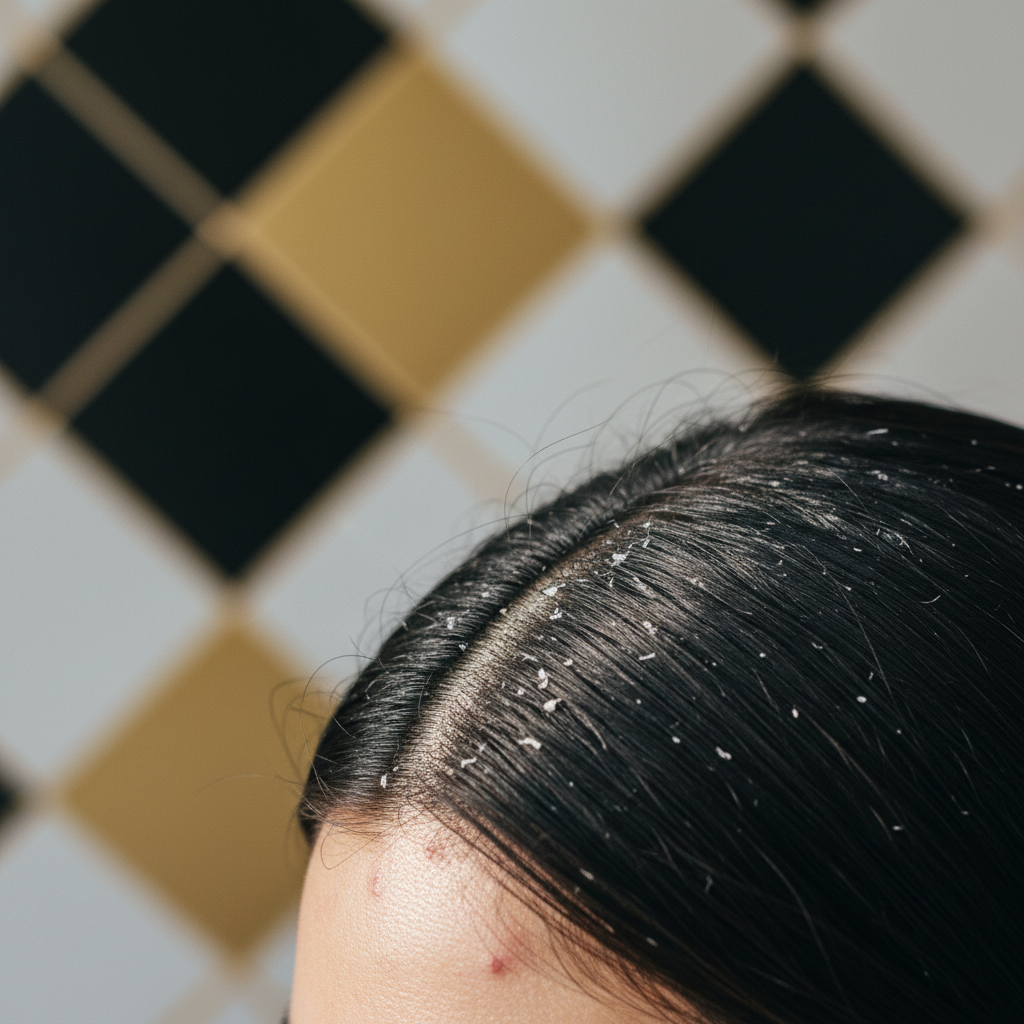
- Powdery shedding on dark clothing: Tiny specks that fall freely like dust when you shake your hair indicate moisture-depleted corneocytes.
- Absence of thick plaques: A standard dry scalp presents uniform, fine shedding across the crown or hairline rather than thick, crusty patches.
- Seasonal variation: Symptoms that worsen significantly during winter months or after prolonged exposure to air conditioning point toward environmental dehydration.
- Dull, static-prone hair: Dry scalp frequently coincides with dehydrated hair fibres that snap easily from friction. Remember, hair breakage along the shaft is completely distinct from follicular hair shedding or systemic alopecia.
Practical steps for treating dry scalp
1. Re-evaluate your wash temperature and frequency
Washing with hot water dissolves the protective sebum that seals moisture into the scalp. Switch to lukewarm water (around 37 to 38 degrees Celsius) to preserve barrier integrity. Aim to cleanse your hair two to three times per week rather than daily, unless your lifestyle or styling product usage demands otherwise.
2. Switch to mild, low-foaming cleansers
Aggressive anionic detergents like sodium lauryl sulphate (SLS) strip natural lipids. Choose gentler surfactants, such as cocamidopropyl betaine, sodium cocoyl isethionate, or decyl glucoside, formulated at a scalp-friendly pH between 4.5 and 5.5.
3. Incorporate leave-in scalp hydration
Just as facial skin requires daily hydration, a parched scalp benefits from lightweight, leave-in serums containing water-binding humectants:
- Glycerin: Penetrates the stratum corneum to hold moisture within surface cells.
- Panthenol (Pro-Vitamin B5): Soothes irritated skin, boosts hydration, and supports epidermal regeneration.
- Niacinamide: Stimulates natural ceramide synthesis to rebuild the protective barrier over time.
- Aloe vera leaf juice: Delivers polysaccharides that calm surface itching without leaving heavy residues.
4. Avoid harsh physical scrubs
Granular scalp scrubs containing crushed nutshells or large salt crystals cause micro-tears on an already compromised stratum corneum. If you need to remove dead skin accumulation, opt for gentle chemical exfoliants like lactic acid (an alpha hydroxy acid that acts as a humectant) or low-concentration salicylic acid (0.5 to 1.0 percent) used once weekly.
5. Protect against environmental stress
Indoor heating reduces relative humidity, rapidly pulling moisture out of exposed skin. Using a room humidifier during dry winter months helps maintain equilibrium in the scalp barrier. When outdoors in freezing or windy conditions, wear loose-fitting, breathable natural-fibre headwear to shield your head from the elements.
What the evidence does not show
There is no credible scientific evidence that loading the scalp with thick culinary oils (such as raw olive oil, coconut oil, or butter) cures chronic flaking. While occlusive oils slow water loss temporarily, heavy plant oils rich in oleic acid can feed opportunistic Malassezia fungi, inadvertently converting simple dryness into active seborrhoeic dermatitis.
Furthermore, evidence does not support the idea that dry flaking causes permanent follicular hair loss. While constant, aggressive scratching can cause mechanical hair breakage and localised micro-trauma to the hair shaft, cosmetic dry flakes do not damage the dermal papilla or destroy hair follicles.
Supporting scalp balance with Watermans
When managing a sensitive scalp environment, product formulation is paramount. Watermans develops haircare products focused on scalp wellness, using gentle surfactants and nourishing botanical extracts. Maintaining clean follicles without stripping the delicate lipid barrier is vital for anyone prone to dryness.
Formulated with ingredients like biotin, rosemary, allantoin, and hydrolysed lupin protein, Watermans shampoos and conditioners deliver essential moisture to parched roots while maintaining an optimal environment for hair growth. By pairing skin-friendly ingredients with a balanced pH, they help you maintain comfortable, flake-free roots without leaving greasy residues.
When the cause may be something else
If your flakes do not respond to gentle hydration and mild cleansing within three to four weeks, your symptoms may stem from a dermatological condition rather than cosmetic dryness:
- Scalp psoriasis: Characterised by well-demarcated, raised red plaques covered with thick, silvery-white scales. It frequently extends beyond the hairline to the forehead, neck, or ears.
- Contact dermatitis: An allergic reaction or chemical irritation from hair dyes, fragrances, or styling chemicals, leading to burning, blistering, or intense redness.
- Tinea capitis: A fungal ringworm infection that causes circular patches of scaling, often accompanied by hairs that break off flush with the scalp surface (black dot appearance).
- Atopic eczema: Chronic inflammatory skin disease presenting with intense itching, cracked skin, and oozing, often linked to personal or family history of asthma or hay fever.
When to seek professional advice
Consult an NHS general practitioner, board-certified dermatologist, or registered trichologist if:
- The scalp develops yellow crusts, weeping sores, or foul-smelling exudate.
- Itching disrupts your sleep or interferes with daily tasks.
- Scaling is accompanied by sudden, patchy hair shedding (telogen effluvium) or bald spots (alopecia).
- Over-the-counter hydrating measures make the redness, burning, or flaking noticeably worse.
Frequently asked questions about Treating Dry Flaky Scalp
How long does Treating Dry Flaky Scalp usually take?
When implementing barrier-repairing haircare and switching to lukewarm water, Treating Dry Flaky Scalp typically takes two to four weeks. The stratum corneum requires approximately 28 days to complete a natural cycle of cell renewal. Consistent hydration and avoiding aggressive surfactants allow the lipid matrix to rebuild progressively over this timeframe.
Can drinking more water clear up a dry, flaking scalp?
While systemic hydration supports overall bodily health, drinking extra water alone will not resolve an impaired epidermal barrier. Scalp flaking is primarily driven by external lipid depletion, humidity levels, and surfactant exposure. Topical humectants and barrier-protective cleansers are far more effective at preventing trans-epidermal water loss than increasing daily water intake.
Should I exfoliate my scalp if it is dry and flaky?
You should avoid physical scrubs containing rough particles, as they cause micro-fissures in dry tissue. However, mild chemical exfoliation using low-strength lactic acid or urea can dissolve dead surface corneocytes while simultaneously binding water to the skin. Limit any exfoliation to once per week to avoid barrier compromise.
Will applying pure coconut oil cure my dry scalp?
Pure coconut oil provides an occlusive seal, but it does not add water to the skin. Furthermore, its lipid profile can provide a food source for resident yeast species if applied heavily to the roots. Lightweight scalp serums formulated with water-based humectants like glycerin and panthenol are far better suited for restoring moisture balance without triggering fungal irritation.
Conclusion
Understanding the root cause of your symptoms is the foundation of Treating Dry Flaky Scalp. True dryness is an issue of hydration deficit and lipid loss, requiring calm, pH-balanced cleansing, humectant-rich nourishment, and protection against high heat and harsh chemicals. By stepping away from aggressive degreasing routines and treating the scalp with the same gentle care as facial skin, you can rebuild a resilient epidermal barrier and restore comfortable, flake-free roots.
Sources and references
- British Association of Dermatologists. Seborrhoeic Dermatitis Patient Information Leaflet. 2020.
- National Institute for Health and Care Excellence (NICE). Psoriasis: assessment and management. Clinical Guideline CG153. 2017.
- NHS. Dandruff and dry scalp conditions. Health A to Z. 2022.
- Journal of the European Academy of Dermatology and Venereology. Scalp condition and its impact on hair health: a review. 2018.
- International Journal of Cosmetic Science. The role of the stratum corneum barrier in scalp health and dryness. 2016.
Find these ingredients in Watermans products
- Biotin: you will find this ingredient in our Hair Growth Shampoo.
- Zinc: you will find this ingredient in our Hair Vitamins.
- Oleic Acid: you will find this ingredient in our Camellia & Black Castor Hair & Body Oil.
- Niacinamide: you will find this ingredient in our Hair Mask.
- Panthenol (Provitamin B5): you will find this ingredient in our Heat Protection Spray.
- Aloe Vera: you will find this ingredient in our Curly Hair Conditioner.