Hair Breakage vs Hair Shedding: The Essential Guide to Identifying Fibre Damage and Root Loss
9 min read ·
Learn the clear differences in Hair Breakage vs Hair Shedding, how to diagnose root bulbs, identify structural damage, and protect your hair density.
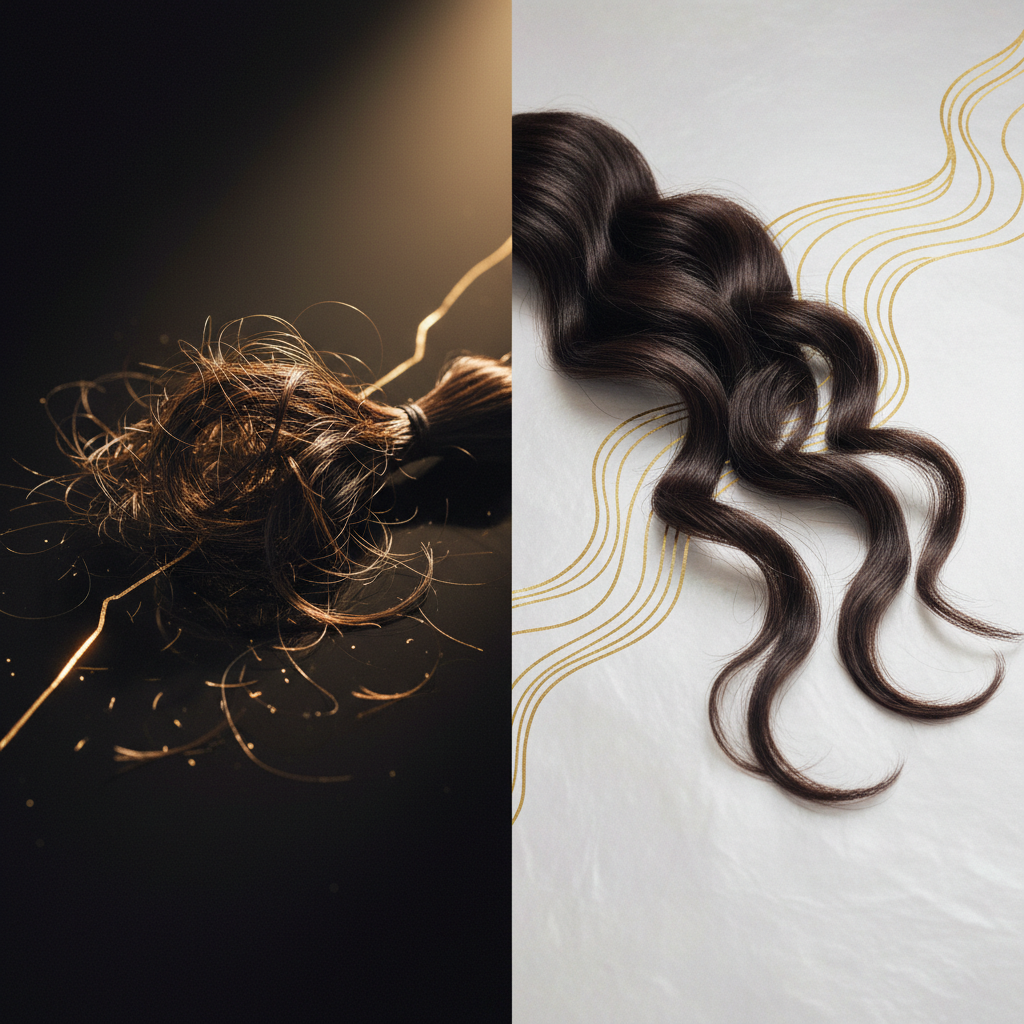
Quick answer: Hair Breakage vs Hair Shedding represents the fundamental difference between structural fibre failure and the natural biological hair growth cycle. Hair shedding occurs when a hair strand completes its lifecycle and releases entirely from the root, typically displaying a small white bulb at the tip. Hair breakage happens when mechanical, thermal, or chemical trauma snaps the hair shaft anywhere along its length without root involvement. While shedding reflects internal follicular regulation, breakage reflects external cuticle degradation, requiring entirely distinct diagnostic approaches and treatments.
Key takeaways
- Shedding originates in the follicle as part of the natural telogen phase, whereas breakage is structural damage to the external hair shaft.
- Natural shedding releases 50 to 100 hairs daily, complete with a tiny, keratinised bulb attached to the end.
- Broken hairs are shorter than your overall hair length, lack a root bulb, and often feature frayed ends or split tips.
- Increased shedding points toward physiological shifts such as illness, hormonal fluctuations, nutritional deficiencies, or stress.
- Hair breakage results from external factors, including chemical processing, heat styling, friction, and environmental wear.
- Targeted management requires identifying whether you are treating the scalp environment for shedding or rebuilding structural integrity for breakage.
Hair Breakage vs Hair Shedding: what the evidence shows
Understanding Hair Breakage vs Hair Shedding requires examining where the separation occurs. Hair shedding is an intrinsic biological process governed by the hair growth cycle. Research published by the British Association of Dermatologists confirms that healthy adults lose between 50 and 100 telogen hairs each day. Each human hair follicle operates independently through four distinct phases: anagen (active growth), catagen (regression), telogen (resting), and exogen (shedding). During the exogen phase, the anchored follicle releases the club hair to make room for a new anagen fibre.
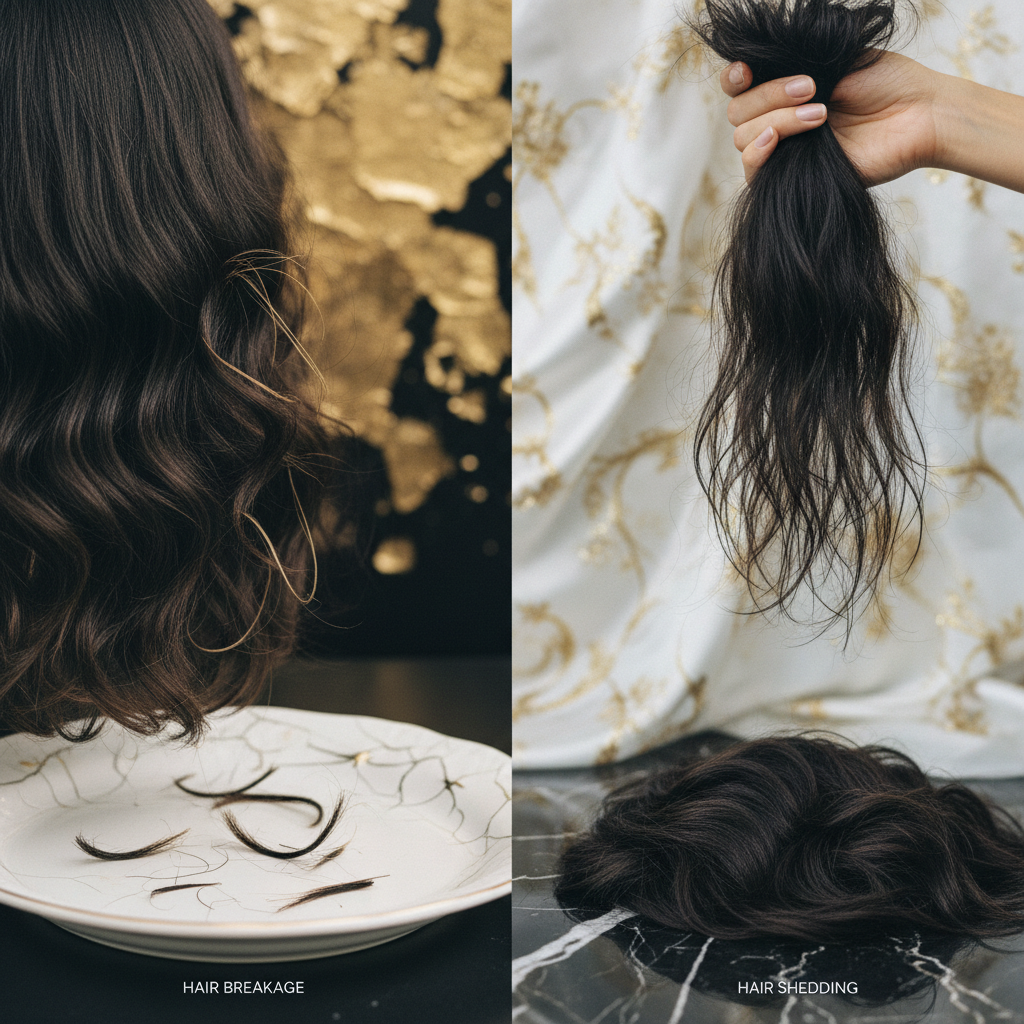
Hair breakage, by contrast, is an acquired structural defect of the hair fibre itself. It has nothing to do with follicular turnover. According to cosmetic dermatology studies, human hair consists of an outer protective cuticle, a structural cortex rich in keratin proteins and disulphide bonds, and an occasional inner medulla. When chemical bleaching, high-heat tools, or aggressive brushing deplete cuticle lipids and degrade cortical protein bonds, tensile strength drops significantly. Once mechanical tension exceeds the fibre's degraded elastic limit, the hair fractures.
The distinction between the two conditions is absolute in trichology:
- Hair shedding involves the entire fibre from root to tip, leaving the follicle intact in the scalp to produce subsequent fibres.
- Hair breakage leaves the lower portion of the fibre still attached to the scalp, resulting in uneven lengths, thinning mid-lengths and ends, and irregular hair density without altered follicle density.
The physical mechanisms: root versus shaft
To diagnose your hair accurately, you must understand the underlying structural mechanisms driving fibre separation.
The mechanism of shedding
Every shed hair is technically a club hair. During the catagen phase, which lasts two to three weeks, the hair bulb detaches from the dermal papilla (the blood supply). The root then keratinises into a rounded, translucent bulb. After resting in the telogen phase for approximately two to three months, the hair naturally slides out of the follicle orifice. Because the follicle remains biologically sound, a new hair fibre begins forming underneath.
When internal stressors disrupt this timing, a condition known as telogen effluvium occurs. Research shows that high fever, childbirth, rapid weight loss, or severe psychological stress can prematurely push up to 30 percent of active anagen hairs into the telogen phase. Roughly two to three months after the triggering event, diffuse shedding increases substantially, often exceeding 200 to 300 hairs per day.
The mechanism of breakage
Breakage is driven by protein loss and physical wear along the hair shaft. Healthy hair possesses a hydrophobic 18-methyleicosanoic acid (18-MEA) lipid layer coating overlapping cuticle scales. This layer maintains slip and prevents moisture loss. When alkaline chemicals (such as relaxers, perms, or bleaching agents at pH 9.0 to 11.0) lift the cuticle, they dissolve this protective lipid barrier and break cystine disulphide bonds inside the cortex.
Similarly, styling tools exceeding 180 degrees Celsius convert moisture trapped inside the cortex into steam, causing microscopic structural blisters known as bubble hair. When you comb or brush this compromised fibre, friction overpowers the weakened cortex. The shaft fractures transversely or splits longitudinally (trichoptilosis), snapping in half without touching the root.
Signs to look for: how to tell the difference
Determining whether you are experiencing breakage or shedding takes only a few seconds of close inspection.
| Diagnostic Factor | Hair Shedding | Hair Breakage |
|---|---|---|
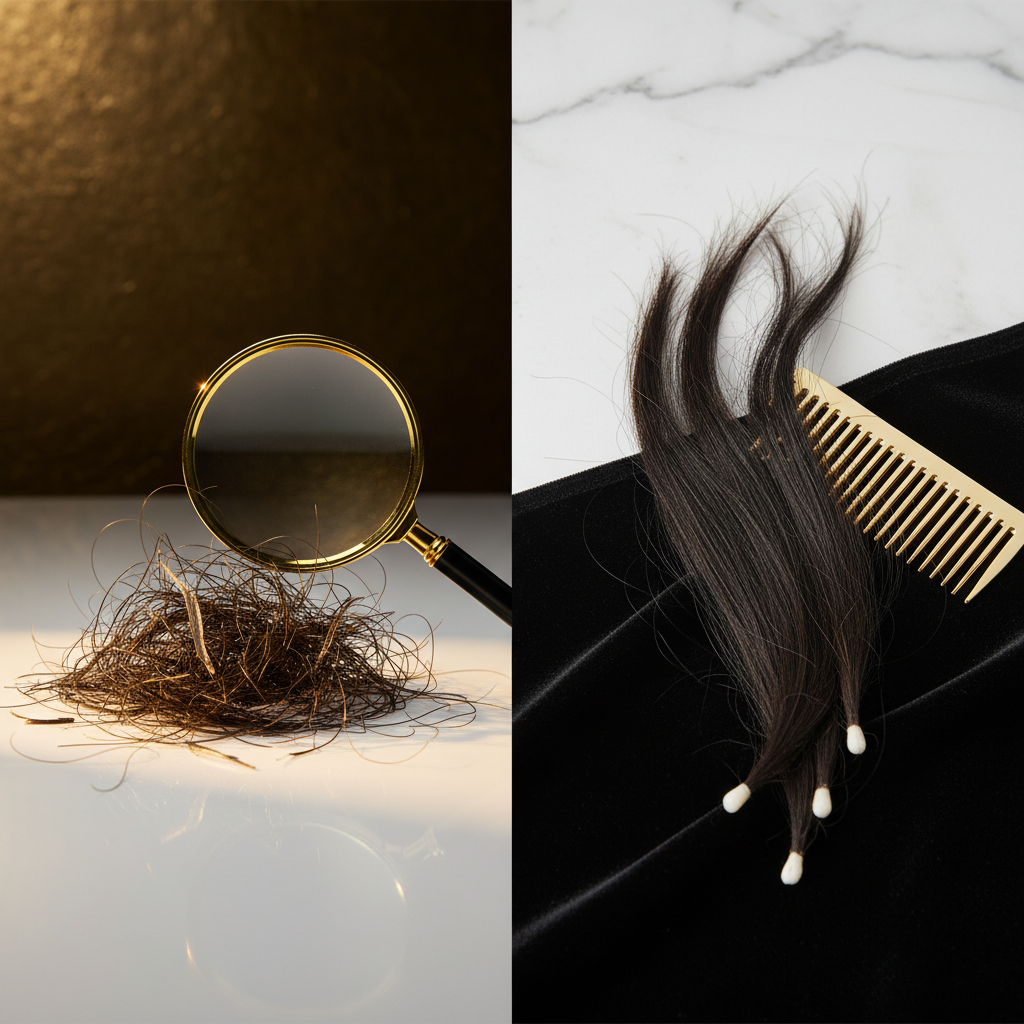
| Visible Bulb | Present (small, white or clear bulb at the tip) | Absent (blunt, jagged, or frayed ends) |
| Strand Length | Full length, matching your typical hair growth | Variable, shorter fragments of differing lengths |
| Elasticity | Normal stretch and recovery before snapping | Low elasticity; snaps immediately under light tension |
| Volume Pattern | Diffuse thinning across the entire scalp or widened parting | Frizzy halo, thinning ends, thin hairline edges, uneven hemline |
| Daily Timing | Noticed during washing, detangling, or resting on pillows | Noticed on clothing, bathroom counters, and styling brushes |
| Primary Root Cause | Systemic, hormonal, or cycle-related | Mechanical, thermal, or chemical damage |
Perform the white bulb test: pick up a fallen strand from your brush or bathroom floor and examine both ends under good light against a dark surface. If you spot a white, rounded nodule at one end, the strand has shed from the follicle. If both ends look blunt, split, or frayed, the strand has broken along the shaft.
What the evidence does not show
There are persistent myths surrounding the topic of Hair Breakage vs Hair Shedding that lead to incorrect treatments:
- Shampoos do not cause hair shedding: Cleansing removes hairs that have already detached from the dermal papilla weeks prior and were resting loosely in the follicle canal. Washing merely dislodges them mechanically.
- Conditioners do not cure physiological shedding: While conditioning agents, silicones, and hydrolysed proteins reduce surface friction and rebuild tensile strength to prevent breakage, they have zero influence on internal hormonal or follicular shedding cycles.
- Cutting your hair does not stop shedding: Trimming split ends removes frayed, vulnerable tips, halting breakage from travelling up the shaft. However, cutting hair has no biological impact on follicular turnover at the scalp.
- Breakage does not lead to permanent baldness: Because breakage leaves the follicle undamaged beneath the skin, hair continues to grow from the root at its standard rate of roughly 1 to 1.25 centimetres per month.
What you can do to address each condition
Because their biological origins differ completely, your management strategy must target either the scalp or the hair fibre.
Strategies for stopping hair breakage
- Reduce chemical processing: Space out bleaching, colouring, and chemical straightening sessions by at least 8 to 12 weeks to allow cortical repair.
- Control heat styling: Keep thermal tools below 180 degrees Celsius and always apply a heat protectant containing film-forming polymers to distribute heat evenly.
- Optimise wet detangling: Hair loses roughly 30 percent of its tensile strength when saturated with water because hydrogen bonds temporarily break down. Never yank a fine-tooth comb through wet hair. Instead, use a wide-tooth comb or flexible detangling brush coated with a slippery conditioner, working gently from ends to roots.
- Incorporate protein and moisture: Use products with hydrolysed wheat, keratin, or amino acids to temporarily patch cuticle gaps, balanced with moisturising fatty alcohols to restore flexibility.
- Protect hair from friction: Sleep on silk or satin pillowcases and use soft scrunchies rather than elastic bands that saw into the cuticle.
Strategies for managing hair shedding
- Track the timeline: Look back two to three months before the excessive shedding began to identify potential systemic triggers like viral illness, surgery, drastic dietary changes, or intense emotional stress.
- Review your nutritional intake: Hair follicles are metabolically active tissue. Low ferritin (iron stores below 40 to 50 ng/mL), vitamin D deficiency, zinc depletion, or insufficient dietary protein can trigger telogen effluvium.
- Support the scalp barrier: Maintain a balanced, clean scalp environment using non-stripping cleansers that remove sebum, cellular debris, and environmental pollution without disturbing the scalp microbiome.
- Practice patience: Telogen effluvium is typically self-limiting. Once the underlying trigger resolves, shedding generally stabilises over three to six months as follicles reset into anagen.
Supporting hair density with targeted care
When addressing overall hair health, combining follicular scalp support with fibre-reinforcing care yields the best outcomes. Watermans approaches hair wellness by focusing on the scalp environment while nurturing the visible fibre. Formulations incorporating ingredients like biotin, caffeine, rosemary extract, and niacinamide help create an optimal, invigorated scalp environment for emerging growth, while hydrolysed lupin protein helps strengthen the hair shaft against daily styling friction. Maintaining this dual approach ensures that while you support natural hair vitality from the root, you simultaneously protect delicate lengths from unnecessary mechanical snapping.
When the cause may be something else
Sometimes, hair thinning involves factors beyond simple mechanical breakage or temporary telogen effluvium:
- Androgenetic Alopecia (Pattern Hair Loss): Driven by genetic sensitivity to dihydrotestosterone (DHT), this process causes follicular miniaturisation. Hairs do not simply fall out in clumps; instead, each growth cycle produces progressively finer, shorter hairs, creating visible thinning at the crown, temples, or central part.
- Alopecia Areata: An autoimmune condition where T-lymphocytes target the hair follicle bulb, resulting in smooth, round, distinct bald patches.
- Traction Alopecia: A hybrid condition where constant mechanical pulling (from tight ponytails, braids, or extensions) causes sustained inflammation at the follicle root, eventually leading to permanent scarring and hair loss along the hairline.
- Scalp Disorders: Untreated seborrhoeic dermatitis, psoriasis, or fungal infections cause inflammation that can weaken hair anchoring and provoke secondary shedding.
When to get professional advice
Consult a GP, dermatologist, or qualified trichologist if you notice any of the following symptoms:
- Sudden, diffuse shedding lasting longer than six continuous months.
- Distinct, patchy hair loss or circular bald spots on the scalp.
- Scalp symptoms such as intense burning, pain, redness, scaling, or fluid-filled bumps.
- Noticeable widening of your natural parting line or receding temples.
- Shedding accompanied by unexplained weight changes, chronic fatigue, cold intolerance, or irregular menstrual cycles, which may indicate thyroid dysfunction.
Hair Breakage vs Hair Shedding: maintaining hair vitality
Navigating Hair Breakage vs Hair Shedding comes down to identifying the root of the problem, whether biological or structural. By inspecting your fallen strands for the presence of a white bulb, you can instantly tell whether your hair is experiencing the natural culmination of a growth cycle or snapping due to mechanical fatigue. Shedding requires gentle patience, nutritional review, and an optimal scalp foundation, while breakage calls for immediate changes to your thermal, chemical, and physical styling routines. Treating the correct issue with the right targeted approach protects your hair density and keeps your fibres resilient from root to tip.
Sources and references
- British Association of Dermatologists. Telogen Effluvium: An Overview. 2021.
- Sinclair, R. Healthy Hair: What Is It? Journal of Investigative Dermatology Symposium Proceedings, 2007.
- Robbins, C. R. Chemical and Physical Behavior of Human Hair. 5th Edition, Springer, 2012.
- Trueb, R. M. Oxidative Stress in Ageing of Hair. International Journal of Trichology, 2009.
- Malkani, R. H. Hair Shaft Disorders. Indian Journal of Dermatology, Venereology and Leprology, 2008.
Find these ingredients in Watermans products
- Biotin: you will find this ingredient in our Hair Growth Shampoo.
- Zinc: you will find this ingredient in our Hair Vitamins.
- Niacinamide: you will find this ingredient in our Hair Mask.