Traction Alopecia vs Alopecia Areata: Key Differences and Scalp Care
9 min read ·
Learn the critical differences in Traction Alopecia vs Alopecia Areata, from mechanical stress to autoimmune triggers, identifying signs, and proper scalp care.
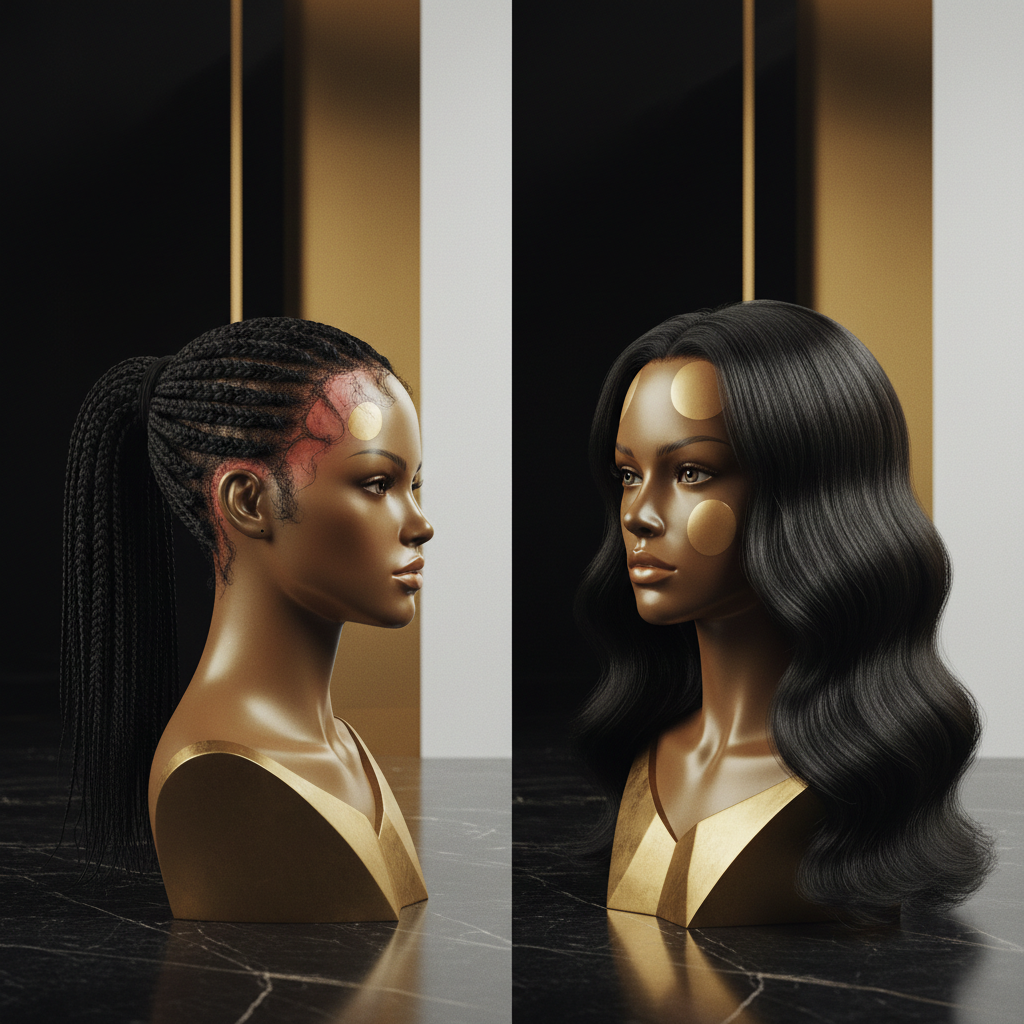
Quick answer: The core distinction in Traction Alopecia vs Alopecia Areata comes down to external mechanical force versus an internal autoimmune response. Traction alopecia is hair loss caused by continuous physical tension pulling on hair follicles, often along the hairline from tight hairstyles. Alopecia areata is an autoimmune condition where the body's immune system mistakenly attacks healthy follicles, creating smooth, round, sudden patches of hair loss anywhere on the scalp or body. While early traction damage is reversible by removing tension, untreated prolonged tension leads to permanent scarring.
Key takeaways
- Different underlying causes: Traction alopecia stems from repeated physical pulling, whereas alopecia areata is driven by autoimmune inflammation targeting anagen follicles.
- Pattern differences: Traction alopecia typically affects the front hairline, temples, or nape, while alopecia areata creates distinct, circular, coin-shaped patches anywhere on the scalp.
- Follicular viability: Traction alopecia can progress from temporary thinning to permanent scarring (cicatricial alopecia) if tension continues. In alopecia areata, follicles remain alive beneath the skin even during prolonged dormancy.
- Early warning signs: Traction damage often presents with scalp tenderness, redness, and small pimples (folliculitis) before hair falls out. Alopecia areata appears without local irritation, often revealed by characteristic "exclamation mark" hairs.
- Action plan: Reversing early traction damage requires eliminating mechanical strain immediately. Managing alopecia areata requires medical diagnosis and dermatologist-prescribed anti-inflammatory or immunomodulating treatments.
Traction Alopecia vs Alopecia Areata: what the evidence shows
When comparing Traction Alopecia vs Alopecia Areata, clinical dermatology categorises them as two entirely separate entities with distinct causes, presentations, and treatment pathways.
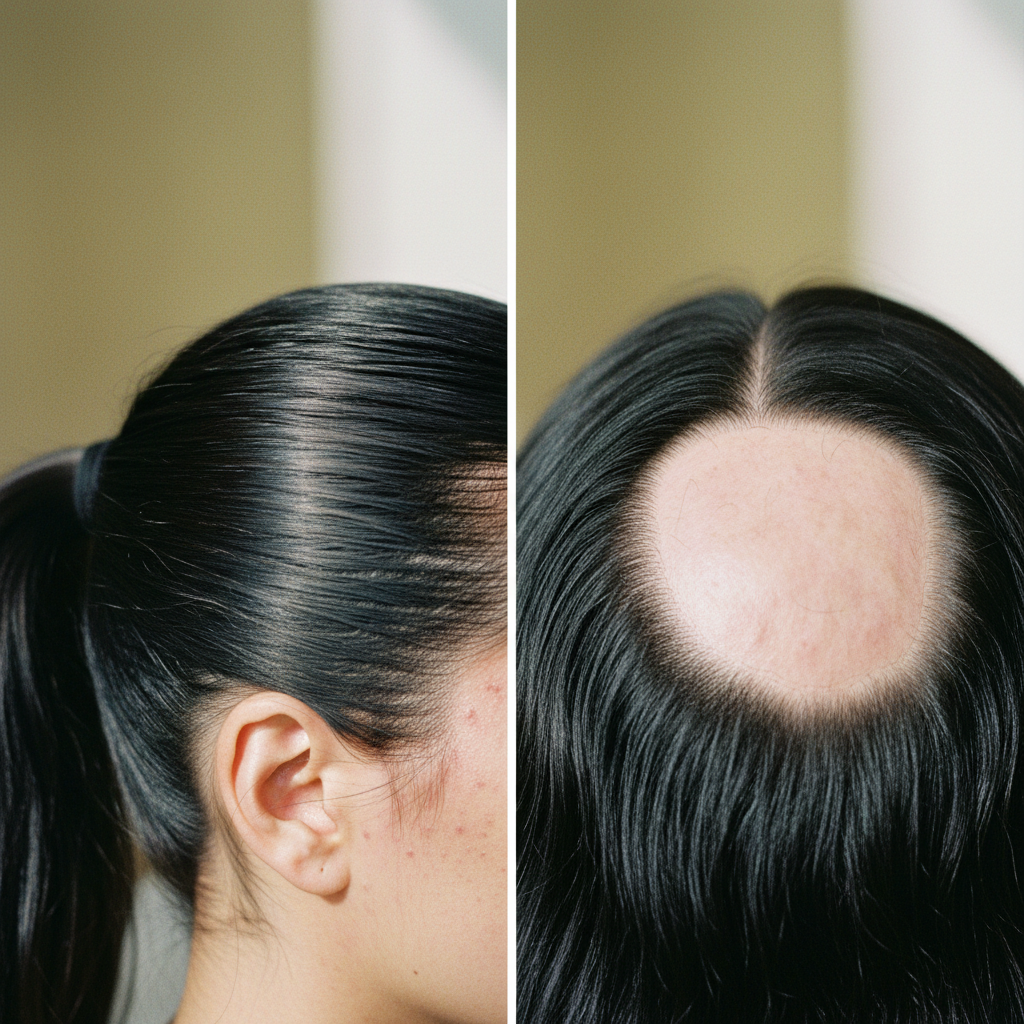
Traction alopecia was first documented in medical literature in the early 20th century among women in Greenland who wore tight traditional topknots. Modern clinical studies confirm it is a mechanical injury. Persistent pulling forces deform the hair follicle, disrupt the outer root sheath, and trigger localised inflammation. If the pulling continues over months or years, the follicle undergoes fibroplasia, transforming into scar tissue that can never produce a fibre again.
Alopecia areata, by contrast, is an autoimmune disorder affecting approximately 2% of the global population at some point in their lives. The hair follicle possesses what immunologists call "immune privilege", meaning it is normally shielded from the body's natural immune defences. In alopecia areata, this immune privilege collapses. CD8+ T lymphocytes swarm the hair bulb during the active growth (anagen) phase, forcing the follicle prematurely into regression (catagen) and resting (telogen) stages.
| Feature | Traction Alopecia | Alopecia Areata |
|---|---|---|
| Primary Cause | Mechanical tension and prolonged physical pulling | Autoimmune attack mediated by T-cells |
| Typical Location | Frontal hairline, temporal areas, above ears, nape | Random, circular patches anywhere on scalp or body |
| Scalp Appearance | Erythema, folliculitis (pustules), later smooth skin | Smooth, skin-coloured or peach-tinted, uninflamed |
| Dermoscopy Signs | "Fringe sign" (retained fine hairs), peripilar casts | Exclamation mark hairs, yellow dots, black dots |
| Follicle Status | Can become permanently scarred and destroyed | Follicles stay intact; dormant rather than destroyed |
| Primary Approach | Remove tension immediately; anti-inflammatory care | Corticosteroids, topical immunotherapy, JAK inhibitors |
The biological mechanisms behind both conditions
Understanding the biological pathway of each condition explains why their treatments differ so dramatically.
The mechanical pathway of traction alopecia
Hair fibres are anchored in the dermis by the dermal papilla and surrounding connective tissue sheath. When hair is pulled into high-tension braids, weaves, heavy dreadlocks, or tight ponytails, a sustained shear stress is placed on the follicle wall.
Initially, this mechanical strain causes micro-tears around the follicular sheath. The body responds with acute inflammation, manifesting as perifollicular erythema (redness) and pustules. Dermatologists refer to this stage as traction folliculitis. If the pulling persists, chronic inflammation starves the follicle of oxygen and nutrients. Over time, the hair matrix atrophies, hair shafts miniaturise, and fibrous connective tissue replaces the living follicle. Once scarred, follicular regeneration is biologically impossible without surgical hair restoration.
The autoimmune pathway of alopecia areata
Alopecia areata does not involve mechanical destruction. Instead, environmental triggers, genetic predisposition, and stress can spark a breakdown of follicular immune privilege. Healthy follicles downregulate major histocompatibility complex (MHC) class I molecules to remain hidden from T-cells. In alopecia areata, MHC class I and II molecules are aberrantly expressed on follicular epithelial cells.
Cytotoxic T-cells identify the follicle as a foreign threat, accumulating around the bulb in a dense pattern that dermatologists describe as a "swarm of bees" on histopathology. This immune attack damages the hair matrix without killing the stem cell niche in the follicular bulge. As a result, the fibre breaks off or sheds, but the follicle remains structurally capable of regrowing hair once the immune attack subsides.
Recognising the signs and clinical patterns
Spotting the physical patterns early makes an enormous difference to hair recovery.
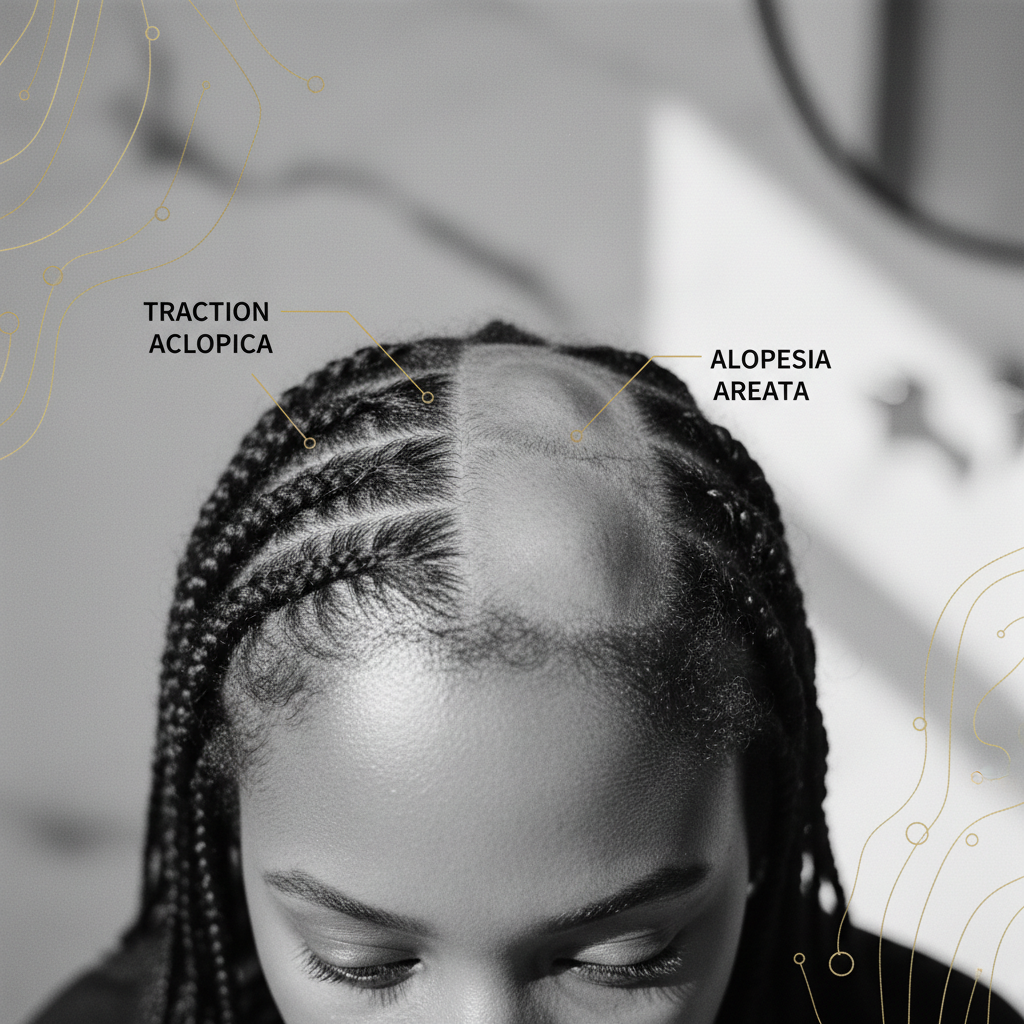
Signs of traction alopecia
- The "Fringe Sign": Retained, very fine, short vellus hairs along the very front edge of the hairline, while the stronger terminal hairs behind them have been pulled out.
- Follicular casts: Tiny, white, cylinder-shaped keratin collars that slide up the hair shaft, caused by the physical detachment of the inner root sheath.
- Scalp sensations: Tenderness, stinging, headaches, or itching immediately after styling hair tightly.
- Distribution: Almost exclusively found along margins of high tension, including the temporal peaks, hairline margins, or along parting lines where extensions hang.
Signs of alopecia areata
- Circumscribed, round patches: Completely bald, oval or circular areas that can appear overnight or over several days.
- Exclamation mark hairs: Short, fractured hairs around the border of a bald patch that are thicker at the top and taper to a thin, hypopigmented base near the skin.
- Associated nail changes: Tiny pits, ridges, or rough texture (trachyonychia) on fingernails in up to 10 to 20% of cases.
- Sensory cues: The scalp generally feels normal, though some people report a mild tingling or burning sensation right before a new patch develops.
What you can do: management and scalp care
Management depends entirely on addressing the specific root cause.
Addressing traction damage
The single most effective step for traction alopecia is eliminating the physical force. Stylists and clients must collaborate to remove tight weaves, heavy extensions, tight cornrows, or rigid ponytails.
If you catch the condition while pustules and tenderness are present, the follicles are still viable. Switching to loose, low-manipulation styles allows the inflammation to resolve. For mild, early-stage inflammation, gentle scalp hygiene, avoiding high heat, and giving hair regular breaks from styling are critical. If redness persists, a doctor may prescribe topical corticosteroids or topical antibiotics to clear the infection and protect the follicles.
Addressing alopecia areata
Because alopecia areata is an internal immune disorder, physical styling changes alone will not halt patch progression. A medical assessment is required.
Conventional medical therapies include:
- Intralesional corticosteroid injections administered directly into bald patches to calm local T-cell activity.
- Topical high-potency corticosteroids or calcineurin inhibitors.
- Systemic treatments such as oral corticosteroids or modern JAK (Janus kinase) inhibitors for extensive cases (such as alopecia totalis or universalis).
Supporting the cosmetic environment
For both conditions, looking after the surrounding scalp and existing hair helps maintain the best cosmetic condition possible. Keeping the scalp clean, hydrated, and clear of heavy build-up creates an ideal environment for emerging fibres. Watermans Grow Me shampoo, formulated with biotin, caffeine, and rosemary, is designed to invigorate the scalp surface, strengthen hair strands, and improve the appearance of hair density. While cosmetic shampoos cannot treat autoimmune alopecia or reverse scarred follicles, maintaining healthy scalp hygiene ensures existing strands stay conditioned and resilient against unnecessary breakage.
When the cause may be something else
Hair thinning is complex and often multi-factorial. If your symptoms do not clearly match traction or areata, consider these alternatives:
- Telogen effluvium: Widespread, diffuse shedding across the whole head, usually occurring two to three months after a physiological shock, severe illness, surgery, or extreme psychological stress. Unlike alopecia areata, it does not leave bald circular patches.
- Androgenetic alopecia: Pattern hair loss driven by genetics and sensitivity to dihydrotestosterone (DHT). In men, it presents as bitemporal recession and crown thinning. In women, it manifests as diffuse thinning along the central parting line with an intact frontal rim.
- Trichotillomania: A behavioural impulse-control disorder where an individual pulls out their own hair. The patches appear irregular and contain broken hairs of varying lengths, often on the dominant-hand side of the head.
- Central Centrifugal Cicatricial Alopecia (CCCA): A scarring alopecia that begins at the vertex or crown and spreads outward. It is common among women of African descent and requires prompt dermatological intervention to stop irreversible scarring.
When to seek professional advice
Consult a GP, dermatologist, or qualified trichologist as soon as you notice unexpected hair thinning. You should seek an evaluation immediately if you notice:
- Rapid development of smooth, bare patches anywhere on the scalp, eyebrows, or eyelashes.
- Persistent bumps, pimples, scalp pain, or fluid leakage along the hairline.
- A receding hairline accompanied by a shiny, smooth scalp where follicular openings are no longer visible.
- Sudden shedding of more than 100 to 150 hairs daily for longer than six consecutive weeks.
Early diagnosis is critical. A clinician will use a dermatoscope (a specialised illuminated magnifier) to examine your follicular openings, differentiate between autoimmune and mechanical markers, and prevent permanent scarring.
Frequently asked questions about Traction Alopecia vs Alopecia Areata
Can traction alopecia trigger alopecia areata?
No. Traction alopecia does not turn into alopecia areata, as they operate through completely different mechanisms. Traction alopecia is caused by external physical tension, whereas alopecia areata is an autoimmune condition driven by genetics and immune dysregulation. However, it is possible for an individual to develop both conditions simultaneously if they have an autoimmune predisposition and wear high-tension hairstyles.
How can a stylist tell the difference between Traction Alopecia vs Alopecia Areata?
A stylist can assess pattern and scalp appearance. Traction alopecia usually appears along the perimeter of the hairline, temples, or parting lines where tension was concentrated, often showing redness, bumps, and tiny hairs at the extreme edge (the fringe sign). Alopecia areata presents as distinct, completely smooth, circular patches that can appear anywhere on the head without preceding tension.
Will hair regrow once traction alopecia has developed?
Hair can regrow from traction alopecia if you intervene during the early stages before scarring takes place. If you stop the high-tension hairstyle while the scalp only shows redness or mild thinning, follicles typically recover over 3 to 6 months. If tension has continued for years and the skin looks smooth, shiny, and devoid of pores, the follicles have scarred permanently.
Is hair loss from alopecia areata permanent?
Hair loss from alopecia areata is rarely permanent because the immune system attacks the hair bulb without destroying the follicle's underlying stem cells. The follicles remain intact beneath the skin surface, dormant in the telogen phase. Many people experience spontaneous regrowth, while others regrow hair successfully following medical treatments such as corticosteroid injections or topical immunotherapies.
Sustaining scalp and follicular health
Distinguishing between Traction Alopecia vs Alopecia Areata is the essential first step in preserving your hair. Traction damage requires immediate behavioural changes to relieve tension, protect fragile hairline borders, and prevent scarring. Alopecia areata requires a prompt dermatological evaluation to manage immune activity and restore follicular signalling. By recognising these distinct patterns early, communicating clearly with your stylist, and consulting medical professionals, you can protect your follicles and maintain optimal hair health.
Sources and references
- British Association of Dermatologists. Clinical Guidelines for the Management of Alopecia Areata. 2020.
- American Academy of Dermatology. Traction Alopecia: Diagnosis and Prevention. 2022.
- National Institute for Health and Care Excellence (NICE). Alopecia Areata: Scenario: Management. 2021.
- Billero, V. & Miteva, M. Traction alopecia: the root of the problem. Clinical, Cosmetic and Investigational Dermatology, 2018. DOI: 10.2147/CCID.S137296.
- Pratt, C.H. Et al. Alopecia areata. Nature Reviews Disease Primers, 2017. DOI: 10.1038/nrdp.2017.11.