Scarring Alopecia Explained: Causes, Symptoms, and Clinical Care
9 min read ·
Scarring alopecia explained: understand the biology, warning signs, and medical treatments for cicatricial alopecia to protect your remaining hair.
Quick answer: Scarring alopecia explained simply refers to cicatricial alopecia, a diverse group of inflammatory disorders where the immune system destroys hair follicle stem cells and replaces them with permanent fibrous scar tissue. Unlike temporary hair shedding or non-scarring conditions like androgenetic alopecia, this destruction causes permanent, irreversible hair loss. Early clinical diagnosis and prompt medical intervention from a dermatologist are essential, because current treatments can halt disease progression and preserve surviving follicles, but cannot regenerate destroyed tissue.
Key takeaways
- Scarring alopecia involves the permanent inflammatory destruction of epithelial hair follicle stem cells located in the follicular bulge.
- The condition is divided into primary cicatricial alopecia (where the follicle itself is the target) and secondary cicatricial alopecia (follicles destroyed by external trauma, burns, radiation, or infection).
- Primary forms are categorised by the dominant inflammatory cell type: lymphocytic, neutrophilic, or mixed.
- Early warning signs include scalp erythema (redness), perifollicular scale, burning sensations, pain, and loss of follicular ostia (visible pores).
- Over-the-counter cosmetic products and general hair loss shampoos cannot reverse scarring; management requires specialist prescription therapies such as corticosteroids, antimalarials, or immunosuppressants.
Scarring Alopecia Explained: what the evidence shows
When having scarring alopecia explained by a specialist, the primary fact to understand is that it represents a medical emergency for your hair. Dermatological research published by the British Association of Dermatologists and the American Academy of Dermatology shows that primary cicatricial alopecias account for approximately 3 to 7 percent of adult hair loss presentations at specialist clinics.
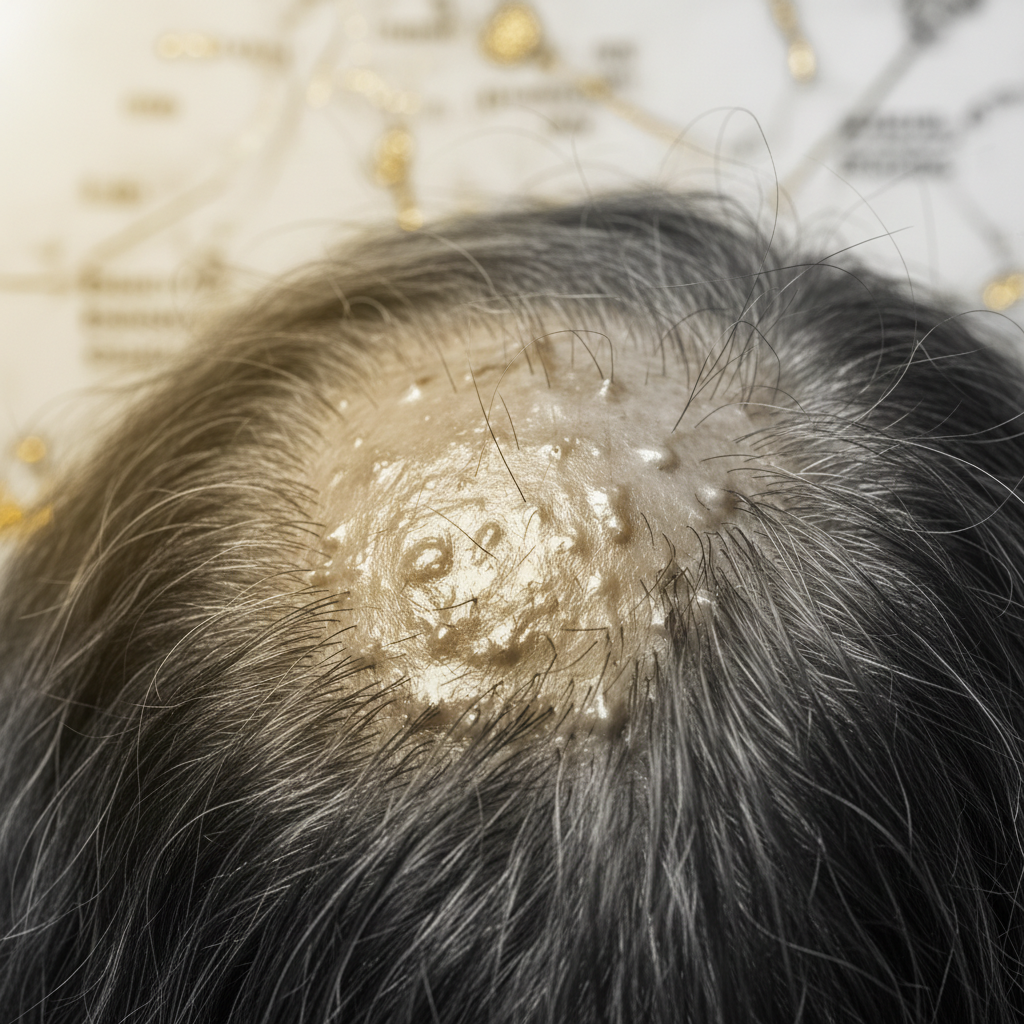
In healthy scalp cycles, hair sheds and regrows because the follicular bulge, situated just below the sebaceous gland, houses quiescent epithelial stem cells. In scarring alopecia, intense cellular inflammation specifically attacks this bulge region. Once these stem cells undergo necrosis or apoptosis, the body repairs the micro-injury with dense fibrous tissue. As a result, the follicular ostium (the pore opening) closes forever.
Dermatologists classify primary cicatricial alopecias into three clinical groups based on histopathological biopsy findings:
- Lymphocytic disorders: Characterised by T-cell infiltration. Common conditions include Lichen Planopilaris (LPP), Frontal Fibrosing Alopecia (FFA), and Central Centrifugal Cicatricial Alopecia (CCCA).
- Neutrophilic disorders: Driven by neutrophil infiltration, often forming sterile pustules. Key examples include Folliculitis Decalvans and Dissecting Cellulitis of the Scalp.
- Mixed disorders: Involving both neutrophils and lymphocytes alongside plasma cells, such as Acne Keloidalis Nuchae.
Controlled clinical trials confirm that once a follicle is replaced by fibrosis, no medical or surgical intervention can recreate it naturally. However, medical intervention can suppress the inflammatory cascade, protecting the remaining follicles and arresting further spread.
What the evidence does not show
There is no credible scientific evidence that standard commercial cosmetics, deep conditioning masks, or everyday hair care routines cause primary scarring alopecia. While harsh chemical processing or severe traction can contribute to specific types of scarring, such as severe traction alopecia or exacerbating CCCA, primary conditions like Lichen Planopilaris are autoimmune or autoinflammatory in origin.
Furthermore, research does not show that natural oils, nutritional supplements, or biotin reverse scarring hair loss. Once fibrous connective tissue fills the dermal space where the follicle once sat, topical vitamins or scalp massages cannot generate new hair follicles. Expecting non-prescription cosmetic serums to regrow scarred patches leads to dangerous delays in seeking medical care.
The biological mechanism of follicular destruction
The exact initial trigger for primary scarring alopecia remains an active area of dermatological research, but the underlying biological mechanism follows a consistent pathway.
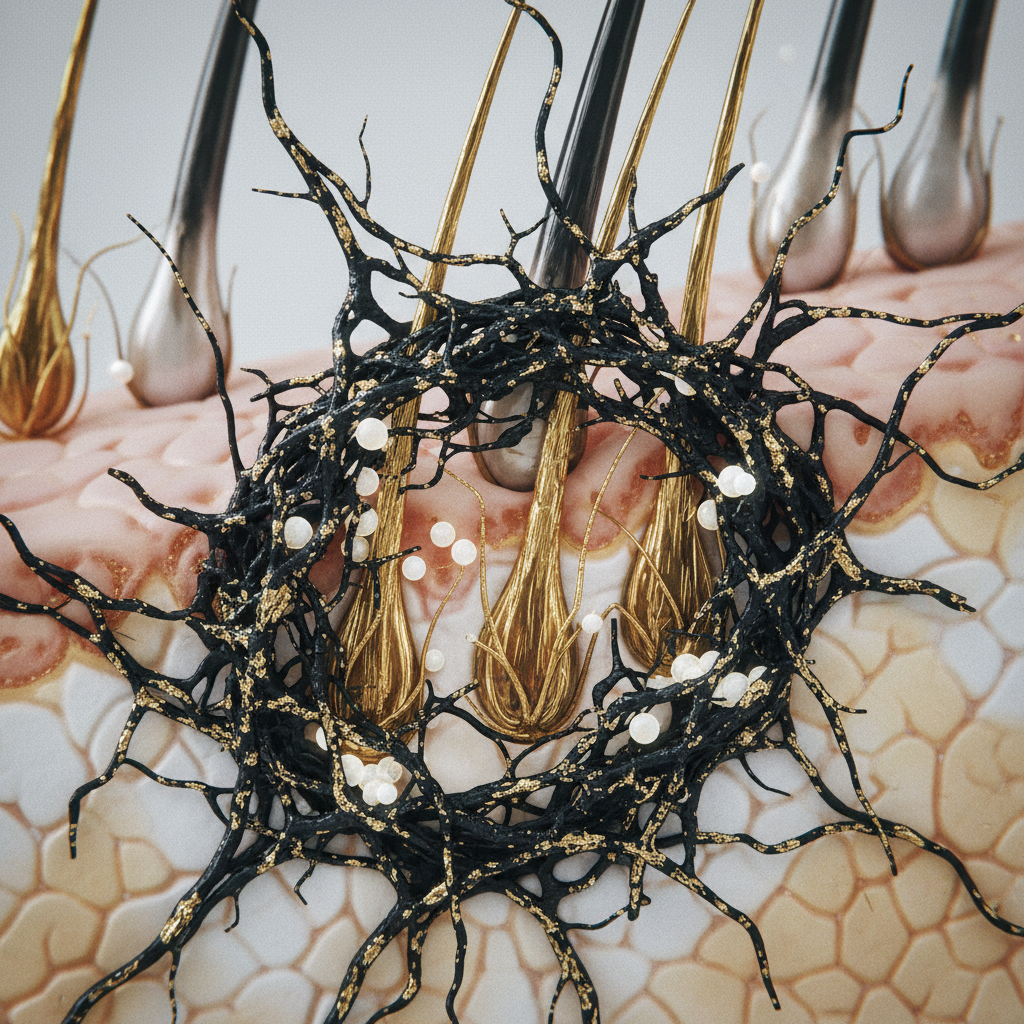
Under normal conditions, the hair follicle maintains "immune privilege". This means the body suppresses local immune surveillance around the lower follicle and bulge area to prevent autoimmune attack against hair-specific proteins.
In lymphocytic scarring alopecias like Lichen Planopilaris, this immune privilege collapses. There is an abnormal upregulation of Major Histocompatibility Complex (MHC) class I and class II molecules. Cytotoxic CD8+ T lymphocytes and helper CD1+ T cells infiltrate the infundibulum and bulge region, releasing pro-inflammatory cytokines such as interferon-gamma (IFN-γ).
This inflammatory cascade induces apoptosis in the epithelial stem cells of the outer root sheath. The sebaceous gland is typically destroyed first, followed by the stem cell reservoir. Without these regenerative cells, the normal hair cycle stops permanently, and fibroblasts migrate to the site, laying down rigid type I and type III collagen that replaces the follicle entirely.
Signs and symptoms to look for
Recognising the signs of cicatricial hair loss early makes the difference between retaining a full head of hair and experiencing permanent baldness. Symptoms can vary depending on whether the condition is slowly progressive or acutely inflammatory:
- Absence of follicular openings: The scalp skin appears unusually smooth, shiny, and porcelain-like, without visible pores.
- Perifollicular erythema and scaling: Redness, crusting, or collars of white scale (perifollicular cast) wrapped around individual hair fibres at the scalp surface.
- Sensory symptoms: Persistent itching, burning, tingling (trichodynia), or distinct scalp tenderness that does not respond to regular anti-dandruff shampoo.
- Tufting or "doll's hair" appearance: Multiple hair shafts emerging from a single dilated pore, often seen in Folliculitis Decalvans.
- Pustules and crusting: Tender, recurrent bumps containing pus or clear fluid on the crown or vertex.
- Receding hairline with eyebrow thinning: A band of pale, smooth skin along the front and temporal margins, typical of Frontal Fibrosing Alopecia.
Scarring vs non-scarring alopecia: a comparison
Understanding the clinical differences between scarring and non-scarring forms of hair loss helps ensure you seek the correct medical pathway immediately.
| Feature | Scarring (Cicatricial) Alopecia | Non-Scarring Alopecia (e.g., Telogen Effluvium, Androgenetic) |
|---|---|---|
| Follicular Pores | Absent; scalp looks shiny, smooth, or scarred | Present; openings remain visible under magnification |
| Hair Stem Cells | Permanently destroyed in the follicular bulge | Intact and preserved within the follicle |
| Reversibility | Irreversible in affected patches | Potentially reversible with treatment or time |
| Common Symptoms | Burning, severe itching, pain, pustules, redness | Usually painless; occasional mild itch or shedding |
| Primary Mechanism | Destructive inflammation and fibrosis | Hormonal sensitivity or disrupted hair growth cycle |
| Diagnostic Gold Standard | 4 mm scalp punch biopsy with histology | Dermoscopy (trichoscopy) and clinical history |
| Primary Treatment Goal | Halt active inflammation and preserve remaining hair | Stimulate regrowth and prolong the anagen (growth) phase |
When the cause may be something else
Not all inflammatory scalp conditions cause scarring alopecia. Conditions such as severe seborrhoeic dermatitis, scalp psoriasis, or allergic contact dermatitis cause intense redness, scaling, and shedding, but they leave the hair follicle stem cells intact. Once the underlying dermatitis is cleared, the hair typically returns.
Similarly, severe Alopecia Areata can cause rapid, circular bald patches. However, Alopecia Areata is a non-scarring autoimmune condition where the follicle is temporarily forced into an inactive state rather than physically destroyed. A dermatologist uses a dermatoscope (trichoscopy) to inspect the scalp. The clear presence of yellow dots, exclamation mark hairs, and patent follicular openings indicates a non-scarring condition rather than cicatricial loss.
What you can do and professional treatment options
If you suspect you have a scarring condition, time is your most valuable asset. The only effective path forward is clinical medical evaluation.
Medical interventions
A dermatologist will typically perform a 4 mm punch biopsy taken from the active, inflamed border of the patch. Treatment depends on the cellular subtype:
- For lymphocytic forms: Potent topical or intralesional corticosteroids, topical calcineurin inhibitors (tacrolimus), oral hydroxychloroquine, doxycycline (for anti-inflammatory effects), or systemic immunosuppressants.
- For neutrophilic forms: Long-term oral antibiotics (such as rifampicin combined with clindamycin), oral dapsone, or systemic retinoids.
Supportive scalp care and cosmetic hygiene
While cosmetics cannot cure scarring alopecia, maintaining a clean, balanced scalp environment supports overall comfort and prevents secondary bacterial contamination:
- Wash the scalp regularly with gentle, pH-balanced (pH 4.5 to 5.5), sulphate-free formulations to clear dead skin and reduce surface buildup without causing mechanical irritation.
- Avoid aggressive brushing, tight protective styles, or high-heat styling tools that place mechanical tension on already inflamed follicles.
- Once the medical condition is confirmed to be clinically "burnt out" or inactive for 1 to 2 years, some patients consider surgical hair restoration or scalp micropigmentation, guided strictly by a specialist surgeon.
Supporting overall scalp and hair health with Watermans
When managing complex hair concerns, keeping your remaining hair fibre in optimal physical condition is essential. Watermans products are formulated to support the scalp microbiome and minimise hair breakage along the shaft.
Watermans Grow Me Shampoo offers a gentle, non-irritating wash containing biotin, rosemary extract, niacinamide, and allantoin. It helps clean away environmental debris, excess sebum, and flaking without stripping the scalp's moisture barrier. While it is not a medical treatment for scarring alopecia and cannot regenerate scarred follicles, it helps ensure that surviving hair fibres look fuller, feel stronger, and remain well conditioned.
Summary of scarring alopecia
Having scarring alopecia explained makes one reality completely clear: this condition requires urgent dermatological care rather than cosmetic experimentation. Because cicatricial alopecia irreversibly destroys the hair follicle stem cells, early detection, accurate biopsy diagnosis, and targeted anti-inflammatory medical treatment are critical to stop the spread and safeguard your remaining hair.
Frequently asked questions about Scarring Alopecia Explained
What is the most common form of scarring alopecia?
The most frequently diagnosed forms in clinical practice are Lichen Planopilaris (LPP), Frontal Fibrosing Alopecia (FFA), and Central Centrifugal Cicatricial Alopecia (CCCA). FFA has risen substantially in reported incidence over the past two decades, particularly among post-menopausal women, while CCCA is the most prevalent scarring alopecia observed in women of African ancestry.
Can hair regrow in areas affected by scarring alopecia?
No, hair cannot naturally regrow once true scarring has occurred. In scarring alopecia explained by dermatopathologists, the epithelial stem cell reservoir within the follicular bulge is permanently obliterated and replaced by dense fibrous scar tissue. Medical therapies focus strictly on extinguishing active inflammation to protect your remaining healthy hair follicles.
How is scarring alopecia definitively diagnosed?
A definitive diagnosis requires a 4 mm scalp punch biopsy evaluated by a dermatopathologist, combined with trichoscopy (magnified scalp dermoscopy). The biopsy reveals the specific inflammatory infiltrate (lymphocytes or neutrophils) and confirms whether follicular architecture has been replaced by fibrosis.
Can stress or poor diet cause scarring alopecia?
There is no clinical evidence that psychological stress or diet alone causes primary scarring alopecia. While physiological stress can trigger temporary shedding (telogen effluvium), scarring alopecias are complex autoinflammatory and autoimmune disorders driven by genetic susceptibility, immune privilege collapse, and environmental or lipid metabolism triggers.
Sources and references
- British Association of Dermatologists: Clinical Guidelines for the Management of Lichen Planopilaris (2020).
- Harries, M. J., et al. "Management of primary cicatricial alopecias: a practical approach." British Journal of Dermatology, 2018.
- Filbrandt, R., et al. "Primary Cicatricial Alopecia: Diagnosis and Treatment." American Family Physician, 2013.
- National Organization for Rare Disorders (NORD): Cicatricial Alopecia overview (2022).
- American Academy of Dermatology: Cicatricial (Scarring) Alopecia Clinical Resource.
Find these ingredients in Watermans products
- Niacinamide: you will find this ingredient in our Hair Mask.