Thermal Styling Safety and Heat Protectants: Evidence and Practice
8 min read ·
A comprehensive guide to Thermal Styling Safety and Heat Protectants, covering keratin denaturation, bubble hair mechanisms, and practical temperature thresholds.
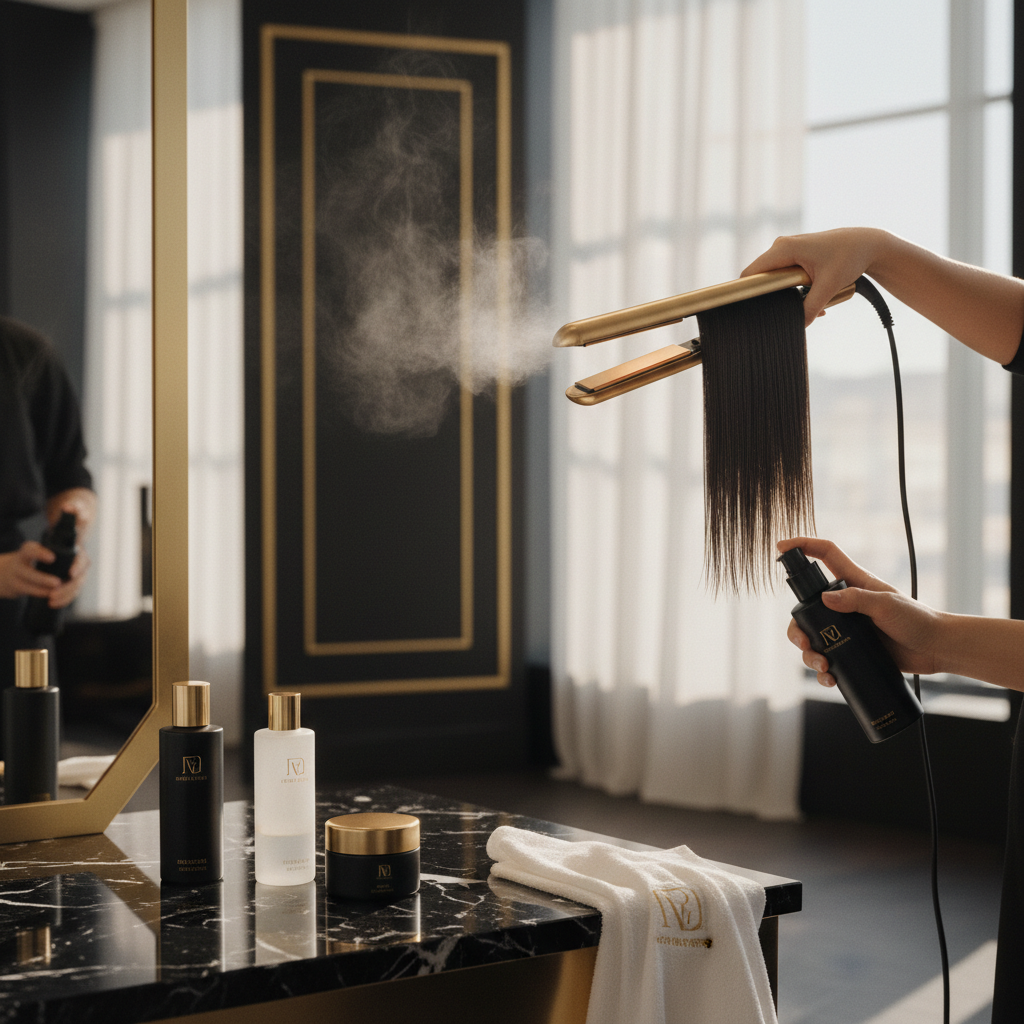
Quick answer: Understanding Thermal Styling Safety and Heat Protectants is essential for preventing irreversible structural degradation of the hair fibre. Thermal tools like flat irons and dryers expose hair to temperatures up to 230°C, causing protein denaturation, moisture loss, and cuticle lifting. Formulations with silicones, polymers, and proteins significantly reduce this heat transfer and friction, acting as a physical buffer. However, the main limitation is that heat protectants merely reduce the rate of damage rather than eliminate it entirely, making temperature control and technique vital.
Key takeaways
- Hair keratin undergoes irreversible denaturation and structural damage when exposed to temperatures above 160°C.
- Heat protectants work by distributing thermal energy evenly, reducing conduction rates, and smoothing cuticle friction.
- Applying direct heat to damp or wet hair causes rapid steam expansion, leading to structural void formation known as "bubble hair".
- Heat protectants significantly reduce cuticle chipping and moisture evaporation, but they cannot grant absolute immunity to heat damage.
- Thermal damage causes hair breakage along the shaft; it does not directly trigger follicular hair loss or shedding from the scalp.
Thermal Styling Safety and Heat Protectants: what the evidence shows
Cosmetic scientists and dermatologists evaluate Thermal Styling Safety and Heat Protectants by measuring the physical integrity of the hair shaft before and after heat exposure. Hair consists primarily of fibrous alpha-keratin proteins held together by disulfide cross-links, hydrogen bonds, and salt linkages, surrounded by an outer cuticle of overlapping scales.
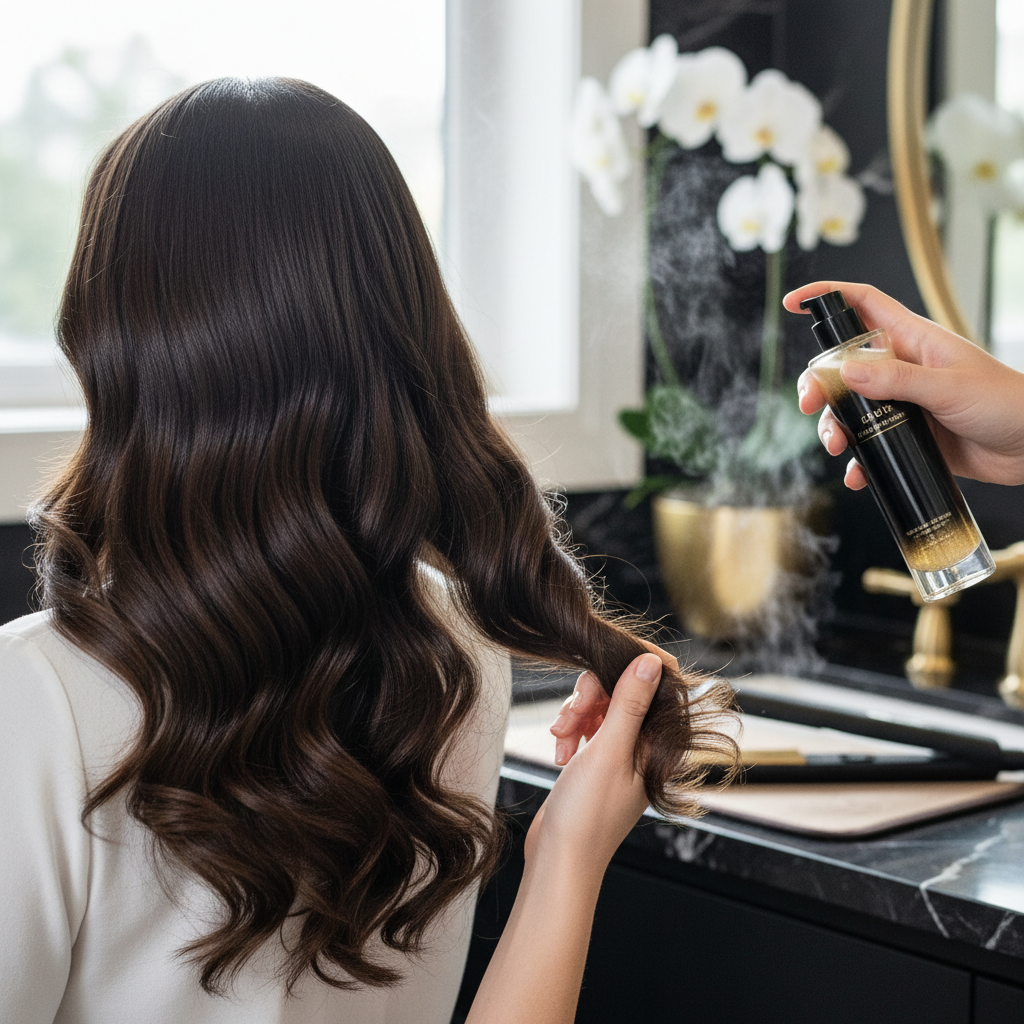
Peer-reviewed studies using differential scanning calorimetry (DSC) and scanning electron microscopy (SEM) reveal that high heat radically alters this anatomy. At temperatures between 140°C and 160°C, the hair fibre begins losing both surface and bound water. Once temperatures cross 160°C, the alpha-helical keratin proteins begin uncoiling into an amorphous beta-sheet structure, permanently reducing the fibre's tensile strength and elasticity.
Heat protectant formulations combat this degradation through several distinct mechanisms:
- Thermal dissipation and conduction resistance: Silicones such as dimethicone and amodimethicone possess low thermal conductivity. They create a fine hydrophobic barrier across the cuticle, slowing heat transfer into the inner cortex.
- Surface friction reduction: Polymers and conditioning agents smooth raised cuticle margins, reducing the mechanical drag of hot ceramic or titanium plates against the fibre.
- Evaporative buffering: Humectants and quaternised polymers form sacrificial films that absorb thermal energy and regulate moisture evaporation, preventing rapid, explosive desiccation.
- Cuticle sealing: By sealing the edges of the cuticle scales, protectants prevent the protective lipid layer (specifically 18-methyleicosanoic acid, or 18-MEA) from being stripped away as quickly during high-heat styling.
What the evidence does not show
Marketing claims often suggest that heat protectant sprays create an impenetrable shield, permitting unlimited styling at maximum temperatures. The scientific evidence directly contradicts this idea. Controlled laboratory studies show that while top-tier heat defence sprays can cut protein loss and surface cracking by 40% to 60%, they do not prevent damage completely. Repeated thermal cycling inevitably degrades the fibre over time.
Additionally, heat protectants do not repair existing cortex fractures or mend split ends. Split ends represent structural cleavage where the inner cortex has separated; no topical cosmetic product can re-fuse these broken fibres permanently. Finally, scientific literature does not support the idea that thermal damage causes follicular hair loss. Heat from styling tools snaps the hair shaft (breakage); it does not alter the follicular growth cycle underneath the scalp skin.
Mechanisms of thermal damage to the hair fibre
Bubble hair and steam expansion
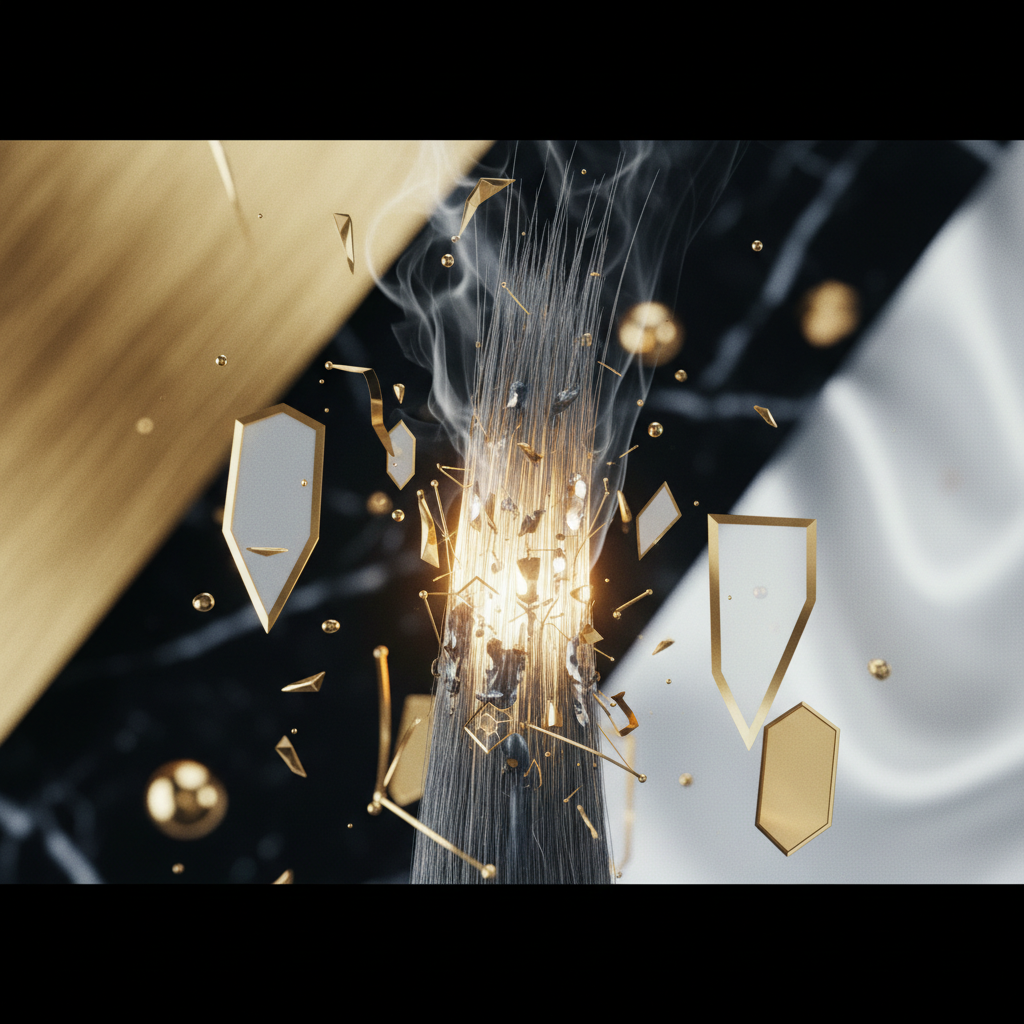
One of the most severe manifestations of thermal styling without safety controls is bubble hair. When flat irons (operating at 180°C to 230°C) touch damp hair, free water trapped inside the hair cortex boils instantly. This water vapour expands rapidly, forming microscopic gas bubbles within the hair shaft. These voids deform the fibre, causing it to snap with minimal physical tension.
Cuticle blistering and loss of 18-MEA
The epicuticle is coated in a thin layer of fatty acids known as 18-MEA, which gives virgin hair its natural hydrophobicity and shine. Excessive heat melts and strips this lipid coating. Without it, the edges of the cuticle scales curl upwards and blister, leaving the porous cortex exposed to ambient humidity, UV radiation, and environmental stress.
| Styling Tool | Typical Temperature Range | Primary Fibre Risk | Best Protectant Format |
|---|---|---|---|
| Hairdryer (Rough dry) | 60°C to 90°C | Surface dehydration, rough cuticle | Lightweight leave-in spray or lotion |
| Hairdryer with round brush | 80°C to 110°C | Mechanical drag and cuticle lifting | Conditioning thermal cream or emulsion |
| Curling tongs / wands | 150°C to 200°C | Keratin denaturation, lipid degradation | Silicone-rich spray or styling serum |
| Flat irons (straighteners) | 170°C to 230°C | Bubble hair, severe cortex embrittlement | Dedicated high-temp polymer barrier serum |
Signs of thermal damage to look for
Detecting heat degradation early allows you to adjust your routine before severe fibre snapping occurs. Key signs include:
- White bulbous flecks along the shaft: Often mistaken for dandruff or nits, these are trichorrhexis nodosa nodes, points where the cuticle has broken down and the cortex has frayed outwards.
- Loss of natural curl pattern: In wavy, curly, or coily hair, thermal denaturation changes the structural cross-links, leaving strands limp, stringy, and unable to form natural spirals.
- Extreme porosity: Damaged hair absorbs water instantly in the shower but dries abnormally quickly, feeling rough, dry, and straw-like to the touch.
- Excessive short breakage: Finding short pieces of hair on your clothes or counter without a white bulb at the root indicates shaft breakage rather than shed hair.
What you can do: best practices for thermal styling safety
Achieving safe thermal styling requires combining the right chemical barriers with careful mechanical technique.
- Dry completely before flat-ironing: Never use direct-contact tools like straighteners or curling wands on hair that feels even slightly cool or damp to the touch. Let hair air-dry or blow-dry smoothly beforehand.
- Cap your temperature settings: Most hair textures do not require tools set above 185°C to reshape hydrogen bonds. Fine, bleached, or fragile hair should rarely be styled above 150°C to 160°C.
- Apply protectant systematically: Section hair into four or more quadrants before spraying or smoothing protectant through. Surface-level misting leaves the inner strands unprotected against the iron.
- Minimise pass frequency: Make one slow, steady, controlled pass with an iron rather than multiple fast passes over the same section. Repeated thermal cycling accelerates lipid breakdown.
- Incorporate protein and conditioning care: Use deep conditioning treatments and leave-in products between heat styling sessions to replace lost moisture and improve tensile elasticity.
When the cause may be something else
If you notice widespread thinning, a widening parting, or clumps of hair coming out with a white bulb attached, the issue is not thermal breakage. Shedding from the scalp indicates a biological shift in the follicular growth cycle, such as telogen effluvium (triggered by stress, illness, or nutritional deficits) or androgenetic alopecia (pattern hair loss). In contrast, heat damage produces irregular fragments of broken hair shafts without any root bulb attached.
When to seek professional guidance
If your hair breaks off near the scalp despite using heat protectants and low temperatures, consult a qualified trichologist or dermatologist. Such fragility may point to an underlying structural issue, severe chemical over-processing, or nutritional deficiencies. Similarly, a professional stylist can trim away irreversible split ends and help calibrate tool temperatures to suit your specific hair diameter.
Supporting hair health from the roots with Watermans
While heat protectants coat the exterior fibre during styling, resilient hair begins at the scalp. Products by Watermans, such as the Grow Me Shampoo and Condition Me Conditioner, are formulated to support the scalp environment and condition the hair shaft with ingredients like biotin, caffeine, argan oil, and rosemary extract. Using nutrient-rich, strengthening washes helps keep hair looking fuller, glossier, and more resilient against daily mechanical and environmental stressors.
Thermal Styling Safety and Heat Protectants: an essential overview
Mastering Thermal Styling Safety and Heat Protectants comes down to balancing styling goals with your hair's physical limitations. Thermal protectants provide a measurable, lab-proven buffer that preserves the hair's lipid envelope, slows internal moisture evaporation, and reduces cuticle friction. When paired with sensible temperature controls, thorough drying before tool use, and regular conditioning, you can enjoy thermal styling while keeping structural breakage to an absolute minimum.
Frequently asked questions about Thermal Styling Safety and Heat Protectants
Do heat protectants work on both wet and dry hair?
Formulations vary. Light leave-in creams, lotions, and sprays are designed for damp hair prior to blow-drying. Dry-finish aerosol sprays or light silicone serums are engineered for dry hair immediately before flat-ironing or curling. Always check the application instructions on your product.
What is the maximum safe temperature when styling hair?
Scientific testing indicates that alpha-keratin denaturation accelerates rapidly above 160°C, and structural degradation is severe beyond 200°C. For fine, coloured, or compromised hair, keep temperatures between 130°C and 160°C. For coarser hair, aim not to exceed 185°C.
Can a heat protectant repair existing split ends?
No cosmetic formulation can permanently fuse split ends back together. Heat protectants lubricate the shaft and prevent existing splits from worsening, but the only permanent solution for a split end is cutting it off with sharp shears.
How do Thermal Styling Safety and Heat Protectants prevent bubble hair?
Thermal Styling Safety and Heat Protectants mitigate bubble hair by regulating moisture evaporation, but the most critical safety step is technique. Never use direct-contact flat irons on damp or wet hair. Allowing the hair to dry fully prevents trapped water from boiling into gas voids inside the cortex.
Sources and references
- Journal of Cosmetic Science: "Thermal analysis of hair: Dehydration and structural transitions" (2011)
- International Journal of Trichology: "Thermal damage to hair: Scanning electron microscopy findings" (2013)
- Journal of the Society of Cosmetic Chemists: "Heat-protective effects of polymers on human hair during thermal styling" (2009)
- British Journal of Dermatology: "Structural properties and lipid organization of the human hair cuticle" (2016)
Find these ingredients in Watermans products
- Biotin: you will find this ingredient in our Hair Growth Shampoo.