Thermal Protectants Mechanism and Efficacy: The Complete Science Guide
9 min read ·
Discover the science of Thermal Protectants Mechanism and Efficacy, exploring how heat sprays buffer high temperatures, reduce breakage, and shield keratin.
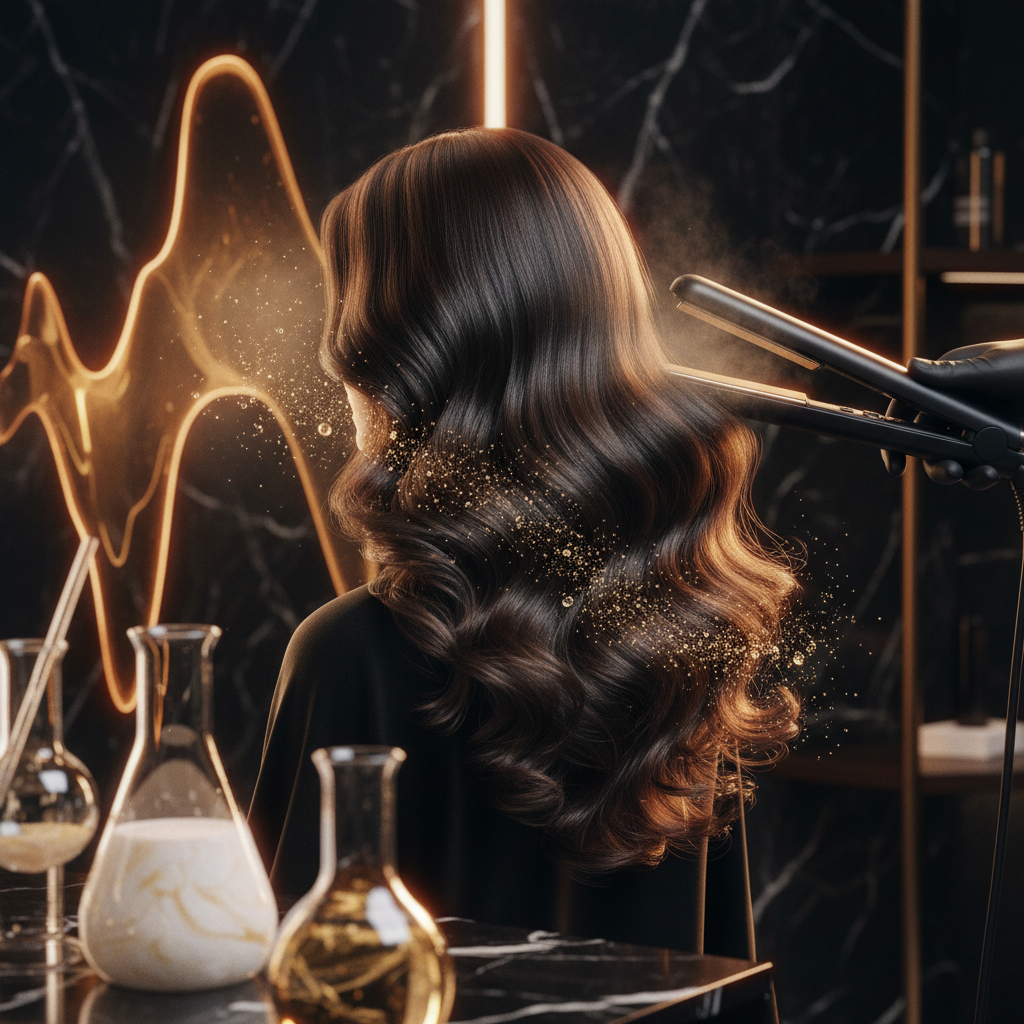
Quick answer: Understanding Thermal Protectants Mechanism and Efficacy reveals that heat styling sprays and serums reduce, but never fully eliminate, high-temperature hair damage. Thermal protectants work by distributing heat evenly across the hair shaft, slowing down thermal conduction, and sealing the cuticle with protective polymers and silicones. However, their main limitation is that they only buffer temperatures up to roughly 200°C to 230°C. They mitigate surface cracking and protein loss, but cannot make hair entirely immune to repeated, aggressive heat exposure.
Key takeaways
- Thermal protectants function as thermal buffers, evening out heat conduction and reducing the rate of heat transfer into the hair cortex.
- Film-forming polymers, silicones, and hydrolysed proteins seal the cuticle layer to slow moisture vaporisation and minimise structural lipid depletion.
- Typical consumer protectants reduce thermal damage by roughly 30% to 50% compared to unprotected hair, depending on the formulation and application method.
- No product provides 100% protection against temperatures exceeding 200°C, meaning direct thermal contact will still cause progressive structural degradation over time.
- Applying heat to damp hair without adequate protection induces "bubble hair", an irreversible structural deformation caused by rapidly expanding steam inside the cortex.
Thermal Protectants Mechanism and Efficacy: what the evidence shows
Scientific research into Thermal Protectants Mechanism and Efficacy demonstrates that these products provide a measurable physical barrier against heat-induced degradation. Hair keratin undergoes denaturation when exposed to excessive temperatures. The alpha-keratin helical structure begins destabilising between 140°C and 160°C, while complete degradation and irreversible protein breakdown occur beyond 220°C to 235°C.
When heat appliances touch unprotected hair fibres, the rapid temperature spike vaporises internal moisture, melts surface 18-methyleicosanoic acid (18-MEA) lipids, and cracks the outer cuticle scales. Controlled studies using scanning electron microscopy (SEM) and differential scanning calorimetry (DSC) confirm that applying polymer-based or silicone-based formulations significantly lowers cuticle cracking, reduces tryptophan degradation (a marker of protein breakdown), and preserves tensile strength.
The evidence proves efficacy is highest when products are distributed uniformly from root to tip. Incomplete coverage leaves unprotected zones that bear the brunt of thermal shock, leading to localised breakage along the hair fibre.
The biophysical mechanism of thermal protection
Thermal protectants rely on biophysical principles to shield the hair shaft from extreme heat sources such as flat irons, curling wands, and blow dryers.
1. Thermal conduction and dissipation
Ingredients such as dimethicone, amodimethicone, and various copolymer blends possess low thermal conductivity compared to direct metal or ceramic contact. When applied, they form a microscopic film over the cuticle. This film acts as an insulator, slowing the transfer of heat from the styling tool into the inner cortex. Instead of an instantaneous thermal shock, heat disperses more gradually across a broader surface area.
2. Moisture regulation and steam buffering
Natural hair contains roughly 10% to 15% water under ambient conditions. Sudden heating turns this unbound moisture into steam instantly. If the steam cannot escape gradually, the rapid volumetric expansion creates micro-cavities within the hair fibre, known clinically as "bubble hair". Thermal formulations regulate the rate of moisture evaporation, allowing water vapour to vent progressively rather than blasting through the cortex and cuticle.
3. Surface friction reduction and cuticle smoothing
Heated tools generate friction that mechanically abrades softened cuticles. Silicones and conditioning agents smooth the overlapping cuticle tiles and lower the coefficient of friction. This allows flat iron plates or styling brushes to glide effortlessly down the shaft, minimising mechanical snagging and cuticle stripping.
| Protective Ingredient Type | Primary Mechanism of Action | Temperature Resilience | Main Benefit to Fibre |
|---|---|---|---|
| Volatile Silicones (e.g., Cyclomethicone) | Spreads actives evenly, evaporates cleanly without heavy buildup | Up to 180°C | Facilitates slip; reduces tool drag and friction |
| Non-Volatile Silicones (e.g., Dimethicone) | Forms an insulating, hydrophobic barrier; slows heat transfer | Up to 230°C | Excellent heat insulation; preserves internal moisture |
| Hydrolysed Vegetable / Keratin Proteins | Cross-links temporarily with damaged sites; buffers cortex | Up to 200°C | Preserves tensile strength; reduces protein degradation |
| Quaternised Conditioning Polymers (Polyquaterniums) | Electrostatically binds to negatively charged, damaged cuticles | Up to 210°C | Smooths cuticle edges; prevents static and surface flyaways |
| Natural Plant Oils (e.g., Argan, Jojoba) | Lubricates fibre surface; provides mild emolliency | Varies (smoke points 160°C to 220°C) | Adds suppleness; should not replace engineered thermal polymers |
What the evidence does not show
It is vital to recognise what heat protection products cannot accomplish. Laboratory evidence does not show that thermal protectants offer total immunity against heat styling.
First, thermal protectants do not prevent damage if tools exceed the decomposition temperature of the protective film itself. Many consumer styling irons reach 230°C. At this threshold, both the cosmetic formulation and the hair's natural keratin matrix suffer thermal stress.
Second, protectants cannot repair split ends or reverse structural fracture once the cuticle has sheared off. Cosmetic silicones can temporarily glue fractured ends together until the next wash, but the underlying structural integrity is permanently compromised.
Finally, thermal protectants do not speed up the biological growth cycle or stop follicular shedding. Claims that a thermal spray treats hair loss are unfounded; they address fibre integrity and breakage along the shaft, not cellular activity inside the follicle.
Signs of thermal damage to watch for
Thermal stress manifests gradually before culminating in visible fibre breakage. Key diagnostic signs include:
- Cuticle roughness: The hair feels dry, rasping, or like straw when you slide your fingers from tip to root.
- Loss of natural elasticity: When gently stretched while damp, healthy hair extends and returns to its original length. Thermally degraded hair snaps easily under minimal tension.
- Colour fading and brassiness: High heat oxidises both natural melanin and artificial colour molecules, causing brunette tones to turn reddish or brassy and blonde hair to yellow.
- Persistent frizz and split ends: Trichoptilosis (longitudinal splitting) and cuticle peeling appear frequently, particularly on the vulnerable ends that receive repeated styling passes.
Best practices: how to maximise protective efficacy
To achieve the best results from your thermal protectant, application technique matters as much as the formula itself.
- Apply to damp hair before blow-drying: Distribute a lightweight leave-in protectant through towel-dried lengths using a wide-tooth comb to ensure every strand is coated.
- Never use hot irons on damp hair: Ensure hair is 100% dry before introducing high-heat direct contact tools like straighteners or curling wands. Sizzling sounds indicate internal water vaporising rapidly, which causes permanent cortex bubbling.
- Reapply a light mist before flat-ironing: If you blow-dry and then flat-iron, apply a dry thermal spray to shield against the secondary, higher-temperature pass.
- Lower your styling temperature: Fine or chemically processed hair rarely requires more than 150°C to 175°C. Thick, coarse hair should ideally remain below 200°C.
- One pass is plenty: Avoid running the iron down the same section of hair multiple times. One deliberate, slow pass causes less cumulative degradation than five hurried passes over the same section.
When fibre breakage is mistaken for hair shedding
People often confuse heat-induced hair breakage with biological hair loss. If you find short, snapped lengths of hair with no white bulb attached on your shoulders, pillowcase, or bathroom floor, you are experiencing mechanical and thermal breakage along the hair shaft.
In contrast, true hair shedding (telogen effluvium or androgenetic alopecia) originates from the scalp follicle, where shed strands display a distinct white keratinised bulb at one end. While thermal damage can make hair appear thin and sparse through mid-shaft breakage, it does not alter follicular growth cycles.
Supporting hair vitality: the Watermans approach
Maintaining healthy-looking hair requires caring for both the fibre and the scalp environment. While thermal protectants defend the hair shaft from appliance damage, long-term hair quality starts at the scalp where new growth forms.
Watermans focuses on non-invasive, premium scalp and hair care formulations designed to foster a healthy, balanced environment for growth. Incorporating gentle, nutrient-rich cleansing helps wash away thermal styling residues, silicones, and environmental pollutants without stripping natural moisture. By pairing proactive heat protection on the mid-lengths and ends with revitalising scalp care, you maintain fibre strength while keeping your hair looking fuller, thicker, and more resilient.
When to seek professional advice
If you observe sudden, patchy shedding, significant thinning at the crown, or a widening parting, consult a trichologist, dermatologist, or your GP. Thermal products can address brittle, snapping fibres, but they cannot treat hormonal hair thinning, nutritional deficiencies, or underlying scalp conditions like seborrhoeic dermatitis. Professional clinical evaluation ensures you identify whether your concerns stem from fibre damage or a follicular health issue.
Frequently asked questions about Thermal Protectants Mechanism and Efficacy
What is the primary science behind Thermal Protectants Mechanism and Efficacy?
The science relies on thermal insulation, friction reduction, and heat dissipation. Formulations containing silicones, polymers, and hydrolysed proteins coat the cuticle. This micro-layer slows heat conduction into the cortex, allows internal moisture to evaporate gradually, and minimises surface friction from hot tool plates, reducing structural keratin degradation.
Can natural oils replace commercial heat protectants?
No. While natural plant oils provide emolliency and surface lubrication, many have relatively low smoke points and lack the heat-distributing copolymer technology found in formulated protectants. Some pure oils can even fry the hair shaft if subjected to flat iron temperatures exceeding 180°C.
How much heat damage do thermal protectants actually prevent?
Laboratory testing demonstrates that thermal protectants typically reduce heat damage by roughly 30% to 50% compared to bare hair. They reduce cuticle fracturing and protein loss, but they do not provide 100% immunity against thermal degradation, especially at temperatures above 200°C.
Does a thermal protectant help with blow-drying as well as flat-ironing?
Yes. Blow dryers expose hair to indirect convective heat that dries out the cuticle and lifts scale edges. Thermal protectants lubricate the fibre, seal in baseline moisture, and shield against mechanical abrasion from round brushes during the drying process.
Can using too much thermal protectant damage your hair?
Excessive use does not cause heat damage directly, but heavy product buildup can leave hair dull, limp, and prone to flaking. Over time, silicone buildup can prevent moisture from penetrating the shaft unless removed periodically with an effective, clarifying wash.
Preserving fibre integrity through thermal awareness
Understanding Thermal Protectants Mechanism and Efficacy is essential for anyone who regularly uses heated styling appliances. While these products are indispensable tools that substantially minimise cuticle cracking, moisture shock, and structural protein degradation, they are buffers rather than absolute shields. Pair high-performance thermal protectants with sensible styling habits, lower heat settings, and a dedicated scalp care routine to maintain hair that looks vibrant, strong, and full of life.
Sources and references
- Journal of Cosmetic Science: Investigation of the thermal degradation of hair keratin and the protective effect of cosmetic ingredients (2011).
- International Journal of Cosmetic Science: Hair damage caused by thermal styling tools and the efficacy of protective polymers (2020).
- Society of Cosmetic Chemists: Heat-induced damage to hair cuticles and protective film mechanisms (2018).
- Dermatology and Therapy: Structural changes in human hair induced by heat styling appliances and protective strategies (2022).