Thermal Heat Protectants Guide: Evidence, Mechanisms, and Fibre Care
8 min read ·
This Thermal Heat Protectants Guide explains the biophysics of heat styling, how protective formulas work, their scientific limits, and how to prevent fibre breakage.
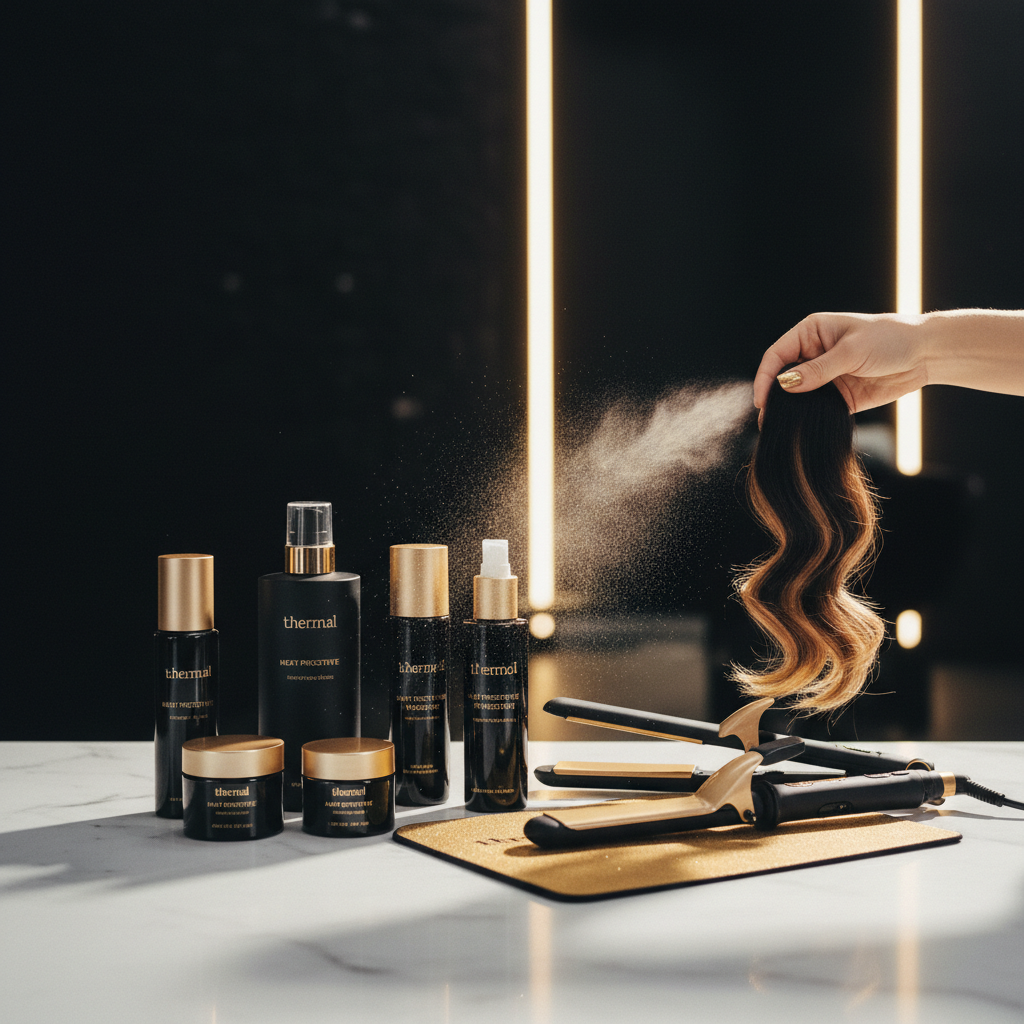
Quick answer: A Thermal Heat Protectants Guide helps you understand how cosmetic formulations shield hair shafts from extreme styling temperatures. Heat protectants work by slowing thermal transfer, sealing the cuticle layer, and preserving moisture within the cortex. However, their primary limitation is that no product offers complete thermal immunity. They reduce protein degradation and surface cracking by roughly 30 to 50 percent, but applying excessive heat or using hot tools on damp hair will still cause structural fracture and irreversible fibre breakage.
Key takeaways
- Heat styling tools routinely reach 185°C to 230°C, temperatures high enough to denature keratin proteins and melt surface lipids.
- Thermal protectants rely on film-forming silicones, quaternary polymers, and hydrolysed proteins to distribute heat evenly and slow thermal conduction.
- Applying heat to damp hair causes rapid water vaporisation inside the cortex, producing bubble hair and severe structural breakage.
- Protectants dramatically reduce surface cuticle friction and lipid loss, but they cannot prevent damage entirely if styling temperatures are too high.
- Fine, bleached, or chemically processed hair has a lower heat tolerance threshold and degrades at lower temperatures than coarse, virgin hair.
Thermal Heat Protectants Guide: what the evidence shows
This Thermal Heat Protectants Guide examines the biophysical limits of cosmetic heat defence. Peer-reviewed cosmetic science shows that exposing human hair to temperatures above 150°C triggers progressive, irreversible changes to the fibre. The outer lipid layer (18-methyleicosanoic acid or 18-MEA) strips away first, followed by thermal degradation of the alpha-keratin coiled coils inside the cortex at roughly 215°C to 235°C.
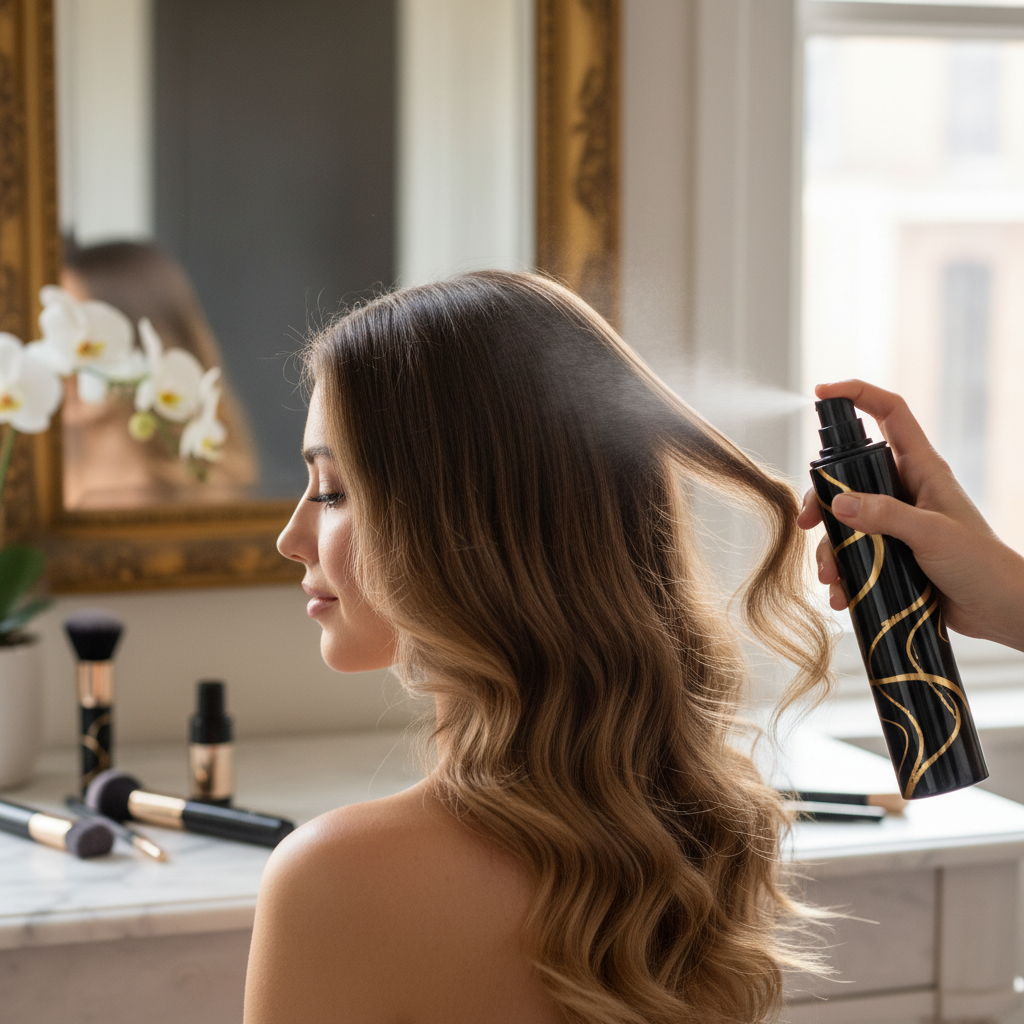
Controlled laboratory studies evaluate thermal protection by measuring changes in tensile strength, tryptophan degradation (a fluorescent amino acid within keratin), and cuticle integrity via scanning electron microscopy. Formulas containing specific polymers, such as dimethiconol, amodimethicone, and polyquaternium compounds, consistently demonstrate a measurable barrier effect. They lower the rate of thermal transfer to the inner cortex, preventing hot spots where irons linger on a single section.
Independent laboratory testing typically shows that well-formulated heat protectants reduce thermal-induced protein denaturation by 30 to 50 percent compared to unprotected hair exposed to the same temperatures. They also preserve moisture balance by reducing rapid water desorption, keeping the hair shaft more flexible and less prone to mechanical snap during styling.
How thermal protectants work at the fibre level
The mechanism of heat protection depends on physics and surface chemistry rather than biological repair. Hair is non-living tissue; once damaged, the keratin matrix cannot regenerate.
[Hot Tool Surface: 185°C - 230°C]
 │
 ▼
[Polymer / Silicone Heat Shield Film] <-- Distributes heat, reduces friction
 │
[Cuticle Layer (18-MEA Lipid Barrier)] <-- Shields scales from lifting / cracking
 │
[Cortex (Keratin Alpha-Helices)] <-- Prevents rapid water boil & protein melt
When you apply a thermal shield, three distinct mechanisms take place:
- Thermal Conduction Delay: Silicones like amodimethicone and dimethicone have very low thermal conductivity. They act as a physical buffer, ensuring the hair cortex heats up more gradually rather than experiencing a sudden thermal shock.
- Friction Reduction: Passing a flat iron plate over dry hair generates high mechanical friction, which shears lifted cuticle scales. Heat protectants deposit a lubricating film that lets ceramic or titanium plates glide smoothly, stopping physical abrasion.
- Moisture Vaporisation Regulation: Hydrolysed plant proteins and humectants bind temporary water to the cuticle exterior. When the tool passes over, this surface moisture absorbs thermal energy and evaporates first, sacrificing itself before structural water inside the cortex can boil.
What the evidence does not show
Thermal protectants are frequently marketed as absolute shields, leading to common misconceptions:
- They do not make hair impervious to 230°C heat. No cosmetic polymer can block all thermal energy from a metal plate clamped directly against a thin keratin fibre. High heat still degrades internal disulphide bonds.
- They cannot repair existing heat damage. Protectants are preventative. If your hair already suffers from split ends, raised cuticles, or white bulb fractures along the shaft, a heat spray cannot mend the broken protein backbone.
- They do not prevent "bubble hair" if hair is damp. Applying a protectant to damp hair and immediately using a flat iron will cause catastrophic internal steam expansion. Water expands over 1,500 times its liquid volume when converting to steam, forming physical cavities in the cortex that snap instantly.
| Protective Ingredient | Thermal Function | Best Suited For | Wash-Out Requirement |
|---|---|---|---|
| Amodimethicone | Selective polymer film; targets damaged, negatively charged sites | Bleached, porous, or chemically treated hair | Mild surfactant shampoo |
| Dimethicone | Heavy, highly lubricating thermal barrier; seals moisture | Coarse, thick, or frizzy hair | Clarifying or standard sulphate/sulfonate wash |
| Hydrolysed Wheat Protein | Penetrates outer cortex to maintain tensile elasticity | Fine, fragile, or breakable hair | Gentle shampoo |
| Polyquaternium-55 | Film-former with exceptional heat memory and hold | Fine to medium hair styled with curling wands | Standard cleansing |
| Natural Plant Oils (e.g., Argan) | Light lubrication; high smoke point buffers styling plate | Dry, wiry, or Afro-textured hair | Thorough surfactant wash |
Signs of thermal damage to watch for
Thermal stress presents distinct symptoms along the hair shaft. Because heat breaks the hair fibre rather than affecting the root, it must not be confused with follicle-driven hair loss. Look for these signs:
- Mid-shaft snapping: Small fragments of hair breaking off during brushing without a white bulb at the root tip.
- Loss of natural curl pattern: Wavy, curly, or coily textures appearing permanently straight, limp, or stringy in frequently heat-styled sections.
- Rough, raspy texture: Cuticles that have blistered or sheared off, leaving the hair feeling dry even when conditioned.
- Accelerated colour fading: Heat rapidly oxidises artificial pigment molecules and degrades natural melanin, creating brassy or washed-out tones.
- High porosity: Hair that absorbs water instantly in the shower but dries into a brittle, frizzy state within minutes.
Practical steps for effective heat styling
To minimise thermal stress and get the most from protective formulations, use this systematic approach:
- Dry thoroughly first: Ensure hair is 100 percent dry before introducing flat irons or curling tongs. Rough dry or blow-dry on medium heat with a directional nozzle held at least 15 cm from the fibre.
- Section before spraying: Do not mist a light cloud over the top of your head and assume every strand is covered. Divide hair into manageable sections (around 2 to 4 cm wide) and apply the protectant evenly from mid-lengths to ends.
- Match tool temperature to fibre diameter:
- Fine, fragile, or bleached hair: 150°C to 170°C
- Medium or naturally healthy hair: 170°C to 190°C
- Coarse, thick, or resistant hair: 190°C to 200°C (rarely should any hair exceed 200°C)
- One deliberate pass: Moving a hot tool smoothly and slowly down the hair strand once causes far less cumulative damage than repeatedly running an iron over the same section three or four times.
- Incorporate regular clarifying: Heat protectant films, especially silicones and conditioning agents, accumulate on the cuticle over time. Cleanse with an effective shampoo weekly to prevent heavy product build-up that impedes moisture entry.
When breakage is mistaken for hair shedding
People often see short strands accumulating on their clothing or in their hairbrush and assume they are experiencing alopecia or excessive shedding. It is vital to tell these apart:
- Hair shedding (telogen effluvium): The hair falls from the root follicle, showing a distinct small, white keratin bulb at the end. The strand equals your full hair length.
- Heat breakage: The strand is noticeably shorter than your typical length, has blunt or ragged ends, and possesses no root bulb.
If you are losing full-length hairs with white bulbs at an accelerated rate (more than 100 to 150 per day), the cause is likely physiological, nutritional, hormonal, or stress-related, rather than hot tool damage. In such cases, consult a registered trichologist or your GP. If the strands are short, jagged, and snap under minimal tension, heat degradation is the primary culprit.
Supporting heat-stressed hair with Watermans
When hot tools have compromised your hair's surface integrity, supporting the scalp and fibre resilience becomes essential. Watermans Grow Me Shampoo and Condition Me Conditioner provide a targeted, topical approach to revitalise tired-looking lengths. Formulated with hydrolysed lupin protein, biotin, niacinamide, and caffeine, the range works to condition the cuticle and supply structural moisture to brittle strands. Using these formulas alongside lower heat settings helps reinforce hair against daily mechanical wear, leaving lengths looking fuller, softer, and more manageable.
Frequently asked questions about Thermal Heat Protectants Guide
Do heat protectants completely prevent styling damage?
No. As outlined in this Thermal Heat Protectants Guide, cosmetic protectants only minimise heat transfer and reduce surface friction. They typically mitigate thermal protein loss by 30 to 50 percent. Exposing hair to temperatures above 200°C will degrade internal keratin and strip surface lipids regardless of which protectant you apply.
Can I use a thermal protectant on wet hair before flat ironing?
You can apply a protectant to wet hair before blow-drying, but you must never use flat irons or curling wands on wet or damp hair. Clamping hot plates onto moist strands boils water trapped inside the cortex, causing steam blisters, severe bubbling, and irreversible fibre breakage.
What is the ideal temperature for heat styling?
For fine, colour-treated, or porous hair, keep styling tools between 150°C and 170°C. For healthy, medium-textured hair, stay between 170°C and 185°C. Very coarse or resistant hair can tolerate up to 200°C. Styling temperatures should not exceed 210°C, as keratin denatures rapidly past this point.
Are silicones necessary in heat protectants?
While not strictly mandatory, silicones like amodimethicone and dimethicone are among the most effective ingredients for heat defence. They have exceptionally low thermal conductivity, high smoke points, and superior slip, allowing plates to glide smoothly without tearing cuticles. Non-silicone alternatives rely on specialised film-forming polymers and hydrolysed proteins.
Summary
Understanding how to care for your hair requires an honest look at styling habits, and this Thermal Heat Protectants Guide confirms that sensible heat application is non-negotiable. While high-grade protectants form an invaluable buffer that preserves cuticles and reduces protein loss, they cannot compensate for careless technique or extreme temperatures. By pairing quality protective formulations with moderate heat settings, fully dried strands, and gentle cleansing, you can achieve your desired style while maintaining long-term fibre strength and shine.
Sources and references
- Journal of Cosmetic Science, "Thermal degradation of hair keratin: a review of damage mechanisms and protective strategies", 2011.
- International Journal of Cosmetic Science, "The effect of heat styling on hair properties and the protective efficacy of hair care products", 2018.
- Society of Cosmetic Scientists (SCS), "Principles of Hair Care Formulation and Thermal Protection", 2020.
- British Association of Dermatologists, "Hair Breakage and Cosmetic Hair Damage Overview", 2022.
Find these ingredients in Watermans products
- Biotin: you will find this ingredient in our Hair Growth Shampoo.
- Niacinamide: you will find this ingredient in our Hair Mask.