A Guide to Thermal Heat Damage and Keratin Denaturation
8 min read ·
Discover the science behind Thermal Heat Damage and Keratin Denaturation, how high temperatures break down hair proteins, and how to protect your strands.

Quick answer: Thermal Heat Damage and Keratin Denaturation occurs when hot styling tools alter the physical and chemical structure of hair proteins. When temperatures exceed 140°C, the natural alpha-helical keratin begins to unwind into disordered beta-sheet structures, leading to moisture loss, cuticle blistering, and brittle fibres. The main limitation is that fully denatured keratin cannot be biologically regenerated. While cosmetic conditioning agents can patch the surface and improve tensile elasticity, preventing thermal stress remains the only way to preserve the structural integrity of the hair shaft.
Key takeaways
- Hair keratin undergoes phase transitions under heat: reversible dehydration begins around 100°C, while irreversible protein denaturation occurs between 140°C and 230°C.
- Applying direct heat to damp hair causes rapid steam expansion inside the cortex, creating microscopic cavities known clinically as bubble hair.
- Thermal degradation permanently disrupts cystine disulfide cross-links, leaving hair porous, inelastic, and prone to mechanical snapping.
- Heat protectants work by lowering thermal conductivity, distributing heat evenly, and reducing surface friction, but they do not make hair impervious to excessive temperatures.
- Damaged hair fibres cannot heal biologically; management relies on protective styling, regular trims, and bond-building cosmetic conditioners.
Thermal Heat Damage and Keratin Denaturation: what the evidence shows
Research into hair physics demonstrates that hair is primarily made of keratin, a fibrous, insoluble protein rich in the amino acid cystine. These protein chains form organized coiled springs called alpha-helices, held together by hydrogen bonds, salt bridges, and covalent disulfide bonds.
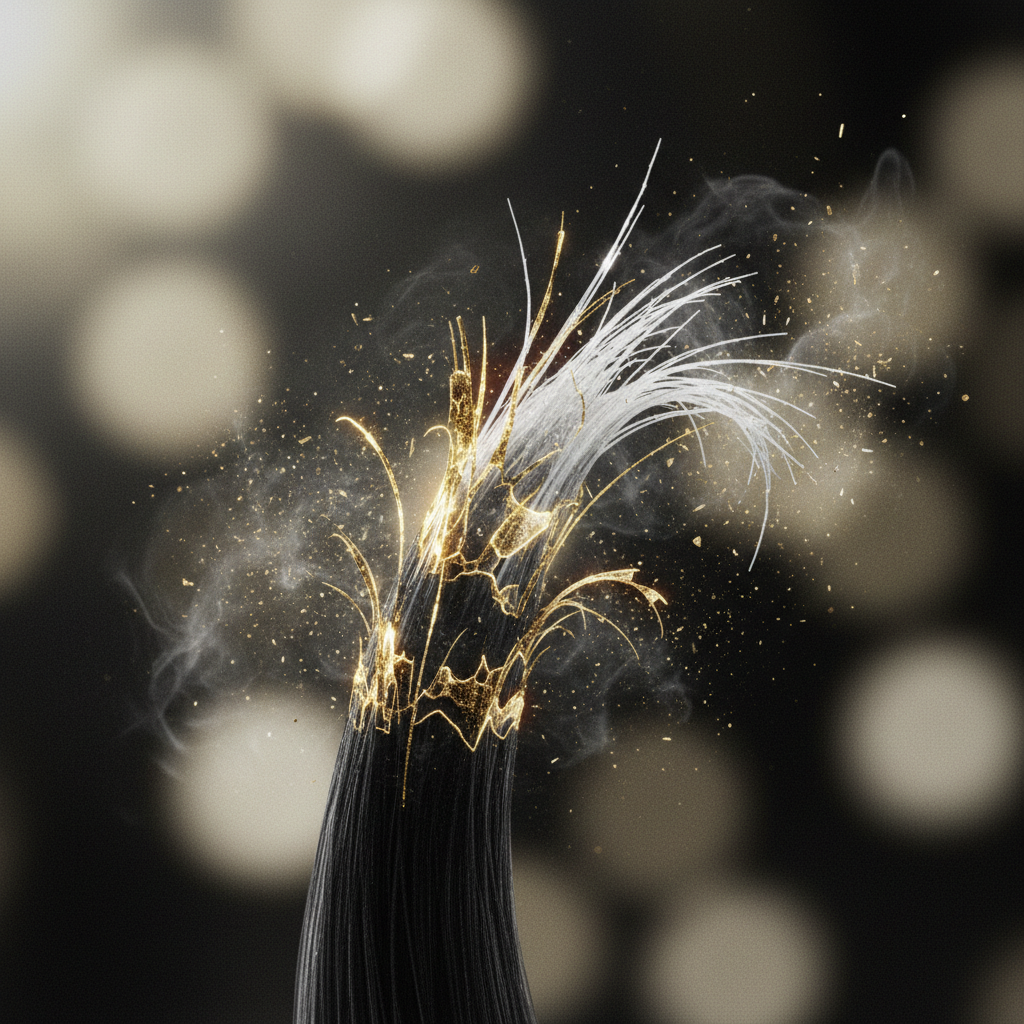
Thermal Heat Damage and Keratin Denaturation describes the progressive breakdown of these structural bonds under extreme temperatures. Studies using differential scanning calorimetry (DSC) reveal that dry hair keratin begins to denature at roughly 215°C to 230°C. However, when hair is chemically treated, porous, or contains moisture, the denaturation threshold drops sharply, sometimes occurring at temperatures as low as 140°C to 155°C.
During this denaturation process, the organised alpha-helices permanently unfold into random beta-sheet configurations. When this happens, hair loses its mechanical strength and elasticity. The fibre can no longer stretch and return to its resting state, resulting in severe snapping and split ends during routine brushing.
| Temperature Range | Structural Effect on Hair Fibre | Reversibility |
|---|---|---|
| Below 100°C | Temporary moisture evaporation; hydrogen bonds break and reform upon cooling. | Fully reversible |
| 100°C to 140°C | Complete free-water loss; initial softening of cuticular lipid layers (18-MEA). | Mostly reversible with hydration |
| 140°C to 190°C | Alpha-keratin begins unfolding to beta-sheet; cystine degradation starts; colour fade. | Irreversible structural change |
| 190°C to 230°C | Extensive keratin denaturation; disulfide bond cleavage; cuticle melting and cracking. | Irreversible structural breakdown |
| Above 230°C | Thermal pyrolysis; complete carbonisation and disintegration of the protein matrix. | Total fibre destruction |
The biological and physical mechanism of heat damage
Hair consists of three concentric layers: the outer protective cuticle, the thick structural cortex, and the central medulla. Heat affects each layer differently, compounding damage from the outside inward.
Cuticle degradation and lipid stripping
The outer layer of the hair shaft is sealed by a thin mono-molecular lipid layer composed primarily of 18-methyleicosanoic acid (18-MEA). This layer makes virgin hair naturally hydrophobic, causing water to bead off the surface. Thermal tools operating above 160°C melt and degrade these surface lipids.
Without this protective coating, the cuticle scales lift, crack, and chip away. This increases the coefficient of friction along the hair shaft, making adjacent strands catch against one another, leading to severe tangling and comb-induced mechanical breakage.
Cortex destruction and "bubble hair"
The cortex accounts for approximately 85 percent of the total weight of the hair fibre and houses all the tensile strength. When curling wands or flat irons are applied to hair that retains free water, an explosive phenomenon occurs.
Water trapped within the cortex boils instantly, converting to steam. Because the vapour expands faster than it can escape through the dense cuticle, it forces open microscopic voids in the soft cortex. Under light microscopy, these appear as physical bubbles within the hair shaft, a condition known as bubble hair deformity. Hair afflicted with bubble hair is exceptionally weak and fractures at the site of each bubble under minimal tension.
Disulfide bond oxidation
Keratin's resilience relies on disulfide bridges formed between pairs of cysteine amino acids. High heat oxidises these bonds, converting cystine into cysteic acid. Once oxidized, these cross-links cannot reform spontaneously. The internal protein matrix softens permanently, causing hair to feel limp, gummy when wet, and straw-like when dry.
Signs of thermal damage vs other hair conditions
It is essential to separate thermal breakage from genuine hair shedding or thinning. Thermal tools damage the dead, non-living fibre (the hair shaft); they do not cause medical hair loss at the follicle level unless a scalding hot tool physically burns the scalp skin.
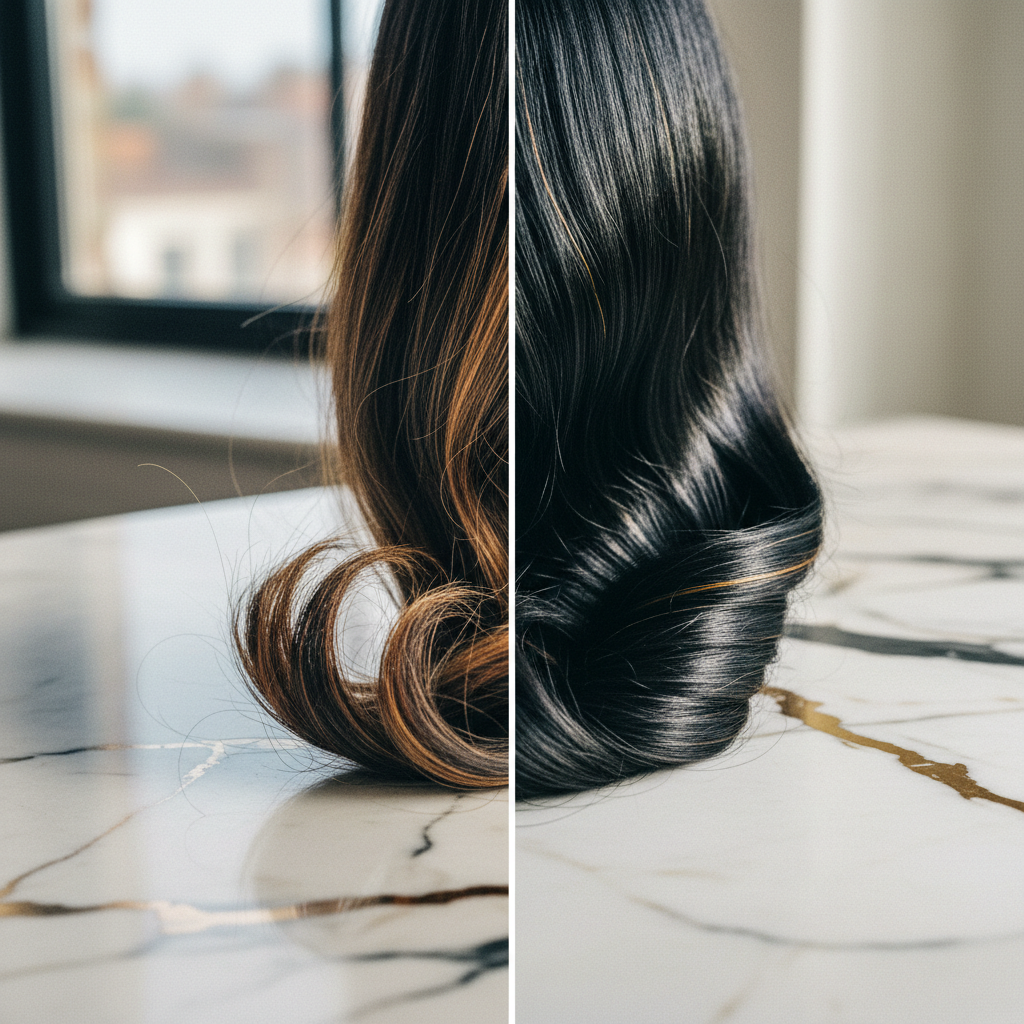
- Split ends (Trichoptilosis): Heat breaks down the intercellular cement holding cortical cells together, causing the strand to fray longitudinally at the tip.
- White dots (Trichorrhexis nodosa): Microscopic nodes where the cuticle has vanished and cortical fibres have frayed outwards like two brooms pushed together. The hair snaps easily at these points.
- Loss of curl pattern: In naturally curly or coily hair, the permanent denaturation of alpha-helices causes heat-trained curls to become loose, uneven, or completely straight.
- High porosity: Damaged hair absorbs water instantly like a sponge but dries out just as rapidly, remaining dull and rough to the touch.
If you are noticing large quantities of whole hair strands accumulating on your pillow or shower drain with small white bulbs at the base, you are experiencing follicular shedding (telogen effluvium or androgenetic thinning), not thermal shaft breakage.
What the evidence does not show
There is no scientific evidence that dead keratin fibres can be revitalised, fed, or healed through topical vitamins, natural oils, or organic masks. Keratin in the hair shaft contains no living cells, blood supply, or metabolic activity. Once structural bonds denature, the change is permanent.
Furthermore, laboratory testing demonstrates that cosmetic heat protectant sprays do not offer 100 percent insulation. High-grade silicones (such as dimethicone and amodimethicone) and polyquaternium polymers slow down the rate of heat transfer and smooth the surface, but they cannot prevent internal protein denaturation if a flat iron is held on one section for several seconds or set above 200°C.
Practical steps to prevent protein denaturation
Because keratin denaturation cannot be biologically reversed, defence and prevention are vital.
- Dry hair thoroughly before using heated irons: Ensure hair is 100 percent dry before touching it with a flat iron or curling tong to avoid steam expansion and bubble hair.
- Cap your temperatures: For fine or chemically processed hair, keep styling tools between 150°C and 170°C. For coarse, thick hair, do not exceed 185°C to 190°C. No consumer hair type requires 230°C.
- Use protective film-formers: Always apply an evenly distributed leave-in heat defence formula containing silicones or heat-stable polymers before applying hot airflow or plates.
- Minimise dwell time: Glide your styling tool steadily through each section in a single, smooth pass. Holding hot plates clamped in one spot causes localized thermal hotspots that instantly cook the cortex.
- Incorporate regular micro-trims: Trimming 5 to 10 mm every 8 to 12 weeks removes worn, split ends before the structural fractures migrate upwards toward the root.
Supporting distressed hair fibres
When styling routines have left hair feeling dry and depleted, incorporating restorative cleansing and conditioning can help mitigate friction and reduce ongoing mechanical breakage. Watermans offers nutrient-rich formulations such as GrowMe Shampoo and ConditionMe Conditioner, designed to support the appearance of hair density while coating individual shafts with smoothing, conditioning emollients. While no cosmetic product can re-knit severed keratin molecules, improving moisture retention and surface lubrication significantly reduces the comb resistance that snaps compromised hair.
Frequently asked questions about Thermal Heat Damage and Keratin Denaturation
What is the primary cause of Thermal Heat Damage and Keratin Denaturation?
Thermal Heat Damage and Keratin Denaturation is primarily caused by exposing hair to temperatures above 140°C using hot styling tools such as flat irons, curling tongs, and high-heat blow dryers. These temperatures degrade protective surface lipids, vaporise internal water, and permanently unfold the organized alpha-helical protein matrix into disordered beta-sheet chains.
Can denatured keratin in hair be repaired naturally?
No, denatured keratin cannot be repaired naturally. Hair is non-living tissue without cellular metabolism, meaning it cannot regenerate damaged protein structures. While leave-in treatments, hydrolyzed proteins, and cosmetic bond-builders can temporarily patch cracks and improve surface tensile strength, the underlying structural damage remains until that section of hair is trimmed away.
Does blow-drying cause the same damage as a flat iron?
Blow dryers generally operate between 60°C and 100°C, remaining well below the rapid denaturation threshold of dry keratin. However, holding a concentrator nozzle directly against wet hair can cause surface cuticle cracking and water bubble damage. Flat irons apply direct conduction heat between 160°C and 230°C, posing a vastly higher risk of immediate protein denaturation.
Can thermal damage cause hair loss at the scalp?
Thermal styling tools do not cause medical hair loss or follicular shedding unless a hot iron physically burns the scalp skin, which can damage hair follicles and cause scarring alopecia. Otherwise, heat damage is confined strictly to the hair shaft, causing mid-shaft snapping and split ends that may mimic thinning.
Moving forward with heat styling
Understanding Thermal Heat Damage and Keratin Denaturation allows you to balance your desired styling results with long-term fibre preservation. Hair keratin possesses remarkable natural tensile strength, but its tolerance to heat is strictly defined by physical thresholds. Once temperatures breach the point of structural denaturation, internal bonds break down permanently. By respecting temperature ceilings, drying hair thoroughly before using direct heat, and protecting the surface cuticle, you can enjoy styled, resilient hair without compromising its structural integrity.
Sources and references
- Journal of Cosmetic Science, "Thermal analysis of hair keratin", 2004.
- International Journal of Cosmetic Science, "The effect of heat on hair chemical and physical properties", 2011.
- Journal of the Society of Cosmetic Chemists, "Thermal degradation of hair keratin", 1998.
- British Journal of Dermatology, "Bubble hair and other thermal styling injuries", 1994.