Hair Shaft Anatomy: Understanding the Inner Structure of Your Hair
9 min read ·
Explore the biological layers of hair shaft anatomy, from the protective cuticle to the cortex and medulla, and discover how to prevent structural damage.
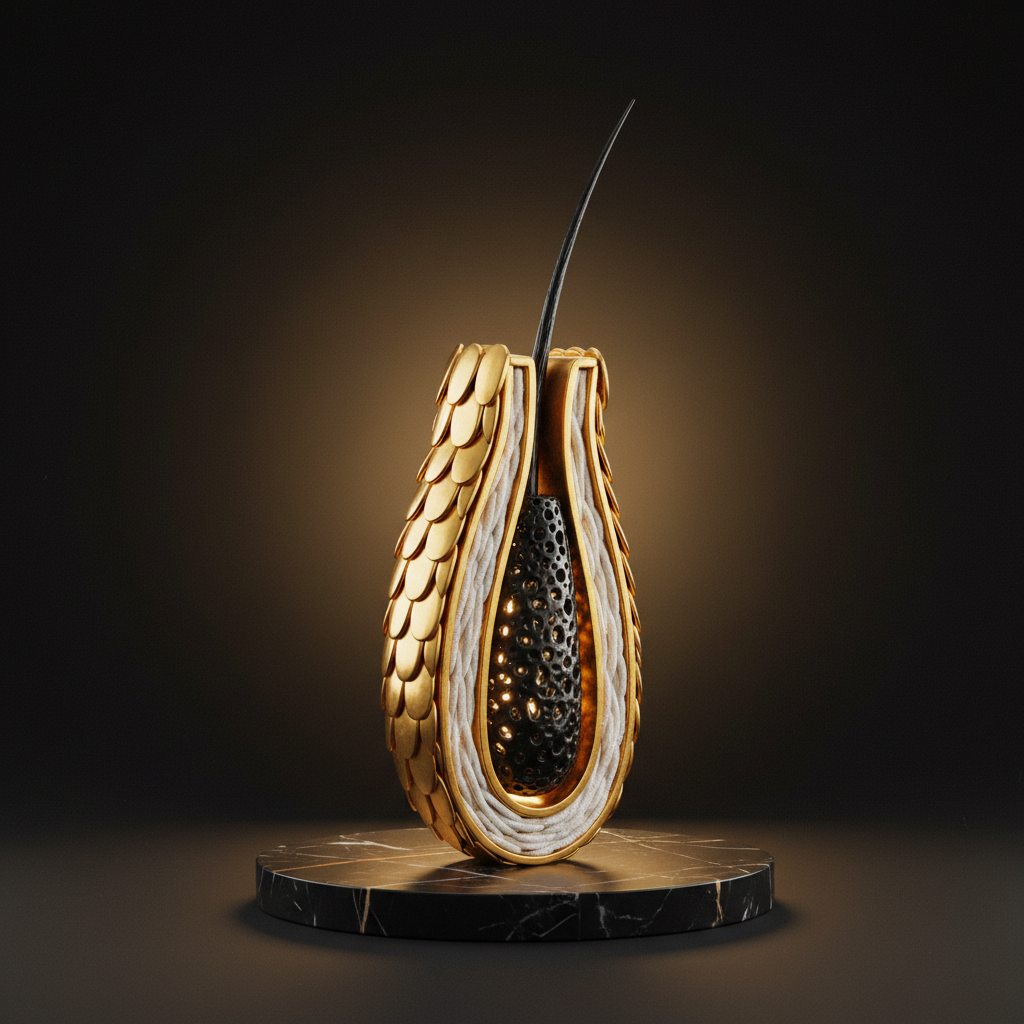
Quick answer: Hair shaft anatomy refers to the physical architecture of the non-living protein fibre extending above the scalp surface. Human hair fibres consist of three concentric layers: an outermost protective cuticle, a structural cortex that provides tensile strength and pigment, and an innermost central medulla. Understanding hair shaft anatomy helps explain why damaged hair cannot biologically heal itself; because the shaft lacks living cells, blood supply, and nerve endings, maintenance relies entirely on external physical and cosmetic protection against structural breakdown.
Key takeaways
- The hair shaft is biologically non-living tissue made primarily of alpha-keratin (around 85% to 90%), water, lipids, and trace melanin.
- The three concentric layers of hair shaft anatomy are the cuticle (outer barrier), cortex (core bulk and strength), and medulla (innermost core, often intermittent or absent in fine hair).
- Cuticle integrity dictates shine, porosity, and friction; lifting or chipping of cuticle scales exposes the cortex to mechanical and chemical trauma.
- Disulphide bonds within the cortex give hair its elasticity and resilience, but chemical treatments and excessive heat permanently break these linkages.
- Because hair fibres have no cellular turnover or metabolic repair systems, cuticle wear and cortex degradation accumulate over time and require proactive cosmetic preservation.
Hair shaft anatomy: what the evidence shows
Human hair shaft anatomy represents a complex composite structure evolved to protect the scalp from ultraviolet radiation and regulate physical abrasion. The shaft emerges from the hair follicle, where living matrix cells divide, differentiate, keratinise, and undergo programmed cell death. By the time the fibre clears the follicular opening, it is completely non-living, composed of compacted, cornified protein packages.
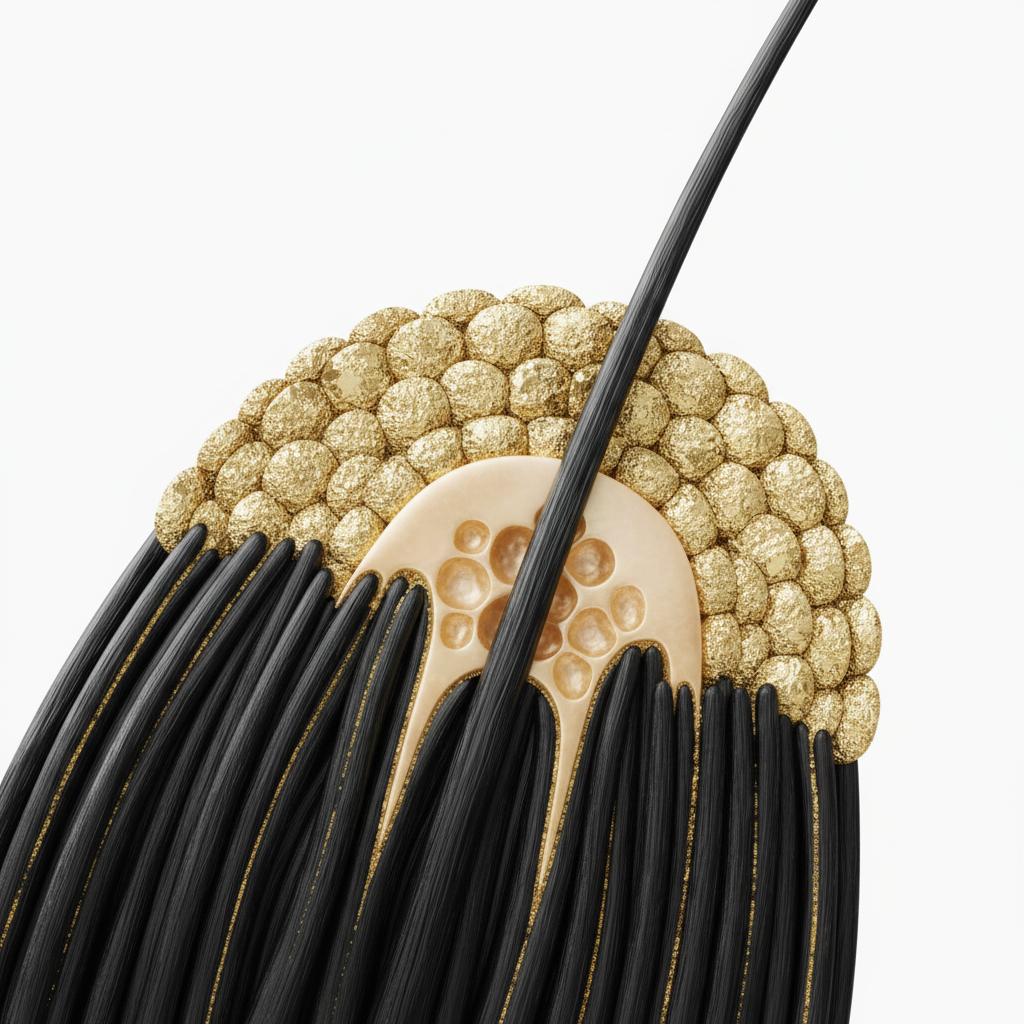
Cross-sectional examinations consistently show that the diameter of a human hair shaft ranges between 40 and 120 micrometres, depending on genetics, ethnicity, and follicle shape. The entire fibre is organised into three distinct biological compartments.
 [ Cuticle ] Outer protective shingles (5 to 10 overlapping layers)
 │
 [ Cortex ] Middle structural bulk (keratin microfibrils + melanin)
 │
 [ Medulla ] Innermost central core (porous, air-filled spaces)
1. The Cuticle: outer defensive armour
The cuticle serves as the chemical and physical barrier for the fibre. It consists of 5 to 10 overlapping, flattened scale-like cells that point toward the hair tip, resembling shingles on a roof.
Each cuticle cell is roughly 0.3 to 0.5 micrometres thick. Modern electron microscopy reveals that each cell features three distinct sub-layers:
- The Epi-cuticle: The outermost envelope, rich in cystine (roughly 12% to 15%) and coated with the 18-methyleicosanoic acid (18-MEA) lipid layer, which provides hydrophobicity and surface lubricity.
- The Exo-cuticle: A highly cross-linked protein layer containing roughly 30% cystine, providing rigid mechanical resistance.
- The Endo-cuticle: The inner sub-layer with low cystine content (around 3%), which swells readily in water and is structurally softer.
Between individual cuticle cells lies the Cell Membrane Complex (CMC), a lipid-protein mortar containing ceramides, free fatty acids, and cholesterol that cements the scales together.
2. The Cortex: strength, elasticity, and colour
The cortex accounts for approximately 80% to 90% of the total hair shaft volume. It provides the fibre with its mechanical strength, flexibility, and natural colour.
The cortex consists of elongated spindle-shaped cortical cells aligned parallel to the fibre axis. Within these cells lie macrofibrils, which are dense bundles of intermediate filaments (microfibrils) embedded in an amorphous, cystine-rich protein matrix. The microfibrils consist of low-sulphur alpha-keratin arranged in coiled-coil helical structures.
The cortex also houses melanin granules, which determine natural hair colour:
- Eumelanin: Granular pigments responsible for black and brown tones.
- Pheomelanin: Diffuse pigments responsible for red and warm yellow tones.
Intercellular CMC runs throughout the cortex as well, bonding the cortical cells together.
3. The Medulla: the variable core
The medulla is the innermost column of the hair shaft. It consists of loosely packed, vacuolated cells separated by air pockets.
Interestingly, the medulla is not present in all hairs. It is frequently fragmented or entirely absent in fine hair and common in thick, coarse, or beard hair. While researchers suspect it may play a minor role in thermal insulation, it contributes minimally to the mechanical strength or elasticity of the hair fibre.
Chemical bonds within the hair shaft
The structural integrity of hair shaft anatomy depends on three distinct types of chemical bonds within the cortical matrix:
- Disulphide bonds: Covalent linkages formed between two cysteine amino acid residues (forming cystine). These strong bonds resist water, normal heat, and stretching. They can only be altered chemically via reducing agents (such as permanent waves or relaxers) or broken irreversibly by high-lift bleaching and extreme heat.
- Hydrogen bonds: Weak, electrostatic attractions between polar groups in adjacent protein chains. While individual hydrogen bonds are weak, their sheer number accounts for significant elasticity. They are broken easily by water and reform as hair dries, which explains temporary thermal styling.
- Salt (ionic) bonds: Electrostatic linkages between acidic and basic amino acid side chains. These bonds depend heavily on pH; they remain strongest within the natural isoionic point of hair, between pH 3.67 and 5.5.
| Structural Layer | Primary Composition | Key Role | Susceptibility to Damage |
|---|---|---|---|
| Cuticle | Keratinised scales, 18-MEA lipid layer, CMC | Protects interior, controls porosity, prevents friction | Lifted by high pH, stripped by bleaching, chipped by brushing |
| Cortex | Alpha-keratin microfibrils, cystine matrix, melanin | Tensile strength, elasticity, elongation, colour | Degraded by UV radiation, broken down by chemical relaxers and heat |
| Medulla | Amorphous proteins, lipid droplets, air voids | Minor thermal insulation | Generally unaffected by surface cosmetic stressors |
What the evidence does not show
There are several persistent misconceptions regarding hair shaft anatomy:
- The shaft cannot absorb "nutrients" to grow: The hair shaft is non-living tissue. Applying vitamins, minerals, or botanical extracts to the mid-lengths and ends cannot make the fibre grow faster or alter its genetic diameter. Fibre production occurs solely inside the living follicle below the scalp surface.
- Split ends cannot be permanently mended: When the cuticle wears away, cortical fibres unravel at the tip (trichoptilosis). Cosmetic serums and polymers can temporarily glue these fibres together using surface film-formers, but no product can rebuild cellular cohesion. The only permanent resolution is trimming.
- Hair does not "breathe": Hair fibres do not respire or consume oxygen. Coating the shaft with silicones, cosmetic plant oils, or styling polymers does not "suffocate" the hair shaft.
Mechanisms of hair shaft degradation
When the hair fibre exits the scalp, it is in its most pristine structural state. Over time, physical, chemical, and environmental forces degrade the hair shaft anatomy through predictable mechanisms:
- Weathering: Regular ultraviolet (UV) light exposure oxidises cystine to cysteic acid, bleaches melanin granules, and degrades cortical proteins.
- Hygral fatigue: The repeated swelling and contraction of the inner cortex when wet, which places continuous mechanical stress on the overlying cuticle scales.
- Frictional wear: Towel drying, brushing, and backcombing mechanically shear off the protective 18-MEA layer and lift cuticle edges, exposing the delicate cortex beneath.
- Thermal denaturing: Using hot tools above 185°C to 200°C boils moisture trapped inside the cortex and denatures alpha-keratin helices into fragile beta-keratin, permanently weakening fibre elasticity.
Maintaining structural fibre integrity
Because the hair shaft cannot biologically heal, care routines must focus on preventative surface conditioning and protective maintenance.
- Manage moisture and pH balance: Use cleansing products formulated near the natural pH of hair (pH 4.5 to 5.5) to keep the cuticle scales lying flat and reduce swell during washing.
- Replenish lost surface lipids: Apply conditioners containing cationic surfactants (such as behentrimonium chloride) and cosmetic oils to mimic the natural 18-MEA layer, reducing friction and static charge.
- Shield against high temperatures: Always apply heat protectants containing film-forming polymers before blow-drying or heat styling. These ingredients evenly distribute heat and slow thermal transfer into the cortex.
- Handle wet hair gently: Hair loses up to a third of its tensile strength when saturated with water because hydrogen bonds are temporarily detached. Use wide-tooth combs or flexible detangling brushes on damp strands.
Supporting hair condition with Watermans
While hair shaft anatomy involves dead keratin that cannot metabolise ingredients, the health of newly forming hair fibres depends heavily on the condition of the scalp and follicle.
Watermans Grow Me Shampoo and Condition Me Conditioner provide a targeted, topical approach to modern hair maintenance. The formulations are pH balanced to support cuticle alignment while cleansing away sebum, residue, and environmental debris from the follicular opening. The inclusion of hydrolysed lupin protein, biotin, rosemary extract, and niacinamide helps reinforce the feel of hair fibres while delivering lightweight surface conditioning that protects the outer cuticle against everyday breakage and mechanical stress.
Frequently asked questions about Hair Shaft Anatomy
What is the primary protein found in hair shaft anatomy?
The primary protein in hair shaft anatomy is alpha-keratin, a fibrous, insoluble structural protein rich in the amino acid cysteine. Keratin accounts for roughly 85% to 90% of the total dry weight of the shaft. Its high concentration of disulphide bonds provides hair with its characteristic elasticity, mechanical strength, and resistance to environmental degradation.
Why does hair break instead of stretching?
Hair stretches when its cortex retains intact hydrogen and disulphide bonds alongside adequate internal moisture. A healthy, dry hair fibre can stretch 20% to 30% beyond its original length before snapping. When chemical processing, heat tools, or excessive UV light deplete disulphide linkages and strip the protective cuticle, cortical cells fracture easily under physical tension, causing breakage.
What is the 18-MEA layer on the hair shaft?
The 18-MEA (18-methyleicosanoic acid) layer is a thin lipid film covalently bonded to the outermost surface of the cuticle. It creates a hydrophobic barrier that repels water, minimises friction between adjacent strands, and imparts natural gloss. Chemical bleaching, permanent dyeing, and high-alkaline treatments permanently strip this lipid layer, leaving the shaft porous and dry-feeling.
Can products rebuild internal hair shaft anatomy?
Products cannot biologically regenerate the internal cells of the hair shaft because the fibre is non-living. However, modern cosmetic bond-building treatments and hydrolysed proteins can temporarily patch structural micro-voids in the cortex and reinforce broken linkages. These cosmetic repairs delay further fibre breakdown, although they wash out or wear away over time.
Preserving your hair shaft structure
Recognising the precise architecture of hair shaft anatomy changes how you approach everyday haircare. Because every centimetre of hair beyond the scalp is non-living protein, preservation rather than restoration is the golden rule. Guarding the outer cuticle against physical friction, high heat, and harsh chemical alkalinity preserves the structural integrity of the inner cortex, keeping your hair looking vibrant, elastic, and strong throughout its lifespan.
Sources and references
- Robbins, C. R. (2012). Chemical and Physical Behavior of Human Hair. 5th ed. Springer-Verlag New York.
- Dawber, R. (1996). Hair: Its structure and response to cosmetic preparations. Clinics in Dermatology, 14(1), 105-112.
- Swift, J. A. (1999). Human hair cuticle: biologically conspired to the owner's advantage. International Journal of Cosmetic Science, 21(6), 387-404.
- Cruz, C. F., Fernandes, M. M., Gomes, A. C., & Cavaco-Paulo, A. (2016). Keratins and Flavouring Peptides in Hair Care. Cosmetics, 3(3), 25.
- British Association of Dermatologists (BAD). Hair Structure and Hair Loss. Patient information guide, updated 2022.
Find these ingredients in Watermans products
- Niacinamide: you will find this ingredient in our Hair Mask.