Keratin Treatments Demystified: Understanding the Evidence for Smooth, Frizz-Reduced Hair
15 min read ·
Keratin treatments demystified: these professional salon services temporarily smooth hair, reduce frizz, and enhance shine using protein solutions sealed with heat.
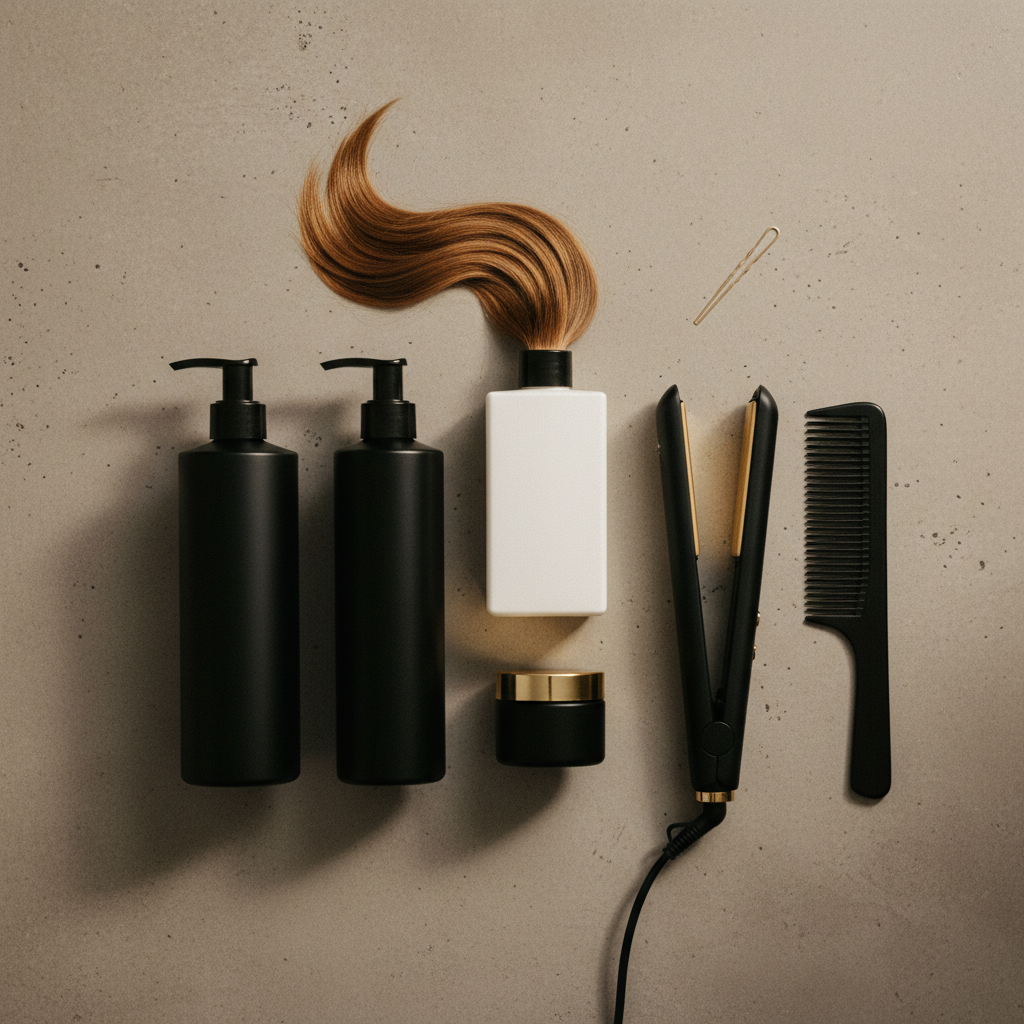
Quick answer: Keratin treatments demystified: these professional salon services temporarily smooth hair, reduce frizz, and enhance shine. They typically involve applying a protein-rich solution to the hair, which is then sealed with heat. While effective for cosmetic appearance, some treatments involve formaldehyde-releasing chemicals, raising safety concerns for both clients and stylists. Their effects are temporary, usually lasting 2 to 6 months, and they do not permanently alter hair structure.
Key takeaways
- Keratin treatments are salon procedures designed to temporarily smooth hair, reduce frizz, and enhance cosmetic shine by applying protein solutions and sealing them with heat.
- The primary mechanism involves applying a hydrolysed keratin solution, which is then bonded to the hair fibre's cuticle using high heat from a flat iron.
- Many traditional keratin treatments use formaldehyde-releasing chemicals to create more significant straightening effects by temporarily altering the hair's protein structure.
- "Formaldehyde-free" alternatives typically use compounds like glyoxylic acid, offering less dramatic and shorter-lived smoothing effects without the use of formaldehyde.
- Potential risks include exposure to irritating fumes (especially from formaldehyde-releasing formulas) and possible hair damage if treatments are applied incorrectly or too frequently.
- Longevity varies from 2 to 6 months, influenced by the specific product, hair type, aftercare, and washing frequency, with professional application being crucial.
Keratin treatments demystified: what the evidence shows
Keratin treatments demystified means understanding what these popular salon services truly are and what they can, and cannot, achieve. Keratin treatments are professional salon procedures designed to temporarily smooth the hair's cuticle, reduce frizz, and improve its cosmetic shine and manageability. The term is broad, encompassing various formulations and application methods. At their core, these treatments involve applying a liquid solution, often containing hydrolysed keratin proteins, to the hair, followed by heat application to seal the product onto the hair shaft. This process aims to enhance the hair's appearance and manageability for a period, typically ranging from 2 to 6 months.
Hair is primarily composed of keratin, a fibrous structural protein that forms the building blocks of the hair shaft. Damage from environmental factors, chemical processes (like colouring or bleaching), and heat styling can compromise the hair's natural keratin, leading to a rough cuticle, increased porosity, frizz, and a dull appearance. Keratin treatments are designed to supplement this natural protein externally, thereby improving the hair's surface texture and reducing friction between hair strands.
The effectiveness and safety of keratin treatments largely depend on their active ingredients. Traditional formulas often contain chemicals that release formaldehyde when heated. These chemicals react with the hair's amino acids, creating new, temporary bonds that modify the hair's structure, leading to a straighter, smoother finish. While these treatments can provide significant cosmetic benefits, the presence of formaldehyde has raised health and safety concerns for both clients and stylists. Formaldehyde is classified as a human carcinogen by the International Agency for Research on Cancer (IARC) and is known to be an irritant to the eyes, nose, and throat (Occupational Safety and Health Administration, OSHA, 2011).
In response to these concerns, "formaldehyde-free" alternatives have emerged. These treatments typically use other compounds, such as glyoxylic acid, to achieve a smoothing effect. While generally considered safer due to the absence of formaldehyde, their straightening power may be less potent, and the results might not last as long as traditional formulas. It's important to note that some products marketed as "formaldehyde-free" may still contain other aldehydes that can release formaldehyde when exposed to high heat, or other chemicals that can cause irritation. Careful ingredient scrutiny is always advised.
The smoothing and anti-frizz effects are primarily cosmetic. While the treatments can make hair feel stronger and appear healthier by improving the hair's surface, they do not repair internal hair damage in a permanent structural way. They act as a temporary coating or re-shaping agent. The benefits are temporary, requiring repeat applications to maintain the desired effect as the hair grows out and the treatment gradually washes away.
How keratin treatments work: the mechanism
The fundamental mechanism of keratin treatments involves a multi-step process that temporarily alters the hair fibre's external structure and, in some cases, its internal bonds.
- Preparation: The hair is first thoroughly cleansed, often with a clarifying shampoo, to remove product build-up and gently open the hair's outermost layer, the cuticle. This allows for better penetration of the treatment solution.
- Application: A liquid solution containing active ingredients, typically hydrolysed keratin (keratin proteins broken down into smaller molecules), amino acids, and other conditioning agents, is meticulously applied to the hair.
- Processing: The solution is left on the hair for a specific period, usually 20 to 60 minutes, allowing the ingredients to interact with the hair shaft.
- Drying and Sealing: This is the most critical step. The hair is blow-dried, and then small sections are flat-ironed at high temperatures, often between 200 to 230°C (390 to 450°F). The heat is crucial for two main reasons:
- Protein Adhesion: The heat helps to bond the applied proteins and conditioning agents to the hair's cuticle, effectively filling in porous areas and creating a smoother, more uniform surface. This external coating contributes to reduced frizz and enhanced shine.
- Chemical Reaction (if applicable): In formaldehyde-releasing treatments, the heat activates the chemical reaction between formaldehyde and the hair's amino acids (particularly cysteine). This reaction creates new methylene bridges, which temporarily realign the hair's disulphide bonds into a straighter configuration. This temporary re-sculpting is what provides the more significant and longer-lasting straightening effect.
For "formaldehyde-free" treatments, such as those using glyoxylic acid, the mechanism is slightly different. Glyoxylic acid forms temporary bonds within the hair's keratin structure when heated, leading to a smoothing effect without the use of formaldehyde. However, these bonds are generally less robust and therefore less permanent than those formed by formaldehyde, resulting in a less intense straightening effect and shorter longevity.
The temporary nature of these treatments means that as the hair is washed and exposed to environmental factors, these bonds gradually break down, and the applied proteins eventually wash away, causing the hair to revert to its natural texture. The hair's natural texture is not permanently altered, unlike with chemical relaxers or permanent waves.
What the evidence does not show: common misconceptions
Despite their popularity, there are several misconceptions surrounding keratin treatments. Understanding these helps in managing expectations.
- Permanent Straightening: Keratin treatments are not permanent hair straighteners. Unlike chemical relaxers, which permanently break and reform disulphide bonds within the hair's cortex, keratin treatments offer temporary straightening or smoothing. The effects typically last 2 to 6 months as the chemical bonds degrade and the applied keratin washes off. The hair will gradually return to its natural texture.
- Hair Repair: While keratin treatments can make hair look healthier and feel smoother by coating the cuticle and reducing friction, they do not genuinely repair deeply damaged hair. They provide a cosmetic solution that improves the hair's external appearance but do not restore the internal structure of severely compromised hair fibres. Long-term, repeated use, especially with high heat, can paradoxically contribute to further hair damage if not performed correctly, or if the hair is already severely weakened.
- Universal Safety: Not all keratin treatments are equally safe. The presence of formaldehyde or formaldehyde-releasing chemicals in many formulations poses health risks, including respiratory irritation, eye irritation, and potential carcinogenicity with chronic exposure (OSHA, 2011). Products marketed as "formaldehyde-free" also need scrutiny, as some may contain other aldehydes that can release formaldehyde when heated, or other irritant chemicals. Always discuss the ingredients with your stylist.
- One-Size-Fits-All: The results and longevity of keratin treatments vary significantly based on hair type, texture, condition, and the specific formula used. For instance, very curly or coily hair may experience less dramatic straightening compared to wavy hair. Individual hair porosity also affects how the treatment takes and how long it lasts. Hair that is already extensively damaged, for example from bleaching, may not tolerate the high heat required for application.
Signs you might consider a keratin treatment
You might find a keratin treatment beneficial if you regularly experience the following hair concerns and are seeking a temporary cosmetic solution:
- Persistent Frizz: Your hair becomes frizzy, especially in humid conditions, making it difficult to manage or style as desired. This is often due to a raised cuticle that absorbs moisture from the air.
- Lack of Cosmetic Shine: Your hair appears dull or lacks natural lustre, which can be a sign of a rough or uneven cuticle surface. A smoother cuticle reflects light more effectively.
- Rough or Coarse Texture: Your hair feels coarse or rough to the touch, often due to a raised cuticle or accumulated damage. A keratin treatment can create a smoother surface feel.
- Difficult Styling and Prolonged Drying Time: You spend a significant amount of time blow-drying or styling your hair straight, and you desire easier, quicker styling, or reduced drying time. The smoothing effect can reduce the effort required.
- Breakage Along the Hair Shaft: While not a treatment for hair loss, if your hair is prone to breakage along the shaft due to friction, snagging, or mechanical stress from styling, the smoothing effect of a keratin treatment can reduce the likelihood of individual hair fibres snapping. This is because a smoother cuticle reduces tangling and friction.
When to reconsider a keratin treatment
While keratin treatments offer cosmetic benefits, they are not suitable for everyone. Consider these points before proceeding:
- Severely Damaged or Compromised Hair: If your hair is already highly porous, extremely brittle, or severely damaged from chemical processes (such as over-bleaching) or excessive heat, adding another chemical treatment followed by high heat may exacerbate damage. The hair fibre may not withstand the process, leading to further breakage or a gummy texture. Consult with a professional stylist who can assess your hair's integrity.
- Sensitive Scalp or Allergic Tendencies: Individuals with sensitive scalps, eczema, or a history of allergic reactions to hair products should be cautious. The chemicals involved, particularly in formaldehyde-releasing formulas, can cause irritation, itching, or allergic contact dermatitis on the scalp, neck, and face. A patch test is always advisable.
- Pregnancy or Breastfeeding: Due to the chemicals involved, especially formaldehyde-releasing agents, most professionals advise against keratin treatments during pregnancy and breastfeeding. The potential risks of chemical inhalation or absorption are not fully understood in these contexts.
- Fine or Thin Hair: While keratin treatments can reduce frizz, some formulations might weigh down fine or thin hair, making it appear flatter or lacking volume. Discuss suitable "light" formulations with your stylist if you have fine hair.
- Unrealistic Expectations: If you are expecting permanent straightening, complete repair of internal damage, or a solution to hair loss (e.g., alopecia), a keratin treatment will not meet these expectations. It is a temporary cosmetic treatment for surface smoothing and frizz reduction.
Different types of keratin treatments: a comparison
The landscape of keratin treatments is varied, primarily categorised by their active smoothing agents and the presence of formaldehyde or formaldehyde-releasing chemicals. Here's a comparison of common types:
| Feature | Traditional (Formaldehyde-Releasing) Keratin Treatment | "Formaldehyde-Free" Keratin Treatment (e.g., Glyoxylic Acid) |
|---|---|---|
| Primary Active Agent | Formaldehyde or formaldehyde-releasing chemicals | Glyoxylic acid, cysteine derivatives, other aldehydes |
| Mechanism | Forms temporary methylene bridges, realigns disulphide bonds | Creates temporary bonds within keratin structure |
| Straightening Power | Stronger, more significant straightening | Milder, more smoothing and frizz reduction than straightening |
| Frizz Reduction | Excellent | Very good |
| Longevity | Typically 3 to 6 months | Typically 2 to 4 months |
| Application Time | 2 to 4 hours | 2 to 3 hours |
| Hair Texture Suitability | Most hair types, including very curly and coily | Wavy to moderately curly hair |
| Potential Health Concerns | Formaldehyde exposure, respiratory/eye irritation, sensitivity | Potential for other irritants, less severe safety concerns |
| Result | Very smooth, sleek, often significantly straighter | Smoother, less frizzy, enhanced shine, retains some natural texture |
| Hair Washing Post-Treatment | Often requires 72-hour waiting period | Usually allows washing within 24 hours, or immediately |
Both types rely on heat from a flat iron to activate and seal the treatment. The choice between them often balances desired results with safety concerns.
Aftercare for keratin treatments
To maximise the longevity and maintain the cosmetic benefits of your keratin treatment, proper aftercare is crucial.
- Wait to Wash (if applicable): Some traditional treatments require a waiting period, typically 48 to 72 hours, before washing your hair. This allows the treatment to fully set and the chemical bonds to stabilise. Always follow your stylist's specific instructions.
- Sulfate-Free Hair Products: Use shampoos and conditioners that are free from harsh sulfates. Sulfates can strip the treatment from your hair more quickly, reducing its lifespan. Look for products specifically labelled "sulfate-free" or "keratin-safe". See our guide on Sulfate-Free Shampoo Benefits.
- Avoid Sodium Chloride: High levels of sodium chloride (salt) in hair products can also accelerate the breakdown and removal of keratin treatments. Check ingredient lists for this common additive.
- Minimise Washing Frequency: The more frequently you wash your hair, the faster the treatment will fade. Consider washing your hair two to three times a week rather than daily. Dry shampoo can be helpful between washes.
- Gentle Styling: Avoid excessive heat styling, which can degrade the treatment over time. When you do use heat, use a heat protectant. Avoid tight hairstyles, elastics, or clips that can create dents or creases in the hair while the treatment is settling (especially during the initial waiting period).
- Protect from Chlorine and Salt Water: Chlorine in swimming pools and salt water can strip the treatment. If you swim, wet your hair with clean water and apply a leave-in conditioner beforehand to create a barrier, then rinse thoroughly immediately after swimming.
- Deep Conditioning (Moderately): While regular conditioning is essential, avoid very heavy or protein-rich masks too frequently, as these can sometimes disrupt the treatment balance. Opt for lightweight, hydrating conditioners.
When to seek professional advice
While Keratin treatments demystified can offer aesthetic improvements, it's important to know when to seek professional advice. Consult a dermatologist or trichologist if you experience any of the following:
- Severe Scalp Irritation or Allergic Reaction: If you develop persistent itching, redness, burning, swelling, or rash on your scalp, face, or neck after a treatment, seek medical attention. This could indicate an allergic reaction or chemical irritation.
- Unexpected Hair Damage: If your hair becomes excessively brittle, gummy, frizzy, or experiences unusual shedding or hair loss (distinct from typical breakage) immediately following a keratin treatment, consult a professional. This could be a sign of damage from improper application, incompatibility with your hair type, or a reaction to the chemicals.
- Respiratory Issues: If you experience persistent coughing, wheezing, shortness of breath, or eye irritation during or after a keratin treatment application, especially in inadequately ventilated spaces, it's crucial to consult a doctor. This may be related to chemical fumes, particularly formaldehyde.
- No Improvement or Worsening Frizz: If the treatment does not deliver the expected smoothing or frizz reduction, or if your hair seems to worsen, it might indicate the treatment was unsuitable for your hair type or was not applied correctly. A professional stylist can assess the situation.
Frequently asked questions about Keratin treatments demystified
Can keratin treatments cause hair loss?
Keratin treatments themselves are not typically a direct cause of follicular hair loss (alopecia). However, improper application, excessive heat during the sealing process, or chemical sensitivity can lead to hair breakage along the shaft or, in severe cases, chemical burns to the scalp that may temporarily disrupt hair growth. If you experience significant hair shedding or scalp irritation after a treatment, consult a dermatologist.
How long do keratin treatments last?
The effects of keratin treatments are temporary, typically lasting between 2 to 6 months. The exact duration depends on several factors, including the specific product formula used, your hair type and texture, how often you wash your hair, and your aftercare routine. Treatments tend to fade gradually as the hair is washed and exposed to environmental factors.
Are "formaldehyde-free" keratin treatments truly safe?
"Formaldehyde-free" treatments generally pose fewer health risks than those containing formaldehyde. However, some may contain other aldehydes or chemicals that can still cause irritation or other adverse reactions. Always ask your stylist for the full ingredient list and research any unfamiliar compounds. A patch test is always recommended to check for individual sensitivities, truly making Keratin treatments demystified more understandable.
Can I colour my hair after a keratin treatment?
It is generally recommended to colour your hair either before a keratin treatment or wait at least two weeks after the treatment. Applying colour before allows the colour to penetrate the hair shaft fully. If colouring afterwards, waiting gives the keratin treatment time to settle and prevents the colour from stripping the treatment. Some stylists even recommend colouring immediately before the treatment, as the treatment can sometimes slightly alter hair colour or seal in the fresh colour.
How often can I get a keratin treatment?
Most stylists recommend waiting at least 3 to 4 months between keratin treatments to prevent potential build-up or over-processing, especially if your hair is fine or prone to damage. The hair will gradually return to its natural texture as the treatment wears off, and you can re-evaluate if another application is desired. Frequent treatments may increase the risk of hair damage or product build-up.
What are the main benefits of Keratin treatments demystified?
The main cosmetic benefits of keratin treatments include a significant reduction in frizz, enhanced cosmetic shine, smoother-feeling hair, and improved manageability. They can make blow-drying and styling quicker and easier, offering a temporary reprieve from daily hair struggles for individuals with unruly or frizzy hair. They do not, however, address underlying hair health issues or promote new hair growth.
Conclusion
Keratin treatments demystified: these salon services offer a temporary, cosmetic solution for individuals seeking smoother, less frizzy, and shinier-looking hair. By applying a protein-rich solution and sealing it with heat, these treatments can significantly improve hair manageability for 2 to 6 months. While effective for aesthetic enhancement, it's crucial to understand the differences between formaldehyde-releasing and "formaldehyde-free" formulas, and to be aware of the potential health and hair integrity considerations. Always prioritise professional application, thorough ingredient knowledge, and appropriate aftercare to achieve the best results and ensure hair health. These treatments modify the hair's surface rather than repairing its internal structure, making them a styling aid rather than a restorative treatment.
Sources and references
- International Agency for Research on Cancer (IARC). IARC Monographs on the Evaluation of Carcinogenic Risks to Humans, Volume 100F: Chemical Agents and Related Occupations. Lyon, France: IARC; 2012. (For formaldehyde classification)
- Occupational Safety and Health Administration (OSHA). Hazard Alert: Hair Smoothing Products That Could Release Formaldehyde. United States Department of Labor; 2011. Available from: www.osha.gov (for formaldehyde health risks)
- Gavazzoni Dias, M. F. R. (2015). Hair Cosmetics: An Overview. International Journal of Trichology, 7(1), 2-15. DOI: 10.4103/0974-7753.153493 (General hair science and cosmetic treatments)
- British Association of Dermatologists. Contact Dermatitis. Available from: www.bad.org.uk (General information on skin reactions)
- Journal of Cosmetic Science. Various studies on hair chemistry and cosmetic ingredients. (General academic source)