Tensile Strength of Hair: The Complete Evidence-Based Guide
10 min read ·
Discover the science behind the tensile strength of hair, what causes strands to snap, how wet hair behaves, and how to protect fragile lengths from breakage.
Quick answer: The Tensile Strength of Hair refers to the maximum pulling force a single strand can withstand before snapping. In healthy, virgin human hair, a single dry fibre can support between 50 and 100 grams of weight and stretch roughly 20 to 30 percent beyond its original length before permanent damage occurs. However, chemical processing, excessive heat styling, and environmental oxidation degrade the internal protein bonds, significantly reducing this resilience and making hair vulnerable to mechanical breakage.
Key takeaways
- Keratin integrity dictates strength: Roughly 85 to 90 percent of human hair consists of keratin proteins rich in cystine, forming rigid disulphide bridges that grant hair its natural tensile load capacity.
- Wet hair stretches more but breaks easier: Wet hair can stretch up to 50 percent of its length because water molecules weaken temporary hydrogen bonds, but its overall yield point and breaking stress drop substantially.
- Chemical lifting destroys structural bonds: Bleaching, permanent colouring, and chemical relaxing break covalent disulphide bonds, permanently lowering the fibre's tensile threshold.
- Breakage is not hair loss: Tensile failure causes hair breakage along the shaft; it does not cause follicular hair shedding or medical alopecia at the scalp.
- Cosmetics reinforce, not rebuild: Topical conditioners, lipid sealants, and bond-building formulations can reduce friction and temporarily improve fibre resilience, but they cannot restore the original biological architecture of virgin hair.
Tensile Strength of Hair: what the evidence shows
The mechanical resilience of human hair has been studied extensively in cosmetic science, textile physics, and forensic pathology. Tensile testing involves clamping a single hair strand at both ends in an extensiometer and pulling it at a controlled rate until it ruptures. This measurement generates a stress-strain curve that reveals three distinct phases of hair mechanics: the Hookean (elastic) region, the yield region, and the post-yield region leading to ultimate break.
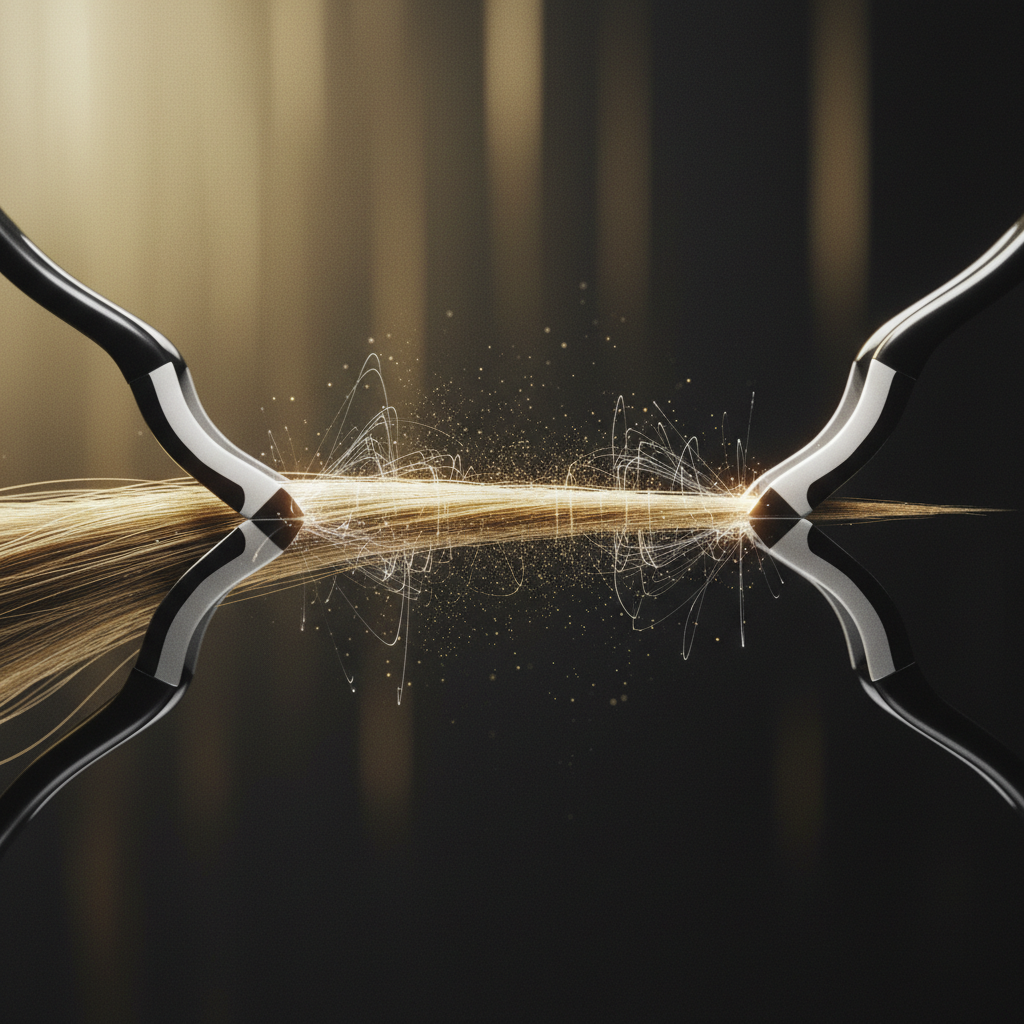
In healthy hair, the Hookean region occurs during the initial 1 to 2 percent of stretching. Here, the alpha-helical proteins inside the cortex deform elastically, meaning if you release the tension, the strand snaps back to its exact original length without structural alteration. As tension increases past the yield point, the alpha-helical keratin coils uncoil into straight beta-sheet conformations. This structural change requires significantly less incremental force to continue extending the fibre.
Once the fibre enters the post-yield region (typically beyond 25 to 30 percent elongation in dry hair), the covalent disulphide bonds between neighbouring keratin molecules bear the mechanical load directly. When these cross-links rupture, the fibre reaches its ultimate tensile strength and fractures cleanly or frays into a split end.
| Measurement / Condition | Virgin Dry Hair | Virgin Wet Hair | Chemically Bleached Hair |
|---|---|---|---|
| Average Load to Break | 50 to 100 grams | 30 to 60 grams | 20 to 40 grams |
| Elastic Limit (Hookean) | Up to 2% extension | Up to 1% extension | < 1% extension |
| Maximum Elongation | 20% to 30% | 40% to 50% | 5% to 15% |
| Primary Structural Restraint | Intact disulphide cross-links | Unbonded hydrogen matrix | Oxidised / severed cystine bonds |
| Breakage Risk During Brushing | Low | Moderate to high | Severe |
The internal biological mechanism
Hair strength relies on three distinct layers, though the cortex bears over 85 percent of the mechanical tensile load.
The outermost layer, the cuticle, consists of overlapping scales coated in 18-methyleicosanoic acid (18-MEA), a protective lipid layer. While the cuticle contributes modest direct tensile resistance, it protects the cortex from external abrasion. When friction strips away the cuticle, mechanical shear forces transmit directly into the inner cortex.
Inside the cortex sit macrofibrils, which house intermediate filaments embedded in an amorphous, sulphur-rich protein matrix. The high concentration of the amino acid cystine creates covalent disulphide bonds between adjacent polypeptide chains. These bonds act like the rungs of a rigid ladder. In addition to disulphide bonds, billions of weaker hydrogen and salt (ionic) bonds stabilise the protein network.
Water directly affects these secondary bonds. When hair absorbs water, water molecules insert themselves between polar groups in the keratin chains, dismantling the hydrogen bonds. This transition plasticises the fibre. As a result, wet hair elongates dramatically under light tension, but because the hydrogen network is compromised, its breaking load is markedly lower than when dry.
What reduces the tensile resilience of the fibre?
Cosmetic hair damage is cumulative because the visible hair shaft consists of biologically non-living tissue. Unlike skin, the hair shaft cannot synthesise new proteins or heal itself once its internal matrix is damaged.
Chemical processing
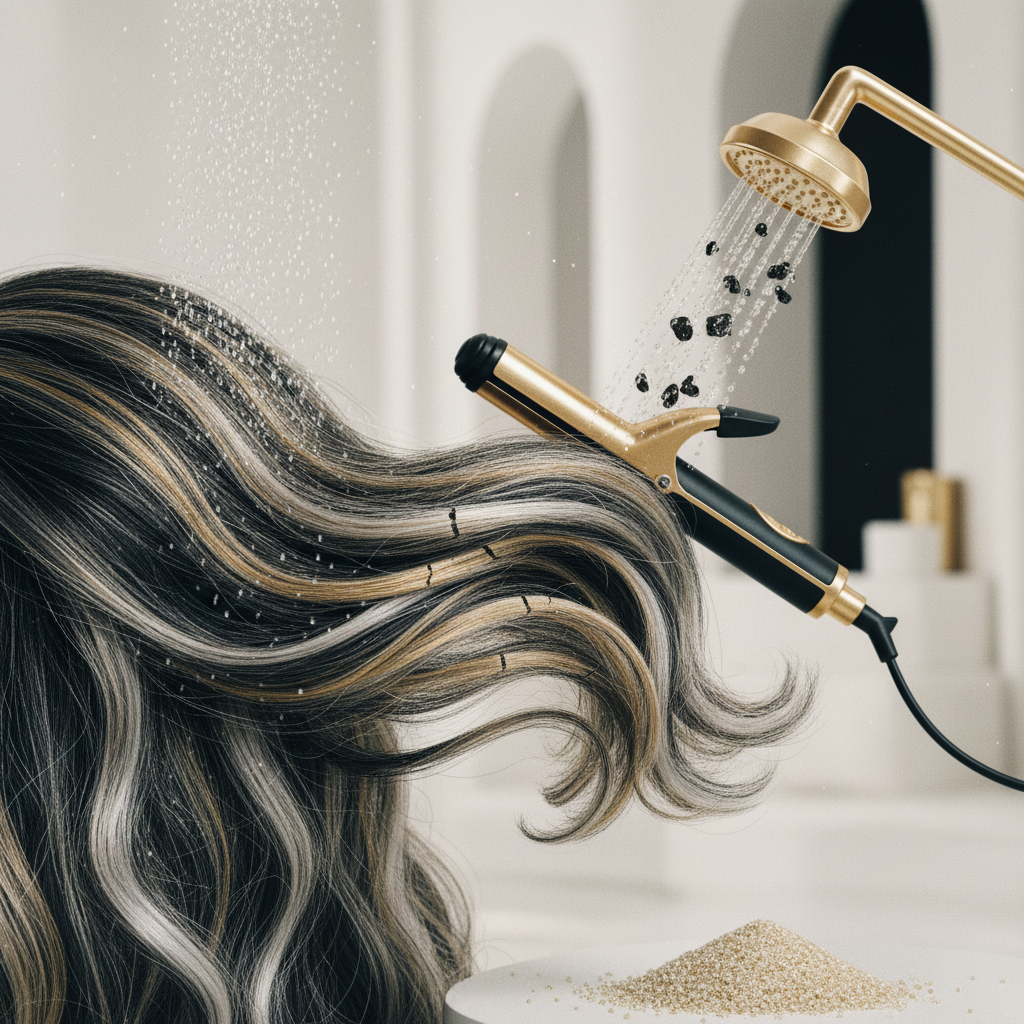
Bleaching, permanent tinting, and high-pH alkaline relaxers require opening the protective cuticle to penetrate the cortex. Bleaching oxidises melanin pigments, but it indiscriminately oxidises cystine into cysteic acid as a side reaction. Cysteic acid cannot form disulphide bridges. Studies indicate that heavy bleaching can eliminate over 30 to 50 percent of a hair fibre's cystine cross-links, causing a catastrophic drop in tensile load tolerance.
Thermal styling
Exposing hair to curling irons, straighteners, and excessively hot blow-dryers above 185 degrees Celsius denatures keratin proteins. Heat evaporates both free water and chemically bound water within the cortex. Rapid heating of damp hair can even cause moisture inside the shaft to vaporise instantaneously, creating microscopic structural voids known as bubble hair, which snap under minimal tension.
Mechanical fatigue
Vigorous backcombing, detangling wet hair with fine-toothed combs, and wearing tight elastic bands place localized tensile stress on the shaft. Over time, repeated sub-maximal stretching causes micro-fractures in the cortical cells, leading to trichorrhexis nodosa (node-like swelling along the strand) and premature snapping.
Environmental photodamage
Solar ultraviolet (UV) radiation, particularly UVA and UVB wavelengths, photolytically breaks disulphide bonds and oxidises amino acids such as tryptophan and histidine. Extended sun exposure bleaches hair naturally and strips away its surface lipids, leaving fibres brittle and prone to breakage.
Signs of depleted tensile strength
Spotting compromised hair strength early helps stylists and clients modify handling routines before severe breakage occurs. Typical signs include:
- Snapping during routine detangling: Strands pop audibly under minimal comb resistance.
- Loss of bounce or elasticity: When stretched gently while damp, the hair does not rebound; it either stays slack or breaks immediately.
- Abundant white bulbs-less fragments: Short pieces of hair scattered on your shoulders or sink that lack the white keratin bulb of a naturally shed telogen hair.
- Split ends and fraying: The cuticle has weathered away, leaving exposed cortical fibres splitting into brush-like tips.
- Gummy or spongy feel when wet: A classic indicator of severe chemical over-processing where cortical protein structure has collapsed.
What you can do to protect and support fibre strength
While severed disulphide bonds cannot be permanently re-fused to match virgin biological integrity, specific haircare practices significantly mitigate tensile failure and improve fibre durability.
Optimise the detangling routine
Never aggressively drag a comb through wet hair. Because wet hair has an unstable hydrogen matrix, apply a slippery leave-in conditioner or detangling spray before styling. Use a wide-toothed comb or flexible-bristle brush, starting at the tips and working upward toward the roots to minimise cumulative tension.
Apply surface-sealing lipids and conditioning agents
Conditioning agents containing cationic surfactants (such as cetrimonium chloride or behentrimonium methosulfate), fatty alcohols, and silicones coat the cuticle. They lower the coefficient of friction between strands, reducing the mechanical force required to pull a comb through the hair by upwards of 50 percent. Less mechanical resistance directly prevents the hair from reaching its breaking point.
Incorporate structural proteins and bond-modifiers
Hydrolysed vegetable, wheat, or keratin proteins can temporarily diffuse into superficial cortical fissures and deposit on the cuticle surface. These proteins act like temporary scaffolding, augmenting fibre stiffness. Additionally, formulations containing dicarboxylic acids (like maleic acid) or cross-linking agents can temporarily shield weak spots within the damaged protein network.
Manage heat exposure
Always apply a heat protectant containing heat-stable polymers before using heated tools. Keep tool temperatures below 185 degrees Celsius, and ensure hair is completely dry before applying direct contact heat from flat irons or curling wands.
The role of targeted cosmetic care: Watermans
For individuals managing fibre weakness and fragile lengths, using targeted cosmetic products can dramatically improve the day-to-day resilience of vulnerable strands.
Watermans hair care products, including the Grow Me Shampoo and Condition Me Conditioner, are formulated to support the appearance of fuller, stronger-feeling hair. Condition Me features hydrolysed lupin protein, cholesterol, niacinamide, and caffeine, working cosmetically to coat the hair shaft, improve surface smooth and manageable texture, and reduce comb-induced friction. By smoothing the outer cuticle layer and improving moisture retention along the hair shaft, these formulations help protect fragile, weathered ends from everyday mechanical breakage without relying on harsh, drying detergents.
When breakage is mistaken for hair loss
It is critical to distinguish between reduced hair strength and medical hair loss.
When hair breaks due to compromised tensile resilience, the hair snaps along the shaft. The hair follicle in the scalp remains intact and continues its regular cyclical biological growth. You will notice short, uneven strands around your crown, parting, or temples, but your scalp density at the roots remains relatively unchanged.
Conversely, true hair shedding (telogen effluvium) or progressive hair thinning (androgenetic alopecia) originates beneath the scalp within the dermal papilla. Shed hairs carry a distinctive white keratin bulb at the root, indicating the entire fibre has left the follicle naturally. If you observe excessive hair shedding from the roots, widening parts, circular bald patches, or persistent scalp irritation, you should seek guidance from a GP, dermatologist, or qualified trichologist rather than relying solely on cosmetic hair-strengthening treatments.
Frequently asked questions about Tensile Strength of Hair
What is the average Tensile Strength of Hair?
A single healthy, virgin human hair strand can generally hold between 50 and 100 grams of weight before snapping. In terms of engineering stress, intact hair exhibits a tensile strength of roughly 150 to 200 MegaPascals (MPa), which is comparable to some structural plastics and metals on a strength-to-weight basis.
Does water increase or decrease the Tensile Strength of Hair?
Water decreases the tensile strength of hair. While water increases hair elasticity, allowing a damp strand to stretch up to 50 percent of its resting length, it disrupts internal hydrogen bonds. This makes the fibre structurally weaker, lowering the ultimate mechanical force required to break it.
Can split ends or broken hair bonds be permanently repaired?
No cosmetic product can permanently repair broken disulphide bonds to virgin condition. Bond builders and hydrolysed proteins can temporarily patch structural gaps, cross-link proteins, and smooth the outer cuticle, but these treatments gradually wash out and do not reverse biological damage. Trimming away split ends is the only permanent fix.
How does hair bleaching affect its tensile properties?
Bleaching relies on strong alkaline oxidising agents that strip away the protective cuticle lipids and oxidise the cortex. During this process, up to half of the hair's natural cystine disulphide bonds are converted to cysteic acid, significantly lowering the force required to snap the fibre.
Can dietary changes improve the tensile strength of existing hair?
Dietary adjustments cannot alter the tensile strength of hair that has already grown past the scalp surface, as the hair shaft is biologically dead tissue. However, a balanced diet providing adequate dietary protein, iron, zinc, and vitamins supports the healthy synthesis of new keratin fibres currently forming within active follicles.
Supporting the mechanical integrity of hair
The Tensile Strength of Hair is the fundamental measure of a strand's structural integrity, governed by its internal cortex and cross-linked keratin network. While virgin hair possesses remarkable biological elasticity and resistance to physical force, daily chemical processing, thermal styling, and rough handling inevitably erode this resilience. By understanding the mechanical physics of the hair shaft, treating wet hair with caution, reducing chemical stress, and protecting the fibre surface with lipid-rich conditioners, you can effectively defend your hair against premature mechanical breakage and maintain noticeably smoother, stronger lengths.
Sources and references
- Robbins, C. R. (2012). Chemical and Physical Behavior of Human Hair. 5th Edition, Springer-Verlag New York.
- Wolfram, L. J. (2003). Human hair: A unique physicochemical composite. Journal of the American Academy of Dermatology, 48(6), S106-S114.
- Swift, J. A. (1999). Human hair cuticle: biologically conspired to the owner's advantage by its mechanical properties. Journal of Cosmetic Science, 50(1), 23-47.
- Dawber, R. (1996). Hair: Its structure and response to cosmetic preparations. Clinics in Dermatology, 14(1), 105-112.
- Cruz, C. F., et al. (2016). Human hair characteristics based on internal and external factors: A review. International Journal of Cosmetic Science, 38(5), 441-449.
Find these ingredients in Watermans products
- Zinc: you will find this ingredient in our Hair Vitamins.
- Niacinamide: you will find this ingredient in our Hair Mask.