The Cortex of Hair: Anatomy, Function, and Care
9 min read ·
The Cortex of Hair is the thick, protein-rich core responsible for hair strength, colour, and elasticity. Discover how it functions and how to prevent damage.
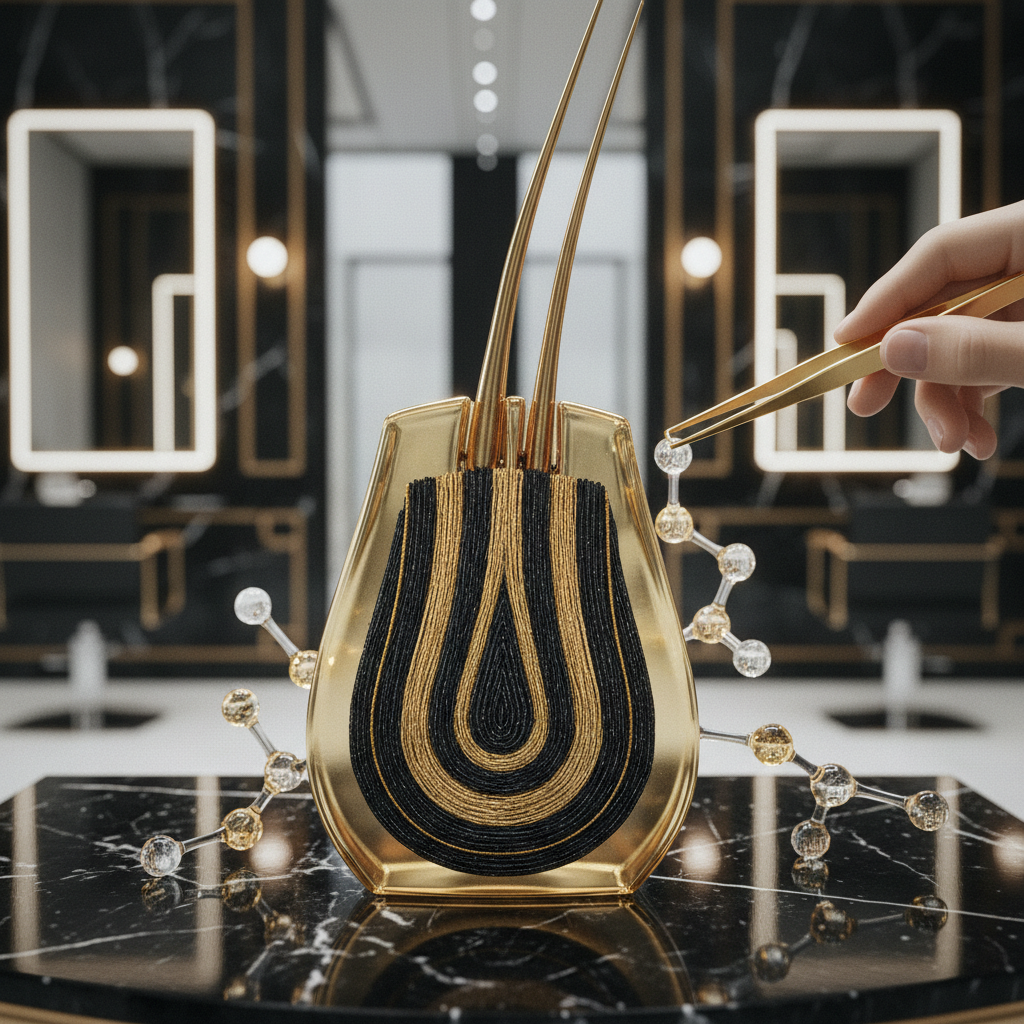
Quick answer: The Cortex of Hair is the thick, fibrous middle layer of the hair shaft that makes up roughly 75 to 90 percent of its total mass. It houses the keratin proteins, moisture reserves, disulfide bonds, and melanin pigments that dictate hair strength, elasticity, shape, and natural colour. However, because the cortex sits beneath the protective outer cuticle, topical products cannot rebuild severed internal bonds permanently; cosmetic treatments can only temporarily reinforce or mask cortical damage until the hair grows out.
Key takeaways
- The cortex forms the structural core of the hair shaft, providing mechanical strength, flexural rigidity, and tensile elasticity.
- Natural pigment granules (eumelanin and pheomelanin) reside entirely within cortical cells, determining your natural hair colour.
- Chemical services like bleaching, permanent colouring, and perms work by lifting the cuticle to alter or strip cortical bonds and melanin.
- The cortex contains three major bond types: disulfide bonds, hydrogen bonds, and salt bridges, each responding differently to heat, water, and pH.
- Once internal cortical protein matrices break from severe heat or chemical over-processing, the fibre cannot biologically regenerate itself.
Cortex of Hair: what the evidence shows
Microscopic and biochemical analyses show that the Cortex of Hair is an intricate biological composite. Located directly beneath the protective, scale-like cuticle and surrounding the central medulla, the cortex comprises elongated, spindle-shaped cortical cells packed along the longitudinal axis of the hair shaft.
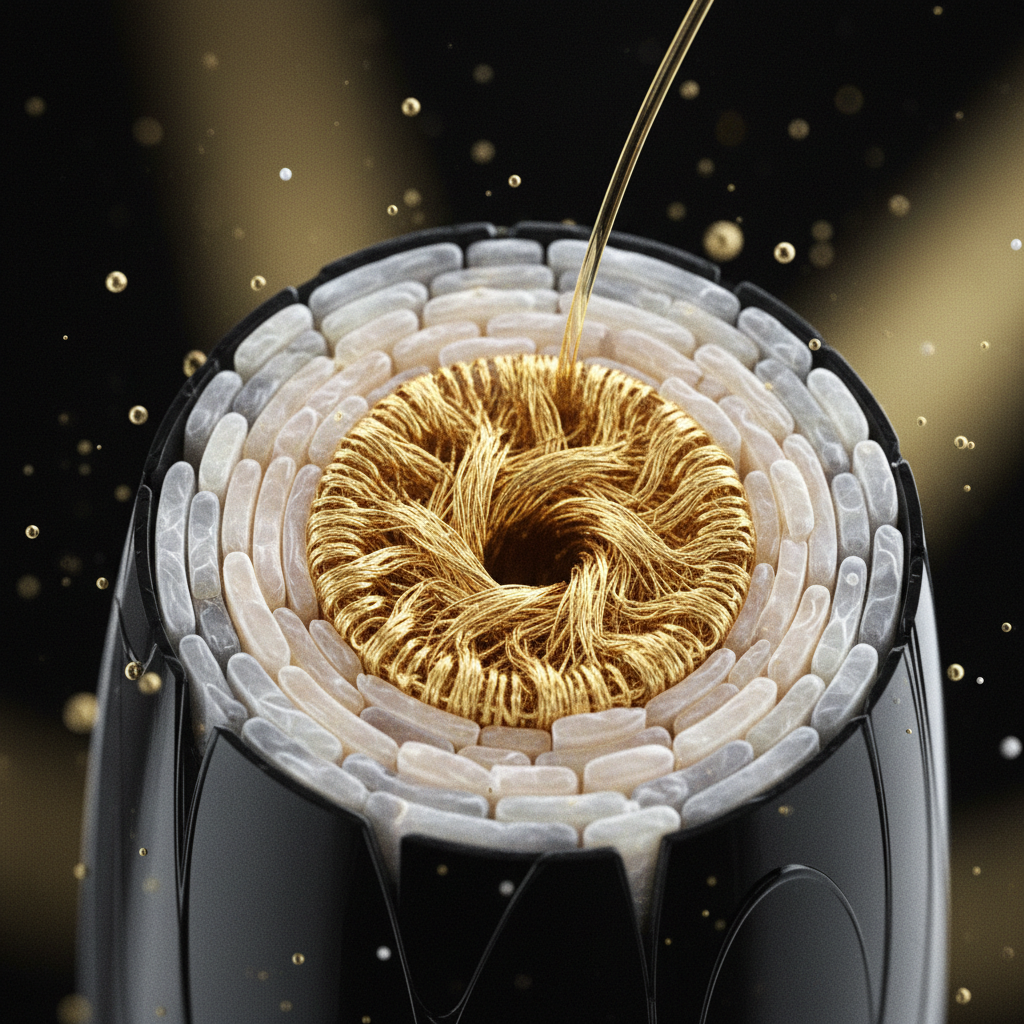
Research published in structural biology journals indicates that cortical cells consist of microfibrils, intermediate filaments, and an amorphous protein matrix rich in high-sulfur keratin-associated proteins (KAPs). This architecture gives human hair its remarkable tensile strength. A healthy strand can stretch up to 30 percent of its dry length without snapping and bear a load of 50 to 100 grams before breaking.
The cortex also functions as the hair's moisture reservoir. Bound and free water within the cortical matrix plasticises the keratin coils, granting flexibility. When the water content drops below its typical equilibrium (around 10 to 15 percent at room temperature and moderate humidity), the cortex becomes brittle, leaving the entire shaft vulnerable to catastrophic breakage.
+------------------------------------------------------------------+
| HAIR SHAFT CROSS-SECTION |
| |
| [ Cuticle: 6-10 overlapping protective layers ] |
| | |
| v |
| +------------------------------------------------------------+ |
| | CORTEX OF HAIR | |
| | - Spindle-shaped cortical cells | |
| | - Microfibrils & intermediate filaments | |
| | - High-sulfur keratin-associated proteins (KAPs) | |
| | - Melanin granules (eumelanin & pheomelanin) | |
| | - Disulfide, hydrogen, and ionic salt bonds | |
| +------------------------------------------------------------+ |
| | |
| v |
| [ Medulla: central porous core (variable / often absent) ] |
+------------------------------------------------------------------+
Cortical bonds and how they govern hair behaviour
The physical performance of the cortex depends on three fundamental chemical bonds:
- Disulfide bonds: These covalent bonds link sulfur atoms within cysteine amino acid pairs. They are exceptionally strong and do not dissolve in water. Permanent straightening, relaxing, and perm waving function by chemically cleaving these disulfide bridges using reducing agents (such as thioglycolates or hydroxides) and reforming them into a new shape.
- Hydrogen bonds: These weak physical bonds form between adjacent amino and carbonyl groups. They are easily broken by water and heat, which is why wetting your hair allows you to blow-dry or heat-style it into a temporary new shape. As the cortex dries and cools, the hydrogen bonds re-anchor in that aligned position.
- Salt bridges (ionic bonds): These bonds link positive and negative amino acid side chains. They are sensitive to pH changes. At hair's isoelectric point (around pH 3.67 to 5.5), these bonds are at their most stable. Alkaline solutions (pH 8.0 and above) disrupt salt linkages, causing the cortex to swell and weaken.
What the evidence does not show
Cosmetic marketing often suggests that intensive serums or bonding treatments can completely "reconstruct" or "repair" a severely damaged cortex. The scientific evidence does not support this claim.
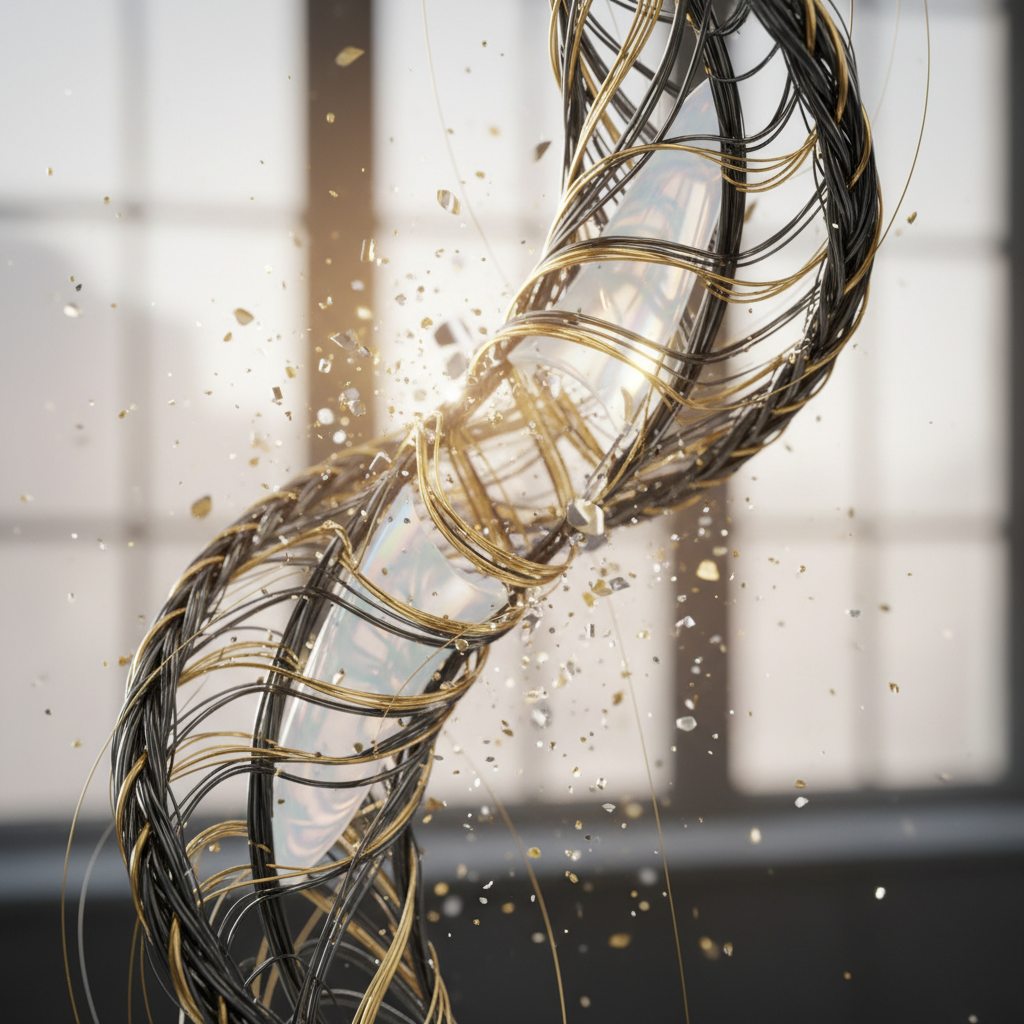
Hair is non-living tissue (keratinised protein). It lacks cellular machinery, vascular delivery, and DNA replication mechanisms. While certain synthetic bond-building molecules (such as bis-aminopropyl diglycol dimaleate) and low-molecular-weight hydrolysed proteins can penetrate beneath the cuticle into the cortical matrix to cross-link fragments or deposit temporary mass, they cannot restore original tensile strength. They function as internal reinforcement rather than biological healing. Once cortical microfibrils undergo extensive transverse shearing, no topical formulation can truly return the fibre to its virgin state.
Mechanisms of cortical damage: how the core breaks down
Understanding how the cortex degrades helps you prevent irreparable fibre breakage. Cortical damage typically occurs via three distinct pathways:
- Thermal denaturation: Applying heat styling tools above 150 degrees Celsius begins to degrade alpha-keratin coils into amorphous beta-keratin. Above 200 degrees Celsius, the keratin proteins melt and denature, while moisture trapped within the cortex vaporises rapidly, creating micro-cavities (often referred to in trichology as bubble hair).
- Chemical oxidative stress: Bleaching relies on alkaline hydrogen peroxide and persulfate salts to penetrate the cuticle and oxidise melanin granules within the cortex. In doing so, it also oxidises cystine into cysteic acid, permanently destroying disulfide bonds and dissolving structural KAPs.
- Mechanical stretching: Brushing hair while wet stretches cortical intermediate filaments beyond their elastic limit. Wet hair reaches yield point far earlier than dry hair because water acts as a plasticiser, weakening hydrogen bonds and leaving the cortex prone to mechanical snapping.
Comparison of hair shaft layers
To see how the cortex fits into overall hair health, consider how it compares to the surrounding structures:
| Structural Layer | Location | Mass of Shaft | Primary Components | Key Function |
|---|---|---|---|---|
| Cuticle | Outermost layer | 10 to 15% | Flat, overlapping, scale-like cells (epicuticle, exocuticle, endocuticle) rich in 18-MEA lipids | Barrier defence, hydrophobic seal, light reflection, smooth texture |
| Cortex | Middle layer | 75 to 90% | Long cortical cells, intermediate filament keratins, KAPs, melanin | Tensile strength, elasticity, natural pigmentation, moisture retention |
| Medulla | Innermost core | 0 to 10% | Discontinuous or continuous porous, spongy cellular matrix with air spaces | Negligible structural role; contributes minimally to thermal insulation or optical density |
Identifying signs of cortical depletion
Cortical compromise presents very differently from simple surface cuticle wear. Watch for these physical indicators:
- Loss of elastic snap-back: Take a single wet hair strand and stretch it gently between your fingers. If it fails to return to its original length, stretches endlessly like chewing gum, or snaps instantly without any resistance, the internal cortical bonds are compromised.
- Split ends travelling upwards (trichoptilosis): When the cuticle wears off entirely, the exposed cortex frays longitudinally like an unravelled rope. If left unaddressed, this cortical split travels upwards toward the root.
- Spongy wet texture: A strand that absorbs vast quantities of water, swells dramatically, feels mushy when wet, and takes hours to dry has lost its hydrophobic envelope and sustained extensive cortical porosity.
- Severe colour fading and hollowness: If newly applied demi-permanent or permanent dyes wash out within one or two washes, the cortex no longer possesses sufficient structural matrix to anchor pigment molecules.
Practical steps to protect cortical integrity
While you cannot biologically regenerate a damaged cortex, you can preserve existing cortical integrity and reinforce vulnerable fibres:
- Maintain acidic pH balance: Keep hair products (conditioners, rinses, styling products) between pH 4.0 and 5.5. An acidic environment contracts the cuticle scales, shielding the cortex from moisture loss and external aggressors.
- Apply thermal protection without fail: Film-forming polymers and silicones slow heat transfer to the cortex, keeping internal temperatures below the keratin denaturation threshold. Never heat-style hair that is damp, as this turns internal cortical moisture into steam.
- Use targeted protein and amino acid treatments: Hydrolysed keratin, wheat protein, and free amino acids (such as arginine and cysteine) with molecular weights under 1,000 Daltons are small enough to pass between cuticle scales into the outer cortex, temporarily bolstering tensile rigidity.
- Minimise high-lift chemical processing: Space out bleaching and chemical perm sessions by at least 8 to 12 weeks to prevent compounding cortical protein loss.
Supporting hair density and overall follicle vitality
Protecting the fibre you have is one half of the equation; nurturing the follicle where the cortex is formed is the other. For those seeking fuller-looking, resilient hair, Watermans offers targeted, cosmetic scalp care.
Watermans Grow Me Shampoo and Condition Me Conditioner are formulated with clean, revitalising ingredients such as biotin, rosemary, caffeine, niacinamide, and hydrolysed lupin protein. Designed to support a clean, invigorated scalp environment while strengthening the surface feel of individual hair strands, these formulations deliver essential conditioning that keeps your hair feeling thicker, softer, and more resilient against daily mechanical breakage.
When breakage is not simply cortical damage
Be careful to distinguish between hair fibre breakage and medical hair loss:
- Hair breakage: Shorter fragments of hair with fractured, split, or uneven ends, lacking a white bulb. This stems directly from cuticle and cortical degradation along the shaft.
- Hair shedding: Full-length hairs dropping from the root, featuring a small white keratin bulb at the tip. Normal shedding accounts for 50 to 100 hairs daily.
- Follicular thinning or alopecia: Noticeable widening of the part line, receding hairlines, or round, bare patches on the scalp. These conditions relate to follicle cycling, genetics, hormonal shifts (such as dihydrotestosterone sensitivity), autoimmune conditions, or nutritional deficiencies, not structural cortical damage.
If you observe abrupt, patchy, or diffuse shedding from the scalp, seek guidance from a qualified trichologist, dermatologist, or your GP for an accurate clinical diagnosis.
Frequently asked questions about Cortex of Hair
What is the primary function of the Cortex of Hair?
The primary function of the cortex is to provide the hair fibre with its tensile strength, mechanical durability, and elasticity. It also holds the melanin pigments that give hair its natural colour and stores bound moisture that keeps the hair shaft flexible and resistant to brittle snapping.
Can chemical treatments permanently damage the cortex of hair?
Yes. Aggressive chemical services such as bleaching, high-lift colouring, and chemical straightening alter or dissolve the protein matrix and disulfide bonds within the cortex of hair. Once these bonds are cleaved and structural proteins leach out, the cortex cannot biologically replace them, leading to permanent structural weakness until the hair is trimmed away.
Does the cortex affect whether hair is straight, wavy, or curly?
Yes. The cross-sectional shape of the cortex and the uneven distribution of cortical cell types (orthocortex and paracortex) determine your hair's curl pattern. Oval or flattened cortical structures with asymmetrical cell distributions produce wavy, curly, or coily hair, while round cortical structures yield straight hair.
How do bond builders interact with the cortex?
Bond builders use small, chemically reactive molecules that slip past lifted or damaged cuticles into the cortex. Once inside, they link together free thiol groups to create artificial covalent or ionic bridges across fractured disulfide bonds, temporarily reinforcing the structural integrity of the hair fibre.
Preserving your hair's internal foundation
The Cortex of Hair serves as the true foundation of hair health, responsible for almost every mechanical attribute from bounce and tensile resistance to natural pigmentation. Because hair lacks the biological capacity to regenerate internal structural damage, protecting this vital middle layer through cautious styling, disciplined pH awareness, and gentle handling remains the single most effective strategy for maintaining long, resilient, and beautiful hair.
Sources and references
- Robbins, C. R. (2012). Chemical and Physical Behavior of Human Hair (5th ed.). Springer-Verlag.
- Swift, J. A. (1999). The mechanics of human hair: a review. International Journal of Cosmetic Science, 21(4), 227-239.
- Wolfram, L. J. (2003). Human hair: a unique physicochemical composite. Journal of the American Academy of Dermatology, 48(6), S106-S114.
- Dawber, R. (1996). Hair: Its structure and response to cosmetic preparations. Clinics in Dermatology, 14(1), 105-112.
- Cruz, C. F., et al. (2016). Human hair characteristics and methods to assess hair quality. Cosmetics, 3(2), 26.
Find these ingredients in Watermans products
- Biotin: you will find this ingredient in our Hair Growth Shampoo.