Hair Cuticle Care: Anatomy, Protection, and Restorative Practices
9 min read ·
Learn the science of Hair Cuticle Care. Discover how to protect overlapping keratin scales, prevent fibre breakage, manage pH, and maintain smooth, resilient hair.
Quick answer: Effective Hair Cuticle Care protects the outermost protective shield of your hair shaft, composed of overlapping keratin scales. Proper Hair Cuticle Care minimises friction, regulates internal fibre hydration, and preserves tensile strength by keeping these microscopic scales flat, lubricated, and intact. The critical limitation is biological: hair cuticles are non-living structures. Once a cuticle cell chips away or fractures completely, cosmetic treatments can temporarily patch or coat the damage, but they cannot regenerate the original biological tissue.
Key takeaways
- The cuticle consists of 5 to 10 overlapping layers of dead, flattened cells rich in cross-linked cystine that protect the cortex.
- Chemical alkaline treatments (such as bleaching and perm solutions with a pH above 8.5) swell the hair and force scales open, risking permanent cell loss.
- Hair fibre relies on a native lipid coating known as 18-methyleicosanoic acid (18-MEA), which chemical processing strips away.
- Daily mechanical friction from brushing, towel drying, and heat styling over 180°C physically erodes cuticle margins.
- Acid-balanced formulations (pH 4.5 to 5.5) and conditioning agents help smooth the cuticle layer and reduce fibre breakage, though they cannot regrow damaged scales.
Hair Cuticle Care: what the evidence shows
Scientific research consistently identifies the cuticle as the hair fibre's first line of physical and chemical defence. Peer-reviewed studies in cosmetic dermatology demonstrate that healthy hair cuticles form an uninterrupted barrier that shields the inner cortex from environmental oxidation, UV radiation, and rapid moisture loss.
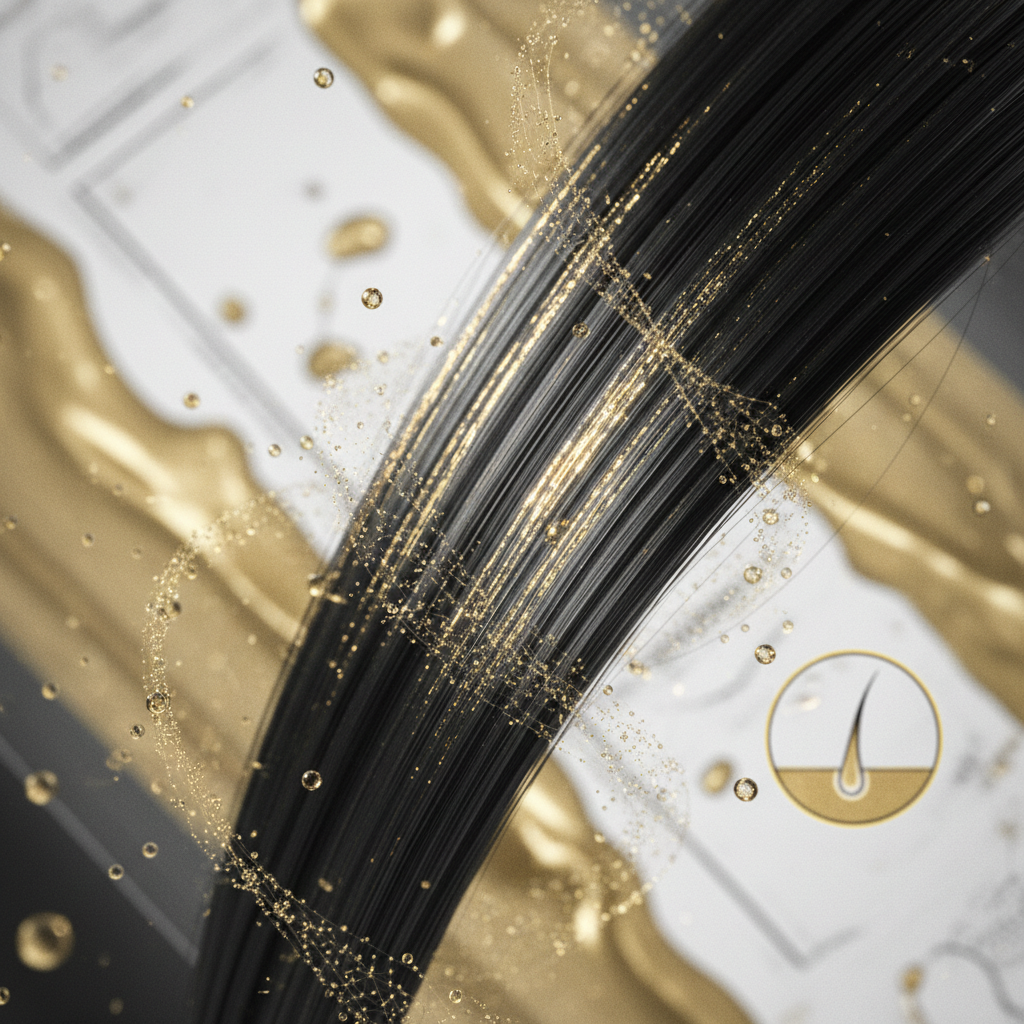
Under scanning electron microscopy (SEM), an undamaged hair shaft displays tightly packed, shingle-like cells pointing downward toward the hair tip. When you maintain these scales in an aligned, flattened orientation, light reflects evenly off the hair surface, generating what we perceive as natural shine and gloss. Furthermore, aligned scales minimise friction between neighbouring strands. When the coefficient of friction drops, hair glides freely, reducing the snags, knots, and mechanical snapping that lead to hair breakage.
Evidence highlights the central role of surface lipids. The outermost layer of the cuticle (the epicuticle) features a covalent mono-layer of 18-methyleicosanoic acid (18-MEA). This unique fatty acid imparts strong hydrophobic properties, ensuring that the fibre repels excess atmospheric moisture and prevents uncontrolled swelling. When 18-MEA is intact, hair retains its natural elasticity and resists water-induced fatigue.
Anatomy and mechanisms of the hair cuticle
To understand how to protect this layer, you need to examine its microscopic architecture. A single hair cuticle scale is roughly 0.5 to 1 micrometre thick and about 45 to 60 micrometres long. Each individual cell is composed of distinct sub-layers that vary in their chemical composition:
- The Epicuticle: A thin, hydrophobic membrane (roughly 5 to 7 nanometres thick) covered by the lipid 18-MEA.
- The A-Layer: A rigid, protein-dense barrier with high cystine content (over 30%), providing immense chemical resistance.
- The Exocuticle: Another highly cross-linked protein layer, making up roughly 55% of the total cuticle cell thickness.
- The Endocuticle: A low-cystine, protein-sparse inner sub-layer that swells readily in the presence of water.
These individual scales are bonded together by the cell membrane complex (CMC). The CMC functions like mortar between bricks, rich in lipids and structural proteins.
Because the endocuticle swells significantly more in water than the rigid exocuticle, wetting hair creates internal physical strain. This differential swelling causes cuticle margins to curl upward slightly whenever hair is submerged. If you apply rough mechanical action, such as aggressive scrubbing or brushing while wet, these lifted margins easily break or tear away.
 [ Outer Environment ]
 |
 ============================== <- Epicuticle (with 18-MEA lipid layer)
 ------------------------------ <- A-Layer (High cystine, very rigid)
 ------------------------------ <- Exocuticle (Cross-linked keratin)
 ------------------------------ <- Endocuticle (Swells readily in water)
 ============================== <- Cell Membrane Complex (Intercellular cement)
 |
 [ Inner Cortex ]
Signs of cuticle degradation
Cuticle erosion occurs progressively. Stylists and dermatologists classify cuticle wear according to visible physical and tactile signs:
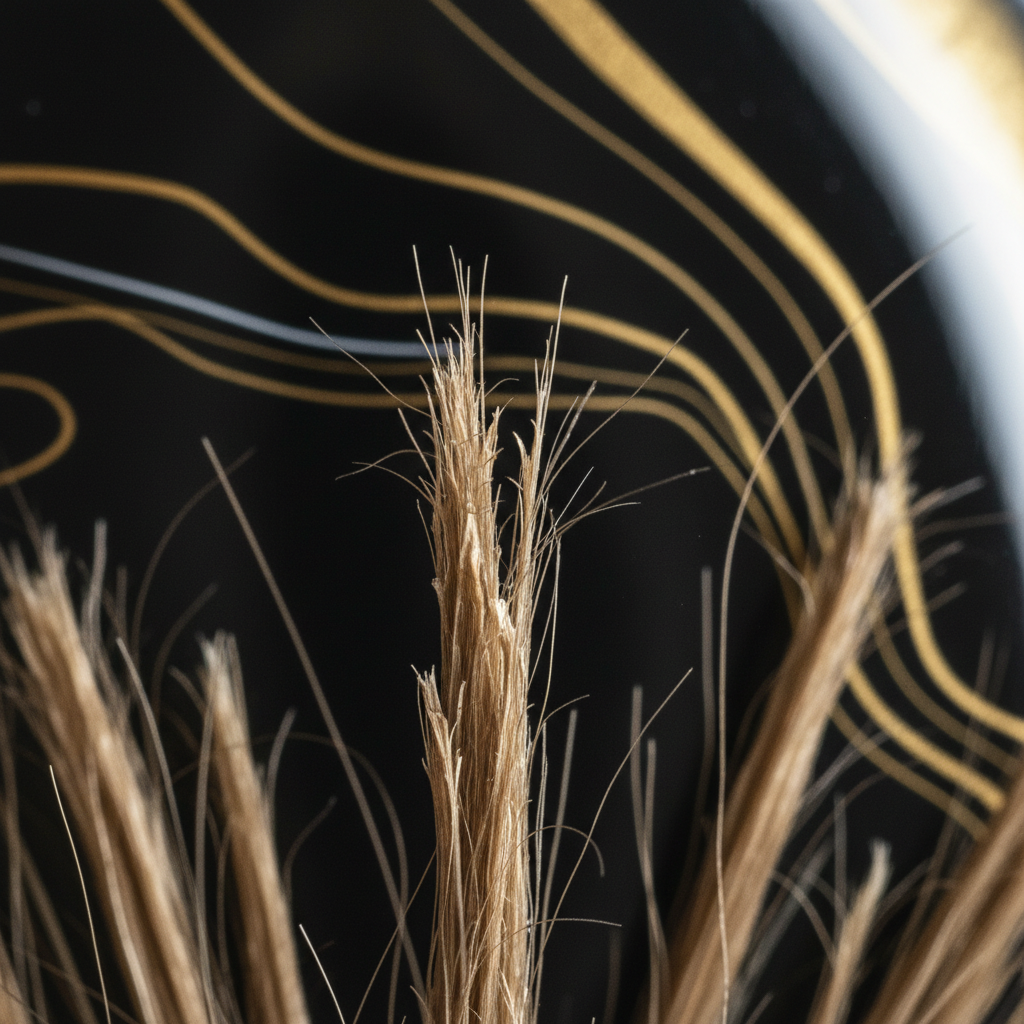
- Loss of shine and dullness: Light scatters irregularly across lifted, chipped, or eroded scales rather than reflecting as a clean specular highlight.
- Persistent tangling and friction: Damaged cuticles catch on adjacent hair strands like interlocking Velcro, forming stubborn knots.
- Increased porosity: Hair absorbs water rapidly when wet, but dries out just as fast, turning brittle and rough to the touch.
- Split ends (trichoptilosis): Complete cuticle loss exposes the cortex beneath. Without the protective cuticle sheath, cortical fibres unravel like the strands of an uncoiled rope.
- Frizz in humid conditions: Without the hydrophobic 18-MEA lipid barrier, water vapour penetrates the cortex unevenly, disrupting hydrogen bonds and warping strand alignment.
Comparing healthy and damaged hair cuticles
| Feature | Intact Cuticle | Compromised Cuticle | Severely Damaged Cuticle |
|---|---|---|---|
| Microscopic Appearance | Flat, overlapping, smooth margins | Lifted edges, cracked scales | Absent scales; exposed cortex |
| Surface Charge | Moderately negative | Highly negative (anionic) | Strongly anionic (cysteic acid formation) |
| Hydrophobic Quality | High (water beads on surface) | Moderate to low (water soaks in) | Hydrophilic (readily absorbs liquid) |
| Natural Lipids (18-MEA) | Present and continuous | Partially stripped | Completely depleted |
| Average Friction Level | Low (strands glide easily) | Medium to high (frequent tangling) | High (severe knotting, snagging) |
| Susceptibility to Breakage | Minimal | Moderate | High (shaft snapping, split ends) |
Daily strategies for protecting the cuticle
Preserving this delicate protective layer requires intentional adjustments to your wash and styling routine.
Manage the pH balance of products
Hair fibre operates at an isoelectric point between pH 3.67 and 5.5. Formulations outside this window alter the electrical charge of the hair. Alkaline solutions (pH 7.0 and higher) introduce negative charges that cause scales to repel one another, forcing them open. Shampoos and conditioners formulated within a mildly acidic range (pH 4.5 to 5.5) neutralise surface charges, keeping scales smooth, compact, and aligned.
Limit chemical alteration
Bleaching, permanent tinting, and chemical relaxing break disulphide bonds and oxidize the 18-MEA lipid layer. A single bleaching session can eliminate up to 80% to 90% of native surface lipids, transforming hair from hydrophobic to hydrophilic. If you colour your hair, space your sessions at least 8 to 10 weeks apart and treat only the root regrowth rather than repeatedly pulling permanent dye through previously processed ends.
Shield against thermal degradation
Heat tools operating above 180°C cause the moisture inside the cortex to vaporise rapidly. This rapid expansion can create microscopic structural voids, commonly known as bubble hair. Always use thermal protectants containing silicones or conditioning polymers. These agents deposit a sacrificial barrier that slows heat transfer and reduces surface friction from hot plates.
Minimise wet mechanical friction
Hair is at its weakest when wet. Water breaks temporary hydrogen bonds, doubling the fibre's elasticity while lowering its structural resistance to stretching. Brushing wet hair stretches the fibre past its plastic deformation threshold, snapping cuticle scales from their edges. Detangle wet hair using a wide-tooth comb or your fingers, starting from the ends and gradually working upward, preferably with conditioner present to provide slip.
When the problem is not cuticle damage
It is easy to blame rough or fragile hair on poor cuticle care, but several internal and follicular conditions mimic cuticle wear:
- Genetic hair shaft disorders: Conditions like trichorrhexis nodosa or monilethrix cause weak spots and nodes along the shaft, causing hair to snap despite gentle cosmetic care.
- Telogen effluvium: Increased shedding at the root is not related to cuticle health. If you notice white bulbs at the end of fallen hairs, the strand has shed from the follicle, rather than snapping along the shaft.
- Nutritional deficiencies: Chronic iron deficiency (ferritin below 30 ug/L) or severe protein deficits alter the structural integrity of the hair as it forms in the follicle, emerging fragile before it faces any external wear.
- Thyroid abnormalities: Both hypothyroidism and hyperthyroidism can cause hair to grow dry, brittle, and sparse across the entire scalp.
Professional options and when to consult a specialist
When hair shows extreme cuticle degradation, regular home care may fall short. Professional salons provide acidifying glosses, deep-penetrating amino acid treatments, and professional bond builders. These treatments deposit hydrolysed proteins and synthetic polymers into the damaged CMC and cortex, temporarily reinforcing structural integrity.
If your hair breaks without significant chemical or thermal history, or if breakage is accompanied by diffuse shedding, scalp erythema, or scaling, consult a board-certified dermatologist or qualified trichologist. A professional can examine your hair under polarized light microscopy or dermoscopy to distinguish structural cuticle wear from systemic and follicular disorders.
Supporting your routine with Watermans
Cosmetic routines that protect your cuticle provide the best environment for long, resilient hair. Watermans designs scalp and haircare products formulated to respect the natural balance of your hair fibre. Using gentle cleansing agents alongside targeted botanical and conditioning extracts, Watermans products help you maintain a clean scalp while smoothing the hair surface, minimising mechanical friction, and protecting fragile lengths against daily wear and breakage.
The foundation of healthy hair lengths
Practising consistent Hair Cuticle Care remains the single most effective way to protect the cosmetic appearance, length, and strength of your hair. Because cuticle scales cannot regenerate once lost, prevention forms the cornerstone of every sound haircare routine. By respecting the natural acid balance of your hair, reducing wet friction, shielding against excessive heat, and replenishing depleted surface lipids with quality conditioning agents, you preserve your hair's protective layer. Caring for your cuticles keeps your hair smooth, strong, and resilient against the demands of daily styling.
Frequently asked questions about Hair Cuticle Care
Can you permanently repair a damaged hair cuticle?
No, you cannot permanently repair a damaged cuticle. Hair cuticles are made of non-living, keratinised tissue devoid of cells that can heal or divide. While conditioning products, oils, and bond-building treatments can fill structural cracks, smooth lifted scales, and coat exposed areas, these are cosmetic fixes that wash out over time. The only way to remove severely degraded ends permanently is by trimming them.
What is the ideal pH for Hair Cuticle Care products?
The ideal pH for Hair Cuticle Care products falls between 4.5 and 5.5. At this mildly acidic level, hair fibres sit close to their natural isoelectric state. This environment neutralises excess negative surface charges, preventing the cuticle scales from swelling and lifting. Alkaline products with a pH above 7.0 force scales open, exposing the inner cortex to environmental damage.
How often should you trim hair to prevent cuticle erosion?
Trimming hair every 8 to 12 weeks helps manage cuticle wear. Over time, the distal ends of your hair naturally lose their protective cuticle scales through daily friction and washing. Once the cortex is exposed, the fibre splits upward toward the roots. Trimming removes these vulnerable tips before splitting spreads further up the hair shaft.
Does cold water really close the hair cuticle?
Cold water does not close the hair cuticle. Cuticle scales are biological structures governed by chemical pH, moisture, and lipid integrity, not living muscles or temperature-sensitive pores. While a cool rinse will not cause scales to swell the way hot water does, it does not mechanically seal the hair shaft. Smoothing the cuticle requires acid-balanced formulations and lubricating conditioning agents.
Sources and references
- Robbins, C. R. (2012). Chemical and Physical Behavior of Human Hair (5th ed.). Springer-Verlag.
- Gavazzoni Dias, M. F. (2015). Hair cosmetics: An overview. International Journal of Trichology, 7(1), 2-15.
- Dawber, R. (1996). Hair: Its structure and response to cosmetic preparations. Clinics in Dermatology, 14(1), 105-112.
- Sinclair, R. D. (2007). Healthy hair: What is it? Journal of Investigative Dermatology Symposium Proceedings, 12(2), 2-5.
- Swift, J. A. (1999). The mechanics of human hair: The cuticle. International Journal of Cosmetic Science, 21(4), 227-239.