Hair Shaft Structure
5 min read ·
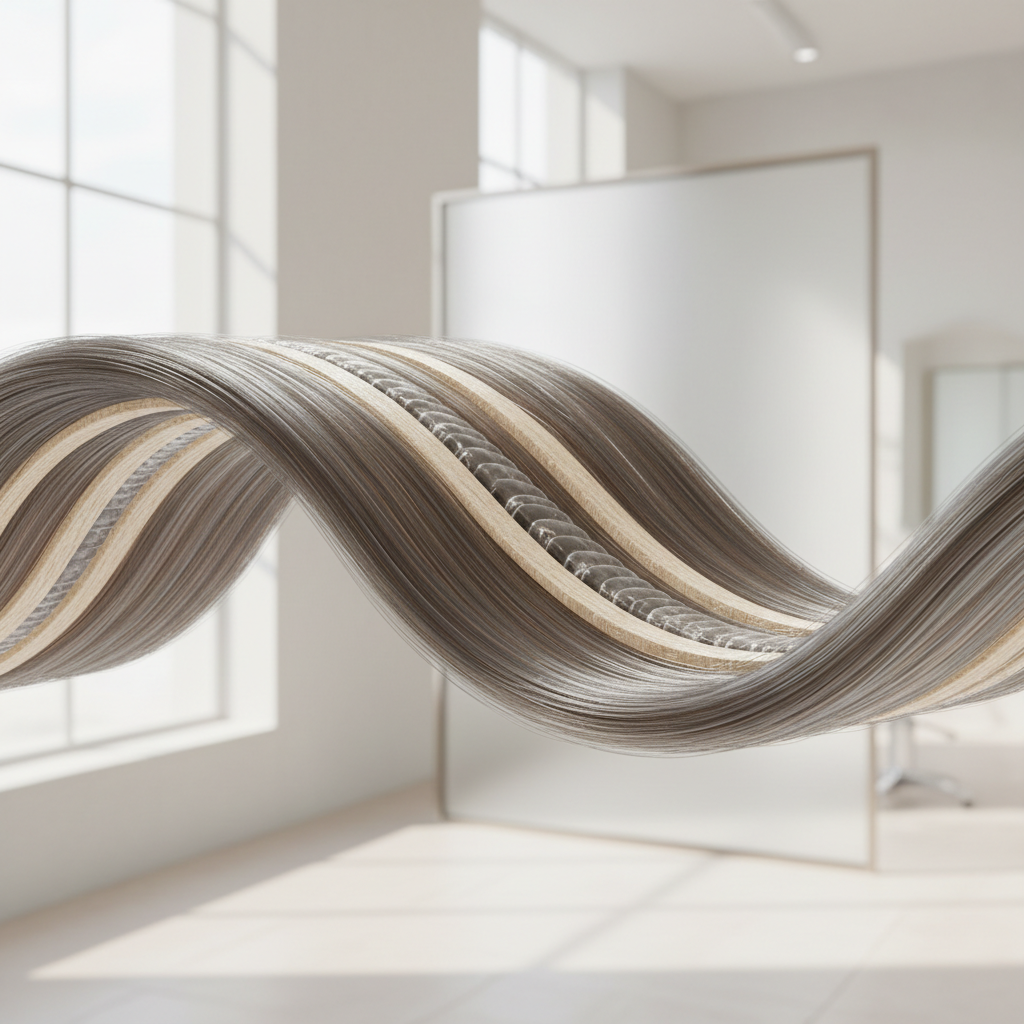
The hair shaft, the visible part of the hair, is a complex biological structure composed of three primary layers: the cuticle, cortex, and medulla.
Introduction
The hair shaft is the part of the hair that extends beyond the surface of the skin. While it may appear as a simple strand, it is a sophisticated biological structure with a complex architecture designed for strength, flexibility, and protection. Understanding its composition is fundamental to comprehending hair health, common hair issues, and the efficacy of various haircare treatments.
Each hair shaft originates from a follicle embedded within the dermis, the inner layer of the skin. As cells proliferate within the follicle's bulb, they undergo keratinization, a process where they fill with keratin proteins and lose their nucleus, forming dead, hardened cells that make up the hair shaft.
The Three Layers of the Hair Shaft
The hair shaft is comprised of three distinct layers, each contributing to its overall properties:
- Cuticle: The outermost protective layer.
- Cortex: The central and thickest layer, providing strength and colour.
- Medulla: The innermost core, present in some hair types.
Let's explore each layer in detail.
The Cuticle
The cuticle is the hair's first line of defense, a transparent, outermost layer composed of dead, flattened, overlapping cells. These cells, resembling shingles on a roof, are arranged in a downward-facing direction, from the root towards the tip of the hair. This arrangement provides physical protection against external damage, chemical aggressors, and moisture loss.
Key characteristics and functions of the cuticle include:
- Protection: Shields the inner cortex from environmental stressors, such as UV radiation, pollution, and mechanical friction.
- Smoothness and Shine: When the cuticle lies flat and undisturbed, it reflects light evenly, contributing to the hair's natural luster and smooth feel. Damage or disruption to the cuticle can lead to dullness and roughness.
- Porosity Control: The integrity of the cuticle largely determines the hair's porosity, which is its ability to absorb and retain moisture. A tightly sealed cuticle indicates low porosity, while a raised or damaged cuticle indicates higher porosity.
- Chemical Barrier: It resists the penetration of certain chemicals, though strong alkaline substances can cause it to lift and open, allowing access to the cortex.
The cuticle layers are cemented together by a lipid-rich intercellular cement, further enhancing its protective barrier function. The condition of the cuticle is often a primary indicator of overall hair health.
The Cortex
Beneath the protective cuticle lies the cortex, the main body of the hair shaft and its thickest layer, typically accounting for 75-90% of the hair's total weight. The cortex is composed of elongated, spindle-shaped cortical cells packed with keratin fibres, which are oriented parallel to the length of the hair strand. These keratin fibres are twisted into rope-like structures called macrofibrils, which in turn are made up of microfibrils.
The cortex is responsible for the majority of the hair's mechanical properties and its aesthetic characteristics:
- Strength and Elasticity: The high concentration of keratin proteins, cross-linked by disulfide bonds, provides the hair with its remarkable tensile strength and elasticity, allowing it to stretch and return to its original shape without breaking.
- Melanin Pigmentation: The cortex contains melanin, the pigment responsible for natural hair colour. Eumelanin produces black and brown shades, while pheomelanin produces red and yellow shades. The quantity, type, and distribution of these melanin granules determine the specific hue and depth of a person's hair colour.
- Moisture Content: The cortex also holds the majority of the hair's internal moisture, which is crucial for its flexibility and manageability. Dehydration of the cortex can lead to brittleness and breakage.
- Chemical Alterations: Most chemical treatments, such as colouring, perms, and relaxers, work by penetrating the cuticle and altering the disulfide bonds and/or melanin within the cortex to achieve desired changes.
The Medulla
The innermost layer of the hair shaft is the medulla. It is a soft, central core that is not always present in all hair types or even within all hairs on the same head. When present, the medulla can be continuous, interrupted, or fragmented.
The exact function of the medulla is not fully understood, but it is believed to play a minor role, if any, in the hair's overall strength or physical properties. It is often absent in fine hair and more prominent in coarse or thick hair. Some theories suggest it may be involved in regulating heat, trapping air for insulation, or even acting as a rudimentary structural support, though these roles are largely speculative compared to the well-defined functions of the cuticle and cortex.
Intercellular Cement and Hair Bonds
Beyond these three primary layers, the hair shaft also contains crucial "glue" and connections that hold it together and contribute to its integrity:
- Cell Membrane Complex (CMC): This is a lipid-rich, proteinaceous cement that binds the cuticle cells to each other and to the cortex. It is vital for maintaining the structural integrity of the hair and plays a significant role in its barrier function and resilience.
- Disulfide Bonds: These are strong chemical bonds within the keratin proteins of the cortex, formed between sulfur atoms in adjacent amino acid chains. Disulfide bonds are primarily responsible for the hair's strength, elasticity, and shape memory. They are significantly altered by chemical processes like perms and relaxers.
- Hydrogen Bonds: Weaker than disulfide bonds, hydrogen bonds are temporary bonds that can be broken by water and reformed as the hair dries. They contribute to the hair's temporary shape, which is why styling with heat or water can change hair's configuration until it gets wet again.
- Salt Bonds: Also temporary and easily broken by changes in pH, salt bonds contribute to the hair's elasticity and can be disrupted by alkaline or acidic products.
Conclusion
The hair shaft, from its protective cuticle to its robust cortex and occasional medulla, is a marvel of biological engineering. Each layer works in concert to provide strength, flexibility, colour, and protection. A healthy hair shaft is characterized by an intact cuticle, a well-hydrated cortex, and strong internal bonds. Understanding this intricate structure empowers individuals to make informed decisions about their haircare routines and to appreciate the complex science behind healthy, beautiful hair. Watermans products are formulated with ingredients that care for all layers of the hair shaft.
Where Watermans fits
If you want a routine built around the science above, these are the products from the range that apply here: