Sulphate-Free Haircare Benefits: Evidence, Chemistry, and Results
9 min read ·
Discover the science behind Sulphate-Free Haircare Benefits: protect your scalp barrier, retain hair colour, prevent cuticle damage, and reduce fibre breakage.
Quick answer: Real Sulphate-Free Haircare Benefits stem from the use of milder surfactants that clean the scalp without stripping its delicate lipid barrier or leaching cosmetic dye molecules. By avoiding aggressive detergents such as sodium lauryl sulphate, these formulations help preserve natural sebum, reduce cuticle lifting, and minimise scalp irritation. However, sulphate-free cleansers are not a cure for medical hair loss conditions like androgenetic alopecia, and individuals using heavy silicone stylers may occasionally need stronger clarifying agents to prevent buildup.
Key takeaways
- Sulphate-free formulations replace harsh anionic detergents with amphoteric, non-ionic, or gentler anionic surfactants like glucosides, isethionates, and betaines.
- The primary structural benefit is cuticle preservation: gentler cleansing reduces hair shaft swelling and minimises lipid loss from the cell membrane complex.
- Colour-treated hair retains artificial pigment significantly longer because milder cleansers cause less cuticle abrasion and water uptake during washing.
- Sensitive, dry, or eczema-prone scalps experience fewer flare-ups due to reduced barrier disruption and decreased transepidermal water loss.
- Sulphate-free products clean through micellar action rather than harsh dissolution, meaning they produce a denser, less aerated lather that cleans just as effectively without over-stripping.
Sulphate-Free Haircare Benefits: what the evidence shows
Scientific interest in cosmetic surfactants demonstrates that standard sulphates, particularly sodium lauryl sulphate (SLS) and to a lesser extent sodium laureth sulphate (SLES), can compromise both skin and hair proteins. Understanding Sulphate-Free Haircare Benefits requires examining how these formulas interact with the hair fibre and scalp biology.
Cosmetic surfactants are surface-active agents designed to bind to water-insoluble sebum and debris, allowing them to rinse away. Sulphates possess high critical micelle concentrations and potent degreasing capacities. While this removes dirt, it also extracts structural lipids from the cell membrane complex (CMC) of the hair shaft. Over repeated wash cycles, this extraction leaves the outer cuticle layer brittle, elevated, and prone to mechanical friction.
Research published in the International Journal of Cosmetic Science shows that gentler, sulphate-free cleansing systems preserve the hydrophobic 18-methyleicosanoic acid (18-MEA) layer that protects the hair shaft. By maintaining this natural lipid envelope, sulphate-free options reduce cuticle roughness, limit electrostatic charge, and keep moisture from escaping the hair cortex.
On the scalp, sulphates penetrate the stratum corneum, denaturing structural keratin and dissolving intercorcellular lipids like ceramides. Clinical dermatology studies frequently use SLS as a benchmark irritant precisely because it reliably disrupts the skin barrier. Switching to sulphate-free alternatives prevents this chemical stress, maintaining scalp barrier function and lowering the incidence of contact dermatitis, itching, and dryness.
| Feature | Sulphate Cleansers (e.g., SLS, SLES) | Sulphate-Free Cleansers (e.g., Isethionates, Glucosides) |
|---|---|---|
| Primary Surfactant Source | Synthetic or modified palm/petroleum | Coconut, sugar, or amino acid derivatives |
| Cleansing Mechanism | Rapid emulsification, high lipid stripping | Gentle micellar capture, selective sebum removal |
| Impact on Hair Cuticle | Lifts cuticle scales, leaches CMC lipids | Smoothes cuticle, retains protective 18-MEA |
| Colour Retention | Faster dye leaching due to cuticle opening | Higher retention of oxidative and direct dyes |
| Scalp Barrier Impact | Higher risk of transepidermal water loss | Preserves ceramides and acid mantle pH (4.5 to 5.5) |
| Lather Characteristics | Flashy, high-volume, loose foam | Dense, creamy, micro-bubble lather |
What the evidence does not show
It is vital to separate cosmetic reality from marketing myths. Sulphate-free products are often marketed with sweeping, unsubstantiated claims that muddy consumer understanding.
First, sulphates do not cause follicular hair loss. Conditions such as androgenetic alopecia (pattern baldness) are driven by genetic sensitivity to dihydrotestosterone (DHT), not by hair wash ingredients. Similarly, systemic shedding conditions like telogen effluvium stem from physiological shocks, hormonal shifts, nutritional deficiencies, or severe stress. While a sulphate shampoo can dry the hair fibre enough to cause mechanical breakage along the shaft, it does not choke hair follicles or cause hair to fall out from the root.
Second, sulphates are not systemic toxins or carcinogens at cosmetic concentrations. Regulatory bodies, including the Cosmetic Ingredient Review (CIR) Expert Panel and the European Commission's Scientific Committee on Consumer Safety (SCCS), have reviewed the toxicology data extensively. They concluded that sulphates are safe for use in wash-off personal care formulations when formulated to minimise irritation. The decision to switch should be based on fibre health and scalp comfort, not chemical alarmism.
Surfactant chemistry: the mechanism of gentler cleansing
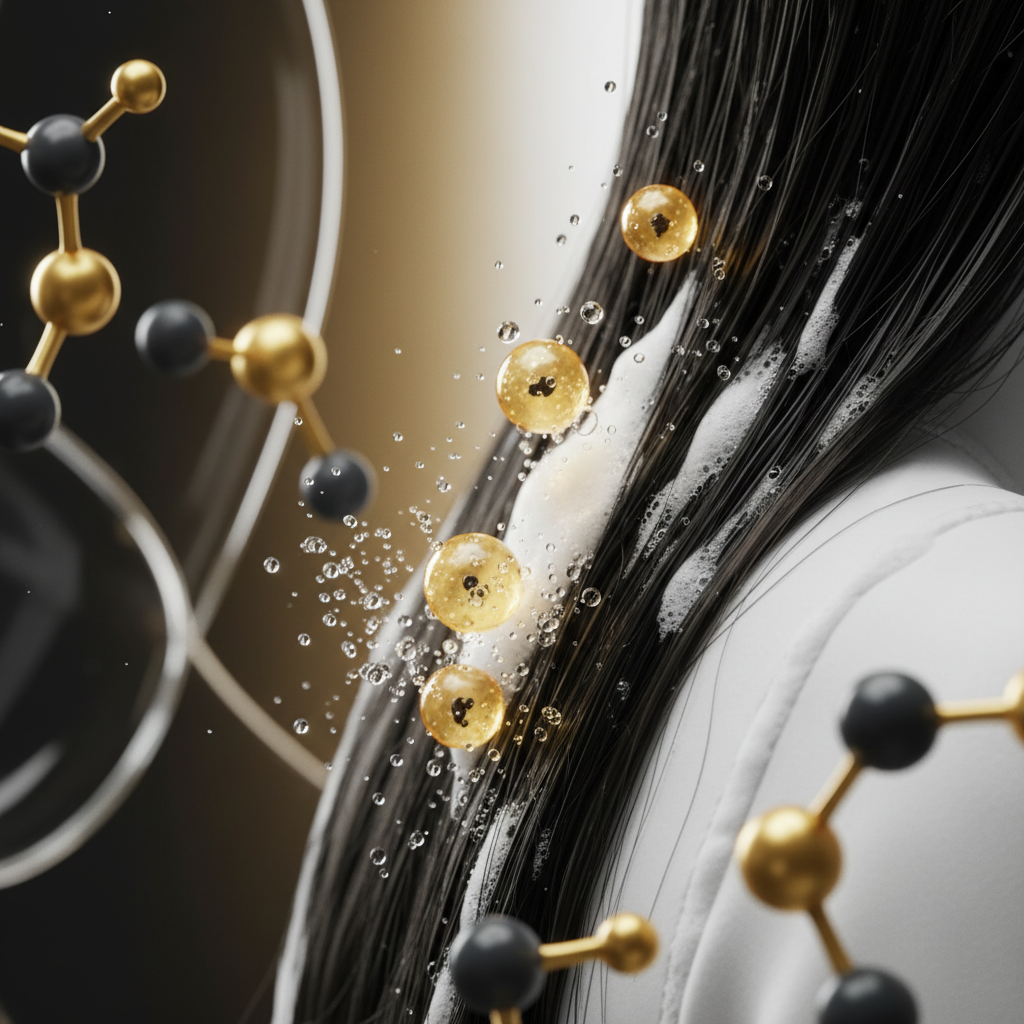
To understand why gentle cleansers work differently, look at surfactant molecular structure. Standard sulphates feature small, highly polar head groups that can easily squeeze into the lipid bi-layers of the stratum corneum and the hair cuticle. Once inside, their charged heads pull water molecules into places they should not be, swelling the cuticle and loosening intercellular bonds.
Sulphate-free formulas rely on alternative classes of surfactants:
- Isethionates (e.g., Sodium Cocoyl Isethionate): Known colloquially as "baby foam", these anionic surfactants have a larger, softer molecular profile that cleans thoroughly while interacting minimally with skin proteins.
- Glucosides (e.g., Decyl Glucoside, Coco Glucoside): Non-ionic surfactants derived from plant sugars and fatty alcohols. Because they carry no electrical charge, they do not bind aggressively to the negatively charged surface of hair keratin.
- Betaines and Sultaines (e.g., Cocamidopropyl Betaine): Amphoteric molecules that carry both positive and negative charges. They soften the action of primary cleansers, boost lather density, and reduce potential skin irritation.
- Sarcosinates and Taurates (e.g., Sodium Lauroyl Sarcosinate, Sodium Methyl Cocoyl Taurate): Amino acid-based cleansers that mirror the natural building blocks of the skin, offering luxurious slip and cleansing at an acidic pH.
By blending these modern surfactants, formulators achieve a balanced micellar matrix. This matrix lifts excess oils and airborne pollution without dissolving the vital lipids that cement the hair cuticle closed.
Signs your routine needs a sulphate-free switch
How do you tell if your current wash routine is too aggressive? Watch for these common signs:
- Rapid colour fade: If your fresh salon colour or gloss fades dramatically within three to four washes, your cleanser is likely lifting the cuticle and washing dye pigments down the drain.
- Persistent post-wash tightness: If your scalp feels tight, itchy, or stinging within an hour of washing, your surfactant system is stripping the stratum corneum.
- Mid-shaft frizzy halo: When hair dries with a rough, fuzzy texture despite using conditioner, the cuticle scales are likely raised from harsh degreasing.
- Reactive oiliness: Stripping the scalp of all sebum can trigger compensatory sebum production, leaving your roots greasy 24 hours after washing while your ends remain brittle.
- Excessive wet tangling: Hair fibres that snag, squeak aggressively, or snap easily when wet have lost their surface lubricity and protective lipids.
How to use sulphate-free formulas effectively
Because gentler surfactants behave differently from traditional foams, getting the best results requires slight technique adjustments:
- Drench the hair completely: Sulphate alternatives need ample water to distribute evenly. Stand under warm running water for at least a full minute before applying product.
- Emulsify in your palms first: Rub the cleanser between wet hands to activate the micro-foam before applying it to the scalp.
- Target the roots, not the lengths: Massage the formula directly onto the scalp with your fingertips. The lather that rinses down the lengths is more than enough to cleanse the hair shaft without drying it out.
- Use more water, not more product: If you are not getting sufficient lather, do not immediately double the amount of cleanser. Add a splash of water to your scalp to re-activate the surfactants.
- Rinse thoroughly: Plant-based and amino acid surfactants can feel richer. Take an extra 30 seconds to rinse completely to ensure no residue lingers on the scalp.
When hair breakage or scalp irritation has another cause
While switching to a milder routine can transform hair texture, not all hair issues originate from your shampoo bottle.
If you are experiencing noticeable hair thinning, widening partings, or clumps of hair coming out in the shower, the problem is not surfactant-induced damage. True hair loss originates below the surface. Alopecia areata, androgenetic thinning, thyroid dysfunction, and iron deficiency require medical diagnosis and targeted systemic treatments.
Similarly, chronic flaking, thick greasy scales, or persistent scalp redness may indicate seborrhoeic dermatitis or scalp psoriasis. These conditions stem from inflammatory responses to Malassezia yeast or abnormal skin cell turnover, not basic surfactant irritation. In such cases, switching to a simple sulphate-free formula will not clear the issue; you may require medicated agents containing ketoconazole, ciclopirox olamine, or salicylic acid.
Professional insight: the Watermans approach
Gentle, physiologically aligned cleansing forms the core of thoughtful scalp care. Products like Watermans GrowMe Shampoo reflect this approach by relying on gentle cleansing agents rather than harsh, stripping sulphates.
By pairing a mild surfactant base with active botanical and nutritional ingredients like biotin, rosemary, caffeine, and niacinamide, the formula maintains the scalp's protective moisture barrier. This creates an optimal environment for hair that feels stronger and shows visibly reduced breakage from daily mechanical wear.
Frequently asked questions about Sulphate-Free Haircare Benefits
What are the main Sulphate-Free Haircare Benefits for dry or damaged hair?
The primary benefit is the preservation of internal moisture and structural lipids. Traditional sulphates strip the natural fatty acids that bind the outer cuticle scales together. By using gentler alternatives, sulphate-free cleansers keep the cuticle flat and smooth. This directly reduces moisture loss, limits fibre friction, prevents mechanical breakage, and leaves brittle hair feeling softer and more supple over time.
Will sulphate-free shampoo clean dirty or oily hair properly?
Yes. Modern sulphate-free cleansers use balanced combinations of amphoteric and non-ionic surfactants that form effective cleaning micelles. While they may not produce the airy, bubbling froth of an SLS shampoo, their micro-foam binds to dirt, pollutants, and sebum thoroughly. If your hair is heavily soiled, a double cleanse with a sulphate-free formula clears away buildup without dehydrating the scalp.
Can sulphate-free products help prolong salon colour?
Yes. Sulphate-free formulas dramatically extend the lifespan of cosmetic hair colour. Water and aggressive surfactants cause the hair fibre to swell, forcing the cuticle open and allowing artificial dye molecules to wash away. Milder surfactant systems minimise cuticle swelling during washing, which keeps the protective outer layer closed and locks the colour molecules securely inside the hair cortex.
Do sulphate-free shampoos stop hair loss?
No. Sulphate-free shampoos do not prevent or treat medical hair loss, such as androgenetic alopecia or telogen effluvium, which are regulated by genetics, hormones, and systemic health. However, gentler formulas do reduce hair breakage along the shaft. Less breakage means ends stay thicker and fuller, which is often confused with reduced shedding from the follicle.
Conclusion
Understanding the structural science of hair makes the advantages clear: real Sulphate-Free Haircare Benefits come down to barrier preservation, cuticle integrity, and balanced cleansing. By replacing stripping anionic detergents with refined, biocompatible surfactants, you protect your scalp's protective mantle and safeguard the hair fibre against dryness and mechanical breakdown. While gentle products cannot alter genetic shedding, matching your cleansing routine to your hair's physiological needs ensures healthier, more resilient strands from root to tip.
Sources and references
- Cosmetic Ingredient Review (CIR) Expert Panel. (2010). Final Report on the Safety Assessment of Sodium Lauryl Sulfate and Ammonium Lauryl Sulfate. International Journal of Toxicology.
- D'Souza, P., & Rathi, S. K. (2015). Shampoo and Conditioners: What a Dermatologist Should Know? Indian Journal of Dermatology, 60(3), 248-254.
- Robbins, C. R. (2012). Chemical and Physical Behavior of Human Hair (5th ed.). Springer-Verlag Berlin Heidelberg.
- European Commission Scientific Committee on Consumer Safety (SCCS). Opinions on Cosmetic Ingredients and Surfactant Safety profiles.
- Trüeb, R. M. (2007). Shampoos: Ingredients, benefits and efficacy. Journal of the German Society of Dermatology, 5(5), 356-365.
Find these ingredients in Watermans products
- Niacinamide: you will find this ingredient in our Hair Mask.