Sulfates in Shampoo
5 min read ·
Sulfates are a class of detergents used in shampoos to create lather and effectively clean hair by removing dirt, oil, and product buildup.
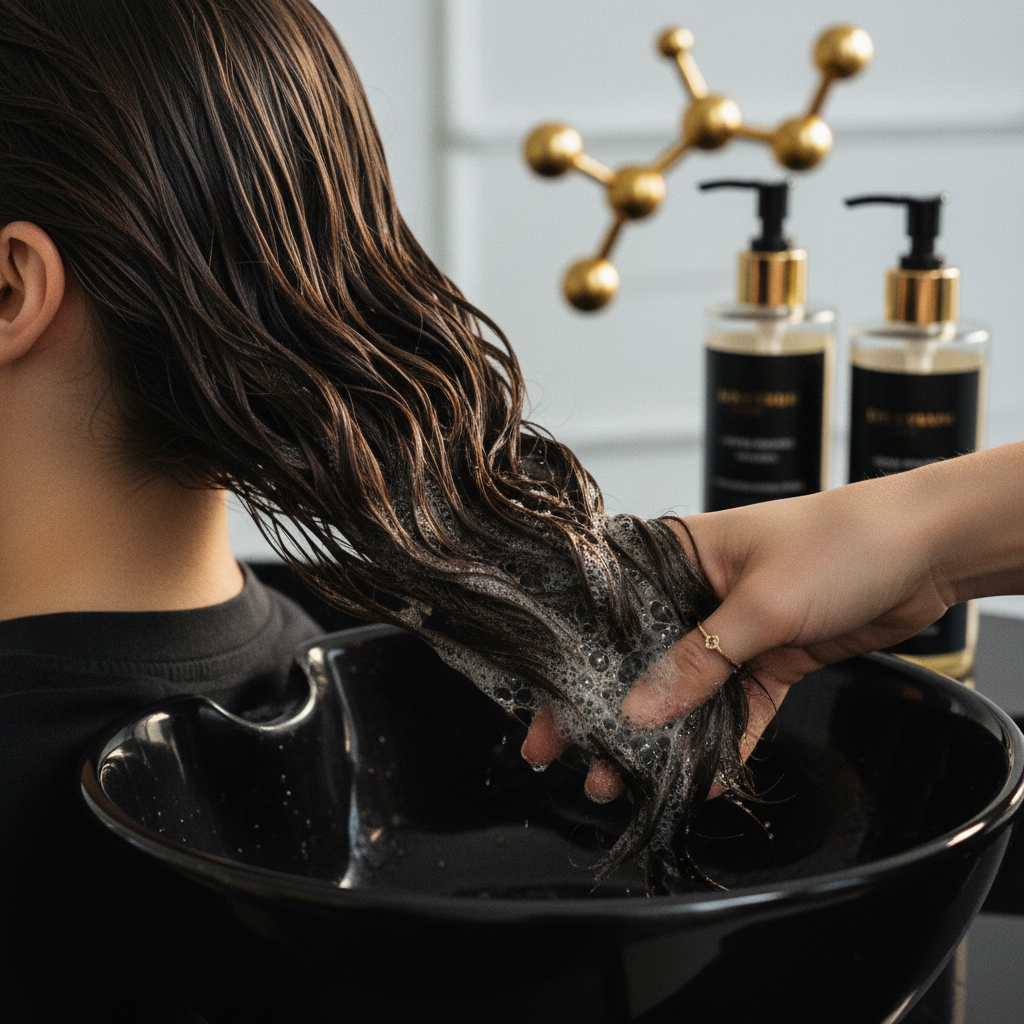
Sulfates are a category of chemical compounds widely used as surfactants in many cleansing products, including shampoos. The term "surfactant" is a portmanteau of "surface-active agent," meaning these molecules reduce the surface tension between two liquids or a liquid and a solid. In hair care, this property allows them to lift and suspend oils and dirt, enabling water to rinse them away.
What Are Sulfates?
Chemically, sulfates are salts of sulfuric acid. In shampoos, the most common sulfates are sodium lauryl sulfate (SLS) and sodium laureth sulfate (SLES). While often grouped, they have distinct characteristics:
- Sodium Lauryl Sulfate (SLS): This is a strong anionic surfactant. Its molecular structure allows it to effectively bind to both water and oil, making it highly efficient at emulsifying and removing grease. SLS is known for its ability to produce a rich, dense lather, which consumers often associate with effective cleaning.
- Sodium Laureth Sulfate (SLES): SLES is derived from SLS through a process called ethoxylation, where ethylene oxide is added. This modification makes SLES generally milder than SLS, reducing its potential for irritation while still maintaining excellent cleansing and lathering properties. Many formulations use SLES as a primary surfactant due to this balance.
How Do Sulfates Work in Shampoo?
When you apply shampoo containing sulfates to your hair, several actions occur:
- Emulsification: Hair naturally produces sebum, an oily substance. Styling products also contribute to oil and residue buildup. Sulfates act as emulsifiers, breaking down these oily substances into smaller droplets that can mix with water.
- Lather Formation: The surfactant molecules reduce the surface tension of water, allowing it to mix with air more easily and create foam or lather. This lather helps to distribute the shampoo evenly across the scalp and hair, ensuring comprehensive cleaning.
- Dirt and Oil Removal: The sulfate molecules have a "head" that is attracted to water (hydrophilic) and a "tail" that is attracted to oil and dirt (lipophilic). As you rinse, the hydrophilic heads are pulled away by the water, taking the oil-laden tails, and the attached dirt and grime, with them.
This mechanism effectively cleanses the hair and scalp, removing excess oil, dead skin cells, and product residue, leaving the hair feeling clean and refreshed.
Benefits of Sulfates in Shampoo
For decades, sulfates have been a staple in shampoo formulations due to their effectiveness and economic viability. Their primary benefits include:
- Exceptional Cleaning: Sulfates are highly effective at removing dirt, oil, and heavy product buildup, making them particularly useful for those with oily scalps or who use a lot of styling products.
- Abundant Lather: The rich foam created by sulfates enhances the user experience, providing a satisfying sensation of cleanliness. This lather also helps to spread the shampoo evenly through the hair.
- Cost-Effectiveness: Sulfates are relatively inexpensive to produce, which allows manufacturers to formulate effective shampoos at an accessible price point.
Concerns and Misconceptions
In recent years, sulfates have become a subject of debate, leading to the rise of "sulfate-free" products. Many of these concerns stem from misinterpretations of scientific studies or anecdotal experiences. Some common points of contention include:
- Hair Dryness and Frizz: Stronger sulfates like SLS can be highly effective at stripping oils. For individuals with dry, damaged, or colour-treated hair, this can sometimes lead to excessive moisture loss, resulting in dryness, frizz, or dullness. SLES is generally less harsh.
- Scalp Irritation: In some individuals, particularly those with sensitive skin or certain skin conditions like eczema or contact dermatitis, sulfates (especially SLS) can cause irritation, redness, or itching. This is due to their ability to disrupt the skin barrier.
- Colour Fading: There is a common belief that sulfates cause hair colour to fade more quickly. While strong detergents can indeed strip some pigments, the primary culprit for colour fade is often repeated washing itself, combined with other factors like water temperature and UV exposure. Milder sulfates or sulfate-free options may offer a gentler cleanse for colour-treated hair, but the effect is often less significant than widely perceived.
- Hair Loss: There is no credible scientific evidence to suggest that sulfates directly cause hair loss. Hair loss is a complex issue with many underlying causes, including genetics, hormones, nutrition, and stress. Sulfates, when used as intended in shampoos, do not penetrate the scalp deeply enough or interact with hair follicles in a way that would trigger hair loss.
Sulfates and Hair Type
The suitability of sulfate-containing shampoos largely depends on individual hair and scalp characteristics:
| Hair Type/Concern | Recommendation |
|---|---|
| Oily Scalp/Hair | Sulfate-containing shampoos can be highly effective at controlling oil. |
| Fine Hair | Effective at removing buildup that can weigh down fine hair. |
| Thick/Coarse Hair | Can handle the stronger cleansing action, beneficial for heavier product use. |
| Dry/Damaged Hair | May benefit from sulfate-free or SLES-based shampoos to retain moisture. |
| Colour-Treated Hair | Consider sulfate-free or SLES-based options for potentially gentler care. |
| Sensitive Scalp | Sulfate-free or SLES-based products are often preferred to minimise irritation. |
The "Sulfate-Free" Movement
The rising concern over sulfates has led to a significant increase in sulfate-free shampoo formulations. These products typically use alternative, milder surfactants such as cocamidopropyl betaine, coco-glucoside, or disodium laureth sulfosuccinate. While often gentler, sulfate-free shampoos may produce less lather and might not provide the same deep cleansing power, especially for very oily hair or heavy product users. Some users may experience a transition period where their hair feels different, or they may need to wash more frequently.
Conclusion
Sulfates are powerful detergents that excel at cleansing hair and scalp. While they offer significant benefits, particularly for oily hair, their strong cleansing action can sometimes be overly stripping for certain hair types or sensitive scalps. Understanding the specific type of sulfate (e.g., SLS vs. SLES) and your own hair's needs is key to making an informed choice. There is no universal "best" approach; the optimal shampoo for you will depend on your hair type, scalp condition, and personal preferences, balancing effective cleansing with maintaining hair health.