Understanding Hard Water and Hair Health
6 min read ·
Understanding Hard Water and Hair Health is crucial for maintaining optimal hair condition, as mineral deposits can impact its feel and appearance.
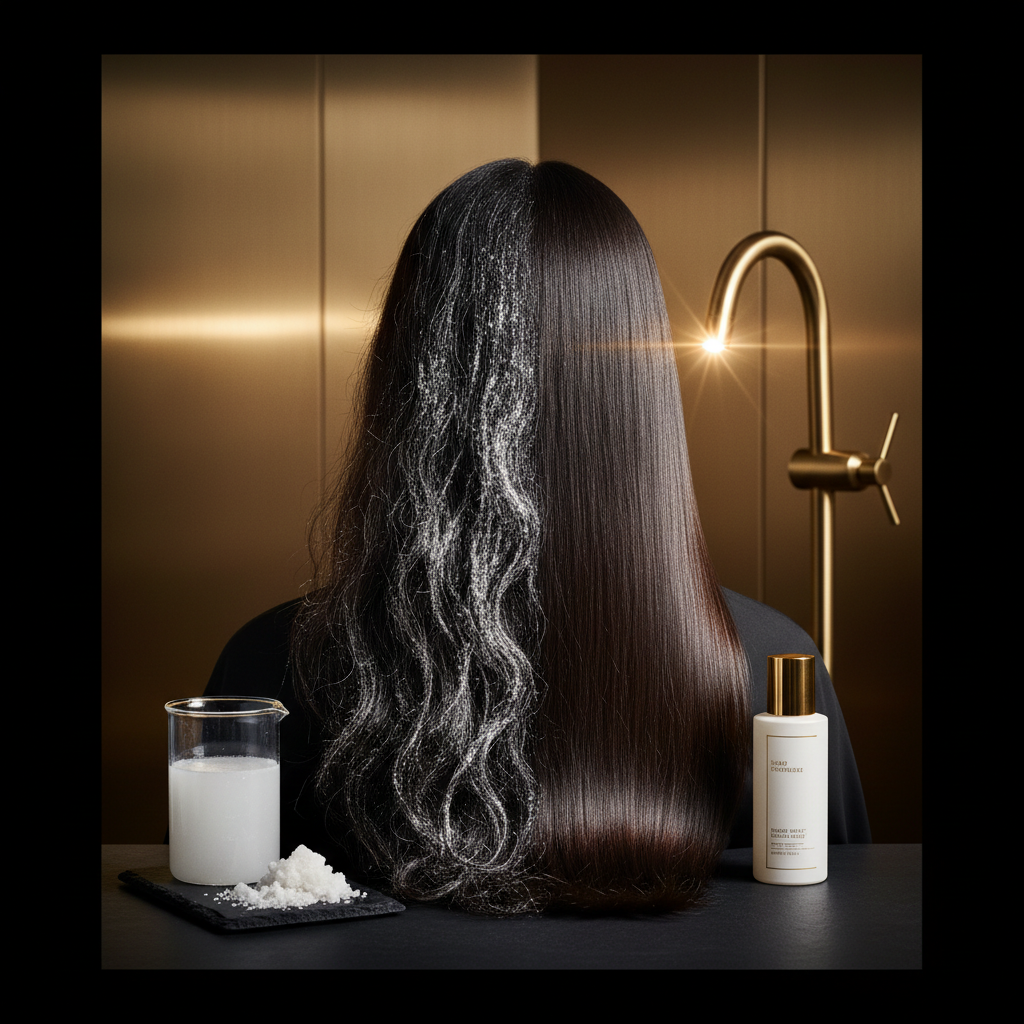
Quick answer: Understanding Hard Water and Hair Health involves recognising that water with high mineral content, primarily calcium and magnesium, can leave deposits on hair. These deposits may affect hair's texture, shine, and manageability, potentially making it feel dry or appear dull. While it doesn't cause hair loss, hard water can contribute to issues like increased friction and product build-up, impacting overall hair condition. Its effects are largely cosmetic, not medical.
Key takeaways
- Hard water contains elevated levels of dissolved minerals, mainly calcium and magnesium.
- These minerals can accumulate on hair, forming a coating that affects its texture and appearance.
- Common signs of hard water's impact include dull, stiff-feeling hair, residue buildup, and reduced lather from shampoos.
- Hard water does not cause hair loss or alopecia, but it can contribute to hair breakage due to increased friction and dryness.
- Solutions range from chelating shampoos to water softeners and filters, aimed at reducing mineral exposure.
Understanding Hard Water and Hair Health: what the evidence shows
Understanding Hard Water and Hair Health involves examining how the mineral content of water interacts with the hair fibre. Hard water is defined by its concentration of dissolved minerals, primarily calcium (Ca2+) and magnesium (Mg2+) ions. The higher the concentration of these multivalent cations, the "harder" the water. Water hardness is typically measured in milligrams per litre (mg/L) of calcium carbonate (CaCO3) or grains per gallon (gpg). For context, water with less than 60 mg/L CaCO3 is generally considered soft, while anything above 120 mg/L CaCO3 is classified as hard, and above 180 mg/L CaCO3 as very hard.
When hard water comes into contact with hair during washing, the calcium and magnesium ions can bind to the hair shaft. Over time, these mineral deposits accumulate, forming a thin, rigid coating on the hair's surface. This coating can interfere with the hair's natural cuticle layers, preventing them from lying flat and smooth. The result is often hair that feels rough, stiff, or straw-like. Studies, including those published in the International Journal of Dermatology, have explored the impact of hard water on hair. For example, research has indicated that hair washed in hard water tends to exhibit decreased manageability and increased friction compared to hair washed in soft water. This increased friction can make hair more susceptible to tangling and, consequently, breakage during styling or brushing. It's important to note that these effects are primarily cosmetic and structural to the hair fibre itself, rather than impacting the hair follicle or causing hair loss.
The interaction between hard water minerals and shampoo ingredients is another important factor. Many shampoos contain anionic surfactants that are designed to clean hair by lifting oils and dirt. However, in hard water, these surfactants can react with calcium and magnesium ions to form insoluble precipitates, often referred to as "soap scum". This reduces the shampoo's ability to lather effectively and cleanse the hair, leaving behind an unwanted residue that further contributes to dullness and stiffness.
What the evidence does not show about hard water and hair
While hard water can undeniably affect the cosmetic properties of hair, there is currently insufficient evidence to conclude that it causes hair loss, male pattern baldness, or other forms of alopecia. Claims linking hard water directly to follicle damage or hair shedding are not supported by robust scientific research. The primary concerns relate to the hair shaft's integrity and appearance, not the health or function of the hair follicle itself. Therefore, concerns about hard water leading to permanent hair thinning or baldness are generally unfounded.
How hard water affects the hair fibre
The mechanism by which hard water impacts hair is largely physical and chemical, occurring on the surface of the hair shaft:
- Mineral Deposition: Calcium and magnesium ions bond with the negatively charged sites on the hair's cuticle, accumulating over time. This mineral layer makes the hair rough and can disrupt the natural overlapping of cuticle scales.
- Increased Friction: The rougher surface caused by mineral deposits leads to higher friction between individual hair strands and with styling tools. This increased friction can weaken the hair fibre, making it more prone to tangles, knots, and ultimately, breakage.
- Reduced Shine: A smooth cuticle reflects light, giving hair its natural shine. When mineral deposits lift the cuticles, light is scattered rather than reflected, resulting in a dull or lacklustre appearance.
- Product Inefficiency: As mentioned, hard water minerals can react with surfactants in shampoos and conditioners, forming insoluble residues. This reduces the efficacy of hair products, meaning less effective cleansing and conditioning, and often requires using more product to achieve the desired results.
- Dryness: The mineral layer can also prevent moisture from properly penetrating the hair shaft, contributing to a feeling of dryness and brittleness, even when using hydrating products.
Signs your hair is affected by hard water
Identifying the signs of hard water exposure in your hair can help you take appropriate action. Look out for:
- Dullness: Hair lacks its natural shine and appears lifeless, even after washing.
- Stiffness or Roughness: Hair feels coarse, rigid, or straw-like to the touch, rather than soft and supple.
- Tangles and Snarls: Hair is difficult to comb or brush, tangles easily, and feels "sticky" or matted.
- Reduced Lather: Shampoos struggle to produce a rich lather, even when using a generous amount.
- Residue: A visible film or white flaky residue might be present on hair, especially near the scalp, or on shower fixtures.
- Colour Changes: For coloured hair, hard water can sometimes cause tones to shift or fade more quickly, or even develop a brassy tint.
- Increased Breakage: While not directly causing hair loss, the increased friction and dryness can lead to more hair snapping along the shaft.
What you can do about hard water and hair health
Several strategies can help mitigate the effects of hard water on your hair:
- Chelating or Clarifying Shampoos: These shampoos contain ingredients like EDTA (ethylenediaminetetraacetic acid) or phytic acid that bind to minerals, helping to remove them from the hair shaft. Use them periodically (e.g., once a week or fortnight) rather than every wash to avoid over-stripping.
- Acidic Rinses: A dilute apple cider vinegar rinse (1 part vinegar to 4 parts water) can help to dissolve mineral deposits and smooth the hair's cuticle, restoring shine. Use sparingly.
- Shower Filters: These devices attach to your showerhead and claim to reduce mineral content. While some can be effective, their efficiency varies, and they don't typically soften water to the same extent as a whole-house system.
- Water Softeners: For a comprehensive solution, a whole-house water softening system removes calcium and magnesium ions from all water entering your home. This is the most effective way to eliminate hard water effects but is a significant investment.
- Hair Care Products: Using deeply moisturising conditioners and masks can help to counteract the dryness caused by mineral buildup, improving hair's flexibility and feel.
When the cause may be something else
It