Sulfate vs Sulfate-Free Shampoos: An Evidence-Based Guide
9 min read ·
Explore the science behind Sulfate vs Sulfate-Free Shampoos to understand how surfactants affect scalp lipids, hair breakage, and colour retention.
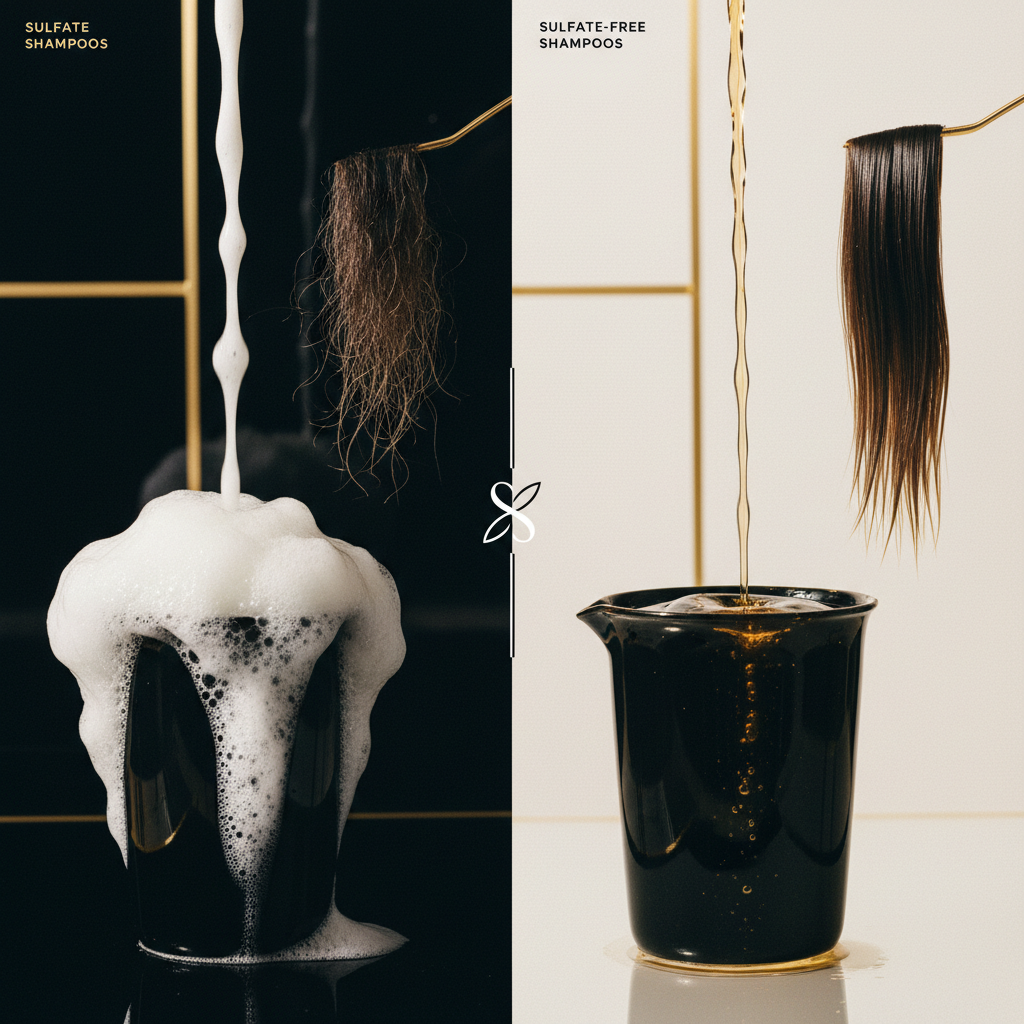
Quick answer: When comparing Sulfate vs Sulfate-Free Shampoos, the core difference lies in surfactant cleansing power and surface charge. Sulfate shampoos use anionic detergents like sodium laureth sulfate to thoroughly strip sebum, dirt, and heavy silicone buildup, which benefits oily scalps and swimmers. Sulfate-free formulas use milder glucoside or taurate surfactants that preserve the hair cuticle's lipid layer, making them gentler on colour-treated, dry, or chemically processed hair. However, sulfate-free shampoos may struggle to clear heavy styling residues, requiring occasional clarifying.
Key takeaways
- Sulfates are synthetic anionic surfactants that excel at dissolving stubborn oils, environmental grime, and insoluble cosmetic polymers.
- Sulfate-free alternatives rely on gentler cleansing agents, which help retain the hair fibre's protective 18-methyleicosanoic acid (18-MEA) lipid layer and reduce artificial dye fading.
- Neither surfactant category causes or treats follicular hair loss (alopecia), though harsh cleansing can increase mechanical hair breakage along compromised shafts.
- Scalp sensitivity and contact dermatitis occur from both classes of surfactant, although sodium lauryl sulfate has a higher documented irritancy threshold.
- The ideal choice depends entirely on your scalp sebum production, hair porosity, styling product usage, and water hardness.
Sulfate vs Sulfate-Free Shampoos: what the evidence shows
The ongoing debate around Sulfate vs Sulfate-Free Shampoos often treats one category as entirely toxic and the other as purely therapeutic. Cosmetic chemistry paints a far more nuanced picture based on interfacial tension, critical micelle concentration (CMC), and protein extraction.
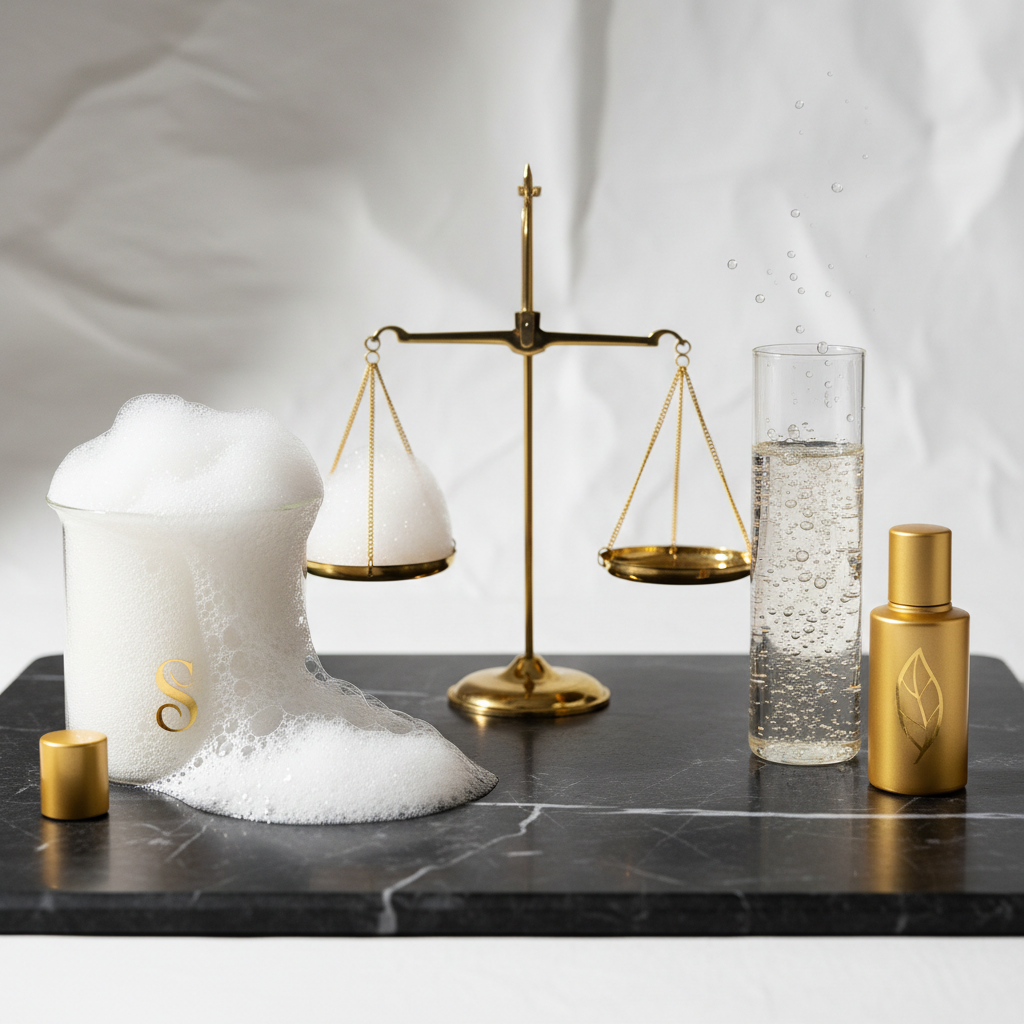
Sulfates are salts of sulfuric acid, most commonly sodium lauryl sulfate (SLS), sodium laureth sulfate (SLES), and ammonium laureth sulfate (ALS). Because of their small molecular size and strong negative charge, they form tight micelles that suspend sebum and mineral deposits efficiently. Controlled dermatological assays, including standard patch tests published in journals such as Contact Dermatitis, demonstrate that SLS disrupts the skin barrier when left on skin at concentrations above 1 to 2 percent. However, modern shampoos rinse off within minutes and combine SLES with amphoteric co-surfactants like cocamidopropyl betaine to lower irritancy significantly.
Sulfate-free shampoos substitute these harsh salts with gentler alternatives such as sodium cocoyl isethionate, decyl glucoside, coco-glucoside, or disodium laureth sulfosuccinate. Research in the International Journal of Trichology indicates that these surfactants do not swell the hair cuticle to the same extent as strong sulfates. As a result, they cause less protein loss from the hair cortex and preserve artificial colour pigments for significantly longer wash cycles.
| Formulation Feature | Sulfate Shampoos | Sulfate-Free Shampoos |
|---|---|---|
| Primary Surfactants | Sodium laureth sulfate, ammonium laureth sulfate | Decyl glucoside, sodium cocoyl isethionate |
| Cleansing Intensity | High (strips sebum and non-polar residues) | Mild to moderate (preserves natural surface lipids) |
| Impact on Cuticle Swelling | Higher pH potential; lifts cuticle scales | Minimal swelling; maintains flat cuticle alignment |
| Colour Retention | Causes faster pigment wash-out | Preserves oxidative and semi-permanent colour |
| Lather Profile | Rich, dense, flash lather | Lower foam density, finer bubbles |
| Risk Profile | Can cause dryness or fibre breakage on fragile hair | Can lead to residue buildup on oily scalps |
What the evidence does not show
Public discourse around shampoo formulations contains persistent myths that cosmetic dermatology does not support:
- They do not cause follicular hair loss: There is no peer-reviewed evidence showing that sulfates cause miniaturisation of the hair follicle, male pattern baldness, or female pattern hair loss. Any claims linking sulfates directly to permanent alopecia are unsupported.
- Sulfates are not carcinogenic at cosmetic concentrations: Regulatory authorities, including the Scientific Committee on Consumer Safety (SCCS) and the Cosmetic Ingredient Review (CIR), have repeatedly evaluated SLES and SLS. They conclude that both are safe when formulated for rinse-off use.
- "Sulfate-free" does not automatically mean non-irritating: Botanical extracts, essential oils, and secondary glucosides used in sulfate-free formulations can still trigger allergic contact dermatitis in sensitive individuals.
The biological and chemical mechanisms
Every hair fibre is covered by an ultra-thin protective lipid membrane known as the epicuticle. The predominant lipid here is 18-methyleicosanoic acid (18-MEA), which provides natural hydrophobicity, water-repellency, and low surface friction.
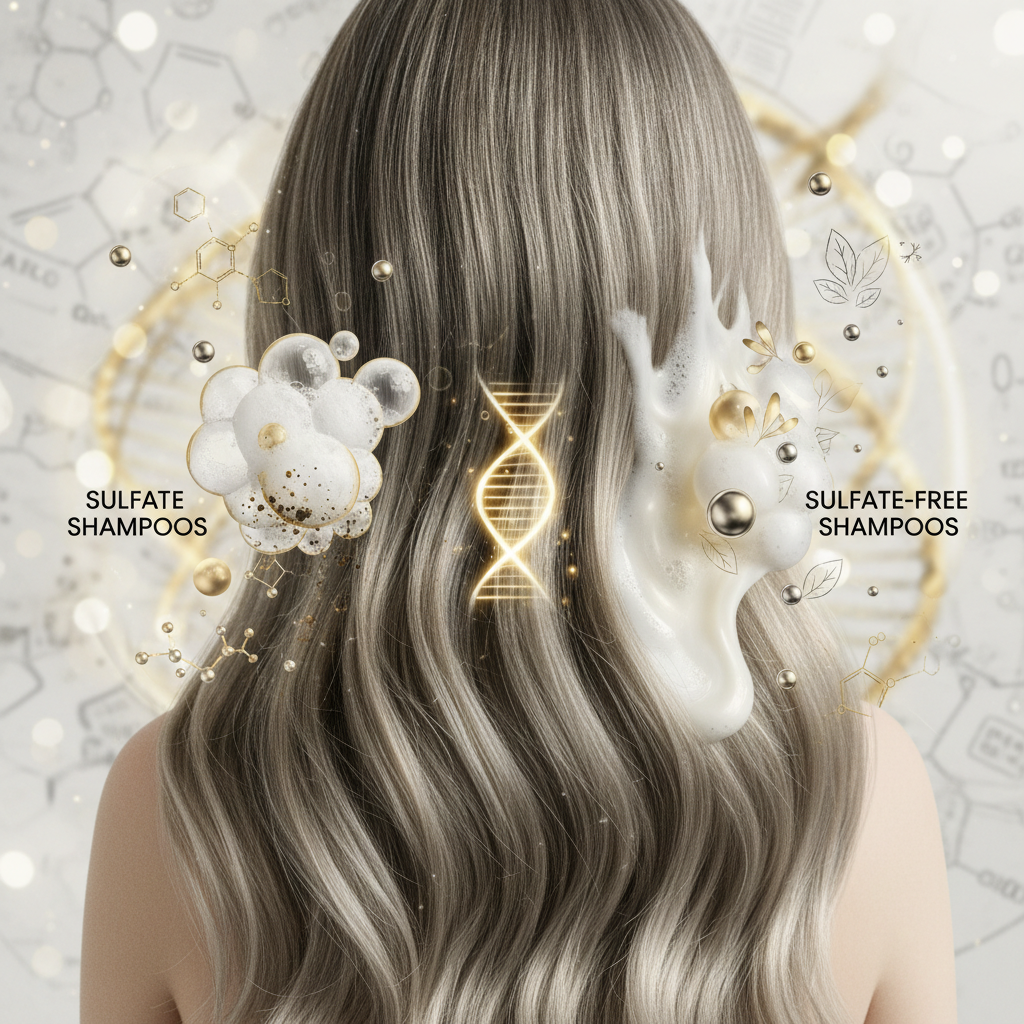
When you apply a high-pH or highly concentrated sulfate wash, the detergent binds to these surface lipids and strips them alongside environmental dirt. Once 18-MEA is degraded, the hair shaft becomes hydrophilic (water-attracting). It absorbs excess moisture, swells, and forces the outer cuticle scales to lift. Over successive washes, lifted cuticles lead to mechanical friction, protein denaturation, split ends, and fibre breakage during brushing.
Sulfate-free formulations operate at a higher CMC and exert less charge repulsion against keratin proteins. By leaving a greater proportion of surface lipids intact, the hair fibre remains smoother, reflects light more uniformly, and retains interior hydration. However, because their detergency is moderate, they do not dissolve heavy petrolatum, mineral oil, or non-water-soluble silicones (such as dimethicone) as readily.
Recognising the signs: which formula does your hair need?
Evaluating whether you need to adjust your routine comes down to observing your scalp skin and the integrity of your hair strands.
Signs you may need a sulfate shampoo
- Your scalp develops an oily sheen within 12 to 24 hours of washing.
- You notice greasy, stubborn flakes that cling to the scalp skin (often linked to Malassezia yeast overgrowth feeding on trapped sebum).
- You regularly use non-soluble styling waxes, heavy pomades, or insoluble silicones.
- Your hair feels weighed down, coated, limp, or stringy despite recent washing.
Signs you should switch to a sulfate-free shampoo
- Your hair feels rough, straw-like, or "crunchy" after washing.
- Your salon hair colour fades significantly within two to three weeks of dyeing.
- You have naturally curly, coily, or high-porosity hair that suffers from extreme dryness.
- Your hair has undergone bleaching, relaxers, or permanent waves, making it vulnerable to breakage.
- Your scalp feels tight, itchy, and irritated immediately after exiting the shower.
What you can do to balance your wash routine
You do not need to choose a permanent camp. Stylists and trichologists frequently recommend a balanced regimen based on your styling habits and environment:
- Use sulfate-free for daily or frequent maintenance: If you wash your hair three or more times a week, a sulfate-free shampoo prevents cumulative lipid depletion and colour loss.
- Incorporate a clarifying wash when necessary: Every three to four weeks, introduce a formula with stronger cleansing agents (such as a gentle sulfate or olefin sulfonate) to remove stubborn mineral scale from hard water and product buildup.
- Control water temperature: Wash your hair in lukewarm water rather than hot water. High temperatures amplify cuticle lifting regardless of which surfactant you use.
- Follow with conditioned protection: Always apply a conditioner formulated with cationic surfactants to smooth the cuticle down and neutralise negative charges on the hair shaft.
When the underlying cause is something else
If you are experiencing noticeable hair shedding or continuous scalp inflammation, changing your shampoo surfactant will not resolve the root problem.
Hair shedding (such as telogen effluvium) happens when a systemic shock, nutritional deficiency (such as low ferritin or vitamin D), thyroid disorder, or hormonal shift forces follicles into a premature resting phase. Shampoos work solely on the scalp surface and the dead keratin fibre; they do not trigger shedding deep within the dermal papilla.
Similarly, severe scalp scaling accompanied by erythema and thick silvery plaques is often scalp psoriasis, an autoimmune condition. Flaking accompanied by yellow scales and redness usually indicates seborrhoeic dermatitis. Neither condition is cured simply by switching to a sulfate-free shampoo; both require targeted antifungal or anti-inflammatory treatments.
When to seek professional advice
Consult a GP, dermatologist, or qualified trichologist if you encounter:
- Sudden, excessive hair shedding (clumps coming out during washing or brushing over several weeks).
- Distinct round patches of complete hair loss on the scalp.
- Persistent burning, pain, bleeding, or pustules across the scalp surface.
- Scalp flaking and itching that fails to respond to over-the-counter medicated washes after four weeks.
Supporting hair health from the roots with Watermans
Choosing the right surfactant is only one half of healthy hair management. While gentle cleansing prevents external cuticle damage and breakage along the length of the hair, supporting the scalp environment is essential for fuller-looking, resilient hair.
Watermans Grow Me Shampoo is engineered without harsh, moisture-stripping sulfates. Instead, it balances gentle cleansing agents with targeted scalp-supportive ingredients, including biotin, caffeine, rosemary extract, niacinamide, and argan oil. By maintaining a clean, nourished scalp without stripping the natural moisture barrier, it helps keep hair looking revitalised, thick, and healthy from base to tip.
Frequently asked questions about Sulfate vs Sulfate-Free Shampoos
Do sulfate shampoos cause hair loss?
No, sulfate shampoos do not cause follicular hair loss or pattern baldness. Sulfates are rinse-off surfactants that clean the scalp surface. While aggressive cleansing can dry out damaged hair fibres and cause breakage along the shaft, it does not damage or shrink the hair follicle beneath the skin.
Between Sulfate vs Sulfate-Free Shampoos, which is better for coloured hair?
Sulfate-free shampoos are decisively better for colour-treated hair. Sulfate detergents open the cuticle layer wider and wash away artificial pigment molecules much faster. Gentle, sulfate-free cleansers maintain cuticle alignment, reducing colour fading and extending the vibrancy of salon dyes.
Why does my hair feel greasy after using a sulfate-free shampoo?
Sulfate-free cleansers contain milder surfactants that produce smaller micelles, which may not dissolve thick sebum deposits, heavy silicones, or petrolatum-based styling products. If your hair feels coated or limp, you may need to double-cleanse or occasionally clarify using a stronger wash.
Can sulfate-free shampoos lather as well as sulfate shampoos?
Traditional sulfate shampoos generate a quick, dense foam with large bubbles. Sulfate-free alternatives do lather, but their foam is typically creamier, denser, and takes more mechanical friction and water to build up. Cleansing efficacy does not depend on the amount of lather produced.
Are sulfates safe to use if I have an oily scalp?
Yes. For individuals with high sebum production or those who work in dusty environments, a sulfate-based shampoo provides the necessary detergency to break down stubborn oil layers, prevent blocked pores, and discourage the overgrowth of Malassezia yeast that triggers dandruff.
Final perspectives on Sulfate vs Sulfate-Free Shampoos
Navigating the choice between Sulfate vs Sulfate-Free Shampoos does not require choosing between chemical toxins and clean alternatives. Sulfates remain safe, exceptionally effective detergents designed for thorough deep cleansing and managing excess scalp sebum. Conversely, sulfate-free cleansers provide a protective, gentle cleanse that prevents colour leaching and minimises cuticle abrasion on fragile or dry strands. Assess your hair's unique porosity, styling habits, and scalp oiliness to choose the surfactant system that best suits your routine.
Sources and references
- Cosmetic Ingredient Review. Final Report on the Safety Assessment of Sodium Lauryl Sulfate and Ammonium Lauryl Sulfate. International Journal of Toxicology, 1983.
- Scientific Committee on Consumer Safety (SCCS). Opinion on Sodium Laureth Sulfate. European Commission, 2010.
- Gavazzoni Dias, M. F. Hair Cosmetics: An Overview. International Journal of Trichology, 2015. DOI: 10.4103/0974-7753.153450.
- D'Souza, P., & Rathi, S. K. Shampoo and Conditioners: What a Dermatologist Should Know? Indian Journal of Dermatology, 2015. DOI: 10.4103/0019-5154.156355.
- Robbins, C. R. Chemical and Physical Behavior of Human Hair. 5th ed., Springer, 2012.
Find these ingredients in Watermans products
- Vitamin D: you will find this ingredient in our Hair Vitamins.
- Niacinamide: you will find this ingredient in our Hair Mask.