The Science of Sulfate Free Cleansing: Evidence and Application
8 min read ·
A detailed guide to Sulfate Free Cleansing: how mild surfactants protect hair lipids, preserve cosmetic colour, and support scalp health without aggressive stripping.
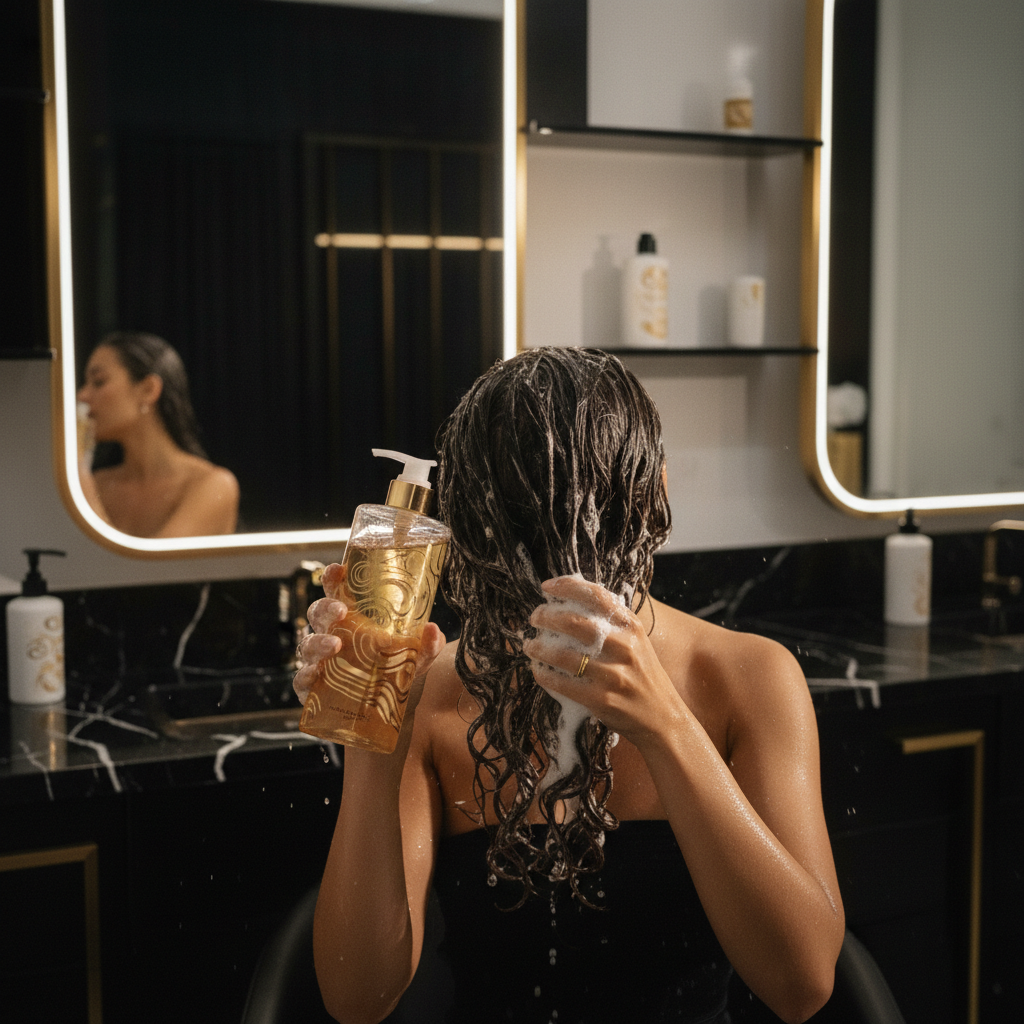
Quick answer: Sulfate Free Cleansing refers to washing the hair and scalp with surfactants that do not contain alkyl sulfates or alkyl ether sulfates, such as sodium lauryl sulfate (SLS) or sodium laureth sulfate (SLES). This approach preserves natural lipid barriers, minimises cuticle swelling, and prolongs cosmetic colour retention. However, its main limitation is a reduced ability to remove heavy silicone deposits, insoluble styling waxes, and excessive sebum without repeated applications or mechanical friction.
Key takeaways
- Sulfate Free Cleansing replaces harsh anionic detergents with gentler amphoteric, non-ionic, or milder anionic surfactants.
- Traditional sulfates can strip essential structural lipids (18-MEA) from the hair cuticle, leading to increased porosity and mechanical breakage.
- Sulfate-free formulas produce smaller, denser foam bubbles rather than high-volume froth, requiring thorough scalp massage to distribute effectively.
- Those with fine hair, severe seborrhoeic dermatitis, or heavy product build-up may require an occasional clarifying wash to prevent residue accumulation.
- Switching to a sulfate-free routine preserves artificial hair dye molecules within the cortex for longer periods.
Sulfate Free Cleansing: what the evidence shows
Sulfate Free Cleansing relies on surfactants that carry larger hydrophilic head groups or lower critical micelle concentrations (CMC) compared to traditional sulfates. Standard sulfates like sodium lauryl sulfate (SLS) possess small molecular sizes that penetrate beyond the hair cuticle into the cortex. SLS also penetrates the outer layers of the epidermis (stratum corneum), where it denatures keratin proteins and extracts intercellular lipids.
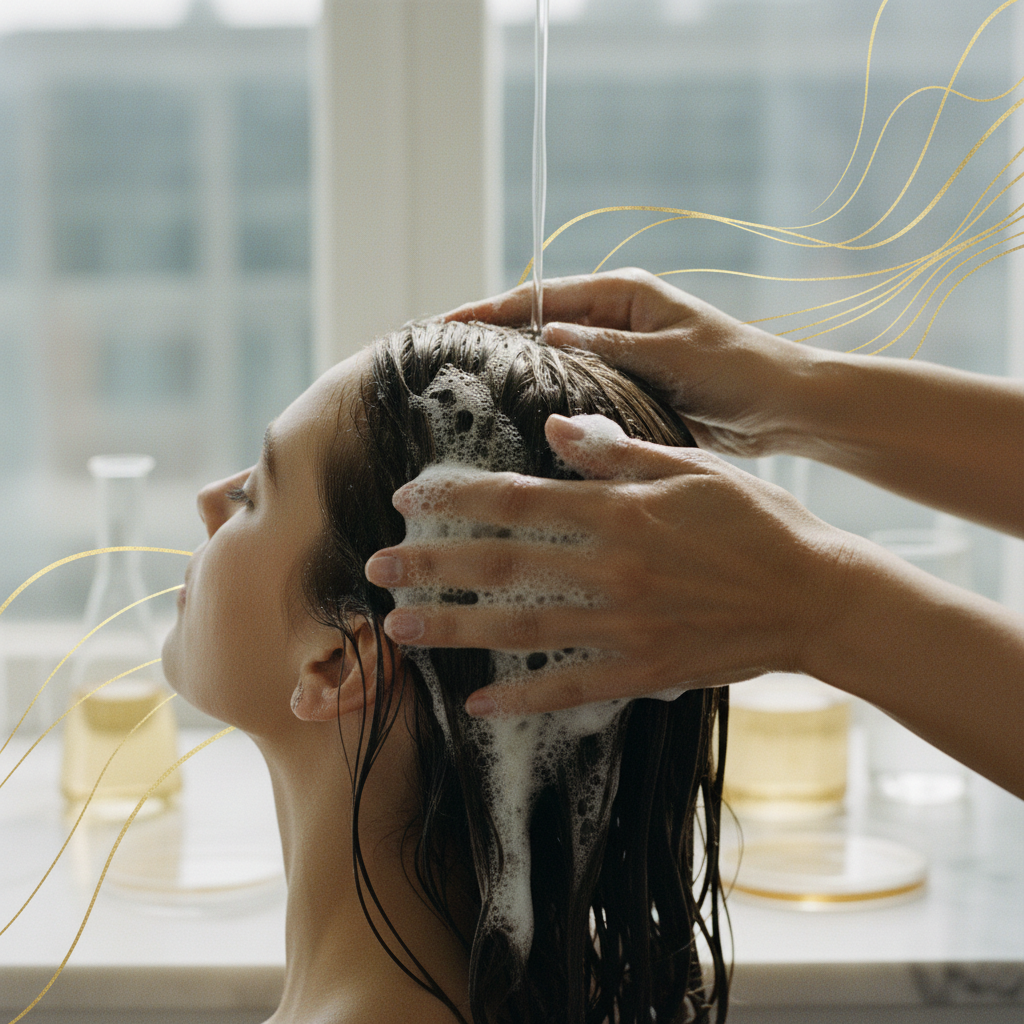
Dermatological and cosmetic science evaluations consistently demonstrate that replacing alkyl sulfates with alternatives like cocamidopropyl betaine, sodium cocoyl isethionate, decyl glucoside, or disodium laureth sulfosuccinate significantly reduces trans-epidermal water loss (TEWL) and cuticle disruption. By leaving the protective 18-methyl eicosanoic acid (18-MEA) lipid layer intact on the surface of the hair shaft, sulfate-free cleansers maintain the hydrophobic barrier of the fibre. This reduces water-induced swelling (hygral fatigue) and decreases the risk of mechanical breakage during detangling.
For colour-treated hair, studies show that water exposure and high-pH, high-detergency cleansers cause the hair shaft to swell excessively. When the cuticle scales lift, artificial pigment molecules leach out into the wash water. Gentler cleansers minimise this cuticle swelling, resulting in measurably superior colour retention over repeated wash cycles.
What the evidence does not show
Despite widespread consumer narratives, research does not support the claim that sulfates cause systemic toxicity, cancer, or medical hair loss. Sulfates do not attack the hair follicle stem cells, nor do they induce genetic thinning (androgenetic alopecia) or sudden telogen effluvium shedding.
Furthermore, sulfate-free formulations are not inherently chemical-free or natural. They simply utilise different chemical classes of detergents to emulsify sebum and soil. A sulfate-free shampoo is also not guaranteed to be hypoallergenic; secondary surfactants like cocamidopropyl betaine can occasionally cause contact dermatitis in sensitive individuals.
Mechanism: how sulfate-free surfactants clean hair
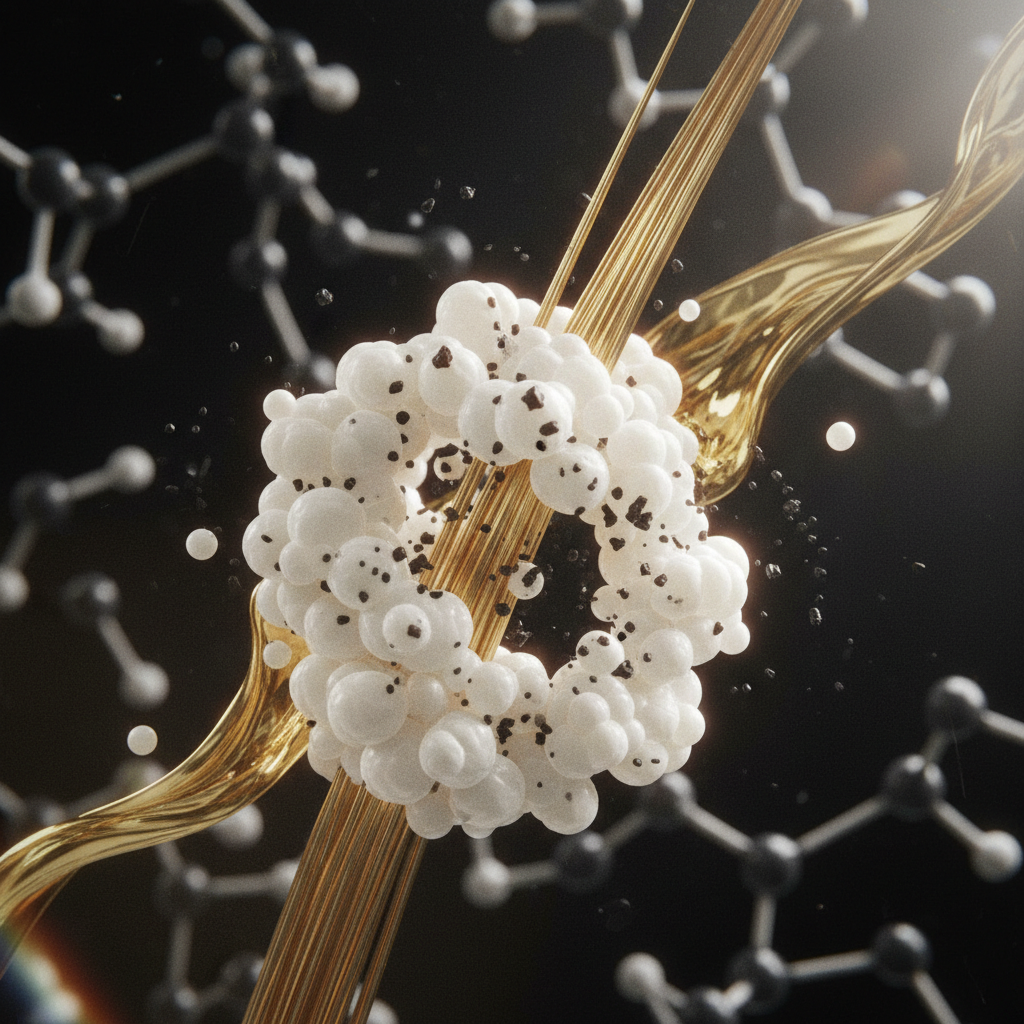
Surfactants function because their chemical structure contains two distinct ends: a lipophilic (oil-attracting) tail and a hydrophilic (water-attracting) head. When applied to wet hair, the tails bond to sebum, environmental pollutants, and cosmetic residues, trapping them in spherical structures called micelles. The hydrophilic heads face outward toward the water, allowing the entire aggregate to rinse away cleanly.
Traditional sulfates are harsh because their high ionic charge and small molecular footprint allow them to strip lipids aggressively. In contrast, sulfate-free surfactants function through gentler mechanisms:
- Non-ionic surfactants (e.g., Decyl Glucoside, Lauryl Glucoside): These carry no electrical charge. They are exceptionally mild on skin proteins, generate moderate foam, and rinse away without destabilising the scalp's moisture balance.
- Amphoteric surfactants (e.g., Cocamidopropyl Betaine): These carry positive or negative charges depending on product pH. They soften the impact of primary cleansers, reduce irritation potential, and provide light conditioning benefits.
- Mild anionic alternatives (e.g., Sodium Cocoyl Isethionate, Sodium Lauroyl Sarcosinate): These provide the satisfying, creamy lather consumers expect without stripping cuticular lipids or causing severe keratin denaturation.
Comparing common cleansing agents
The performance, lather profile, and cleaning power of cleansers vary significantly depending on the surfactant family employed.
| Surfactant Class | Common Examples | Cleansing Power | Irritation Potential | Ideal Candidate |
|---|---|---|---|---|
| Alkyl Sulfates | Sodium Lauryl Sulfate (SLS), Ammonium Lauryl Sulfate (ALS) | Very High | High | Deep clarifying, removing heavy petrolatum or mineral oil |
| Alkyl Ether Sulfates | Sodium Laureth Sulfate (SLES), Ammonium Laureth Sulfate (ALES) | High | Moderate | Moderately oily scalps, budget formulations |
| Isethionates | Sodium Cocoyl Isethionate (SCI) | Moderate to High | Very Low | Dry, sensitive scalp, daily washers |
| Glucosides | Decyl Glucoside, Coco Glucoside | Mild to Moderate | Extremely Low | Hypoallergenic needs, delicate, damaged hair |
| Betaines | Cocamidopropyl Betaine (CAPB), Coco-Betaine | Mild | Low | Chemically treated hair, textured hair, curly patterns |
| Sulfosuccinates | Disodium Laureth Sulfosuccinate | Moderate | Low | Colour-treated hair requiring effective sebum removal |
Signs that your hair needs a sulfate-free approach
You may benefit from eliminating sulfates from your routine if your hair displays visible symptoms of cuticular erosion:
- Colour fading quickly: Your cosmetic dye loses its vibrancy or tone within two to three weeks of application.
- Frizz and rough texture: The hair feels raspy or brittle when dried, catching easily on brushes and combs.
- Scalp tightness or itching: You experience a tight, stinging sensation immediately after washing, accompanied by fine, dry flakes.
- Porosity issues: Your hair absorbs water instantly, takes hours to dry, and snaps under minor tension.
What you can do: best practice for sulfate-free washing
Because sulfate-free cleansers contain gentler cleansing agents, your washing technique must adapt to achieve thorough cleanliness:
- Saturate completely: Wet your hair thoroughly with warm water for at least 60 seconds before applying product. Sulfate-free surfactants require ample water to spread effectively.
- Emulsify in your palms: Rub a 10p or 20p sized amount of product between wet hands before touching your head. This activates the lather.
- Focus on the scalp: Apply the product directly to your roots and scalp skin. Use the pads of your fingers to massage firmly in circular motions, mechanically dislodging sebum.
- Section thick or dense hair: If you have thick hair or tight curls, divide your hair into four quadrants to ensure the cleanser reaches all parts of your scalp.
- Rinse thoroughly: Rinse with warm water for at least one full minute. Because sulfate-free formulas do not glide off as aggressively as sulfates, lingering residues can leave fine hair feeling heavy.
When the cause of hair changes lies elsewhere
If you switch to a gentler washing routine but continue to notice brittle strands or irritation, the issue may not be your shampoo base. Hair snapping along the shaft is often the result of heat damage, bleach oxidation, or vigorous mechanical brushing.
True hair loss, where the follicle sheds the entire fibre from the root (with a small white bulb visible at the tip), is tied to internal physiological triggers. Hormonal imbalances, iron deficiency, thyroid dysfunction, and significant psychological stress trigger hair shedding, which cosmetic cleansers cannot cure or cause.
When to seek professional advice
Consult a GP, dermatologist, or qualified trichologist if you notice patchy hair loss, sudden diffuse thinning across the crown, or persistent scalp pain. Medical conditions such as scalp psoriasis, seborrhoeic dermatitis, and lichen planopilaris require targeted clinical treatments and medicated solutions rather than cosmetic surfactant adjustments.
The Watermans perspective
Watermans designs haircare systems that focus on maintaining scalp health and hair fibre integrity. Watermans products are formulated without harsh sulfates, utilising balanced, scalp-friendly cleansing agents alongside natural botanical extracts, biotin, caffeine, and rosemary. This ensures the scalp environment remains balanced and the hair shaft retains its natural moisture, supporting optimal conditions for thicker, fuller-looking hair without unnecessary structural abrasion.
Frequently asked questions about Sulfate Free Cleansing
Does Sulfate Free Cleansing stop hair from growing?
No. Sulfate Free Cleansing does not negatively affect hair growth. In fact, by preserving the natural epidermal barrier and reducing inflammation on the scalp, mild surfactants foster a healthier foundation for follicles to produce hair fibres.
Why does sulfate-free shampoo lather less?
Sulfate-free surfactants do not reduce surface tension as aggressively as sulfates, leading to smaller, creamier bubbles rather than an airy, high-volume foam. This reduced froth does not mean your hair is not getting clean; mechanical scalp massage distributes the micelles effectively.
Can I practice Sulfate Free Cleansing if I have an oily scalp?
Yes, but you may need to wash your hair slightly more frequently or perform a double cleanse (washing twice in the same shower session). The first wash removes surface oils, while the second deep-cleanses the scalp without causing irritation.
Will sulfate-free cleansing remove water-insoluble silicones?
Gentle sulfate-free cleansers struggle to remove non-water-soluble silicones (such as dimethicone) and heavy petrolatum waxes. If you use styling products with these ingredients, you may need an occasional clarifying wash to prevent coating the cuticle.
Summary
Adopting Sulfate Free Cleansing provides a proven, cosmetically beneficial method for protecting structural cuticle lipids, prolonging colour vibrancy, and calming reactive scalps. By understanding surfactant mechanisms and adjusting your washing technique, you can maintain a clean, balanced scalp while protecting your hair from avoidable mechanical and chemical fatigue.
Sources and references
- Journal of Cosmetic Science: Cosmetic benefit and hair shaft lipid preservation of gentle surfactant systems, 2011.
- International Journal of Toxicology: Final Report on the Safety Assessment of Sodium Lauryl Sulfate and Ammonium Lauryl Sulfate, 1983 / 2010.
- British Journal of Dermatology: Trans-epidermal water loss and skin barrier disruption caused by anionic detergents, 2018.
- Cosmetic Dermatology: Principles and Practice, Leslie Baumann, McGraw-Hill, 2009.
- Society of Cosmetic Scientists (UK): Surfactant Science and Technology in Modern Hair Cleansing, 2020.