Scalp Barrier Repair: The Scientific Guide to Restoring Scalp Health
9 min read ·
Learn the science behind Scalp Barrier Repair: discover how to restore lipids, rebalance pH, calm irritation, and support healthy hair growth.
Quick answer: Scalp barrier repair is the process of restoring the stratum corneum, the outermost layer of skin on the head, by replenishing essential lipids, balancing microbiome flora, and stabilising pH levels. Successful Scalp Barrier Repair eliminates dryness, itching, and flaking caused by harsh surfactants, weather, or over-exfoliation. However, cosmetic barrier repair cannot cure chronic underlying dermatological conditions such as scalp psoriasis, seborrhoeic dermatitis, or severe autoimmune alopecia, which require dedicated medical evaluation and prescription management.
Key takeaways
- The scalp barrier relies on a 1:2:1 equimolar ratio of ceramides, cholesterol, and free fatty acids to prevent transepidermal water loss (TEWL).
- An impaired scalp barrier presents with tight sensations, micro-inflammation, tenderness, burning, and fine powdery flaking.
- Scalp skin has a natural physiological pH between 4.5 and 5.5; alkaline cleansing agents raise this pH, degrading lipid-processing enzymes.
- Restoring a compromised scalp barrier typically takes between 2 to 4 weeks, matching the physiological epidermal turnover cycle.
- True barrier dysfunction differs fundamentally from active fungal overgrowth or autoimmune scalp diseases, which need medical treatment.
Scalp Barrier Repair: what the evidence shows
The scalp is an extension of facial skin, yet it possesses a higher density of sebaceous glands, a lower overall barrier resistance, and hundreds of thousands of hair follicles. Scalp barrier repair centres on the stratum corneum, the brick-and-mortar structure where corneocytes (bricks) sit within an intercellular lipid matrix (mortar).
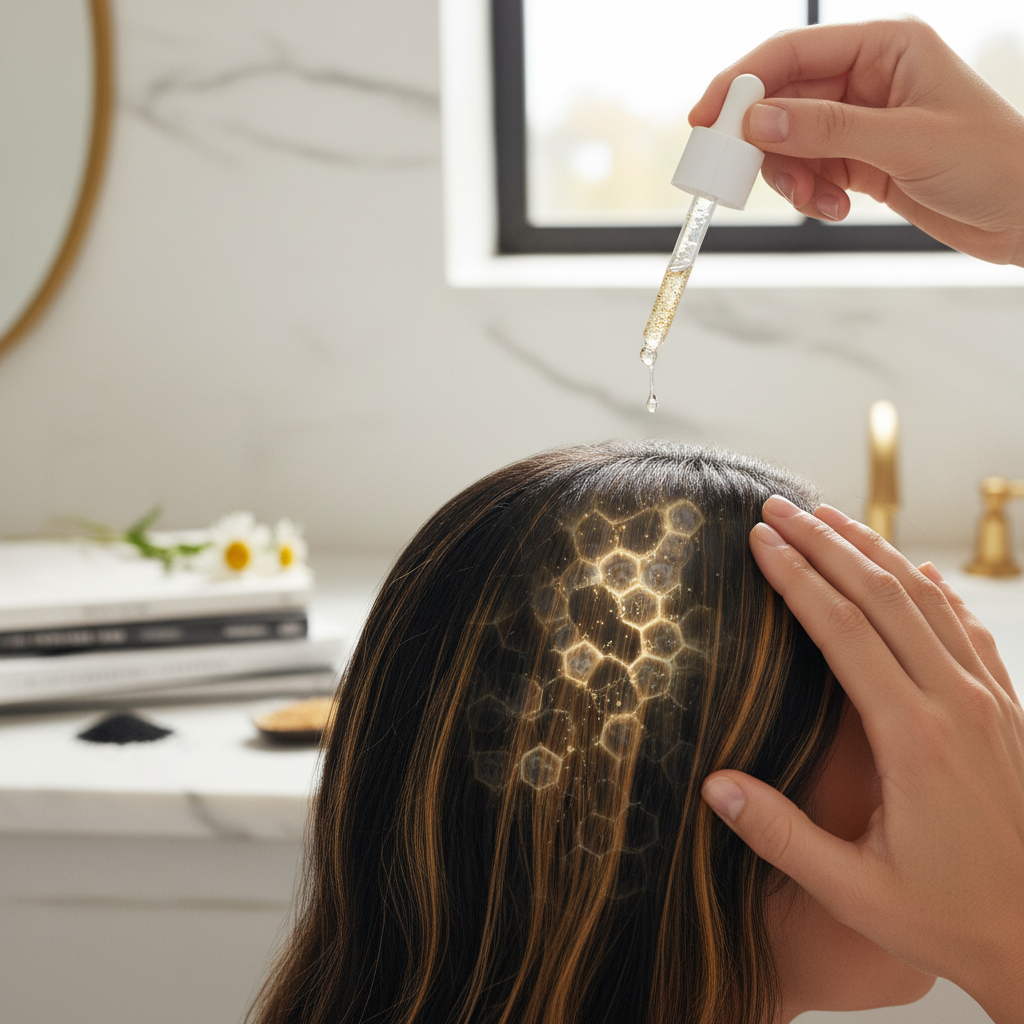
Clinical dermatology demonstrates that when this lipid matrix degrades, transepidermal water loss (TEWL) rises sharply. At the same time, environmental irritants, pollutants, and microbes penetrate deeper into the dermis. This triggers sub-clinical inflammation, releasing pro-inflammatory cytokines such as IL-1alpha. Research published in the International Journal of Trichology and the British Journal of Dermatology confirms that chronic scalp inflammation alters follicular anchorage, leading to increased telogen shedding if left unaddressed. Scalp barrier repair stops this cycle by rebuilding the protective surface seal.
What the evidence does not show
Dermatological research does not support the idea that cosmetic barrier creams or oils can regrow hair lost to androgenetic alopecia or cicatricial alopecia. While an unhealthy scalp microenvironment can worsen shedding, repairing the barrier does not reactivate miniaturised follicles governed by genetics and dihydrotestosterone (DHT).
Furthermore, evidence does not show that heavy kitchen oils (such as pure olive oil or coconut oil) automatically repair the barrier. In fact, olive oil contains high concentrations of oleic acid, which research shows can actually disrupt lipid bilayers and induce barrier permeability in susceptible scalps.
Biological mechanisms of scalp barrier dysfunction
To repair the scalp barrier effectively, you must understand the biochemical processes that compromise it:
1. Acid mantle disruption
The scalp maintains an acidic surface pH between 4.5 and 5.5. This acidity controls the activity of serine proteases (kallikreins), enzymes responsible for desquamation (the shedding of dead skin cells). When you wash your hair with alkaline products (pH 7.0 or higher), these enzymes become hyperactive, degrading desmosomes prematurely and stripping protective ceramides. An elevated pH also allows opportunistic pathogens like Staphylococcus epidermidis and Malassezia species to multiply unchecked.
2. Lipid depletion
The intercellular lipid matrix consists of roughly 50% ceramides, 25% cholesterol, and 15% free fatty acids. Aggressive surfactants, particularly sodium lauryl sulphate (SLS), bind to stratum corneum proteins and strip these lipids away. Without them, water escapes into the atmosphere, leading to cellular dehydration, micro-cracking, and nerve ending irritation.
3. Microbiome dysbiosis
A healthy scalp maintains an equilibrium between Cutibacterium acnes, Staphylococcus, and lipophilic yeasts (Malassezia restricta and Malassezia globosa). When sebum production drops or the barrier thins, the antimicrobial peptides (AMPs) produced by healthy keratinocytes decline. This allows fungal metabolites to irritate the exposed living epidermal layers below.
| Characteristic | Healthy Scalp Barrier | Impaired Scalp Barrier | Seborrhoeic Dermatitis |
|---|---|---|---|
| Surface pH | 4.5 to 5.5 | 5.8 to 7.2 | 6.0 to 7.5 |
| Transepidermal Water Loss | Low (8 to 12 g/m²/h) | Elevated (18 to 30+ g/m²/h) | High, accompanied by inflammation |
| Flake Appearance | None (invisible shedding) | Fine, dry, white, powdery | Greasy, thick, yellowish patches |
| Sensation | Neutral, comfortable | Tight, stinging, tender | Pruritic (intensely itchy), hot |
| Primary Driver | Balanced lipid synthesis | Stripped lipids, physical trauma | Overgrowth of Malassezia + sebum reaction |
| Typical Recovery Window | Maintained continually | 14 to 28 days with correct care | Chronic, requiring ongoing management |
Signs of a compromised scalp barrier
Recognising barrier damage early prevents long-term follicular stress. Look out for these symptoms:
- Stinging or burning: Water, sweat, or mild styling products cause immediate discomfort upon contact.
- Persistent tightness: The scalp feels taut, dry, and restricted, particularly within two hours of washing.
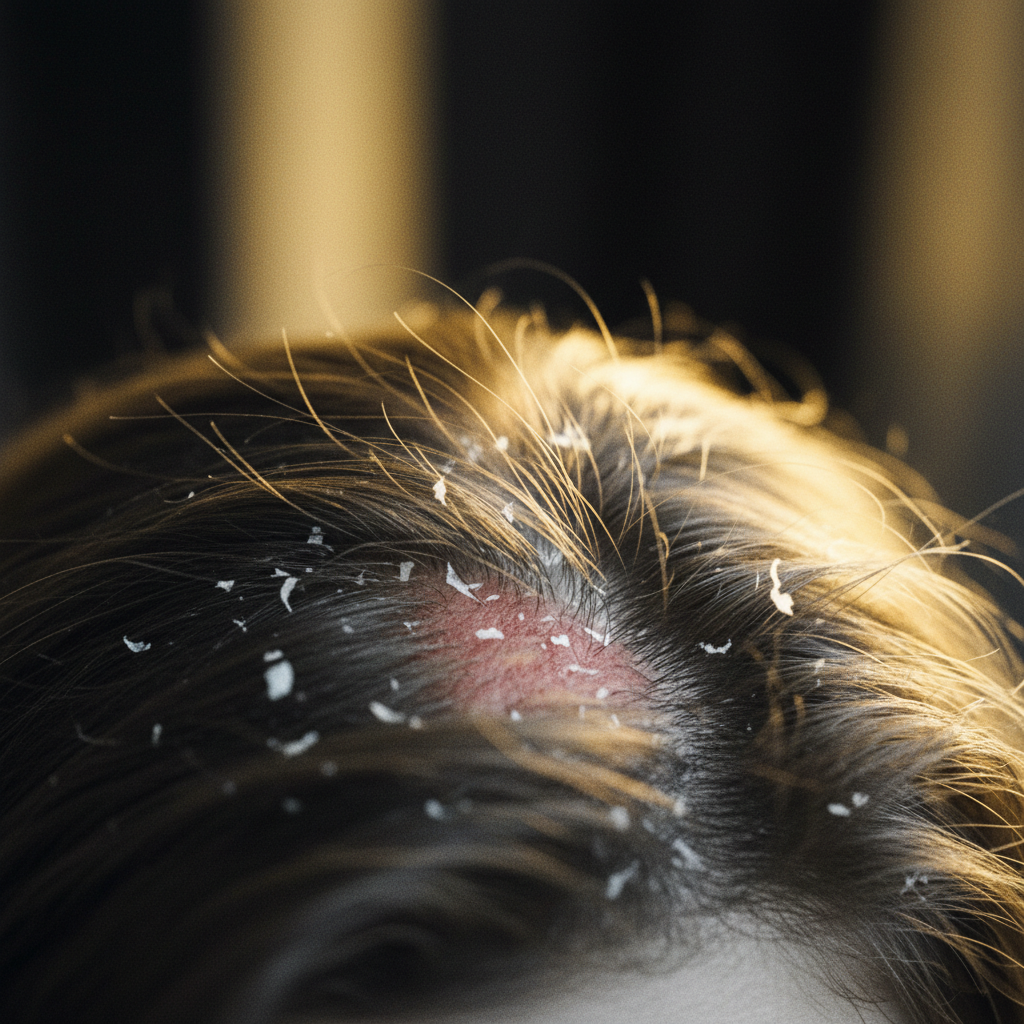
- Fine, powdery flaking: Unlike thick dandruff flakes, barrier-damaged flakes are small, light, and drift off when touched.
- Transient erythema: The scalp looks pink or flushed under direct light, even without heat exposure.
- Increased shedding: You notice a diffuse increase in hairs released from the root, provoked by superficial inflammation.
Practical steps for Scalp Barrier Repair
Restoring your scalp barrier requires removing disruptive agents and applying physiological lipids. You can achieve this by following a focused, phased protocol.
Step 1: Strip back your routine
For 14 days, pause all chemical peels, physical scalp scrubs, salicylic acid treatments, essential oil drops, and fragrance-heavy styling clays. These products disrupt healing stratum corneum tissue.
Step 2: Switch to pH-balanced, non-stripping cleansers
Select shampoos with a certified pH between 4.5 and 5.5. Look for mild amphoteric and non-ionic surfactants like cocamidopropyl betaine, sodium cocoyl isethionate, or decyl glucoside. Avoid primary anionic cleansers like ammonium lauryl sulphate and sodium lauryl sulphate.
Step 3: Replenish physiological lipids
Apply leave-on scalp serums containing barrier-identical ingredients:
- Ceramides (specifically NP, AP, and EOP): Rebuild the lipid matrix structure.
- Niacinamide (2% to 4%): Clinically proven to stimulate keratinocyte ceramide synthesis and calm erythema.
- Panthenol (Pro-Vitamin B5): Penetrates deeply to act as an intracellular humectant and accelerate tissue repair.
- Squalane: A light, biomimetic, non-comedogenic oil that prevents water loss without feeding yeast.
Step 4: Adjust wash frequency and water temperature
Wash your hair in lukewarm water (around 36°C to 38°C). Hot water melts the skin's lipid bilayers, rapidly increasing barrier permeability. If you wash daily, switch to alternate days to give your skin's natural sebum time to protect the healing layers.
The Watermans approach to scalp health
At Watermans, our formulation philosophy has always respected the hair and scalp ecosystem. Hair growth and fibre strength depend heavily on an undisturbed, nourished scalp environment.
Products like Watermans Grow Me Shampoo and Condition Me Conditioner are formulated without harsh, drying sulphates that strip the lipid bilayer. Instead, they incorporate scalp-supportive ingredients, such as rosemary, biotin, niacinamide, and allantoin, balanced to support the physiological acid mantle. This formulation approach cleanses the hair thoroughly while protecting the epidermal moisture seal, ensuring your follicles remain calm and uncompromised.
When the cause is something else
Barrier disruption shares symptoms with several distinct dermatological conditions. If standard barrier repair protocols fail to deliver relief within three weeks, consider these alternative causes:
- Seborrhoeic dermatitis: Driven by inflammatory responses to oleic acid produced by Malassezia yeasts. It causes yellow, oily scales and requires antifungal agents like ketoconazole or piroctone olamine, rather than rich moisturising oils.
- Contact dermatitis: An allergic reaction to a specific ingredient, such as methylisothiazolinone or paraphenylenediamine (PPD) in hair dyes. It manifests as severe, weeping redness and intense itching.
- Scalp psoriasis: An autoimmune acceleration of skin cell turnover producing silver, plaque-like scales that extend beyond the hairline. It requires topical corticosteroids, vitamin D analogues, or phototherapy.
When to seek professional advice
Consult a GP, dermatologist, or registered trichologist if you experience any of the following:
- Bleeding, open sores, or crusting on the scalp.
- Swollen lymph nodes in your neck or behind your ears.
- Localised circular bald patches (which may indicate alopecia areata).
- Pain so severe it disrupts your sleep.
- No improvement after 28 days of gentle, barrier-focused care.
Frequently asked questions about Scalp Barrier Repair
How long does Scalp Barrier Repair take?
In most cases, Scalp Barrier Repair takes between 14 and 28 days. This matches the natural lifecycle of human keratinocytes, which take roughly 28 days to travel from the basal layer to the stratum corneum and shed naturally. If inflammation is mild and you use barrier-supportive products consistently, symptoms like tightness and stinging should begin to ease within 5 to 7 days.
Can a damaged scalp barrier cause hair loss?
A damaged scalp barrier does not cause permanent follicular hair loss (such as pattern baldness), but it can trigger temporary telogen effluvium. When the barrier is compromised, inflammatory cytokines infiltrate the upper dermis. This sustained micro-inflammation can stress the follicle, prompting growing hairs to shift prematurely into the resting and shedding phases.
Should I apply pure oils for Scalp Barrier Repair?
Pure kitchen oils are generally not recommended for barrier repair. While squalane or mineral oil provide safe occlusion, oils high in oleic acid (such as olive oil) disrupt the natural lipid organisation of the stratum corneum. Furthermore, natural vegetable oils can nourish Malassezia yeasts, worsening itching and inflammation. Formulated ceramide serums work much better.
How do I know if my scalp has an impaired barrier or dandruff?
An impaired scalp barrier produces dry, tiny, translucent or white flakes accompanied by skin tightness and burning. Classic dandruff produces larger, oily, yellowish flakes caused by an overgrowth of Malassezia feeding on sebum. Dandruff usually responds best to antifungal cleansers, whereas an impaired barrier requires gentle hydration, physiological lipids, and the removal of harsh cleansing agents.
Restoring balance to your scalp
Achieving genuine Scalp Barrier Repair requires patience, biological understanding, and a gentle touch. When you stop stripping the stratum corneum with alkaline detergents and scorching showers, and instead replenish its acid mantle and essential lipids, the scalp heals naturally. A calm, comfortable, and resilient scalp barrier creates the ideal physiological foundation for sustained hair strength, retention, and vitality.
Sources and references
- British Association of Dermatologists. (2020). Seborrhoeic Dermatitis Guidelines.
- Elias, P. M. (2008). Skin barrier function: basic concepts and clinical relevance. British Journal of Dermatology, 158(3), 442-446.
- Gaitanis, G., et al. (2012). The Malassezia genus in skin and systemic diseases. Clinical Microbiology Reviews, 25(1), 106-141.
- Proksch, E., Brandner, J. M., & Jensen, J. M. (2008). The skin: an indispensable barrier. Experimental Dermatology, 17(12), 1063-1072.
- Trueb, R. M. (2018). The impact of oxidative stress on hair. International Journal of Cosmetic Science, 37(S2), 25-30.
Find these ingredients in Watermans products
- Vitamin D: you will find this ingredient in our Hair Vitamins.
- Oleic Acid: you will find this ingredient in our Camellia & Black Castor Hair & Body Oil.
- Niacinamide: you will find this ingredient in our Hair Mask.
- Panthenol (Provitamin B5): you will find this ingredient in our Heat Protection Spray.